


Phoenix Lifestyle Guide → [Phoenix Lifestyle Guide] & For more info on Phoenix Real Estate → [Phoenix Real Estate Guide]
Written by: Renee Burke
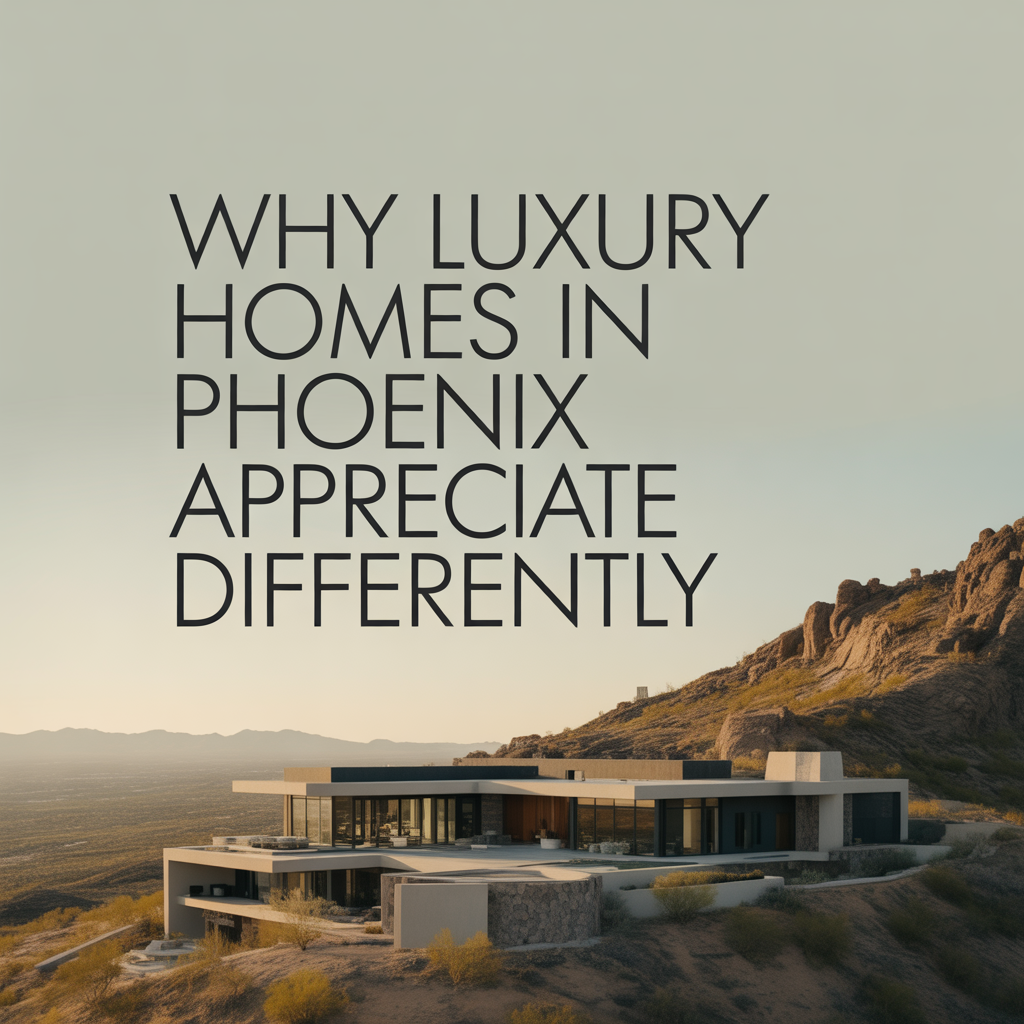
I’ve walked through so many Paradise Valley estates and Scottsdale spec homes over the years, each one telling its own story of what draws people to Phoenix’s high end. Luxury properties here — think those over $2 million in prime pockets — don’t just follow the broader market’s rhythm. They dance to a subtler beat, one shaped by affluent buyers who prioritize lifestyle permanence over short-term flips. It’s reassuring, really, how this segment holds its ground when median homes soften.
Phoenix luxury appreciation feels different because it’s insulated by cash-heavy buyers, ultra-limited supply, and our Valley’s unique blend of privacy, views, and endless sunshine. While the overall market might dip 1–2% in a cooling year, top-tier homes often climb 5–7%, outpacing national trends.
Cash Buyers and Rate Immunity
Here’s the first big separator: financing barely touches luxury. Nationally, high interest rates freeze out regular buyers, but in Phoenix, over 60% of $2M+ deals close with cash. Affluent transplants from California or the Midwest — executives, retirees, even international families — wire funds without blinking. They’re relocating for Banner Health jobs or TSMC expansions, not waiting on Fed moves.
This creates steady demand. While a $450k resale lingers at 6.5% rates, a $3M Arcadia modern sells in weeks to someone eyeing it as a forever compound. I’ve seen it firsthand: Paradise Valley listings priced right move 30% faster than mid-range, even in balanced markets.
Inventory Scarcity in Premium Pockets
Phoenix luxury isn’t everywhere — it’s concentrated, and that’s its strength. Neighborhoods like Scottsdale’s Silverleaf, Paradise Valley’s golf estates, or Biltmore’s guarded enclaves have true scarcity. Raw land is finite; rezoning battles keep supply throttled. Compare that to starter homes flooding Queen Creek — luxury waits for no builder rush.
Zillow data underscores it: top 5% homes here rose 7.1% year-over-year recently, while typical values ticked flat. National brokerages like SERHANT. expanding into Arizona signal confidence — their agents bring East Coast polish to Valley gems, but inventory stays tight. A 2-acre lot with McDowell views doesn’t multiply overnight.
Lifestyle Features That Age Like Fine Wine
What truly sets Phoenix luxury apart? It’s built for our climate and mindset. Think casitas for grandkids, sport courts, infinity pools blending into desert horizons, smart glass for heat control, and wellness wings with saunas or cold plunges. These aren’t add-ons — they’re why owners hold tight.
Broad market homes chase trends: three-car garages, open kitchens. Luxury anticipates life phases — remote offices that double as art galleries, outdoor kitchens for 200 winter nights a year. Paradise Valley buyers don’t downsize; they expand thoughtfully, boosting values through upgrades. A $4M home becomes $5.5M after solar arrays and xeriscaping align with our water-smart future.
Economic Anchors Tailored to High Earners
Phoenix’s job growth feeds luxury differently too. We’re not just service jobs — it’s Mayo Clinic surgeons settling in Gainey Ranch, Intel execs in DC Ranch, or startup founders near Papago Buttes. Median household incomes in 85255 zip (Scottsdale) top $140k, double the Valley average, creating a self-sustaining high-end ecosystem.
Contrast with mass-market segments relying on retail or construction cycles. Luxury ties to stock portfolios and bonuses, smoothing volatility. When markets wobble, C-suite families still buy — they see Phoenix as a tax-friendly haven with private jet access via Deer Valley Airport.
Location Prestige Holds Intrinsic Value
Not all luxury is equal, and Phoenix proves it. Paradise Valley’s exclusivity — no commercial strips, just mountain-framed estates — commands premiums others can’t touch. Scottsdale 85262 (North Scottsdale) appreciates via golf and equestrian trails; Arcadia via walkable charm and historic palms.
These aren’t flip zones. Turnover hovers at 5–7% annually versus 15% in starter suburbs. Owners invest in legacy: subterranean garages, vineyards, even home theaters for multigenerational living. Appreciation compounds quietly — 8–10% over five years, fueled by prestige that national rankings now spotlight.
Risks and Nuances Worth Noting
It’s not all smooth. Luxury can sit if overpriced — buyers scrutinize floor plans, sunset alignments, HOA rules on gates. Presentation matters: unstaged estates fade fast. And while heat drives wellness features, rising insurance nudges some toward fortified builds.
Yet these refine, don’t derail. Smart sellers stage with local art, highlight energy offsets. Buyers seek resilience — homes with batteries, drought-proof grounds — turning challenges into future-proof equity.
How Appreciation Plays Out: A Snapshot
Here’s how Phoenix luxury diverges from the mainstream:
| Segment | Typical YoY Growth | Key Driver | Buyer Profile |
|---|---|---|---|
| Median Homes ($450k) | 0–2% | Rates, first-timers | Financed families |
| Luxury ($2M+) | 5–8% | Cash, scarcity | Affluent relocators |
| Ultra-Luxury ($5M+) | 6–10% | Prestige, custom builds | Legacy investors |
Phoenix luxury outperforms because it’s less a transaction, more a lifestyle commitment.
The Long View on Valley Elegance
Luxury homes here appreciate differently because they mirror what makes Phoenix enduring: vast skies, private sanctuaries, and a rhythm that whispers “stay.” It’s not hype — it’s homes designed for sun-drenched generations, buffered by buyers who value roots over resale flips.
I’ve helped families fall for these properties, watching their worth grow as surely as Camelback’s silhouette at dawn.
If you’re thinking about making a move in Phoenix — exploring a luxury purchase, timing a sale, or simply curious about high-end potential — you don’t have to figure it out alone.
I’ve navigated these estates’ unique paths for years, and I’d love to share insights tailored to you. Reach out for a quiet chat over your questions — neighborhoods, values, visions. Together, we’ll uncover what appreciates most: a home that feels timelessly yours.
Get the full Phoenix Market Insights → [Market Insights]


-

How to Test-Drive Your Phoenix Commute Before You Buy
-
How HOAs Impact Long-Term Resale Value in Phoenix Communities
-

What Happens If You Violate HOA Rules or Miss Payments in Arizona
-
Arizona Buyer Protections When Reviewing HOA Documents
-
HOA vs Non-HOA Neighborhoods in the Phoenix Metro
-
HOA Fees, Reserves, and Special Assessments: Spotting Red Flags
-
How to Review HOA Documents Before Buying a Phoenix Home
-
Prioritizing Repairs in Your First 12–24 Months After Closing in Phoenix
-

What Normal Wear Looks Like on a 15- to 25-Year-Old Phoenix Home
-

Renegotiate or Cancel? Using Your Arizona Inspection Period Wisely
-
How Monsoon Season Exposes Roof and Drainage Problems
-
Hidden Costs of Homeownership in Phoenix: AC, Pools, and Irrigation
-

Most Common Phoenix Home Inspection Issues (and Which Ones Really Matter)
-

How to Spot Age-Related Issues from Photos Before You Tour a Phoenix Home
-

What Builder Warranties in Phoenix Really Cover (and What They Don’t)
-
Master-Planned Communities vs Older Infill Neighborhoods in Phoenix
-
How to Budget Maintenance on 10-, 20-, and 40-Year-Old Phoenix Homes
-

Lifespan of Roofs, HVAC, and Water Heaters in Phoenix Homes
-
Block vs Frame: How Phoenix Home Construction Handles Desert Heat
-

New-Build Homes in Phoenix: What’s Actually Better (and What’s Just Marketing)
-
When Waiting Makes Sense — and When It Quietly Costs You More
-
Renting vs Buying in Phoenix: A Local Numbers Breakdown
-
Building a 5–7 Year Plan So Short-Term Price Swings Matter Less
-
How Interest-Rate Changes Are Affecting Phoenix Offers and Negotiations
-
What Days on Market Really Tells You About Buyer Power in Phoenix