



Buyer Fears→ [Buyer Fears] & For more info on other fears Phoenix Real Estate → [Phoenix Real Estate Fears Guide]
Written by: Renee Burke
I’ve held hands—figuratively, of course—through dozens of inspection reports with buyers staring at thick packets of photos, ratings, and jargon that can feel overwhelming. In Phoenix, where our desert heat, hard water, and monsoon soils create unique wear patterns, reports often highlight more issues than a damp climate might. The good news? Most aren’t deal-breakers. They’re snapshots guiding smart decisions, not alarm bells.
Breathe. Let’s walk through one step by step, focusing on what matters in Valley homes, so you feel steady heading into negotiations.
Start with the Summary—Your Roadmap
Every solid Arizona inspection report opens with a summary of findings—the inspector’s highlight reel. It flags safety issues (like exposed wiring), major defects (roof leaks), and recommendations (further HVAC eval). Ignore the page count; zero in here first.
Phoenix twist: Look for “end of life” on AC units (10–15 years here due to dust) or “settling cracks” from our clay soils. Color-coding helps—red for urgent, yellow for monitor, green for fine. No reds? You’re ahead.
Decode Condition Ratings Calmly
Inspectors use tiers like Satisfactory (works fine), Marginal (minor tweaks), Deficient (fix soon), or Not Inspected (inaccessible attic). Terms vary—“serviceable” means functional but aging; “recommend specialist” flags plumbing scale from our minerals.
Common Valley ratings:
- HVAC “Marginal”: Dusty coils—$500 clean, not $12k replace.
- Roof “Deficient”: Granule loss—recoat if 20 years old, not full tear-off.
- Foundation “Monitor”: Hairline cracks under 1/4-inch—typical post-monsoon.
Photos clarify: Zoom on attic stains (water entry) versus cosmetic stucco hairlines.
Section-by-Section: What to Prioritize
Reports divide logically—Exterior, Roof, Plumbing, Electrical, HVAC, Interior. Skim greens; linger on yellows/reds.
| Section | Phoenix Red Flags | Why It Matters Here | Typical Fix |
|---|---|---|---|
| Roof | Missing granules, cracked tiles | UV + hail weaken fast | $2k–$15k |
| HVAC | Rusted coils, low refrigerant | Runs 10 months/year | $500–$12k |
| Plumbing | Scale buildup, galvanized pipes | Hard water accelerates | $1k–$8k |
| Electrical | Ungrounded outlets, old panels | Pools/safety code strict | $1k–$5k |
| Foundation | Stair-step cracks in block | Soil expansion | $5k–$20k |
| Interior | Warped doors, pool etches | Heat/humidity swings | $500–$3k |
Safety first: GFCIs near water, no double-taps. Deferred maintenance (dirty filters) signals care level.
Translate Jargon to Reality
- “Appears serviceable”: Works now—budget future swap.
- “At end of useful life”: AC or water heater? Plan $10k soon.
- “Further evaluation needed”: Sewer scope ($300) for slab homes.
Phoenix add-ons: SRP efficiency notes, termite history (scorpions too), pool plaster age. Recommendations aren’t demands—get quotes to gauge.
Triage: Big Worries vs. Noise
Not everything needs fixing yesterday:
- Panic-Worthy (Renegotiate): Active leaks, failing electrical, major cracks.
- Budget For (Negotiate): Aging systems, cosmetic wear.
- DIY/Live With: Peeling paint, minor grout.
Multiple yellows? Pattern of neglect. One red in a newer Queen Creek build? Often warranty-covered. Tally costs—under 2% home value? Manageable.
Ask your inspector: “What keeps me safe/cool/dry?” Call me for a second read.
Turn Report into Action
Highlight priorities, attach photos to your BINSR (Buyer Inspection Notice). Within Arizona’s 10-day period, propose fixes/credits reasonably—sellers respond 70% positively. No? Cancel cleanly.
This empowers, not panics. I’ve calmed clients facing “deficient” roofs that became $3k recoats, not catastrophes.
I’m Here to Steady the Wheel
Reports illuminate paths, not pitfalls. In our Valley, they spotlight heat warriors worth keeping versus fixes too big.
Share yours—I’ll decode it line by line, no hype, just clarity.
If you’re thinking about a home in Phoenix, you don’t have to figure it out alone. Reach out—let’s turn that report into your confident next step.
Get the full Phoenix Market Insights → [Market Insights]


-

How the Phoenix Desert Climate Shapes Everyday Life Inside the Home
-

How Phoenix Weather Patterns Shape Everyday Home Routines
-

Why Homes Often Feel More Comfortable After the First Year of Ownership
-

How Living in Phoenix Changes the Way Homeowners Use Their Homes
-
What New Phoenix Homeowners Learn During Their First Year of Ownership
-

How Daily Life Changes After the First Year of Living in a Phoenix Home
-
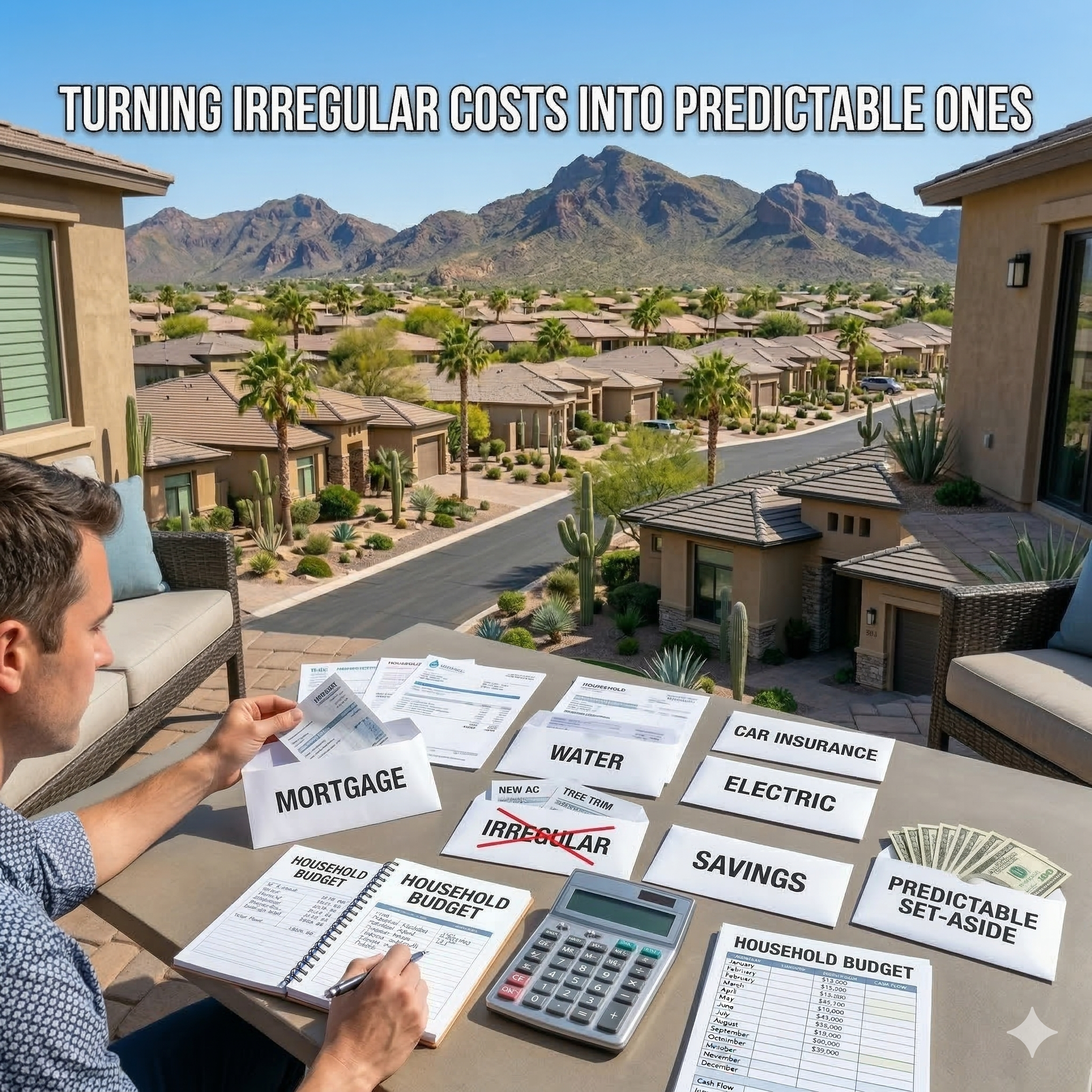
Turning Irregular Costs Into Predictable Ones
-

Budgeting for Ongoing Ownership
-
Repair vs Replace vs Defer Decisions
-

Planning Homeownership Like a Long-Term Asset
-

What Home Expenses You Can Safely Delay
-

Stopping Cost Creep Early
-

Cash Flow vs Net Worth Stress
-

Why “It’s Not That Much” Adds Up
-

Warning Signs Your Ownership Budget Is Tightening
-

The Cumulative Cost of Small Home Repairs
-

Designing Budgets Around Local Conditions
-
Utility Costs Over Time in Desert Climates
-

Insurance Increases Explained for Arizona Homeowners
-

How Inflation Impacts Phoenix Homeownership Costs
-

Avoiding Debt-Driven Homeownership Decisions
-

Replacing Systems on Your Timeline
-

Why Emergency Repairs Cost More
-

Timing Major Expenses Without Financial Shock
-
How Much to Keep in a Phoenix Home Reserve Fund