


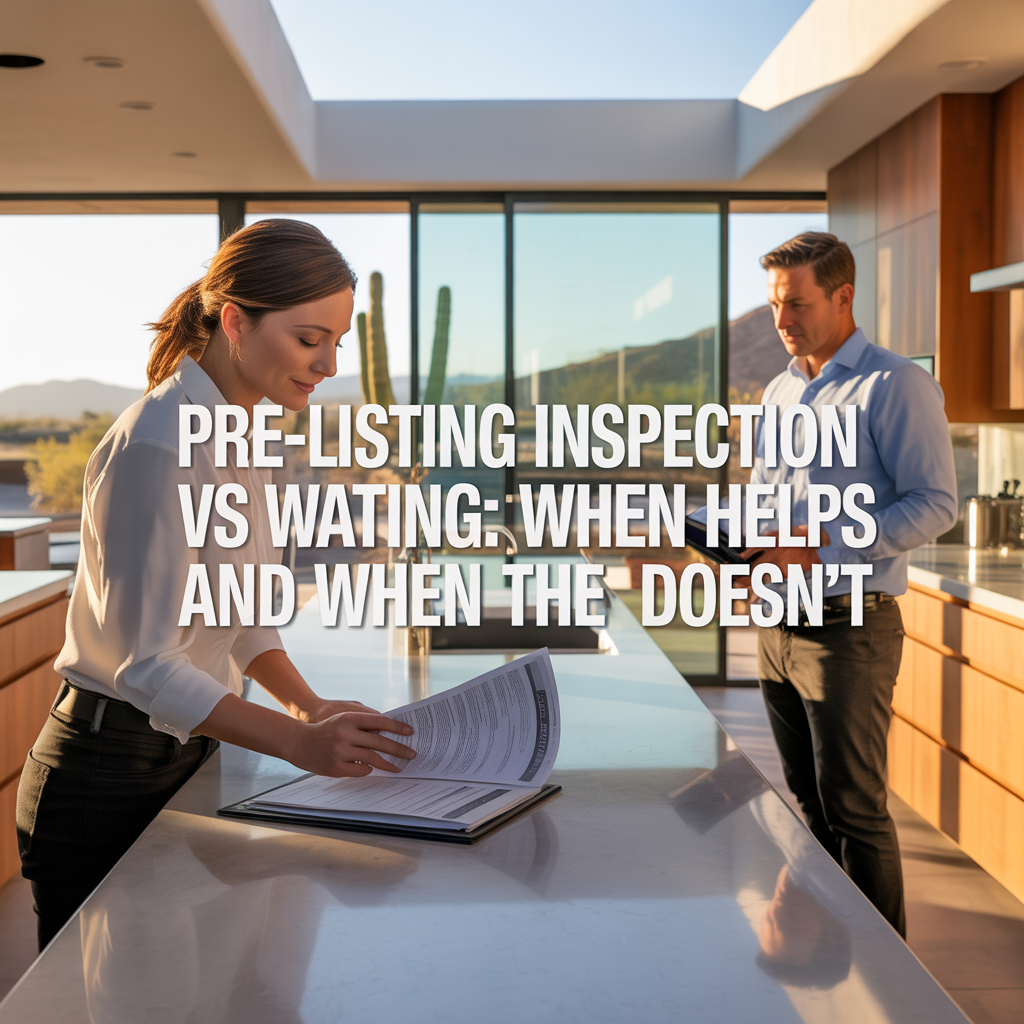
Selling a home in Phoenix can feel like walking a tightrope—especially when inspections come into play. In neighborhoods from Gilbert to north Scottsdale, sellers often wonder if paying for a pre-listing inspection upfront is worth it, or if they should just wait for the buyer’s inspector to flag issues after an offer.
After guiding dozens of Valley sellers through this decision, I’ve seen both paths play out. Sometimes a pre-listing inspection is a game-changer; other times, it’s an unnecessary expense. It comes down to your home’s age, condition, and the market vibe. Let’s break it down thoughtfully, so you can decide with clarity.
What a Pre-Listing Inspection Really Delivers
A pre-listing inspection is like a dress rehearsal. You hire a licensed Arizona inspector—ideally one familiar with desert-specific issues like clay soil settling or tile roof wear—for a full walkthrough, getting a detailed report on roof, HVAC, plumbing, electrical, and more. Cost? Typically $450–$600 in the Phoenix area.
The payoff shows up in control: you spot cracks in the stucco or a tired AC unit before showings start. Fix what matters, disclose the rest with receipts, and market your home as “pre-inspected.” Buyers see transparency, not surprises, which builds trust fast in our sun-baked market.
When a Pre-Listing Inspection Shines Brightest
Not every home needs one, but in these scenarios, it’s often a smart investment that speeds sales and pads your net proceeds.
- Older homes (pre-1980s): Ranch styles in Arcadia or central Phoenix often reveal outdated electrical panels, galvanized plumbing, or attic ventilation gaps. Addressing these proactively avoids buyer renegotiations that could cost $5,000–$10,000 at closing.
- Competitive seller’s markets: When inventory is tight in Chandler or Queen Creek, a clean report differentiates your listing. “Pre-inspected and repair-ready” in the MLS draws stronger offers and shaves 10–14 days off market time.
- Known minor issues: If you’ve ignored that slow garage drain or noticed roof granule loss, get ahead. Control the fixes on your timeline and contractors, not a buyer’s inflated bids.
- High-price-point sales: In Scottsdale or Paradise Valley, picky luxury buyers demand perfection. A report reassures them—and appraisers—on big-ticket items like pool coping or foam insulation.
In these cases, the inspection often pays for itself through fewer concessions and faster closes.
When Waiting for the Buyer’s Inspection Makes More Sense
Sometimes, skipping the pre-listing step keeps things simple and cost-effective. Here’s where holding off works well:
- Newer or recently updated homes: If your Eastmark or Vistancia build is under 10 years old with service records for HVAC and roof, buyers expect a clean bill. Their inspection will likely confirm it—saving you $500 upfront.
- Move-in-as-is sales: In hot investor pockets like south Mesa, cash buyers skip inspections altogether. Why spend if they’re flipping or renting regardless?
- Tight budgets or quick timelines: If you’re staging for a fast spring sale and cash is tight, let the buyer handle it. Minor cosmetic flags rarely kill deals here.
- Perfectly maintained properties: Homes with annual termite bonds, recent pool service, and fresh paint often sail through without red flags. Confidence in your upkeep trumps a report.
Waiting risks a lowball repair credit, but in low-risk homes, the odds favor smooth sailing.
Pros and Cons: Side-by-Side Comparison
| Scenario | Pre-Listing Inspection | Waiting for Buyer’s Inspection |
|---|---|---|
| Cost | $450–$600 upfront | $0 (buyer pays theirs) |
| Control Over Fixes | High—you choose timing and scope | Low—rushed negotiations post-offer |
| Market Time Impact | Often 10–14 days faster | Neutral to longer if surprises arise |
| Negotiation Leverage | Strong—disclose with receipts | Reactive—buyers overestimate costs |
| Buyer Perception | “Transparent and proactive” | “Standard—hope for the best” |
| Best For | Older homes, known issues | Newer builds, as-is sales |
Phoenix-Specific Factors to Weigh
Our desert climate tips the scales. Monsoon damage, hard water scale in pipes, and heat-stressed ACs surface more often than in greener markets. A pre-listing inspection shines here because it catches Valley quirks early—like poor drainage causing foundation cracks or inadequate attic vents driving up power bills.
But if your home’s thrived through 115-degree summers with solid maintenance, the buyer’s inspector will likely echo that story.
A Simple Decision Framework for Sellers
Ask yourself:
- Is my home over 20 years old or showing wear? Lean pre-listing.
- Do I have repair records to share? If yes, waiting might suffice.
- What’s the market like? Seller’s market? Invest in the edge. Buyer’s? Proceed cautiously.
- Budget check: Can I swing $500 now for potential $5,000 later?
Hybrid approach: Do a “seller’s pre-walkthrough” with your agent—often free—and only inspect if flags wave.
The Bottom Line for Valley Sellers
Pre-listing inspections aren’t magic bullets, but they’re powerful when your home’s story needs framing. They turn unknowns into knowns, giving you the upper hand in a market where trust closes deals.
If you’re on the fence, remember: the goal is a smooth handoff to the next family, not perfection.
If you’re prepping to list in Peoria, Ahwatukee, or anywhere across the Valley and want help weighing this for your specific situation—or reviewing a report you already have—you don’t have to figure it out alone. I’ve helped sellers skip the right risks and seize the right opportunities time and again.
If you’re thinking about making a move in Phoenix, let’s connect. I’ll share the grounded insights from years right here in the desert, so your path forward feels clear, confident, and completely supported.