


Buyer Fears→ [Buyer Fears] & For more info on other fears Phoenix Real Estate → [Phoenix Real Estate Fears Guide]
Written by: Renee Burke
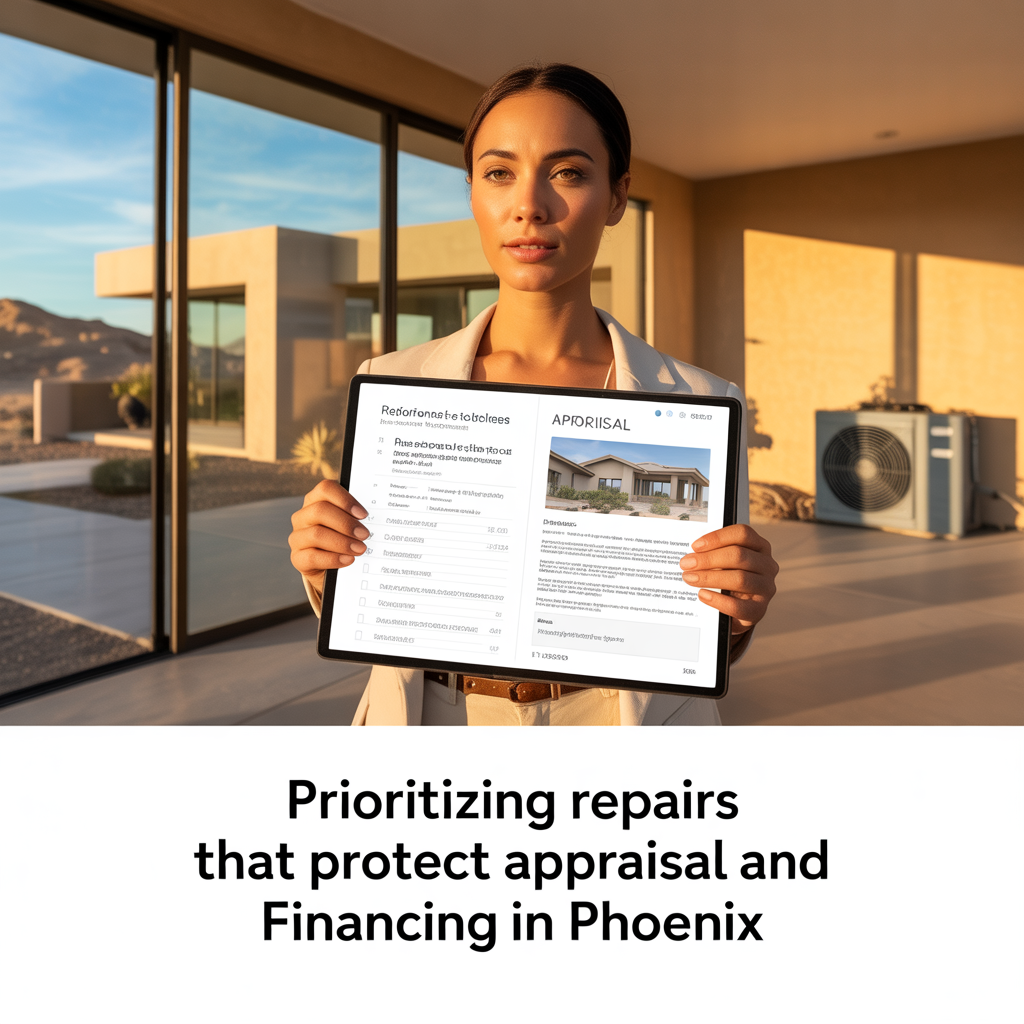
That inspection report is in your hands, and now the real questions start: Which repairs matter most? What could derail your financing or tank the appraisal? In the Phoenix metro area, where our desert climate and lending standards have their own quirks, smart prioritization isn’t just helpful—it’s essential for keeping your deal on track.
I’ve guided families through this exact crossroads countless times, from Gilbert tract homes to custom builds in Fountain Hills. Lenders and appraisers here focus on safety, functionality, and value retention, not cosmetic perfection. Let’s walk through how to focus your energy where it counts, so you protect your position without overextending.
Why Appraisal and Financing Hinge on Repairs
Phoenix appraisers, often working for conventional, FHA, or VA loans, evaluate based on comparable sales in neighborhoods like Chandler or Glendale—but they also scrutinize condition. Unaddressed safety or mechanical issues can lead to a low appraisal, forcing price cuts or extra cash at closing. Lenders require proof that major systems work reliably in our heat-intensive environment.
Inspection findings don’t automatically kill financing, but ignored priorities can. Buyers risk loan denial; sellers face renegotiations. The key is addressing what impacts insurable value and long-term marketability first.
Safety First: Non-Negotiables for Every Loan Type
Start here—appraisers flag these as immediate red flags, and insurers won’t touch them without fixes.
- Electrical hazards. Ungrounded outlets, exposed wiring, or overloaded panels. In older Mesa homes, aluminum wiring needs ARC-fault breakers or updates to pass FHA scrutiny.
- Structural stability. Significant foundation cracks (over 1/4 inch) or water intrusion signs. Our clay soils demand monitoring, but active movement halts financing.
- Handrails and guards. Wobbly pool fences or stair rails—critical in backyard-heavy suburbs like Peoria, where safety codes are strict.
These aren’t optional. A quick licensed electrician or structural check often resolves them affordably, safeguarding your appraisal value.
Mechanical Systems: The Heart of Phoenix Homes
Our 110+ degree summers make HVAC and roof priorities for financing. Appraisers adjust value down for failing systems, and lenders mandate functionality.
- Roof integrity. Leaks, missing tiles, or underlayment wear from monsoons. In East Valley, roofs over 15 years trigger insurance hurdles unless recoated or certified.
- HVAC performance. Aging units (10+ years) with low refrigerant or dirty coils. Buyers, get a tune-up quote; it reassures lenders without full replacement.
- Plumbing essentials. Leaky water heaters or sewer backups. Pre-1995 Gilbert homes often need sewer scopes to confirm cast-iron lines hold up.
Prioritize these for appraisals—comparables assume working systems. A $200 HVAC service can prevent a 10% value hit.
Water and Drainage: Desert-Specific Risks
Monsoon season amplifies poor grading or stucco flashing issues, leading to interior damage that appraisers penalize heavily.
- Grading and drainage. Soil sloping toward the foundation invites lender-required fixes. In Ahwatukee foothills, extend downspouts to avert flood claims.
- Pool and spa equipment. Failing pumps or leaks affect insurability. Scottsdale appraisers note pool condition as a value driver—fix to match comps.
These protect against post-closing insurance denials, common in flood-prone micro-areas.
What Can Wait (Without Risking the Deal)
Not every note needs action. Appraisers overlook normal wear if core systems shine.
| Priority Level | Repair Type | Appraisal/Financing Impact | Phoenix Example |
|---|---|---|---|
| High | Safety/Electrical | High risk of low value or denial | Knob-and-tube wiring in a 1970s Glendale ranch |
| High | Roof/HVAC | Value adjustment, insurance flags | Granule loss on 12-year asphalt in Chandler |
| Medium | Plumbing/Drainage | Potential lender conditions | Minor stucco cracks with no interior moisture |
| Low | Cosmetic | Minimal—focus post-closing | Faded patio pavers in a Mesa backyard |
This table reflects Valley realities: function over finish keeps financing smooth.
Seller Strategies to Bulletproof Your Position
If you’re selling, proactive steps align inspections with appraisals seamlessly.
- Do a pre-listing roof certification or HVAC tune-up—share reports to build buyer confidence.
- Gather permits for additions, especially pools or ADUs in Paradise Valley. Unpermitted work spooks lenders.
- Budget $1,000-3,000 for high-priority fixes; it often nets higher offers than credits.
In balanced markets like ours, prepared sellers close faster with fewer concessions.
Buyer Tactics for Smooth Financing
Buyers, use your contingency wisely—request verification over full repairs.
- Ask sellers for service records on HVAC or recent roof work.
- Line up specialists (pool pros, roofers) for quotes, not demands.
- Time repairs before appraisal; appraisers note unresolved issues.
FHA and VA buyers, note stricter standards—prioritize GFCIs and smoke detectors early.
Timing and Costs in the Phoenix Market
Our short inspection periods (7-10 days) demand quick decisions. Repairs typically run:
- Electrical panel update: $1,500-4,000
- Roof recoat: $2,000-5,000
- HVAC service: $150-400
Appraisal gaps from unaddressed issues average 3-5% here—far costlier. Coordinate with your lender upfront; many allow repair escrows.
Blending Lifestyle and Longevity
Phoenix living rewards foresight. A solid roof means worry-free monsoons for backyard barbecues. Reliable AC supports active family days without utility shocks. These aren’t just fixes—they’re investments in the Valley lifestyle you love: pool parties in summer, cozy evenings year-round.
Thoughtful repairs future-proof your home, boosting resale value when foothill views or community trails drew you here.
Navigating Lender and Appraiser Expectations
Local appraisers know our market—mature neighborhoods like Arcadia tolerate age if maintained. But they mirror comps religiously. If similar Chandler homes have updated HVAC, yours must compete. Share comps with your agent to anticipate adjustments.
Insurers echo this: no coverage without roof or electrical certification in high-risk zones.
When to Get Extra Eyes
For borderline items, bring in specialists—a roofer for tile integrity, a structural engineer for soil concerns. Their reports carry weight with lenders, often resolving flags efficiently.
In my practice, this team approach turns potential roadblocks into seamless closes.
If you’re thinking about making a move in the Phoenix area—or if you’ve just opened that first inspection report and aren’t sure what it all means—you don’t have to figure it out alone. I’m here to help you interpret, plan, and move forward with confidence. Whether you’re in Scottsdale, Chandler, Glendale, or right here in Phoenix, let’s talk through your next step together—calmly, clearly, and with your best interests at heart.
Get the full Phoenix Market Insights → [Market Insights]


-
Cost of Living in Rhode Island: Housing, Taxes, Utilities, and Everyday Expenses
-

What If My Commute Becomes Worse Than Expected?
-

How Aging Home Systems Affect Property Value
-

Energy Efficiency Upgrades for Phoenix Homes
-
How to Plan for Major Home System Replacements
-

When Phoenix Homeowners Should Replace Water Heaters
-
Repair vs Replace Decisions for Phoenix HVAC Systems
-
Creating a Long-Term Home Maintenance Plan
-
How Often Phoenix Homes Should Be Professionally Inspected
-
Early Warning Signs of Major Home System Failures
-

How Preventative Maintenance Protects Phoenix Property Value
-

The Best Annual Home Maintenance Plan for Phoenix Homes
-

Electrical Safety Inspections for Older Phoenix Homes
-

Why Whole-Home Surge Protection Matters in Arizona
-

Preparing a Phoenix Home for Electric Vehicle Charging
-

Signs Your Home’s Electrical System Is Overloaded
-
When Phoenix Homes Need Electrical Panel Upgrades
-

Water Pressure Problems in Phoenix Homes Explained
-

Preventing Irrigation Leaks That Waste Water in Desert Landscapes
-

Signs of Hidden Plumbing Leaks in Phoenix Houses
-

How Long Water Heaters Last in Arizona Homes
-

How Hard Water Affects Plumbing Systems in Phoenix Homes
-

Preventing Water Damage in Phoenix Homes During Storms
-

Roof Maintenance Tips Before Phoenix Monsoon Season
-
How Arizona Sun Damages Roofing Materials Over Time