



Transactional Fears→ [Transactional Fears] & For more info on other fears Phoenix Real Estate → [Phoenix Real Estate Fears Guide]
Written by: Renee Burke
In the Phoenix metro, where our market dances to the rhythm of seasonal heat waves and spring training buzz, you’re deep into escrow on that perfect Chandler single-family — the one with the low-maintenance yard and easy access to the 202. Everything’s humming along until your lender calls: “We need more documentation,” or worse, “Your rate just shifted.” Suddenly, financing feels shaky, right when you thought you were home free.
Late-stage financing hiccups happen more than most buyers or sellers realize, especially in a market like ours where rates hover in the mid-6% range and affordability remains a conversation for many households earning around $93,000 median income. They’re stressful, but they’re rarely fatal. With a steady hand and local know-how, you can navigate them without losing the deal — or your peace of mind.
Let’s unpack what “shaky financing” really means, why it flares up here, and the thoughtful steps to steady the ship.
What “Shaky Financing” Looks Like Late in Escrow
Financing issues late in the game — say, after inspection or appraisal — typically surface during the lender’s final underwriting review, often just days before closing. Your pre-approval felt solid months ago, but now:
- The loan is delayed. Underwriters flag something needing clarification, pushing closing back a week or two.
- Rates shift unexpectedly. A bump from 6.0% to 6.5% changes your monthly payment, making the math feel off.
- Additional conditions arise. Requests for pay stubs, bank statements, or explanations of credit inquiries.
- Worst case: denial. Rare, but it happens if debt-to-income ratios spike or employment changes.
In Phoenix’s February 2026 market, with median home prices around $445,000-$469,000 and inventory at about 3.5-4.8 months’ supply, these moments test everyone’s patience amid stabilizing but cautious buyer activity.
Why It Happens in Our Valley Market
Phoenix’s real estate pulse is tied to broader economic shifts, but local factors amplify late financing wobbles. Rates are easing slightly toward 6.1% by year-end, yet buyers remain sensitive — needing about $116,000 income to comfortably buy versus $69,000 to rent. Here’s what often triggers it:
- Job changes or income verification. Our market draws transplants from California and beyond; a new job offer might require re-verification, even if it’s a raise.
- Credit surprises. Late inquiries from shopping for cars or even doctor bills can ding scores temporarily.
- Rate volatility. With forecasts holding steady in the mid-6s, a Federal Reserve whisper can ripple through, especially for adjustable-rate seekers in suburbs like Gilbert or Mesa.
- Rising costs. HOA fees, insurance hikes (a big Phoenix reality), or title issues add friction, prompting lenders to double-check affordability.
- Underwriting caution. Lenders scrutinize more in softening segments under $1M, where prices are down 2-3% from peaks.
Misconceptions abound: many think pre-approval locks everything in. It doesn’t — it’s a snapshot. Life happens between then and closing.
Immediate Steps When Trouble Brews
Don’t panic. The first call is to your lender for specifics — then loop in your agent. In Phoenix, where days on market average 69 and buyer leverage lingers, time is your ally if handled promptly.
Common resolutions:
- Submit documents swiftly. Fresh pay stubs or letters explaining inquiries often resolve 80% of conditions.
- Shop rate locks or buydowns. Builders in areas like Queen Creek offer incentives like mid-3% to mid-4% rates via buydowns — a lifeline if yours spiked.
- Extension requests. Arizona escrow allows 7-14 day extensions without much penalty; communicate early to avoid earnest money risks.
- Switch lenders. If one drags, a backup can take over seamlessly, especially with local players familiar with Maricopa County nuances.
For Buyers: Protecting Your Dream Home
You’ve eyed that Ahwatukee townhome with mountain views, perfect for weekend hikes at South Mountain. A financing snag feels personal, but it’s procedural. Fears of overpaying or losing out are valid — our market’s median $255/sq ft reflects value, but payments matter more.
Stay grounded:
- Review your debt-to-income; avoid new credit pulls.
- Ask about temporary buydowns to bridge rate jumps.
- Know your outs: if the deal sours, Phoenix’s 3,777+ active listings give options without FOMO.
Most hiccups resolve; only about 5-10% derail fully, per local patterns.
For Sellers: Maintaining Control Gracefully
Sellers in North Central or Scottsdale often face this when buyers’ financing wavers near closing. You worry about relisting in a market with pending sales normalizing but condos lagging due to HOAs and insurance.
Empower yourself:
- Request buyer’s updated pre-approval early.
- Build in contingencies for extensions.
- Have a backup offer ready — our sales volume tops $612M monthly, so strong properties move.
A shaky buyer rarely means a weak home; it’s often their puzzle to solve.
Real-Life Phoenix Resolution
Last month, a Mesa family under contract on a $489,000 home near Superstition Springs hit a snag: the buyer’s credit dip from a medical bill delayed underwriting. We gathered docs overnight, the lender extended rate lock, and closed two days late. The sellers got their timeline with a small credit; everyone won. These stories are our market’s norm — data-driven but human-centered.
Preventing Shaky Financing From the Start
Proactive moves pay off:
- Choose experienced lenders versed in Phoenix’s zoning and HOA quirks.
- Lock rates wisely amid mid-6% stability.
- Agents pre-vet buyers with verification-of-deposit letters.
- Buyers: Freeze credit pre-offer and notify of changes.
In a recovering 2026 market with easing affordability, preparation turns potential chaos into smooth sailing.
You’ve Got This — Together
Financing shakes late in escrow test our resolve, but in Phoenix, where sunshine follows every monsoon, they pass. Our market’s steadying — more inventory, stable prices, cautious optimism — favors those who stay informed and connected.
Breathe. Communicate. Adapt.
If you’re navigating a purchase or sale in the Phoenix area and financing feels unsteady, you don’t have to sort it solo. Reach out — let’s review your details, connect the right resources, and keep your move on track. I’m here as your Valley guide, every step.
Get the full Phoenix Market Insights → [Market Insights]


-

How the Phoenix Desert Climate Shapes Everyday Life Inside the Home
-

How Phoenix Weather Patterns Shape Everyday Home Routines
-

Why Homes Often Feel More Comfortable After the First Year of Ownership
-

How Living in Phoenix Changes the Way Homeowners Use Their Homes
-

What New Phoenix Homeowners Learn During Their First Year of Ownership
-

How Daily Life Changes After the First Year of Living in a Phoenix Home
-
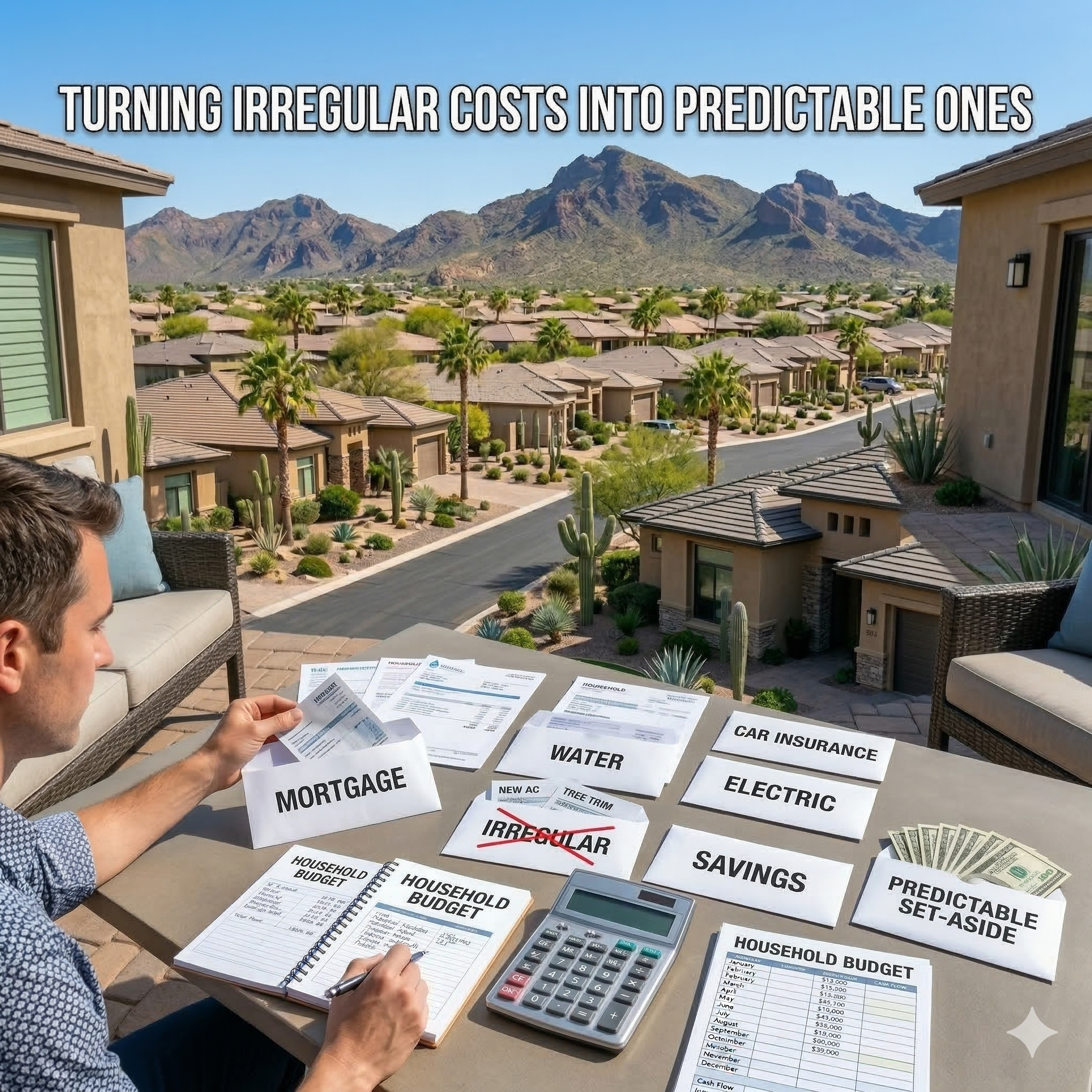
Turning Irregular Costs Into Predictable Ones
-

Budgeting for Ongoing Ownership
-

Repair vs Replace vs Defer Decisions
-

Planning Homeownership Like a Long-Term Asset
-

What Home Expenses You Can Safely Delay
-

Stopping Cost Creep Early
-

Cash Flow vs Net Worth Stress
-

Why “It’s Not That Much” Adds Up
-

Warning Signs Your Ownership Budget Is Tightening
-

The Cumulative Cost of Small Home Repairs
-

Designing Budgets Around Local Conditions
-

Utility Costs Over Time in Desert Climates
-

Insurance Increases Explained for Arizona Homeowners
-

How Inflation Impacts Phoenix Homeownership Costs
-

Avoiding Debt-Driven Homeownership Decisions
-

Replacing Systems on Your Timeline
-

Why Emergency Repairs Cost More
-

Timing Major Expenses Without Financial Shock
-

How Much to Keep in a Phoenix Home Reserve Fund