



Transactional Fears→ [Transactional Fears] & For more info on other fears Phoenix Real Estate → [Phoenix Real Estate Fears Guide]
Written by: Renee Burke
You’ve found that charming mid-century in Arcadia with the citrus trees out back, or you’re selling your Gilbert pool home just steps from the community trails. The contract is signed, escrow is rolling, and then… silence. Or a hesitant text. “I’m not sure anymore.” Cold feet strike — that sudden wave of doubt that can ripple through even the most excited Phoenix home transactions.
It’s more common than you’d think in our Valley market, where life’s big decisions collide with scorching summers, job relocations, and the emotional pull of leaving (or starting) roots here. Buyers second-guess affordability amid our steady median prices around $450,000; sellers romanticize staying put. The reassuring truth? Cold feet don’t have to kill the deal. With gentle guidance and clear options, most situations resolve thoughtfully, keeping everyone moving forward.
Let’s explore why this happens locally, how it feels on both sides, and the calm paths to clarity.
Understanding Cold Feet in Phoenix Deals
Cold feet emerge when emotions outpace logic — typically between offer acceptance and closing. It’s not backing out lightly; it’s human vulnerability surfacing under pressure. In our market, with about 60-70 days on market for single-family homes, there’s time for doubts to brew amid inspections, appraisals, and life’s curveballs.
Buyers might freeze over rising insurance costs in flood-prone Mesa or the reality of HOA fees in master-planned Queen Creek. Sellers could waver if a child’s school transition feels too raw or if memories of backyard barbecues hit hard. Legally, Arizona contracts allow exits via contingencies, but beyond that, earnest money (usually 1-3% here) is at risk — a motivator to communicate openly.
Why It Happens Here in the Valley
Phoenix living is deeply personal — our neighborhoods aren’t just addresses; they’re lifestyles tied to spring training at Sloan Park, hiking Camelback, or Friday nights at Desert Ridge. That intimacy amplifies hesitation:
- Buyer doubts: Affordability jitters in a market where $90,000-$100,000 household incomes stretch for three-bedrooms under $500,000. Or lifestyle mismatches, like realizing a Peoria golf community feels too far from Tempe’s vibe.
- Seller hesitations: Empty-nest sellers in Ahwatukee clinging to mountain views, or investors rethinking amid stabilizing rents versus sales.
- Market timing: February’s mild weather tempts “maybe wait for summer inventory,” but our low 3-4 months’ supply discourages that.
- External triggers: Job offers from California transplants falling through, or family health news shifting priorities.
Misconception: Cold feet means the deal’s dead. Rarely — 85-90% recover with counseling, per local patterns.
First Steps: Pause, Don’t Panic
When doubt hits, the golden rule is communication. No accusations, just listening. As your agent, I’d facilitate a low-pressure call: “Tell me what’s on your mind.” This uncovers fixable fears — like clarifying commute times to Intel in Chandler or walking through updated payment scenarios.
Document everything gently; Arizona’s escrow process favors transparency. Extensions are common (7-30 days), preserving earnest money if mutual.
Options for Buyers with Second Thoughts
Buyers, that Foothills home with the dip pool felt perfect during the showing, but now the inspection revealed minor stucco cracks, and doubt creeps in. Valid feelings — our desert climate ages exteriors faster.
Your toolkit:
- Use contingencies wisely. Inspection periods (often 10 days) allow exits without penalty. Beyond that, negotiate repairs or credits calmly.
- Reassess fit. Walk the neighborhood again — feel the morning walks near Papago Park, test the schools. Data helps: Zillow or ARMLS comps confirm value.
- Pause for perspective. Life changes fast here; a short extension lets you consult family or crunch numbers with your lender.
- Walk if needed. Return earnest money via mutual cancellation; Phoenix’s active listings (thousands Valley-wide) mean opportunities abound.
Most buyers recommit once fears are named — it’s the unknown that freezes feet.
Options for Sellers Feeling the Pull
Sellers, you prepped your North Phoenix four-bedroom for showings, accepted a solid offer, but now the empty house echoes. Especially poignant in family-heavy suburbs like Arrowhead Ranch.
Strategies to steady:
- Reflect on “why now.” List motivations: downsizing for retirement golf in Sun City, or relocating for grandkids. Weigh against staying costs (taxes, maintenance).
- Address buyer concerns first. If their cold feet triggered yours, resolve via updates — fresh comps showing your home’s edge.
- Extension or backup offers. Our market supports contingencies; line up secondary buyers quietly.
- Pause the sale. Rare, but mutual release preserves relationships — I’ve seen sellers relist stronger later.
You’re not trapped; Phoenix sellers hold leverage in desirable ZIPs.
A Local Story That Warms the Heart
I guided a young family buying in Chandler’s Fulton Ranch last spring. Post-inspection, the buyer panicked over pool maintenance in our heat — “What if we hate it?” We toured similar homes, reviewed low HOA-managed options, and connected them with a local pool service. A week later, they closed thrilled. Meanwhile, a seller in Scottsdale wavered over leaving her palo verde tree; we staged a photoshoot of “new memories” in their dream condo. Both deals saved — emotion met with empathy.
These moments build trust, turning transactions into transitions.
Preventing Cold Feet Before They Chill
Preparation warms the path:
- Pre-offer counseling. Buyers: Virtual staging tours. Sellers: “Future self” visioning.
- Strong contracts. Build in cooling-off periods tied to milestones.
- Lifestyle deep dives. Discuss walks to Riggs Road markets or drives to Sky Harbor realities upfront.
- Team support. Experienced agents anticipate; lenders offer scenario planning.
In our sunny market, foresight prevents frost.
Feet Can Warm — And You’re Not Alone
Cold feet remind us: Homes aren’t spreadsheets; they’re chapters in our Phoenix story — sunsets over South Mountain, neighborhood block parties, saguaros framing family photos. Doubts pass when met with patience.
Whether you’re the buyer hesitating or seller holding back, there’s grace in pausing. Deals recover, and better fits emerge.
If you’re in escrow and second thoughts are stirring — or helping someone through theirs — you don’t have to navigate it alone. Reach out in the Phoenix metro; let’s talk it through with no pressure, just clear-eyed guidance tailored to our Valley way. I’m here as your local confidante, ready to steady the steps ahead.
Get the full Phoenix Market Insights → [Market Insights]


-

How the Phoenix Desert Climate Shapes Everyday Life Inside the Home
-

How Phoenix Weather Patterns Shape Everyday Home Routines
-

Why Homes Often Feel More Comfortable After the First Year of Ownership
-

How Living in Phoenix Changes the Way Homeowners Use Their Homes
-
What New Phoenix Homeowners Learn During Their First Year of Ownership
-

How Daily Life Changes After the First Year of Living in a Phoenix Home
-
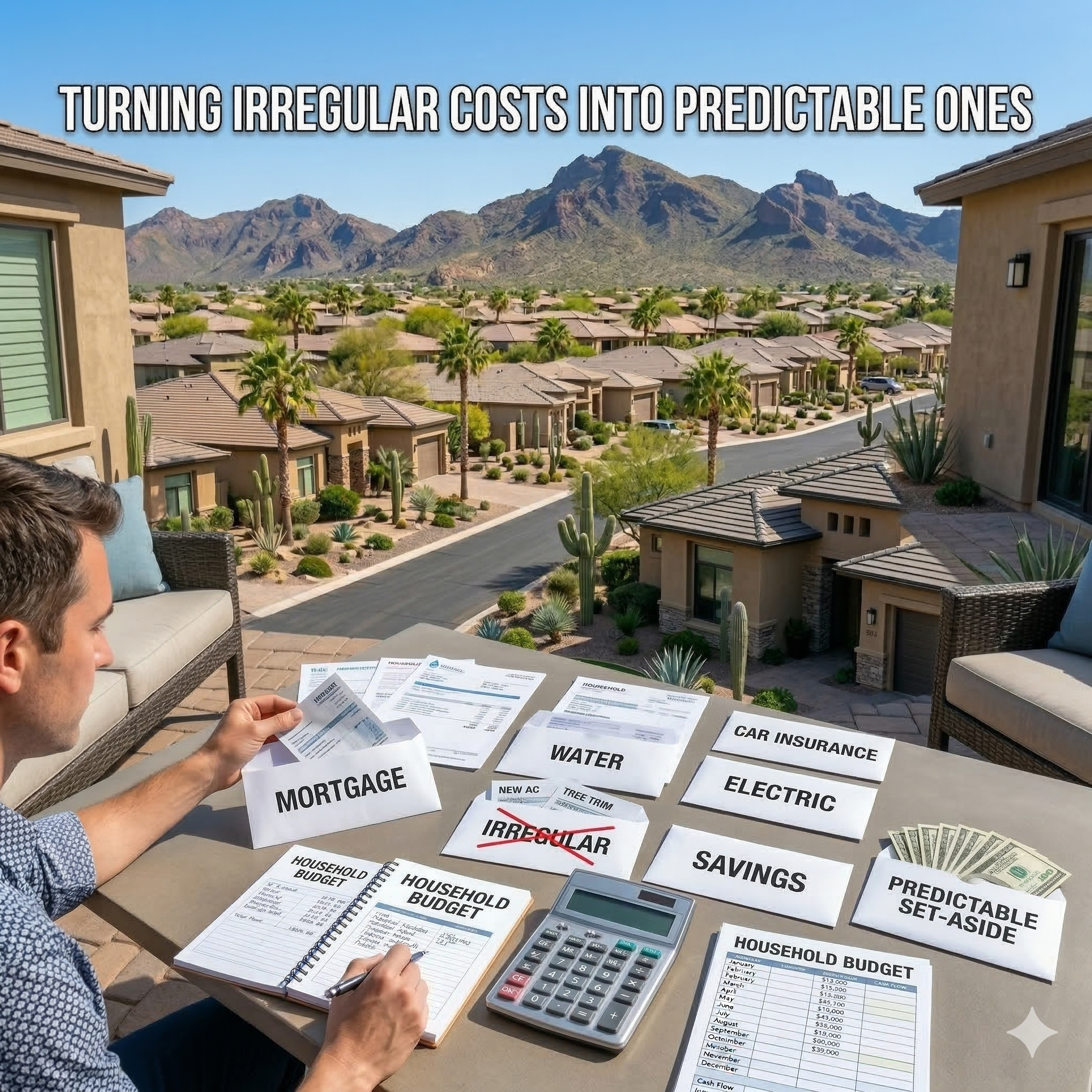
Turning Irregular Costs Into Predictable Ones
-

Budgeting for Ongoing Ownership
-

Repair vs Replace vs Defer Decisions
-

Planning Homeownership Like a Long-Term Asset
-

What Home Expenses You Can Safely Delay
-

Stopping Cost Creep Early
-

Cash Flow vs Net Worth Stress
-

Why “It’s Not That Much” Adds Up
-

Warning Signs Your Ownership Budget Is Tightening
-

The Cumulative Cost of Small Home Repairs
-

Designing Budgets Around Local Conditions
-

Utility Costs Over Time in Desert Climates
-

Insurance Increases Explained for Arizona Homeowners
-

How Inflation Impacts Phoenix Homeownership Costs
-

Avoiding Debt-Driven Homeownership Decisions
-

Replacing Systems on Your Timeline
-

Why Emergency Repairs Cost More
-

Timing Major Expenses Without Financial Shock
-

How Much to Keep in a Phoenix Home Reserve Fund