



Transactional Fears→ [Transactional Fears] & For more info on other fears Phoenix Real Estate → [Phoenix Real Estate Fears Guide]
Written by: Renee Burke
Selling a home in the Phoenix area can stir up a mix of emotions — pride, relief, anticipation, and yes, sometimes anxiety. One of the biggest fears I hear from local sellers is this: What if I accept the wrong offer?
It’s a valid concern. An offer that looks perfect on paper — full price, quick close, strong pre-qualification — can sometimes unravel halfway through escrow, leaving a seller frustrated and back at square one. The good news? There are clear ways to spot potential issues early and move forward confidently, grounded in the local realities of how our Phoenix market truly runs.
The Hidden Stress Beneath a “Great” Offer
In a market as active and layered as the Phoenix metro, “highest offer” doesn’t always mean “best offer.”
We’ve seen it across communities like Gilbert, Ahwatukee, North Peoria, and Chandler: multiple buyers competing, waiving contingencies, stretching budgets to their limits. On the surface, that kind of demand feels like you can’t lose. But within that same competition lies risk — emotional buyers, uncertain financing, or out-of-state purchasers who may not fully understand our local process or property conditions.
What worries many sellers most isn’t just a lower price or a delay in closing — it’s the disruption of momentum. Once your home goes under contract, it’s emotionally off the market. You start picturing the move, calling the movers, maybe eyeing your next home. The wrong offer can freeze that progress.
Signs of a Risky Offer (That Don’t Always Look Risky)
Identifying a weak offer isn’t about paranoia — it’s about pattern recognition. After years of watching how buyers behave across Phoenix’s shifting seasons and micro-markets, I’ve learned that early red flags tend to rhyme, even if they don’t look identical.
Here are some of the most common signs to watch for:
- Aggressive pricing with little cushion. If a buyer offers well above asking in a neighborhood like Arcadia Lite or Desert Ridge, but their pre-approval shows tight ratios, they may be pushing beyond realistic financing limits. When the appraisal comes in lower — as it sometimes does with older properties or unique lots — the deal can wobble.
- Unclear lender communication. Local lenders know how to navigate Maricopa County’s tight timelines and inspection patterns. When a buyer uses an online-only lender or one based out of state, communication gaps can cause escrow delays. Local experience matters — especially during Arizona’s busy spring selling months.
- An inexperienced agent or inconsistent communication. Your agent can often tell early on if the buyer’s representation is engaged, organized, and proactive. If the buyer’s agent seems slow to deliver information or unsteady in negotiation, that can set the tone for how the rest of the process will unfold.
- Unrealistic deadlines. A buyer requesting an extremely quick closing in an already active market can sound tempting — especially if you’d love to move on quickly — but it may signal overconfidence or lack of due diligence.
- Emotional language in the offer. While everyone wants to tell a good story about why they love your home, an offer that relies entirely on emotion (without corresponding financial strength) can hint at a mismatch between desire and readiness.
Phoenix-Specific Realities That Shape Offer Strength
Here’s where understanding our market truly makes a difference. In the Phoenix metro, certain patterns define how offers actually play out — and knowing them helps us read between the lines.
- Appraisal gaps happen more often than most sellers realize. With home values rebounding and stabilizing post-2021 peaks, some buyers still base offers on last year’s inflated comps. If the appraisal doesn’t meet that value, knowing whether the buyer can cover the difference (and proving it up front) becomes crucial.
- Seasonality quietly shifts buyer behavior. Spring is traditionally busy, but our desert climate means summer can thin out qualified buyers fast. A strong spring offer that looks risky might be better than holding out into July and facing fatigue in slower months.
- Investor activity can add complexity. Cash offers from investors — especially those focused on short-term renovation or rental flips — can close quickly but sometimes renegotiate after inspection. Understanding who the buyer is, not just what they offer, matters deeply.
- HOAs and local regulations can create surprise hurdles. In master-planned communities like Verrado or Eastmark, buyers unfamiliar with community costs or restrictions occasionally back out when fees or assessments surface late in the process.
- Phoenix’s inspection patterns are unique. Our older block and stucco homes, irrigation-fed lots, and desert foundation conditions often draw extra scrutiny during inspection. Buyers who aren’t used to this can get cold feet, especially if they’re relocating from wetter climates.
How to Spot Strength — and Stability — in an Offer
When I sit down with sellers to review multiple offers, we start by separating energy from evidence. A strong offer doesn’t just say the buyer is ready — it proves it through preparation, clarity, and flexibility.
Look closely for these stabilizing features:
- Local, reputable lender who communicates directly with your agent.
- Proof of funds that align precisely with the offer and terms.
- A clean contract with proper attention to timelines — not rushed, not vague.
- Reasonable earnest money deposit that shows commitment without posturing.
- A buyer agent who asks the right questions early and responds promptly.
Confidence in a transaction shows up through behavior. When a buyer’s side exudes preparedness and calm — rather than urgency or bravado — it usually signals follow-through ahead.
Emotional Anchors vs. Practical Assurance
It’s worth saying out loud: choosing the right offer isn’t just numbers and clauses. It’s deeply personal. Selling your home, whether it’s a family property in Chandler Heights or a condo in Downtown Phoenix, carries years of memory, effort, and love. You deserve a process that respects that emotional weight and gives you space to move on gracefully.
That’s why I often remind my sellers — your job isn’t to gamble on what feels exciting, but to choose what feels grounded. The “right” offer often carries qualities that feel quiet: consistent follow-up, transparency, realistic enthusiasm. Very few deals fall apart when both sides understand that homebuying is both financial and human.
What Happens When You Choose Wisely
When an offer is vetted carefully, something shifts. Inspections move smoothly. Updates from escrow feel routine, not alarming. Repairs are discussed in good faith rather than in panic. Even if small bumps arise — and they always do — everyone involved moves through them with mutual trust.
Those transactions feel lighter. You start packing earlier because you know this one is going through. Your evenings get calmer. By the time you hand over the keys, it feels less like surrender and more like a natural next step.
That’s what a good offer brings — not just a sale price, but peace of mind.
The Role of Guidance (and Why It Matters More in Phoenix)
Phoenix isn’t just sprawling on a map — it’s sprawling in personality. Each zip code has its own rhythm, its own buyer pool, its own quirks of timing. The right guidance doesn’t just help you pick an offer; it helps you read the subtle patterns that only show up in lived experience here.
Maybe it’s recognizing that a buyer from out of state doesn’t yet grasp irrigation systems. Maybe it’s knowing which local appraisers tend to be conservative in Mesa versus North Glendale. These details sound small, but they often decide whether you close easily or end up relisting months later.
That local nuance is what protects sellers — not just contracts on paper, but insight born from hundreds of transactions across every season, in every corner of the Valley.
A Calm Path Forward
If you’re preparing to sell and feel uneasy about choosing the “right” offer, you’re not alone — and you’re wise to think ahead. Accepting the wrong offer can bring avoidable stress, but understanding what truly signals strength turns uncertainty into clarity.
Here in Phoenix, it’s not about rushing to accept the first exciting number. It’s about steady, informed decision-making that honors your home, your timeline, and your peace of mind.
And that’s something every seller deserves.
If you’re thinking about selling in the Phoenix area — or just want a second opinion before accepting an offer — you don’t have to figure it out alone. I’m always here to help you make sense of what’s real, what’s risky, and what’s genuinely right for your goals. Reach out anytime; we’ll move through it, thoughtfully and confidently, together.
Get the full Phoenix Market Insights → [Market Insights]


-

How the Phoenix Desert Climate Shapes Everyday Life Inside the Home
-

How Phoenix Weather Patterns Shape Everyday Home Routines
-

Why Homes Often Feel More Comfortable After the First Year of Ownership
-

How Living in Phoenix Changes the Way Homeowners Use Their Homes
-
What New Phoenix Homeowners Learn During Their First Year of Ownership
-

How Daily Life Changes After the First Year of Living in a Phoenix Home
-
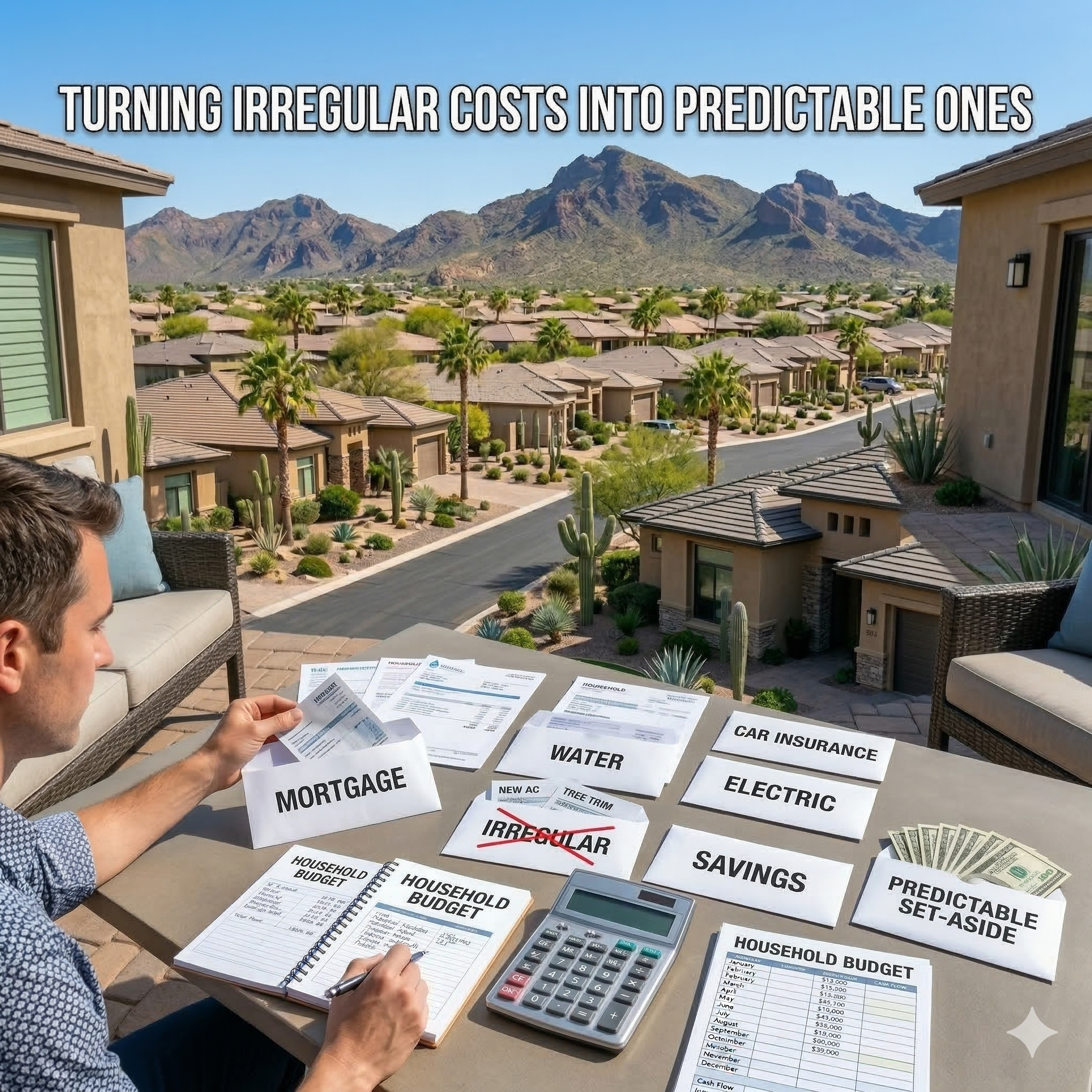
Turning Irregular Costs Into Predictable Ones
-

Budgeting for Ongoing Ownership
-

Repair vs Replace vs Defer Decisions
-

Planning Homeownership Like a Long-Term Asset
-

What Home Expenses You Can Safely Delay
-

Stopping Cost Creep Early
-

Cash Flow vs Net Worth Stress
-

Why “It’s Not That Much” Adds Up
-

Warning Signs Your Ownership Budget Is Tightening
-

The Cumulative Cost of Small Home Repairs
-

Designing Budgets Around Local Conditions
-

Utility Costs Over Time in Desert Climates
-

Insurance Increases Explained for Arizona Homeowners
-

How Inflation Impacts Phoenix Homeownership Costs
-

Avoiding Debt-Driven Homeownership Decisions
-

Replacing Systems on Your Timeline
-

Why Emergency Repairs Cost More
-

Timing Major Expenses Without Financial Shock
-

How Much to Keep in a Phoenix Home Reserve Fund