



Transactional Fears→ [Transactional Fears] & For more info on other fears Phoenix Real Estate → [Phoenix Real Estate Fears Guide]
Written by: Renee Burke
Every Phoenix real estate deal has its own rhythm, like the steady pulse of traffic along the Loop 101 at dusk. Sometimes you need to lean in—push forward with conviction to seize momentum. Other times, easing off the gas, slowing down thoughtfully, breathes life back into a stalling transaction. Knowing which moment calls for what can mean the difference between a signed close and a faded opportunity.
After years of walking families through Valley escrows—from Fountain Hills patio homes to Chandler family estates—I’ve learned this isn’t guesswork. It’s reading the market’s cues, the other side’s signals, and your own timeline with quiet clarity. Let’s break it down so you can sense when to accelerate and when to coast.
Phoenix Pace: Why Timing Shapes Every Deal
Our metro market doesn’t run on a single speed. Spring brings frenzied showings in Gilbert schools zones; summer heat slows West Valley open houses to mornings only; fall relocations quicken North Scottsdale’s pulse. Within each deal, that variability plays out daily—multiple offers demand swift counters, while lingering listings invite patience.
Pushing too hard in a cooled moment feels desperate; slowing prematurely in hot competition cedes ground. The art is matching your energy to the moment, preserving trust while steering toward close. Sellers hold firm on price but flex on dates; buyers push for repairs post-inspection but slow on ultimatums. Balance keeps deals alive.
When to Push: Seize the Momentum Moments
Push when the deal has tailwinds—clear signals of alignment and urgency. Act decisively to lock in progress.
- Fresh multiple offers: In peak spring on a turnkey Ahwatukee bungalow, sellers see three bids by day two. Push your strongest terms immediately—clean contingencies, quick close. Hesitation lets competitors pass you.
- Post-inspection leverage: BINSR reveals a dated AC unit straining under Phoenix summers. Buyers, push promptly with a scoped quote and reasonable credit ask. Sellers, counter fast if the buyer’s financing shines—speed shows seriousness.
- Market heat spikes: Days-on-market under 10 in Queen Creek or Peoria signal demand. Push concessions or escalations before the next open house pulls focus.
Pushing here builds velocity. It’s confident, not aggressive—framed as “Let’s capture this energy and move forward.”
When to Slow Down: Create Space for Alignment
Ease off when friction builds or information gaps loom. Slowing isn’t retreat; it’s recalibration.
- Emotional flare-ups: After a low appraisal rattles a Mesa deal, defensiveness rises. Slow with a 24-hour buffer: “Let’s review comps together tomorrow.” Time cools tempers, reveals options like gap coverage or price adjustments.
- Information voids: Seller motivation unclear on a 45-day listing in Surprise? Slow to gather intel—ask about timelines, repairs, or relocation needs. Rushing blindsides; patience uncovers willingness to flex on closing costs or possession.
- Seasonal lulls: Mid-July heat quiets showings Valley-wide. Slow negotiations on non-essentials like minor paint touch-ups. Buyers gain concessions; sellers avoid lowball pressure by waiting for fall relocators.
Slowing preserves rapport. Phrases like “No rush—let’s make sure this fits perfectly” signal thoughtfulness, inviting the other side closer.
Reading the Cues: Your Decision Framework
No rigid rules, but these Valley-tested signals guide the choice:
| Situation | Push Signals | Slow Signals | Best Move |
|---|---|---|---|
| New Offer | Multiple interests, hot neighborhood (e.g., North Phoenix trails) | Single lingering listing, summer slowdown | Push if competing; slow to probe motivation |
| Inspection Response | Clear priorities, strong buyer pre-approval | Emotional tone, vague repair asks | Push facts fast; slow if heated |
| Appraisal Issue | Gap under 2%, reserves available | Values far off, lender uncertainty | Slow for comps and options |
| Closing Crunch | All docs clear, funds verified | Title snag or wire delay | Push coordination; slow only for fixes |
| Market Shift | Spring frenzy, low inventory | Post-holiday dip, rising rates | Push in heat; slow in balance |
This table mirrors how I map deals—situational, not scripted. Adjust for your side: sellers push certainty, buyers push value.
Step 1: Check Your Timeline First
Your clock sets the tempo. Seller closing for a Queen Creek build? Push buyer responsiveness. Buyer vacating a lease end of month? Slow won’t kill you—push only on must-haves. Align energy with necessity, not frustration.
Step 2: Gauge Their Energy
Listen for tells. Quick replies signal readiness—push. Silence or curtness? Slow down, reopen warmly. In Phoenix’s neighborly market, where Arcadia sellers know the buyers down the street, mismatched pace erodes goodwill fast.
Step 3: Use Pace as Leverage
Strategic slowing builds tension productively: “We love it—sleeping on the numbers to ensure alignment.” It prompts better offers without demands. Pushing clarifies: “To keep momentum, here’s our path by EOD.”
In East Valley HOA-heavy deals, slowing for resale packets prevents rushed errors; pushing post-clearance seals commitment.
Step 4: Pivot Gracefully
Shifts happen—appraisal drops, repair quotes climb. Acknowledge: “Circumstances changed; let’s adjust pace together.” Phoenix flexibility shines here—rent-backs for snowbirds, extended escrows for relocators. Graceful pivots turn obstacles into bonds.
The Valley Reward: Deals That Last
Mastering push versus slow feels instinctive after a few cycles, but it starts with awareness. You’ll close more smoothly, spend less energy, and build references who send their friends your way.
In a market of saguaro strength and monsoon adaptability, timing isn’t tactics—it’s harmony. Deals thrive when paced right.
If Timing Feels Uncertain in Your Deal
You don’t navigate this rhythm alone. I read Phoenix’s beats daily—spring surges, summer ebbs, fall flows—and help you match them perfectly. Whether pushing an offer or slowing for strategy, let’s keep your deal alive and thriving.
Reach out; we’ll find the right pace together.
If you’re thinking about making a move in Phoenix, you don’t have to figure it out alone.
Get the full Phoenix Market Insights → [Market Insights]


-

How the Phoenix Desert Climate Shapes Everyday Life Inside the Home
-

How Phoenix Weather Patterns Shape Everyday Home Routines
-

Why Homes Often Feel More Comfortable After the First Year of Ownership
-

How Living in Phoenix Changes the Way Homeowners Use Their Homes
-

What New Phoenix Homeowners Learn During Their First Year of Ownership
-

How Daily Life Changes After the First Year of Living in a Phoenix Home
-
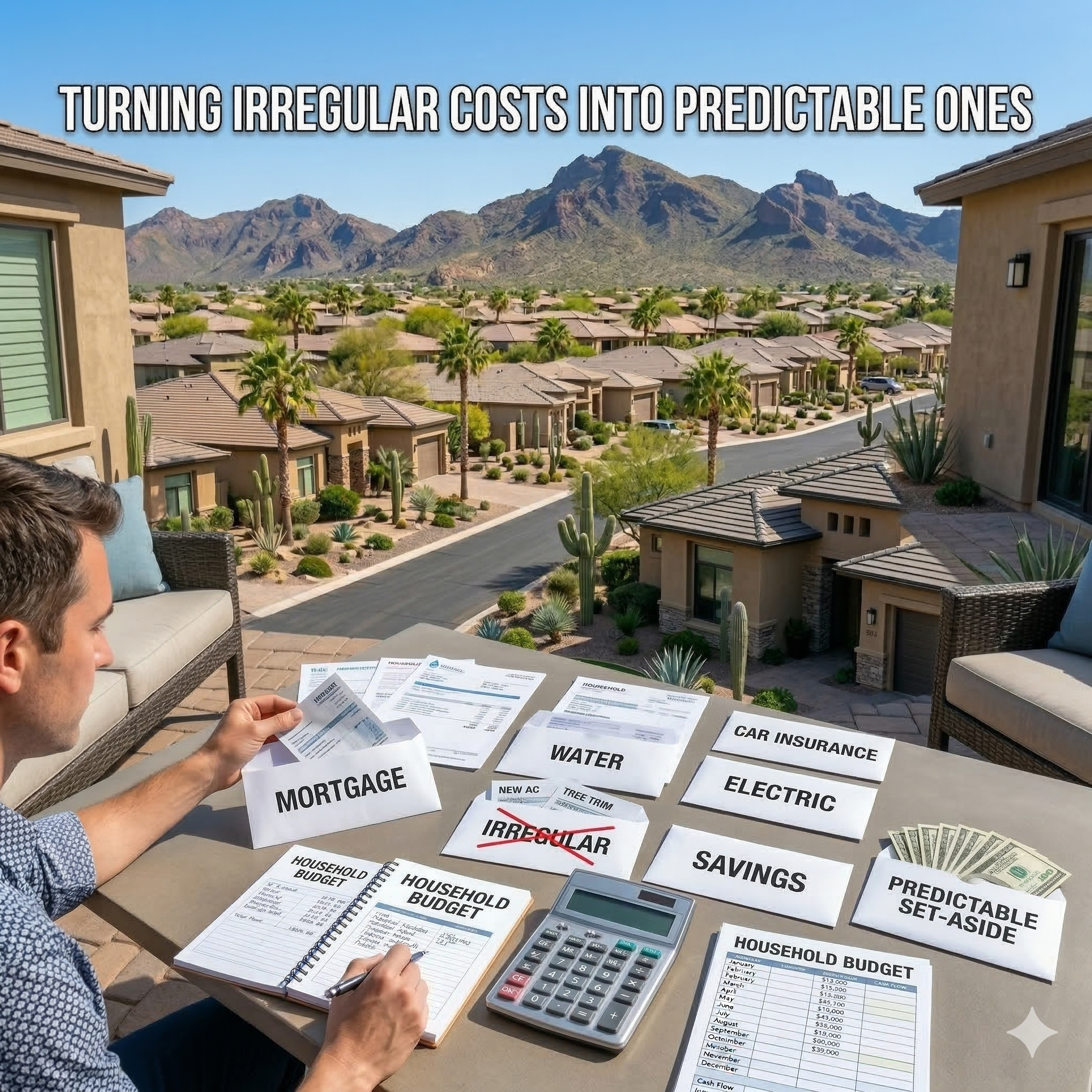
Turning Irregular Costs Into Predictable Ones
-

Budgeting for Ongoing Ownership
-

Repair vs Replace vs Defer Decisions
-

Planning Homeownership Like a Long-Term Asset
-

What Home Expenses You Can Safely Delay
-

Stopping Cost Creep Early
-

Cash Flow vs Net Worth Stress
-

Why “It’s Not That Much” Adds Up
-

Warning Signs Your Ownership Budget Is Tightening
-

The Cumulative Cost of Small Home Repairs
-

Designing Budgets Around Local Conditions
-

Utility Costs Over Time in Desert Climates
-

Insurance Increases Explained for Arizona Homeowners
-

How Inflation Impacts Phoenix Homeownership Costs
-

Avoiding Debt-Driven Homeownership Decisions
-

Replacing Systems on Your Timeline
-

Why Emergency Repairs Cost More
-

Timing Major Expenses Without Financial Shock
-

How Much to Keep in a Phoenix Home Reserve Fund