


This guide is part of our Phoenix Luxury Guide → [Phoenix Luxury Guide] & for information on selling visit Phoenix Home Buying Process→ [Phoenix Home Buying Process]
Written by: Renee Burke
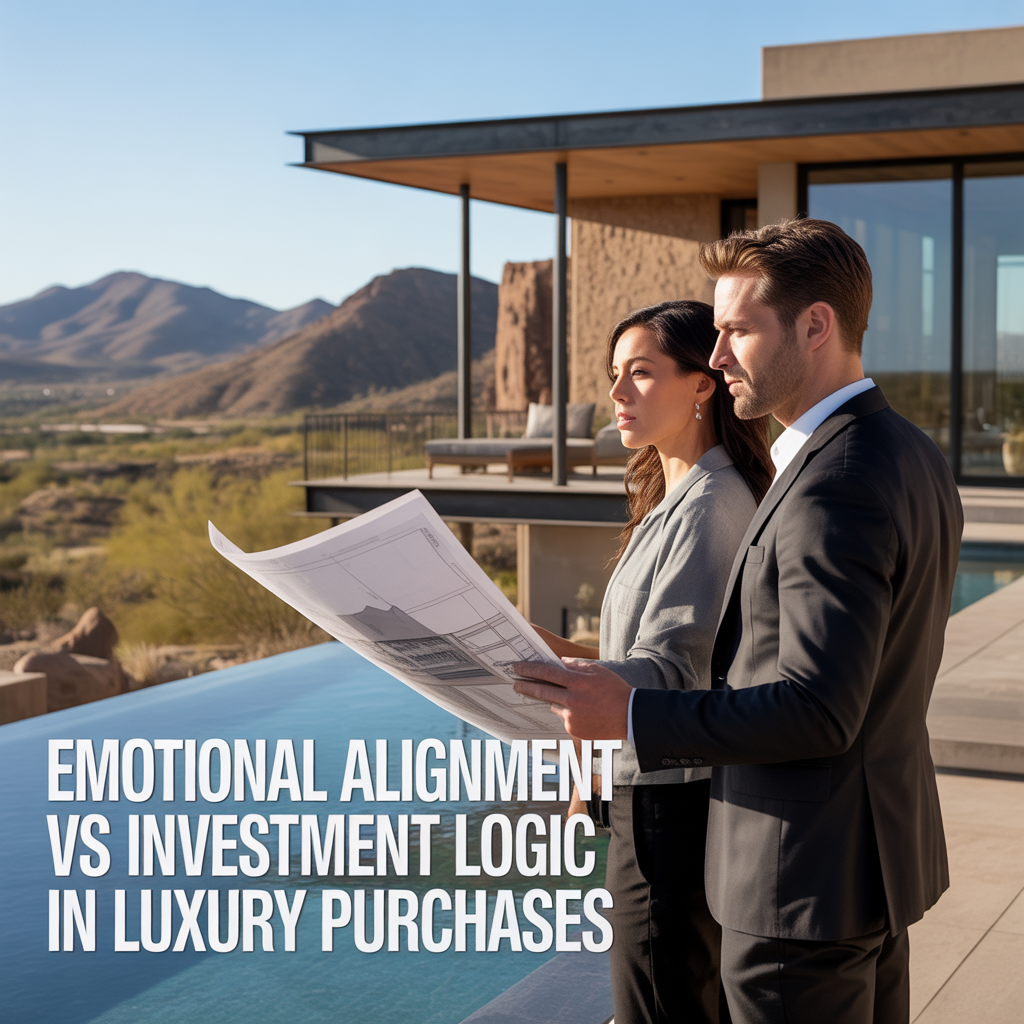
In the world of luxury real estate, every decision feels personal. Whether you’re drawn to a mountainside home in Paradise Valley or a sleek, glass-wrapped retreat in Downtown Scottsdale, the choice isn’t just about walls and square footage—it’s about identity, rhythm, and belonging.
Over the years, I’ve learned that high-end buyers in Phoenix don’t simply purchase property. They pursue alignment—between how they live, what they value, and where they feel most fully themselves. But that pursuit often intersects with another, quieter voice: the numbers. Appreciation potential, resale value, neighborhood velocity. These aren’t cold considerations; they’re safeguards of intention.
Balancing the emotional and logical sides of a luxury purchase is one of the most uniquely human parts of real estate. And in Phoenix, where lifestyle and investment potential often intertwine, finding that balance is absolutely essential.
The Emotional Gravity of “Home”
Luxury buyers are often told to “think logically,” but if we’re being honest, emotion is why most people fall in love with a property in the first place. That moment when you walk through the front door, inhale, and feel a quiet yes—that’s not something a spreadsheet can quantify.
In neighborhoods like Arcadia or the Biltmore, emotion tends to lead with the senses: sunlight spilling across a kitchen island in the morning, the scent of blooming citrus in March, the way Camelback Mountain changes color with the evening light. Phoenix invites you to feel something before you think it through.
That feeling is critical. It tells you when a home fits how you move through your day. Does it invite connection? Does it calm your mind? Do the finishes and layout reflect the way you like to entertain, retreat, and recharge?
But emotional alignment alone isn’t enough. Even the most moving space can become a heavy burden if it doesn’t also work as a sound investment. That’s where logic—and a grounded local perspective—becomes your ally.
The Case for Investment Logic
Phoenix’s luxury market has matured dramatically over the past decade. As our metro has expanded, so have the distinctions between enclaves—Arcadia’s timeless charm, North Central’s architectural pedigree, Paradise Valley’s exclusivity, and North Scottsdale’s resort-style vibrance. Each carries its own rhythm of appreciation and liquidity.
For investors and lifestyle buyers alike, understanding how those rhythms move is crucial. Here are a few guiding threads I remind my clients to consider:
- Location Fluidity: Luxury enclaves once considered “fringe” now command prime attention. Think Upper Arcadia or the communities northeast of Kierland—areas where demand, infrastructure, and lifestyle value now converge.
- Design Longevity: Architectural character—modern desert minimalism, mid-century lines, or Mediterranean estates—impacts resale. A timeless aesthetic tends to hold its value through market cycles, while overly niche designs can narrow future buyer pools.
- Lot Integrity: Views, privacy, and topography still dictate long-term ceiling value. A home that’s emotionally intoxicating but structurally or geographically compromised may never appreciate as strongly, no matter how exquisite its interiors.
- Maintenance Logic: Even luxury homes require pragmatic forward thinking. Pools, landscaping, solar, and energy systems can enhance both lifestyle and marketability if properly chosen and maintained.
Balancing emotion and caution doesn’t mean resisting the heart—it just means giving your heart a stable foundation to stand on.
How Phoenix Amplifies Both Sides
One of the curious things about Phoenix luxury real estate is how seamlessly our market invites both emotional and logical engagement. Here, you don’t have to choose between the two worlds—you simply have to understand how to let them converse.
For instance, if your heart is drawn to quiet seclusion, the foothills of Paradise Valley may speak directly to your soul. But the logic behind that decision—the scarcity of buildable land, the enduring appeal of mountain views, and the timelessness of that address—supports the emotion. Similarly, if your energy thrives on downtown vibrancy, a condo overlooking Roosevelt Row might align not only with your lifestyle but also with strong long-term rental and resale potential as the area continues to mature.
Phoenix rewards buyers who understand that aesthetic pleasure and investment wisdom aren’t opposites—they’re reflections of the same clarity.
When the Heart Leads Too Strongly
It’s natural, especially in luxury transactions, for emotion to take the lead. A home that speaks to your personal story can feel irreplaceable. But one of my roles as a trusted advisor is to make sure that emotional connection coexists with realistic underpinnings.
Sometimes that means gently slowing down the process to gather comparable data or to deeply examine a property’s long-term position in its micro-market. For instance, Arcadia’s irrigation system and older infrastructure demand attention beyond charm. A Paradise Valley hillside estate can deliver breathtaking views but also require nuanced understanding of excavation, drainage, and maintenance costs. These aren’t deterrents—they’re truths that deserve daylight before commitment.
When you balance emotion with clarity, you honor both your dream and your peace of mind.
When Logic Blocks the Joy
On the other hand, I often meet clients who’ve spent years ready to buy but can’t quite give themselves permission to feel it. They’ve done the research, understand the data, even toured countless properties—but they’re waiting for absolute certainty before moving forward.
In luxury real estate, there is rarely perfect certainty. There is, however, aligned confidence—when a purchase feels both emotionally resonant and grounded in solid fundamentals.
I sometimes tell these clients: owning in Phoenix isn’t just about appreciating an asset; it’s about participating in the life you’ve worked so hard to create. If you’ve built success elsewhere, this city has a way of rewarding the decision to finally root that success in sunshine, open space, and evenings that smell like creosote and citrus.
You can trust logic to inform your decision, but at some point, the heart has to step forward and say “this feels like home.”
The Intersection of Emotion and Evidence
The most meaningful purchases I’ve guided have always landed in that intersection—where practical metrics meet personal truth. Here’s how to cultivate that space:
- Define what “home” means right now. Is it tranquility, connection, proximity, or expression? Understanding your season of life helps us align your emotional goals with the right neighborhoods.
- Study the micro-markets. Phoenix isn’t a single market—it’s dozens of intertwined ecosystems. Knowing how those micro-trends behave helps ensure you’re buying from strength, not impulse.
- View your home as both sanctuary and strategy. You can love where you live and still expect it to perform as an investment. In fact, those two goals often enhance one another when approached mindfully.
When clients make decisions from that balanced place, the satisfaction lasts well beyond closing day.
The Phoenix Advantage: Lifestyle as Equity
Few metros in the country offer Phoenix’s blend of natural beauty, architectural variety, and economic vitality. Our valley continues to attract executives, entrepreneurs, and remote professionals who understand that quality of life is a form of return on investment.
From the golf communities of Desert Ridge to the gallery-lined streets of Old Town Scottsdale, our luxury enclaves represent more than property—they represent daily wellness, community, and identity.
When those choices align emotionally, they create lasting fulfillment. When they also align strategically, they build generational value. That’s the real magic of buying luxury real estate here: you don’t have to sacrifice one for the other.
A Steady Hand for a Meaningful Decision
If you’re standing at that crossroads—between falling in love with a Phoenix property and making sure the numbers make sense—know that both instincts deserve equal respect. Emotion tells you what feels true; logic confirms that it’s sustainable.
The home you choose should reflect your life, your story, and your confidence in the future of this valley we call home.
And you shouldn’t have to navigate that balance alone.
If you’re thinking about making a move in Phoenix, you don’t have to figure it out alone. I’m here to help you weigh the heart and the numbers—with care, clarity, and honest perspective—so the home you choose feels right in every sense of the word.
Get the full Phoenix Market Insights → [Market Insights]


-

Pool Liability and Insurance in Phoenix
-

Protecting Outdoor Structures and Shade Systems
-

HVAC Failures and Insurance Coverage
-
Roof Maintenance for Phoenix Climate Conditions
-

Preventing Water Damage in Desert Landscapes
-

How Monsoon Storms Affect Phoenix Homes
-

Why Policy Structure Matters More Than Premium
-

Understanding Coverage Limits and Exclusions
-

What Personal Property Coverage Actually Includes
-

How Liability Coverage Protects Homeowners
-
Replacement Cost vs Market Value in Phoenix Insurance
-

Understanding Deductibles Before You Need Them
-

How Renovations Affect Insurance Coverage
-

When to Review Your Home Insurance Policy
-

Why Replacement Cost Matters in Phoenix Insurance Policies
-

When a House Truly Starts to Feel Like Home
-
How Phoenix Neighborhood Living Builds a Sense of Belonging
-

Why Stability Plays a Major Role in Long-Term Home Satisfaction
-

How Familiarity Changes the Experience of Living in a Home
-
Renovate or Move? Deciding What to Do When Your Phoenix Home No Longer Fits
-
How Lifestyle Changes Affect Space Needs in Phoenix Homes
-
Why Some Phoenix Homes Begin to Feel Too Large After Children Move Out
-
When Homeowners Begin Considering Moving to a Larger Phoenix Home
-

Signs Your Phoenix Home Is Starting to Feel Too Small for Your Family
-

How Desert Landscaping Evolves Over Years of Phoenix Homeownership