


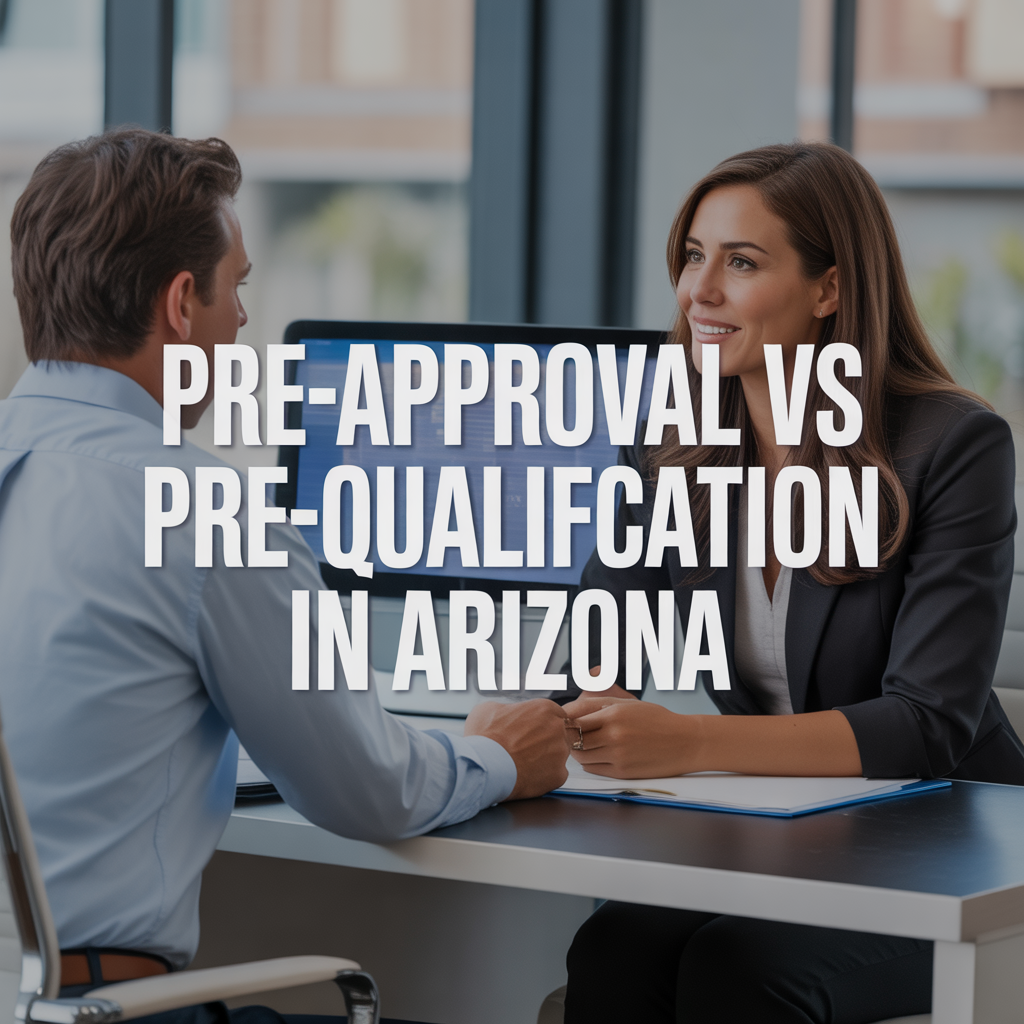
This guide is part of our Phoenix Home Buying Process→ [Phoenix Home Buying Process] & for information on selling visit Phoenix Home Selling Process→ [Phoenix Home Selling Process]
Written by: Renee Burke
If you’ve ever thought about buying a home here in the Valley — maybe while walking past a new listing in Arcadia or eyeing that perfect backyard in Chandler — you’ve probably come across two terms that sound almost identical: pre-approval and pre-qualification.
They’re often used interchangeably, and I completely understand why that’s confusing. But in Arizona’s fast-moving market, the difference between the two can mean the difference between having your offer accepted… or watching your dream home go to another buyer.
Let’s take a gentle but detailed look at how these two steps in financing actually work — and why understanding them early on can save you time, money, and a lot of unnecessary heartache.
The Simple Difference — And Why It Matters in Phoenix
At first glance, pre-qualification and pre-approval might just sound like two versions of the same thing. They both deal with a lender reviewing your finances and giving you a sense of what you can afford.
But in the Phoenix market — where well-priced homes can draw multiple offers within days — the distinction carries real weight.
- Pre-qualification is an estimate. It’s usually based on information you share with your lender verbally or online — things like your income, debts, and assets. It’s quick, informal, and gives you a rough ballpark of affordability.
- Pre-approval, on the other hand, is a verified financial review. The lender checks your credit, reviews documentation, and essentially says, “We’ve seen the numbers, and you’re qualified to borrow this amount.”
That extra layer of verification makes a real difference. Sellers and listing agents here in Phoenix recognize it as a serious sign of commitment. A buyer with a pre-approval letter in hand instantly stands out as organized, prepared, and ready to close.
What Pre-Qualification Really Means — A Soft First Step
If you’re just beginning to explore your options, pre-qualification is a perfectly fine starting place. It’s like dipping your toes into the Salt River before diving in.
You share a few details about your financial situation — often through an online form or a short conversation — and within a day or two, your lender can tell you roughly how much home you might be able to buy.
The important word here is might. Nothing has been verified yet. The lender hasn’t seen pay stubs, W-2s, or tax returns, and they haven’t pulled credit.
So if a buyer finds a listing in Gilbert or North Peoria and wants to make an offer with only a pre-qualification letter, they’ll likely be perceived as “early-stage” or “still exploring.” That can make sellers a bit hesitant, especially if they have several offers on the table — and in neighborhoods like Eastmark or Verrado, that’s often exactly the case.
Pre-qualification is a great way to start conversations. It just isn’t enough to compete strongly in today’s Arizona market.
What Pre-Approval Means — A True Green Light
A full pre-approval is where things start to feel real. Once you’re pre-approved, your lender has verified your credit, employment, and income — and that approval statement carries real authority.
Most reputable lenders in Phoenix will issue a Loan Status Update (LSU) form with the pre-approval, a document required under Arizona purchase contracts. It tells sellers that financing checks are complete and that you’re legitimately ready to buy.
That document has weight behind it — literally, it’s part of what sellers look for when deciding between offers.
Pre-approval often gives you stronger negotiating power, too. If two offers come in close together, one from a pre-qualified buyer and one from a pre-approved buyer, the latter almost always wins out. Sellers (and their agents) want to minimize risk, and an authentic pre-approval means fewer surprises between contract and closing.
In such a fast-paced environment, being ready matters as much as wanting.
Timing and Market Reality — Phoenix Moves Fast
Phoenix isn’t the same market it was 10 or even five years ago. While inventory has improved in 2026, competition remains steady across much of the East Valley and Northwest Corridor.
When a sharp, well-priced home hits the market in Ahwatukee, Desert Ridge, or Queen Creek, buyers with verified pre-approvals often get first consideration. Why? Because sellers know they don’t have to wait weeks for the buyer’s lender to review finances.
Even if you’re not planning to buy immediately, completing your pre-approval gives you a clear understanding of your financial comfort zone — helping you set realistic expectations about price range, neighborhood, and monthly payment.
That confidence lets you move faster when the right home appears, and flexibility is everything in a market where desirable homes can go under contract in just a few days.
Lifestyle Meets Reality — Knowing What You Can Truly Afford
I often say that in Phoenix, “affordability” looks different than it does on paper.
A $600,000 home in central Tempe with a small yard might fit comfortably in your budget, but that same price in Gilbert or Goodyear might mean a pool, newer construction, and lower property taxes. The point is — your approval amount and your lifestyle comfort need to align.
When you go through pre-approval, your lender helps you map out those numbers: not only your maximum purchase price, but also what your monthly expenses might look like when you include Arizona homeowners insurance, HOA dues, and utilities during our summer months.
Those real-world details matter more than just chasing the biggest number on paper.
Buyers who take the time to understand their true purchasing power early on — before shopping or scheduling showings — tend to feel calmer and more confident throughout the process. They’re rarely blindsided by rising interest rates or unexpected costs because they’ve already run the numbers carefully.
Clearing Up Common Misconceptions
Many first-time or even repeat buyers in our area assume pre-approval locks them into a specific lender or program. Thankfully, that’s not the case. You can compare lenders, explore rates, or even adjust your approval amount later as needed.
Others worry that pre-approval is “too serious” if they’re still browsing neighborhoods. In truth, it simply means you’re ready if the right home appears. Think of it as carrying your sunscreen before planning a day outdoors — you might not need it yet, but you’ll be grateful to have it when the time comes.
And because our state requires lenders to issue a specific Arizona pre-qualification form (different from what other states use), having an experienced local agent review it with you can help ensure nothing is missed before that first offer goes out.
The Emotional Advantage — Calm, Clear, and Confident
Buying a home is emotional. No matter how many charts or calculators we use, there’s always that moment when you imagine yourself settling in — your furniture in the space, your family around the table, the desert sunset out your back patio.
Pre-approval brings calm to that moment. Knowing you’ve already been vetted financially lets you focus on what really matters: finding a home that feels right.
Instead of worrying whether your lender can make it happen, you can spend your energy comparing neighborhoods, school zones, commute routes, and backyard views. That clarity changes the entire experience — turning uncertainty into genuine excitement.
A Quick Recap — When Each Step Makes Sense
- Use pre-qualification early, when you’re just exploring possibilities. It’s helpful for starting conversations and clarifying general budgets.
- Secure pre-approval before showing homes seriously or making an offer. It strengthens your position, aligns expectations, and speeds up the closing process.
- Keep your approval current. In Arizona, a lender’s verification typically expires after 60–90 days, so refresh your documentation if your search takes longer.
Having both pieces in order ensures your next step — from browsing to buying — unfolds smoothly.
A Realtor’s Quiet Advice
Here’s what I tell my Phoenix clients all the time:
The best offers aren’t just written — they’re prepared.
When a seller reviews multiple offers on the same evening, the buyer who’s already verified with a trusted lender simply feels more concrete. Their offer reads as someone ready, responsible, and intentional — not just hopeful.
It’s that subtle but powerful level of readiness that can win you the keys to your next home.
A Final Word — You Don’t Have to Navigate Alone
If you’re thinking about buying or selling in the Phoenix area, whether that’s next month or next year, this is the perfect moment to begin the conversation. Understanding pre-approval versus pre-qualification isn’t about paperwork — it’s about building confidence and clarity.
Every buyer deserves to feel supported, not rushed. And every decision you make should be grounded in what fits your life here — your neighborhood rhythms, your daily commute, your favorite local coffee stop.
If you’re thinking about making a move in Phoenix, you don’t have to figure it out alone. Reach out anytime — I’m here to guide you through every detail, calmly, confidently, and completely focused on your goals.
Get the full Phoenix Market Insights → [Market Insights]


-
Cost of Living in Rhode Island: Housing, Taxes, Utilities, and Everyday Expenses
-

What If My Commute Becomes Worse Than Expected?
-

How Aging Home Systems Affect Property Value
-

Energy Efficiency Upgrades for Phoenix Homes
-
How to Plan for Major Home System Replacements
-

When Phoenix Homeowners Should Replace Water Heaters
-

Repair vs Replace Decisions for Phoenix HVAC Systems
-
Creating a Long-Term Home Maintenance Plan
-

How Often Phoenix Homes Should Be Professionally Inspected
-
Early Warning Signs of Major Home System Failures
-

How Preventative Maintenance Protects Phoenix Property Value
-

The Best Annual Home Maintenance Plan for Phoenix Homes
-

Electrical Safety Inspections for Older Phoenix Homes
-

Why Whole-Home Surge Protection Matters in Arizona
-

Preparing a Phoenix Home for Electric Vehicle Charging
-

Signs Your Home’s Electrical System Is Overloaded
-
When Phoenix Homes Need Electrical Panel Upgrades
-

Water Pressure Problems in Phoenix Homes Explained
-

Preventing Irrigation Leaks That Waste Water in Desert Landscapes
-

Signs of Hidden Plumbing Leaks in Phoenix Houses
-

How Long Water Heaters Last in Arizona Homes
-

How Hard Water Affects Plumbing Systems in Phoenix Homes
-

Preventing Water Damage in Phoenix Homes During Storms
-

Roof Maintenance Tips Before Phoenix Monsoon Season
-

How Arizona Sun Damages Roofing Materials Over Time