


This guide is part of our Phoenix Investors Guide → [Phoenix Investors Guide]
Written by: Renee Burke
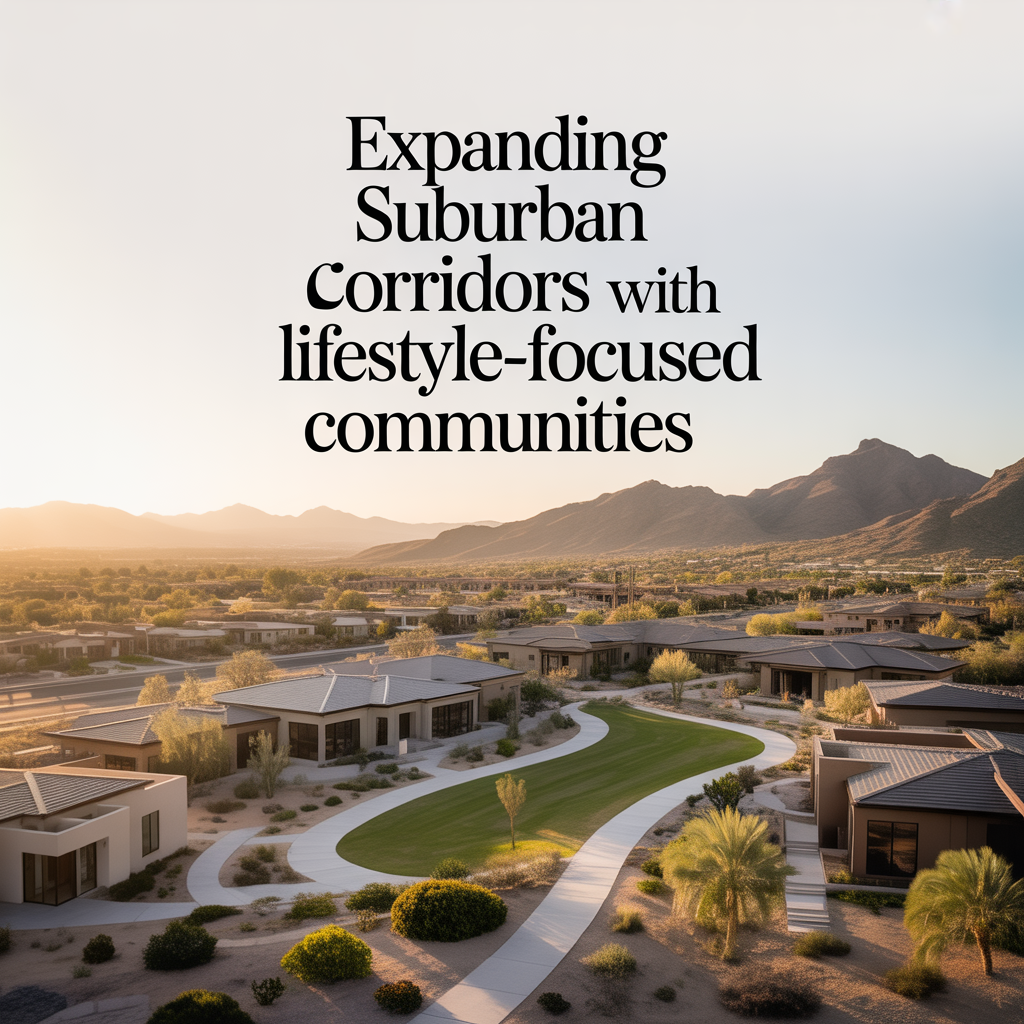
If you’ve lived in the Phoenix metro area for any length of time, you’ve probably noticed something changing — not just the skyline or the construction cranes, but the way entire neighborhoods are being built. Our outer suburbs aren’t simply expanding with more rooftops and retail; they’re evolving into lifestyle-driven communities that feel more intentional, more balanced, and more human.
These aren’t just bedroom suburbs anymore — they’re places designed for connection, convenience, and long-term quality of life. And if you’re wondering whether this shift might fit your next move, it’s worth taking a closer look at why these suburban corridors have become some of the Valley’s most exciting (and smartest) places to plant roots.
The New Shape of Phoenix Growth
Growth in Phoenix has never been a mystery — the sun, space, and affordability have always pulled people here. But the pattern of that growth is what’s shifting.
In the past, expansion meant pushing outward, one master-planned subdivision at a time. Now, developers and cities are rethinking what suburban living should feel like. From Queen Creek to Surprise and north through Desert Ridge, the focus is no longer just on square footage — it’s on how people live day-to-day: access to parks, walkable dining, good schools, local retail, and a sense of belonging.
Corridors like the Loop 303, State Route 24, and the northern reaches of I-17 are becoming the new frontiers for this balanced style of living — communities with substance beneath the surface.
Building Communities, Not Just Homes
One thing I find as I walk new neighborhoods with clients is how different the energy feels compared to older suburban pockets. Instead of long, repetitive streets and identical facades, the newest developments are weaving together green space, neighborhood retail, and even shared working spots that blend home life and professional flexibility.
Buyers today want to feel anchored — they’re looking for communities that simplify daily life while giving them access to real experiences. Whether that means local coffee shops within biking distance, trail systems threading through the desert foothills, or family-friendly gathering areas where neighbors actually know each other, this new design mindset makes a real difference.
Think about how areas like Eastmark in Mesa or Vistancia in Peoria have grown. They weren’t just built for occupancy — they were planned for connection. The balance between open space, community events, and nearby shopping makes everyday living feel easier, not busier.
Why Lifestyle Communities Are Resonating
For many, this trend feels like a direct response to the last few years of rapid change. As more professionals work remotely and families juggle flexible schedules, proximity and pace matter in new ways. Phoenix’s emerging suburban corridors are answering that call with amenities and design choices that reflect today’s priorities: balance, well-being, and local experience.
You see it in small details — shaded walking paths that connect neighborhoods, farmers markets on Saturday mornings, and restaurants designed to feel like extensions of your own outdoor living space. These touches reshape daily living, turning convenience into comfort.
At the same time, smart city planning is improving connectivity. Major freeway expansions, like the SR 24 extension near Queen Creek or new access points off Loop 303, are shrinking commute times and strengthening the relationship between core and corridor. Where once a move outward might have meant more isolation, today it often means more access.
Investment Meets Livability
From a real estate standpoint, these trends represent more than lifestyle perks — they signal long-term strength. Buyers interested in lasting value often ask me, “Which areas feel both livable now and positioned for future growth?” More often than not, those answers lie along these expanding suburban routes.
When a community is built around human-scale design and everyday livability, that appeal doesn’t fade — it compounds. Homes in walkable, experience-rich neighborhoods tend to maintain stronger demand, even when the broader market slows. People are increasingly choosing location based not solely on commute metrics, but on happiness metrics.
That’s a shift you can see clearly in Phoenix’s outer corridors. Developments that blend thoughtful infrastructure with local culture — things like integrated schools, accessible outdoor spaces, or shopping centers designed to reflect local architecture — tend to retain high buyer interest and low turnover, even through market corrections.
For sellers, that means positioning your home within a deeper conversation about lifestyle, not just property features. For buyers, it means choosing a location that aligns with your daily rhythm and future plans — not just your mortgage approval number.
Addressing Common Questions
It’s normal to feel hesitant about moving further from the city’s core, especially if you’re used to central Phoenix convenience. I hear these concerns frequently:
- “Will I feel too far away from everything?”
Many of the Valley’s suburban corridors now offer direct access routes, mixed-use centers, and major retail anchors — from dining at Agritopia to shopping at Prasada. You’re often 20 to 30 minutes from downtown entertainment, but surrounded by amenities that make daily needs effortless. - “Will these new areas hold their value?”
Historically, communities built with cohesive planning and strong local amenities have shown more resilience than those built rapidly without infrastructure. The key factor is whether the area’s growth feels intentional — and in many emerging Phoenix suburbs, it does. - “Are there enough local options for dining, schools, and recreation?”
Absolutely — and growing yearly. School districts continue to expand, restaurant scenes are diversifying in ways that rival central neighborhoods, and recreation infrastructure keeps pace with demand. Whether that’s lakeside paddleboarding in Estrella or open-air concerts in San Tan Valley, you won’t find a shortage of experiences.
The Emotional Side of a Move
I always remind clients that moving isn’t just practical — it’s emotional. It’s about picturing your mornings, your weekends, your sense of belonging. The families I’ve helped transition to these lifestyle-centered communities often share that the biggest surprise isn’t the newness of the neighborhood — it’s the ease it brings to daily living.
The ability to step out for coffee and run into familiar faces, to let kids bike safely to the park, to have dinner without a long drive — those details start to weave comfort into routine. And that comfort is what turns a house into a home.
Phoenix’s suburban evolution is really about giving people those moments back — space to breathe, room to grow, and a stronger connection to community. That’s what today’s homebuyers are quietly seeking, even when they don’t have the words for it.
Finding Your Place in the Valley’s Next Chapter
Phoenix is growing in ways that are both exciting and deeply human. The story isn’t just about expansion — it’s about the kind of city we’re choosing to become. Each suburban corridor adds its own flavor: the tech-forward energy near Chandler’s Price Corridor, the family warmth shaping Queen Creek, the desert balance defining Verrado and Norterra.
Understanding those nuances takes someone who doesn’t just read the data, but lives it daily. That’s where experienced local guidance truly matters. Whether you’re drawn to the vibrancy of new construction or the steady growth of established suburbs, choosing the right community means aligning your lifestyle with your home’s future — not just its address.
And that’s a balance worth getting right the first time.
A Warm Invitation
If you’re thinking about making a move in Phoenix — whether that’s toward one of these expanding corridors or simply a lifestyle that fits where you are in life — you don’t have to figure it out alone. Let’s explore the neighborhoods, schools, and community rhythm that will feel right for you.
I live and work in this market every day, and I’d love to offer the kind of perspective only a local can give — calm, clear, and fully on your side.
Together, we’ll make sure the next step feels less like a transaction and more like the beginning of a chapter you’re excited to live.
Get the full Phoenix Market Insights → [Market Insights]


-

Real Outdoor Access by Chandler Area
-
Commute Corridors and Directions in Chandler
-

School District Lines in Chandler