


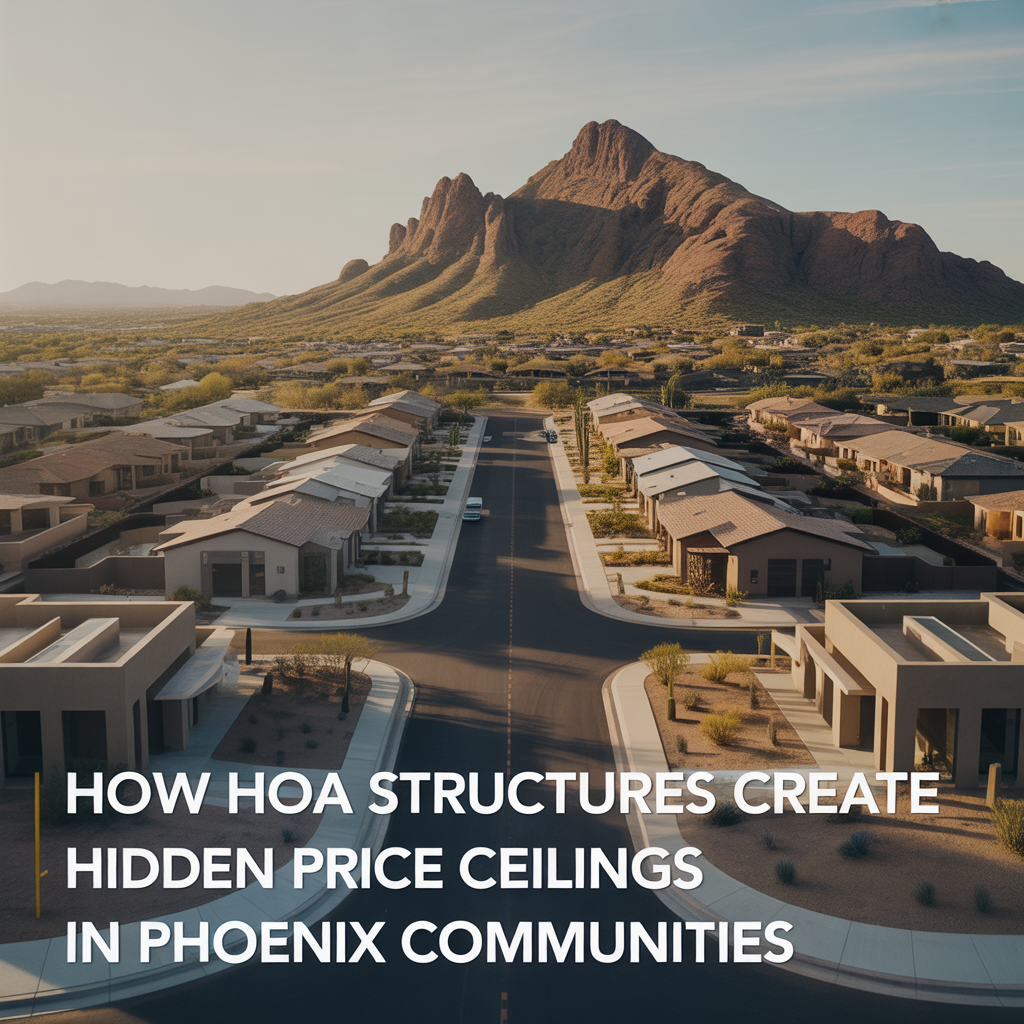
This guide is part of our Phoenix Investors Guide → [Phoenix Investors Guide]
Written by: Renee Burke
In Phoenix, HOA structures quietly act like a “lid” on pricing in many communities — not because buyers don’t value amenities or rules, but because monthly carrying costs and restrictive regulations eventually cap what people are willing (or able) to pay. Once you see how these hidden ceilings form, a lot of puzzling pricing patterns in otherwise similar neighborhoods suddenly make sense.
The Real Cost Buyers Feel: HOA + Mortgage
Most buyers don’t separate HOA dues from the price of the home; they feel the total monthly payment. As HOA fees rise with insurance, maintenance, and service costs in Phoenix, they eat into what a buyer can allocate toward principal and interest.
That means:
- Higher-than-normal HOA dues force buyers to lower their target purchase price to keep their payment stable.
- In communities where dues creep well above what’s “standard” for the area, values tend to appreciate more slowly, or stall sooner, because buyers start opting for nearby non‑HOA or lower‑fee options.
On paper, your home might “comp” higher. In practice, the combined payment is what caps demand — and that quietly sets a price ceiling.
When Rules and Requirements Shrink Your Buyer Pool
HOAs also shape value through who is allowed or willing to buy. In Arizona, HOAs have substantial power to change CC&Rs — from minimum square footage to design controls — and those decisions can drastically narrow the buyer pool.
One documented example: an Arizona HOA increased the minimum home size requirement to 4,000 square feet, instantly eliminating about 80% of potential buyers for remaining lots. That kind of move can look “value‑protecting” on the surface, but in reality it often:
- Makes future resale more difficult.
- Concentrates risk in a smaller, more affluent subset of buyers.
- Limits how high prices can go before the pool of qualified, interested buyers simply runs out.
The stricter, more complex, or more unpredictable an HOA feels, the more buyers quietly put that community in the “maybe not worth the hassle” bucket — even if they love the homes.
Reputation: The Intangible Cap on Value
Beyond fees and rules, there’s the story attached to an HOA. An association known for constant disputes, arbitrary enforcement, or rapidly rising dues can create a stigma that suppresses values relative to nearby, similar neighborhoods.
You see it show up as:
- Longer days on market compared with adjacent non‑HOA or low‑fee areas.
- Deeper negotiation on price once buyers start factoring in “headache risk.”
- Appraisers and agents informally recognizing that “this community just doesn’t sell as high as that one,” even with similar homes.
In other words, HOA reputation becomes an invisible line your prices struggle to cross, no matter how much you renovate.
Condos and Townhomes: When Fees Overwhelm the Price Tag
The effect is especially clear in Phoenix’s condo and townhome market, where HOA dues cover more — structure insurance, exterior maintenance, sometimes utilities — and can look intimidating at first glance.
Agents are seeing:
- Buyers walking away from otherwise good deals simply because they misunderstand what HOA fees include, or they overestimate future increases.
- Communities with unusually high or rapidly rising dues struggling more with resale, creating a softer cap on achievable prices.
When monthly dues cross a certain psychological line, buyers either drop their price point or leave the property type altogether, which naturally limits how far values can climb.
How This Plays Out in a Shifting Phoenix Market
As Phoenix moves through a more balanced or even slightly buyer‑tilted phase in some segments, buyers have the luxury of choice. That’s when HOA structures become especially important:
- In a competitive landscape with more listings, high‑fee or “difficult” HOAs get skipped first.
- Communities with moderate, stable dues and clear, reasonable rules remain more liquid and can support higher prices before hitting resistance.
So while HOA governance doesn’t show up as a line item on a CMA, it’s absolutely there in how quickly homes sell and how high buyers are willing to climb before they pivot to a different neighborhood.
What This Means if You Own in an HOA Community
If you’re already in an HOA neighborhood, you’re not powerless — but it helps to be realistic and proactive.
As a homeowner, you can:
- Monitor fee trends and attend meetings when major budget changes are on the table.
- Advocate against rule changes that dramatically shrink the buyer pool (extreme minimum sizes, overly restrictive use rules).
- When you decide to sell, be ready to explain clearly what the fees cover and how the HOA helps protect the community rather than simply adding cost.
Handled thoughtfully, a well‑run HOA can still support strong values; it’s when fees outpace perceived benefit or rules feel unreasonable that the hidden ceiling drops lower.
A Calm Path Forward
If you’re looking at buying or selling in a Phoenix HOA community and you’re feeling unsure how those fees and rules will affect your long‑term value, that’s completely understandable — most of this doesn’t show up in the glossy marketing.
If you’re thinking about making a move in Phoenix, you don’t have to figure it out alone. I’m here to help you read between the lines of HOA budgets, CC&Rs, and neighborhood reputations so you can make clear, confident decisions. We’ll walk through the numbers, the lifestyle, and the long‑term implications together, so your next move feels not just smart on paper, but genuinely safe and supported in real life.
Get the full Phoenix Market Insights → [Market Insights]


-

How the Phoenix Desert Climate Shapes Everyday Life Inside the Home
-

How Phoenix Weather Patterns Shape Everyday Home Routines
-

Why Homes Often Feel More Comfortable After the First Year of Ownership
-

How Living in Phoenix Changes the Way Homeowners Use Their Homes
-

What New Phoenix Homeowners Learn During Their First Year of Ownership
-

How Daily Life Changes After the First Year of Living in a Phoenix Home
-
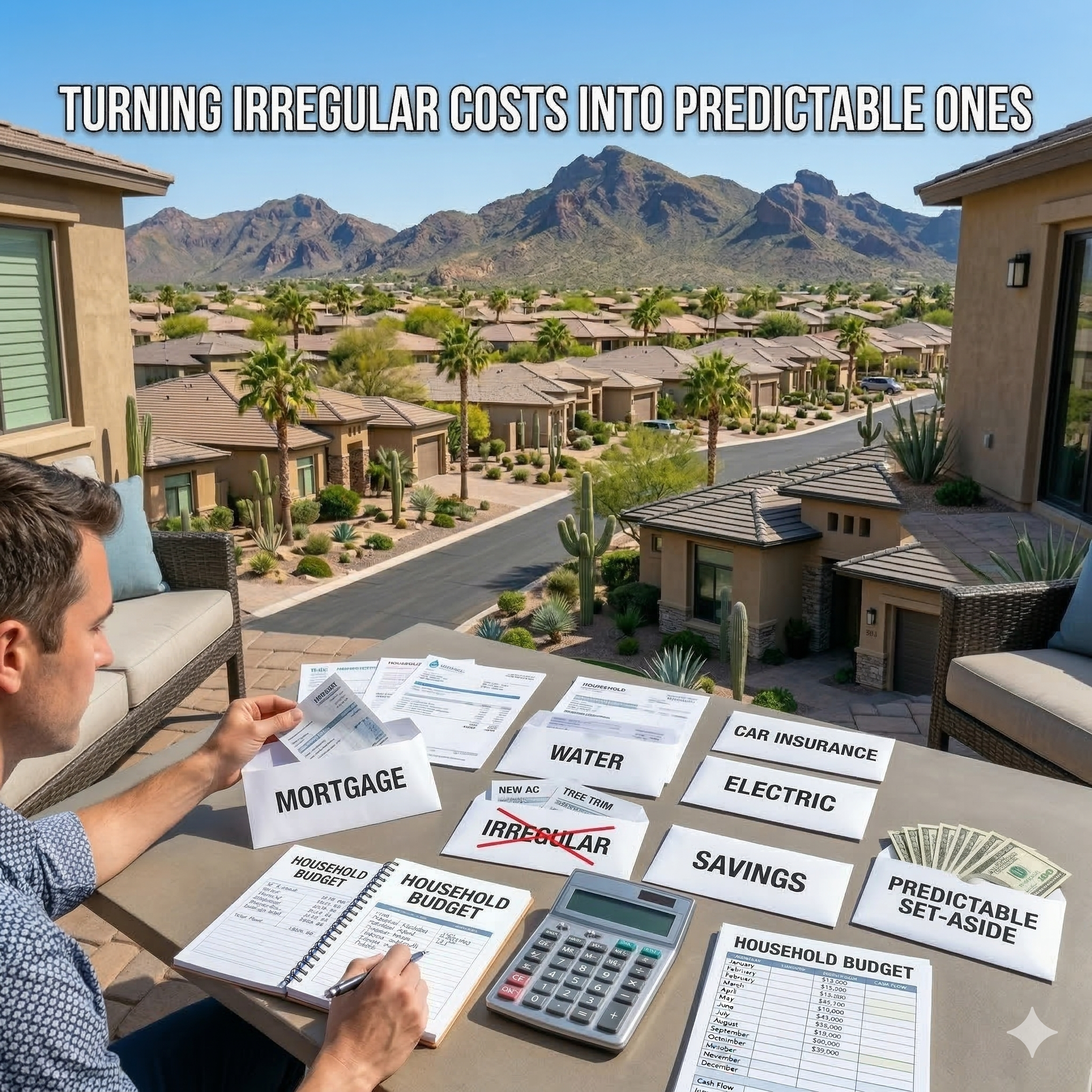
Turning Irregular Costs Into Predictable Ones
-

Budgeting for Ongoing Ownership
-
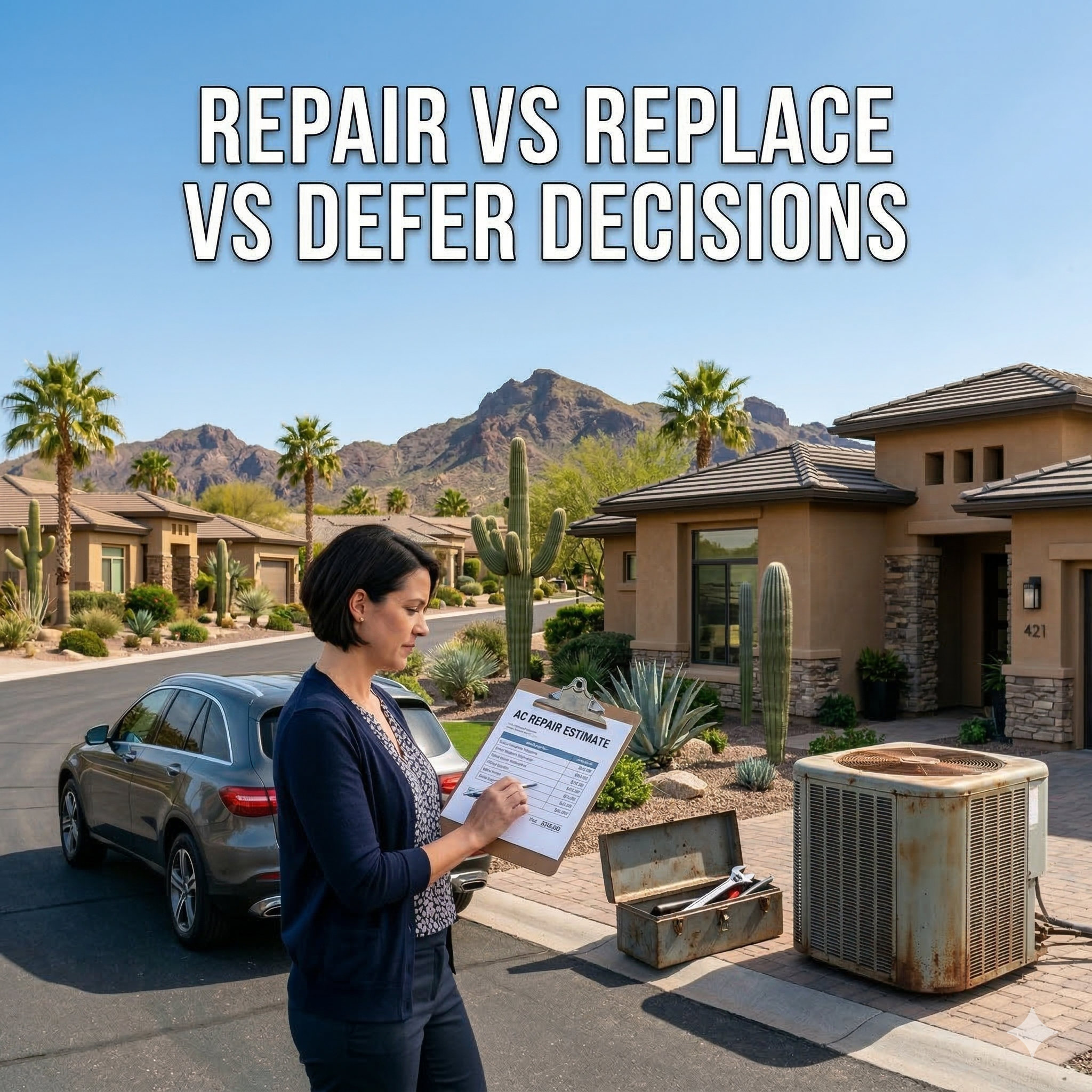
Repair vs Replace vs Defer Decisions
-

Planning Homeownership Like a Long-Term Asset
-

What Home Expenses You Can Safely Delay
-

Stopping Cost Creep Early
-

Cash Flow vs Net Worth Stress
-
Why “It’s Not That Much” Adds Up
-

Warning Signs Your Ownership Budget Is Tightening
-
The Cumulative Cost of Small Home Repairs
-

Designing Budgets Around Local Conditions
-

Utility Costs Over Time in Desert Climates
-

Insurance Increases Explained for Arizona Homeowners
-
How Inflation Impacts Phoenix Homeownership Costs
-

Avoiding Debt-Driven Homeownership Decisions
-

Replacing Systems on Your Timeline
-

Why Emergency Repairs Cost More
-

Timing Major Expenses Without Financial Shock
-
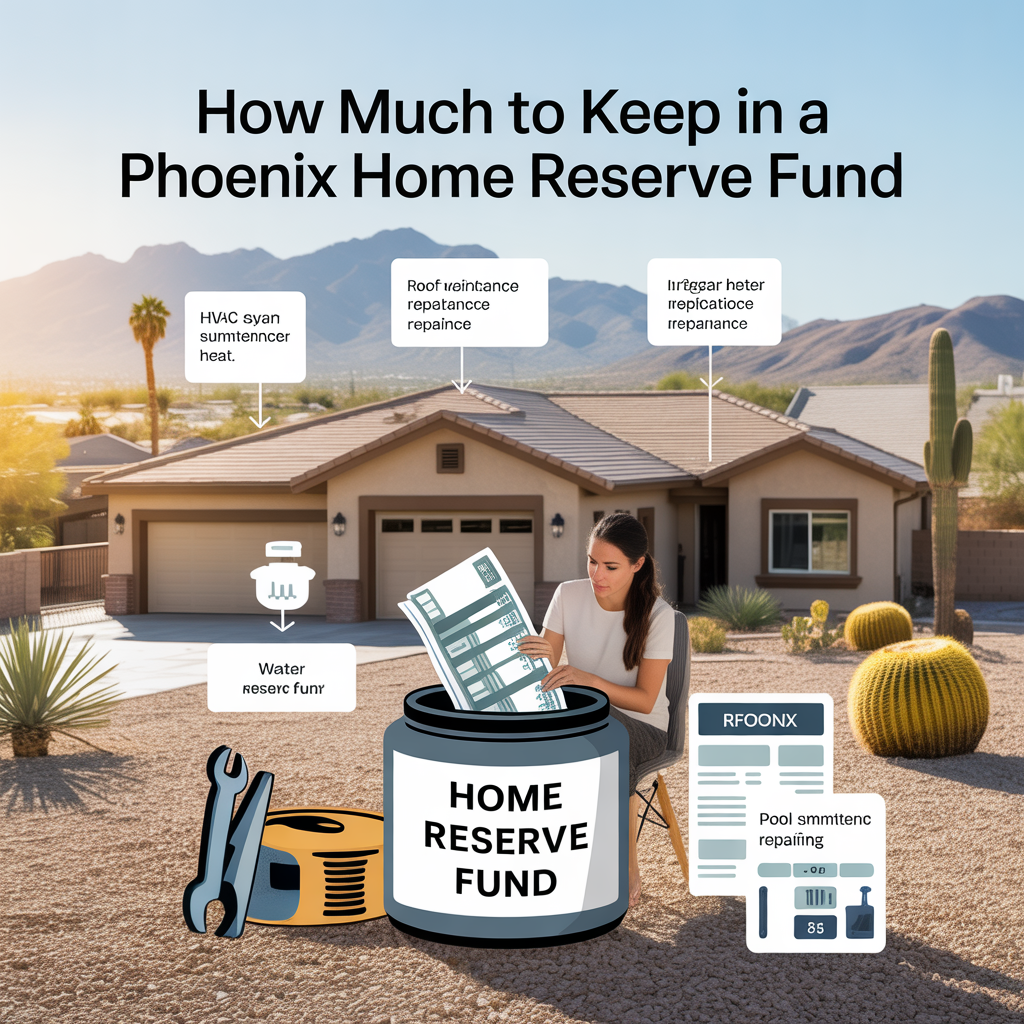
How Much to Keep in a Phoenix Home Reserve Fund