


This guide is part of our Phoenix Investors Guide → [Phoenix Investors Guide]
Written by: Renee Burke
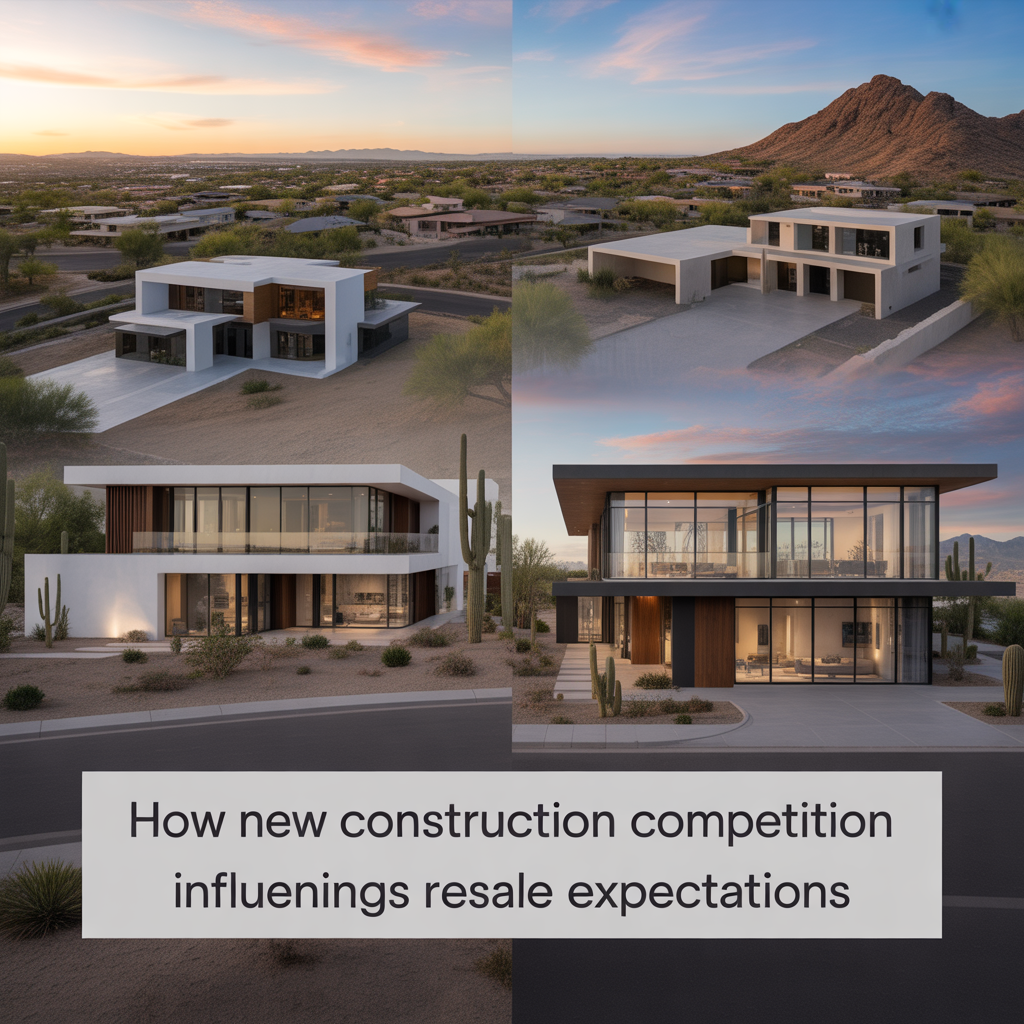
In Phoenix right now, new construction isn’t just another option on the menu — it’s the silent benchmark reshaping what buyers expect from every resale home they walk into. When you understand how those shiny new communities influence psychology, pricing, and negotiation, it becomes much easier to set realistic expectations on both sides of a resale transaction.
How New Construction “Resets” Buyer Expectations
In a growing metro like ours, buyers are constantly exposed to new builds with clean lines, open-concept living, energy-efficient systems, and builder incentives that smooth out the monthly payment. Even if they end up choosing resale, they’ve already formed a mental baseline:
- They expect move-in ready or very close to it.
- They expect modern layouts — open kitchens, good natural light, functional storage.
- They expect transparent all-in costs, not surprise repair lists.
New builds often come with lower maintenance out of the gate, better energy efficiency, and warranties that feel comforting in an uncertain rate environment. So when those same buyers pivot to resale, they unconsciously hold older homes up against that new-build standard — and that’s where many resale sellers get surprised.
Price vs. Value: Why Resale Can’t Just “Match the Builder”
Across the Valley, quality new construction in desirable areas often falls in the roughly mid-400s to 700s range, with higher pricing in premium Scottsdale and tech-adjacent corridors. On paper, it’s easy for a resale seller to say, “My home has more character, better location — I should match or exceed that.” But buyers are doing a different kind of math.
They’re comparing:
- New-build pricing plus incentives and lower utility/repair risk.
- Resale pricing plus likely updates, repairs, and less efficient systems.
Right now, builders in some submarkets are still using rate buydowns and closing cost credits to make monthly payments feel softer than a comparable resale, even when the sticker price is higher. That means a resale home priced like new construction — but without the same perks — can quickly start to feel “overpriced” to today’s buyer, even if the seller is emotionally anchored to past peak values.
Where Resale Still Holds a Quiet Edge
Resale doesn’t lose in this comparison — it just wins differently.
Many buyers still choose resale because they value:
- Established locations: shorter commutes, mature neighborhoods, closer-in school and freeway access.
- Larger or more unique lots: especially in central Phoenix, Arcadia-area, and older Scottsdale pockets where lot sizes beat many new communities.
- Architectural character and landscaping that new builds can’t replicate yet.
But to fully benefit from those strengths, resale sellers have to understand that buyers will mentally subtract for outdated finishes, aging roofs or HVAC, and functional quirks — because they know there’s always a fresh spec home or nearly new property somewhere else in the Valley.
The New Reality for Resale Sellers
In the current cycle, Phoenix resale homes that are dated or mispriced are sitting longer, while well-positioned, well-presented homes still move quickly. A few patterns have become very clear:
- Homes listed 10% above where the market really is are often getting no offers at all, especially if updates are needed.
- Buyers are more comfortable asking for repairs, concessions, and price adjustments on resale because they know they have alternatives.
- Resale listings that lean into what new construction can’t offer — location, lot, and uniqueness — and price realistically see much healthier activity.
If you’re selling, it helps to think like a buyer who’s toured both:
“Would I choose this home over a brand-new one for the same money?”
If that answer is even a hesitant maybe, your price or your presentation probably need adjusting.
The Buyer’s Side: Higher Standards, More Leverage
For buyers, the abundance of new construction has quietly improved the experience of shopping resale.
You now have:
- More negotiating power on resales that aren’t updated or perfectly priced.
- Clearer tradeoffs: you can see exactly what a new-build payment looks like versus a resale with a lower price but some renovation needed.
- Less fear of “settling”: knowing that if the resale doesn’t feel right, a new build, spec home, or lightly used property may fit better.
The real work is getting honest about your non-negotiables — commute, schools, neighborhood feel, yard space, style — and then choosing where you’re willing to compromise: age, renovation timeline, or monthly payment.
How I Guide Clients Through the New-Construction Shadow
This is where calm, grounded advice matters. I don’t push clients toward new or resale — we slow down and compare them side by side. Together we look at:
- Replacement cost: Are you buying below what it would cost to build similar quality today?
- True monthly cost: factoring in energy efficiency, likely repairs, and any builder incentives on the table.
- Long-term position: Is this home in a corridor poised for growth (like tech-adjacent North Phoenix) or in an established area that will always be in demand?
When we do that, the “noise” from billboards, builder ads, and online pricing starts to quiet down, and it becomes much clearer which specific home makes the most sense for you — not just this year, but five and ten years out.
A Gentle, Clear Next Step
If you’re feeling torn between the ease of new construction and the charm or location of resale, you are exactly where many Phoenix buyers and sellers find themselves right now. The competition between the two is real, and it absolutely influences resale expectations — but it doesn’t have to leave you guessing.
If you’re thinking about making a move in Phoenix, you don’t have to figure it out alone. Reach out, tell me where you’re feeling stuck — price, condition, timing, or neighborhood — and we’ll walk through your options together. My role is to be your steady, long-term advisor in this market, so you can move forward with clarity, not pressure, and feel genuinely confident in the home you choose or the one you let go.
Get the full Phoenix Market Insights → [Market Insights]


-

Why National Housing Advice Often Misfires in Phoenix
-

How to Choose the Right Agent for Phoenix’s Climate and HOA Landscape
-

What Long-Term Phoenix Homeowners Wish They Had Known Before Buying
-

Recurring Patterns I See in Phoenix Buyer Regret (and How to Avoid Them)
-

How Working Across the Entire Phoenix Metro Changes My Buyer Advice
-
Why Long-Term Ownership Matters More Than Perfect Market Timing
-

Aligning School Calendars, Lease End Dates, and Market Rhythms
-
Limited Inventory in Phoenix: When to Wait and When to Act
-

Using Monsoon Season to Reveal Roof and Drainage Issues
-

Buying During Snowbird Season Near Resorts and 55+ Communities
-

How Summer Heat Can Work in Your Favor as a Phoenix Homebuyer
-

Phoenix Housing Seasonality: Best and Worst Times to Buy
-

Building a Local Support System Faster After You Move to Phoenix
-

The Emotional Side of Relocating to Phoenix
-

How Families Experience Schools, Sports, and Community Across the Valley
-

Lifestyle Tradeoffs: Leaving a High-Density City for the Phoenix Metro
-

Heat Shock in Phoenix: What Summer Really Feels Like and How to Adapt
-

How to Evaluate Phoenix Neighborhoods When You Can’t Visit in Person
-

What Surprises Phoenix Transplants Most in Their First Year
-

Planning Your Weekly Routine Around Phoenix Traffic Patterns
-
Choosing Between Two Homes with Very Different Commute Realities
-

Best Phoenix Areas for Remote Workers Who Still Need Airport Access
-
How Extreme Heat and Monsoons Affect Daily Driving in Phoenix
-
Living Farther Out vs Closer-In: What Really Pencils Out in Phoenix
-

Reverse Commute Myths and Realities in Metro Phoenix