


Market and Timing Fears→ [Market and Timing Fears] & For more info on other fears Phoenix Real Estate → [Phoenix Real Estate Fears Guide]
Written by: Renee Burke
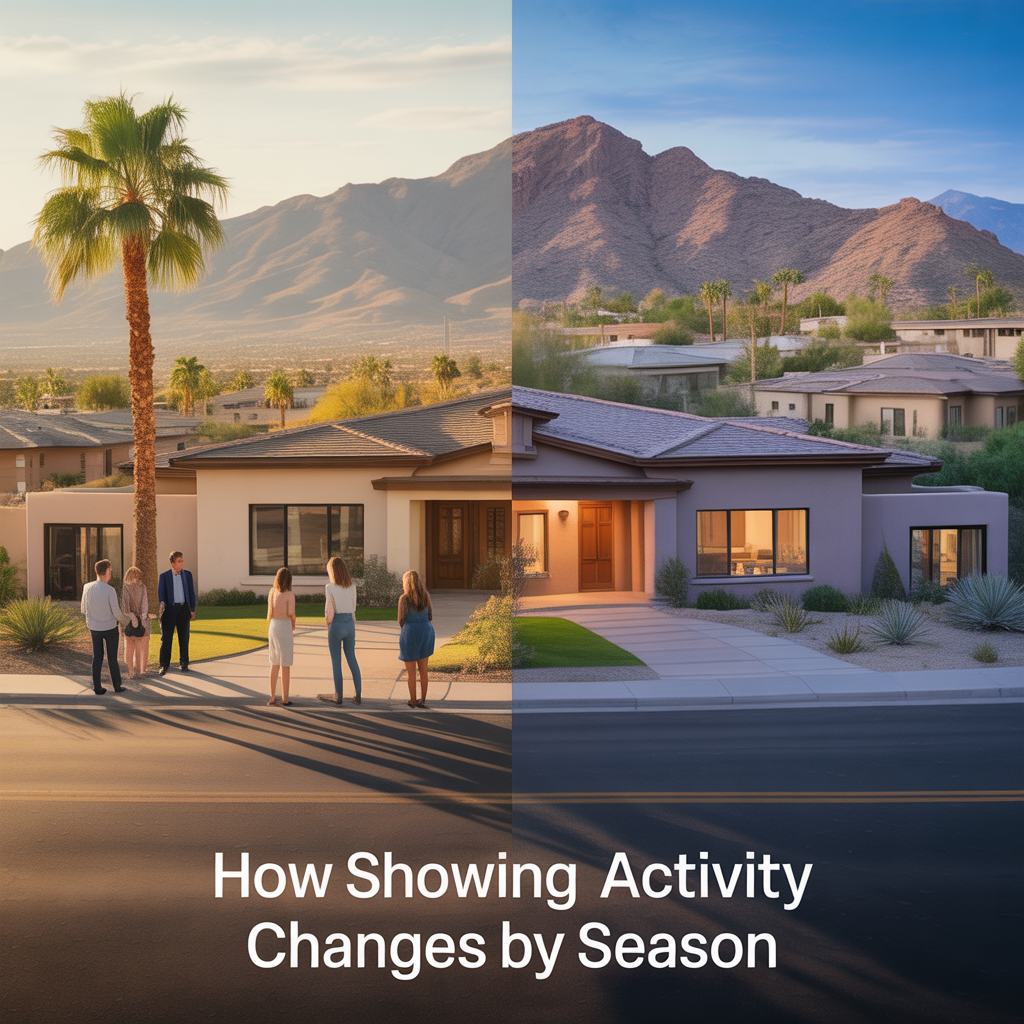
In the Phoenix metro, showing activity isn’t random—it’s tied to our desert rhythm, from winter’s welcoming mildness to summer’s shaded mornings. Whether you’re a buyer picturing evenings in a Gilbert backyard or a seller in Scottsdale prepping for tours, understanding these shifts helps you plan with ease. I’ve seen how each season brings its own flow right here in the Valley, and it always comes down to comfort, timing, and who’s active.
Let’s break it down season by season, drawing from the patterns that play out year after year on our streets and in ARMLS reports.
Winter: Steady and Welcoming Showings
December through February feels approachable—cooler mornings invite lingering tours without the rush of heat. Snowbirds settle into Sun City or Leisure World, boosting activity in resort communities as they scout upgrades or rentals. Families test neighborhoods during perfect 70-degree days, strolling Ahwatukee trails post-showing.
Showings run brisk but not frantic: 20-30% more than summer lows, focused on move-in-ready homes. Sellers keep flexible schedules, knowing retirees prioritize golf course views or casitas. Virtual options fill gaps around holidays, but in-person dominates as buyers savor the weather.
It’s a comfortable pace—ideal for deliberation, with fewer no-shows.
Spring: Peak Energy and Crowds
March to May ignites: blooming saguaros signal the frenzy. New listings spike, drawing local families eyeing BASIS districts in North Phoenix and relocators from California. Open houses draw 10-20 groups per weekend, especially in Arcadia bungalows or Eastmark townhomes.
Buyer traffic peaks—showings can hit daily highs, with agents juggling back-to-back slots. Heat builds by late May, shifting some to evenings, but momentum holds. Sellers thrive on volume, staging patios for that outdoor lifestyle allure.
Competition shows here: well-priced gems see escalation, but overpriced ones languish.
Summer: Sparse but Intentional
June through August slows dramatically—heat caps daytime tours at 108°F-plus. Showings cluster in 7-9 AM windows or post-7 PM, often 40-60% below spring peaks. Families vacation, thinning locals, but serious players persist: TSMC engineers touring Chandler spec homes or investors checking Mesa multis.
Sellers adapt with virtual 3D tours and misted exteriors; pools become stars. Fewer feet through the door means each visitor counts—motivated buyers negotiate freely. Builders in Queen Creek host cooled model home events, keeping activity alive.
Quiet doesn’t mean dead—it’s strategic for patient deals.
Fall: Rebound and Balance
September to November rebounds gently. Temps dip below 100°F, coaxing buyers back for extended tours. Back-to-school settles, sparking family showings in Gilbert or Tempe near ASU. Relocation demand rises with job hires at Banner Health or Intel.
Activity climbs 25-35% over summer: more open houses, flexible daytime slots. Sellers in Paradise Valley highlight ramadas for cooler evenings; luxury sees international interest. It’s less intense than spring, with room for second looks.
Monsoon echoes fade, revealing homes’ true resilience.
Key Patterns Across Seasons
Showing volume follows clear ebbs and flows, influenced by Valley life:
Days on market stretch in summer (50-70 days), tighten in spring (30-50). Heat-proof features—AC, shade—drive summer success.
What Drives the Shifts
Climate rules: winter’s mildness expands windows; summer contracts them. Demographics add layers—our in-migration keeps winter/fall humming, while school calendars bookend spring. Sellers adjust: spring staging dazzles outdoors; summer emphasizes indoor escapes like home theaters.
Buyers fear missing peaks, but data shows opportunity year-round. Prep matters—pre-approvals cut showing no-shows.
Lifestyle Ties to Showing Realities
Phoenix showings reveal daily life: winter tours let you hike Piestewa Peak nearby; spring aligns with pool openings; fall eases into holiday gatherings. Summer tests endurance, spotlighting energy-efficient gems amid utility spikes.
For sellers, match presentation to season—crisp AC in July sells faster than any price cut.
Navigating It Smoothly
Track ARMLS weekly for your zip: showing counts signal momentum. As a buyer, hit peak seasons ready; off-peak, savor leverage. Sellers, time listings for traffic waves without forcing it.
Every season offers homes that fit—it’s about syncing with yours.
If you’re thinking about making a move in Phoenix, you don’t have to figure it out alone. Whether plotting showings or staging for them, I’m here with the Valley know-how to make it feel effortless. Reach out—let’s align the season to your story.
Get the full Phoenix Market Insights → [Market Insights]


-
Cost of Living in Rhode Island: Housing, Taxes, Utilities, and Everyday Expenses
-

What If My Commute Becomes Worse Than Expected?
-

How Aging Home Systems Affect Property Value