


Long-Term & Exit Strategy Fear→ [Long-Term & Exit Strategy Fear] & For more info on other fears Phoenix Real Estate → [Phoenix Real Estate Fears Guide]
Written by: Renee Burke
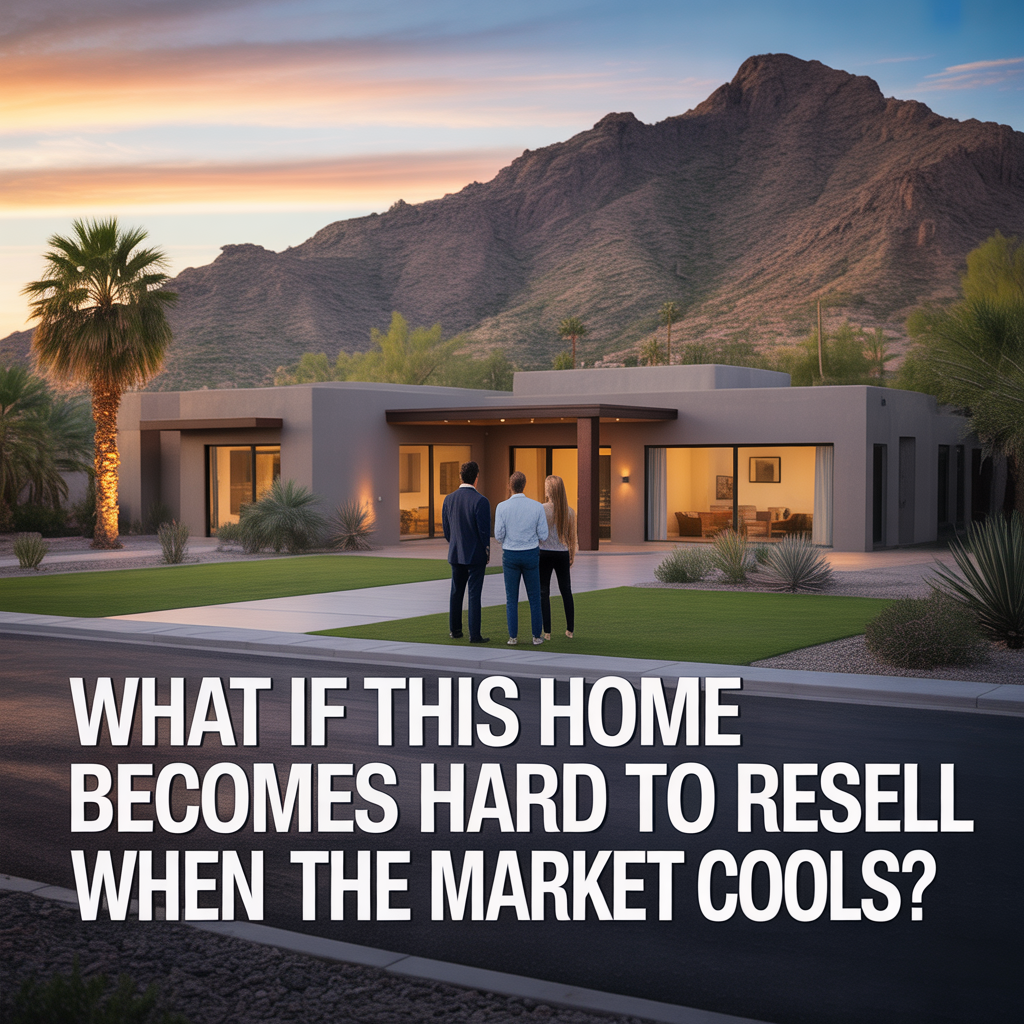
If you’ve ever fallen in love with a home and heard that little whisper in the back of your head — “But what if it’s hard to resell later?” — you’re not alone. Every thoughtful buyer asks some version of that question, especially in a market like Phoenix, where the energy and pace can feel both exciting and unpredictable.
The truth is, our market here has its own rhythm — it doesn’t move in lockstep with what you hear about “the national housing market.” Real estate in the Valley is its own ecosystem, shaped by lifestyle, climate, architecture, and migration patterns that are unique to us. So when people ask me whether their next home will still be desirable when the market cools, my answer always begins with this: “In Phoenix, it depends on the story your home tells.”
Understanding What Makes a Home “Resellable” in Phoenix
When people say a home might be “hard to resell,” it usually comes down to one of three things:
- The location feels too specific.
- The design doesn’t appeal to future buyers.
- The market itself shifts, and supply starts outpacing demand.
All three can happen, even in a city as dynamic as ours. But each has nuances worth understanding in a Phoenix context.
For example, what might be considered a “tough resale” home in another part of the country could do quite well here, simply because of our lifestyle. A home on the outskirts of Gilbert or west of the Loop 303 might have once felt too far out — and yet, as amenities and job centers have expanded, entire corridors that were once “fringe” are now thriving. Conversely, homes that sacrificed shade or layout for style during the boom years might not hold their appeal once buyers remember what it’s like to live through another 115-degree summer.
That’s why resale potential isn’t about guessing future prices — it’s about understanding enduring appeal.
The Elements of Enduring Appeal
Let’s talk about what tends to hold value in Phoenix, even when the market shifts.
- Orientation and Shade: Homes that manage sunlight well — particularly those with north/south exposures and shaded outdoor living — age beautifully here. You can feel the difference when you walk in. It’s cooler, calmer, and more livable.
- Smart Floor Plans: Open-concept is great, but overly vast or trendy layouts can age quickly. A home with balanced flow, natural light, and privacy between main spaces generally sells faster no matter what the market’s doing.
- Quality Over Size: Buyers here are growing more discerning. They’ll choose well-built, thoughtfully designed homes over oversized spaces with dated finishes. High-quality millwork, efficient window systems, and timeless materials never go out of style.
- Neighborhood Integrity: Streets with mature landscaping, consistent upkeep, and strong HOA or community pride often fare better in slower markets. In Phoenix, that can mean historic districts, master-planned communities, or even smaller enclaves in North Central — anywhere that feels stable and cared for.
These aren’t short-term style preferences; they’re rooted in how people want to live in the desert.
What Happens When the Market Cools
It’s natural to wonder if a cooler market means homes simply stop selling. But that’s not really how it works here. When Phoenix moves into a softer cycle, two things happen: days on market stretch out, and buyers start prioritizing value and livability over flash.
Homes that were designed, priced, or presented primarily for “today’s bidding conditions” may need adjusting. But the well-kept, well-priced homes still sell. They always do.
If you’ve bought a home that complements its location and lifestyle — not just one that copied the latest aesthetic trend — it will speak to the next buyer in the same way it spoke to you. That’s the kind of property that weathers downturns well.
I think what helps most is reframing the concern. Instead of asking, “What if the market cools?”, ask:
“Will this home still make sense for the way people live here five or ten years from now?”
That simple shift moves the conversation from fear to strategy.
Reading the Phoenix Market with Context
There’s a rhythm to our market — and living here long enough teaches you to sense it. Summers slow slightly, winter visitors bring momentum, and interest-rate chatter ripples through buyer confidence. But the broader driver of value has always been population flow.
Maricopa County consistently ranks among the fastest-growing counties in the country. People come here for the climate, the cost balance, and the quality of life. Even as the market naturally cools at times, that migration underpins steady long-term demand.
Certain submarkets—South Scottsdale, Desert Ridge, Arcadia Lite, and parts of North Peoria—have proven repeatedly that well-situated homes retain desirability regardless of cycle. These areas have a “lifestyle identity” attached: proximity to restaurants, greenbelts, modern elementary schools, or mountain views. Those factors are incredibly durable when it comes to resale.
Helping Future-Proof Your Purchase
Whether you’re looking at a downtown condo, a mid-century ranch, or a new build out near Queen Creek, there are things you can do now to protect your resale potential without overthinking the future.
- Be thoughtful about upgrades. Choose improvements that add comfort or efficiency, not just Instagram appeal. Dual-pane windows, good insulation, and added shade do more for long-term desirability than most cosmetic remodels.
- Buy into community. A supportive HOA, established neighborhood relationships, and shared upkeep standards all quietly boost resale appeal. Future buyers feel the pride in a maintained community the moment they drive through.
- Respect authentic architecture. If your home has mid-century bones, lean into them. If it’s a Santa Fe, celebrate those Adobe textures. Phoenix prizes authenticity, and buyers can sense when a home’s character has been honored rather than “updated” to chase trends.
- Mind the micro-location. It’s not just the ZIP code — it’s whether your home sits on the interior of a subdivision rather than a busy corner, or whether it backs to desert preserve instead of another yard. These little details make a lasting difference.
When Fear Creeps In
Even seasoned buyers can feel uneasy about investing during certain phases of the market. I see it all the time — the worry that maybe this is the “peak,” or that homes won’t hold value. It’s a fair question, but it often underestimates how stable lifestyle-driven demand is here.
People continue to move to Phoenix for reasons that aren’t fluctuating with mortgage rates. Jobs, weather, healthcare, and community life continue to anchor this region. Our long-term fundamentals are sound, and that forms a reliable safety net beneath occasional market cooling.
So if you’re weighing your next move, try to focus less on timing and more on fit. Ask yourself whether the home will genuinely serve your needs — emotionally, practically, aesthetically — and whether its story fits the evolving story of our city.
When you buy smart and stay mindful of enduring value, your resale conversation will almost always take care of itself later.
A Gentle Closing Thought
Real estate moves in chapters. Some seasons are fast-paced and frenzied; others invite reflection and patience. Both are perfectly natural. If you’re thoughtful in your choices — and guided by someone who understands the Phoenix rhythms firsthand — you won’t need to fear a cooling market. You’ll simply be ready for it.
Because homes here aren’t just investments. They’re part of your life, your story, your days under these skies. And the right home, in the right hands, never loses its meaning or market strength.
A Warm Invitation
If you’re thinking about making a move in Phoenix, you don’t have to figure it out alone. Whether you’re preparing to buy your next home or wondering how your current one might perform when the market shifts, I’m here to help you see the full picture clearly — calmly and confidently.
Reach out anytime. Together, we’ll make sure your next move is not only the right one for today, but a smart one for tomorrow as well.
Get the full Phoenix Market Insights → [Market Insights]


-
Cost of Living in Rhode Island: Housing, Taxes, Utilities, and Everyday Expenses
-

What If My Commute Becomes Worse Than Expected?
-
How Aging Home Systems Affect Property Value