


Long-Term & Exit Strategy Fear→ [Long-Term & Exit Strategy Fear] & For more info on other fears Phoenix Real Estate → [Phoenix Real Estate Fears Guide]
Written by: Renee Burke
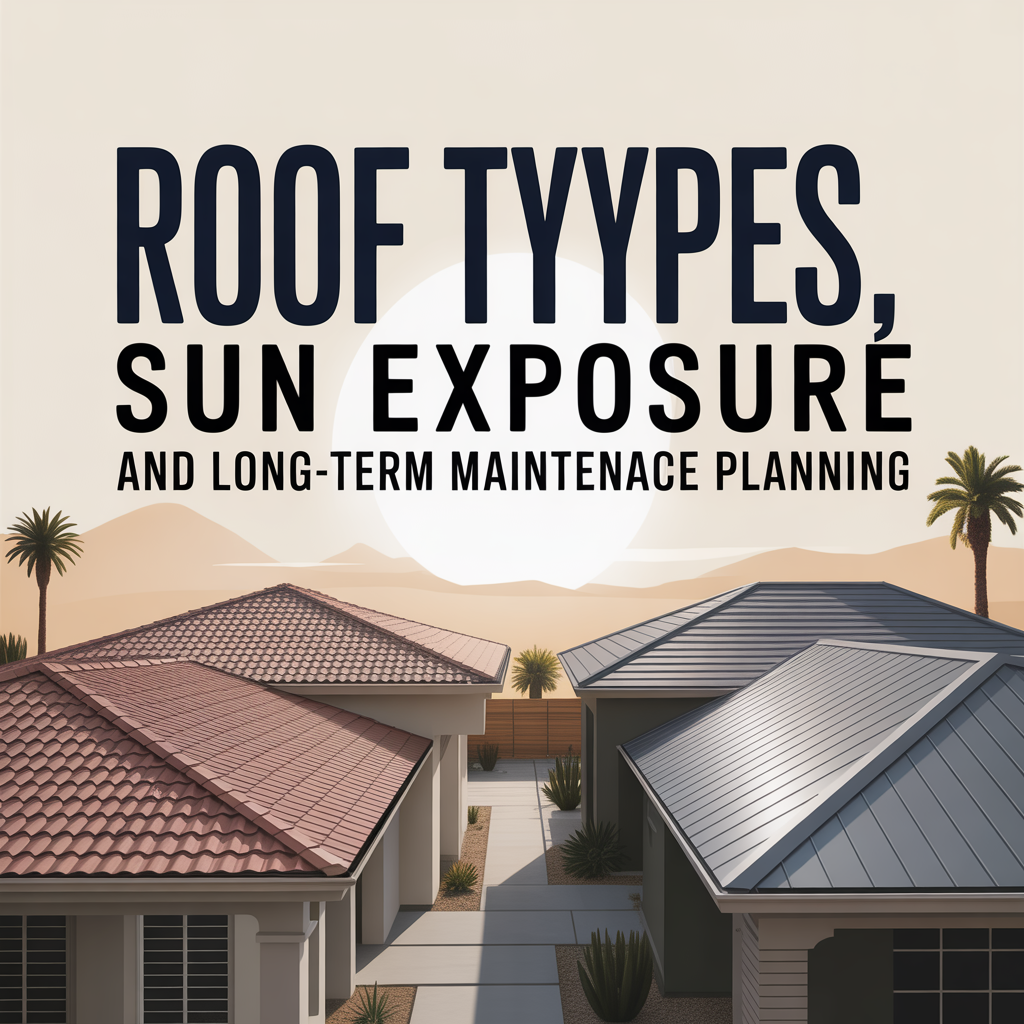
If you’ve lived in the Valley for any length of time, you already know—our sun and heat shape just about every part of life here. From how we plan our days to how our homes are built, the desert climate is both beautiful and demanding. One of the places it has the biggest impact? Your roof. Whether you own a home, plan to sell, or are preparing to buy your next property, understanding roof types, sun exposure, and long-term maintenance can save you money, frustration, and a lot of future surprises.
The Reality of Roofing in the Desert
In many parts of the country, a roof is an afterthought—something that lasts a few decades with little more than the occasional inspection. Phoenix doesn’t work that way. Our roofs endure intense UV radiation, long stretches of 110° days, and sudden monsoon storms that can undo years of quiet wear in one violent downpour.
Every season brings different stressors. Summer heat bakes roofing materials until they expand and crack; fall dust storms push debris under tiles and into drainage valleys; and winter’s cool nights bring contractions that test every seal and joint. If you’ve ever seen a neighbor’s roofing crew mid-July and wondered why replacements seem to come earlier here—that’s why. The desert doesn’t take it easy on our homes.
Common Roof Types Across the Phoenix Metro
Knowing your roof’s material is the first step toward protecting it. Each common type in Phoenix has its strengths and weaknesses, especially when it comes to heat reflection and longevity.
Tile Roofs (Concrete or Clay)
Tile roofs are quintessentially Arizona—especially in Scottsdale, Ahwatukee, and the North Phoenix foothills. They hold up remarkably well under the sun and offer excellent thermal protection. But tiles often outlive the underlayment beneath them. Many owners assume a tile roof “lasts forever,” only to discover that after 20 to 25 years, the waterproof membrane below needs full replacement. Keeping an eye on valleys (where debris collects) and ensuring proper ventilation is key for these roofs.
Foam Roofs
Sprayed polyurethane foam (SPF) roofs are common on flat-topped homes or contemporary builds in Arcadia and Paradise Valley. Foam offers great insulation and energy savings, but it’s more maintenance-intensive. Every five to seven years, the protective elastomeric coating should be reapplied to prevent UV breakdown. When maintained properly, foam roofs can last 30 years or longer—making them one of the most efficient choices for the desert, though often overlooked because homeowners fear “specialized” upkeep.
Asphalt Shingle Roofs
You’ll find these most often in communities built from the late ‘90s onward—Gilbert, Chandler, Peoria, or parts of the West Valley. Shingle technology has improved dramatically, with heat-resistant granules and reflective coatings becoming standard. But even the best shingles can fade, curl, or shed granules faster here than in milder climates. Expect about 15–20 years of life, maybe 25 with top-tier materials and consistent attic ventilation.
Metal Roofs
Once considered too “industrial” for homes, metal roofs are now more common in modern custom builds across Cave Creek, Carefree, and parts of Central Phoenix where design meets sustainability. They reflect a great deal of solar energy, resist embers from nearby fires, and shed monsoon rain quickly. However, expansion and contraction from extreme heat can loosen fasteners over time, so periodic inspection is still important. Their lifespan—40 to 50 years—is hard to beat.
The Role of Sun Exposure and Orientation
In Phoenix, the direction your home faces has real consequences. A south- or west-facing slope will experience far more sun damage than a north-facing one. If you’re evaluating a property—or simply looking to care for your own—it’s worth studying the pattern of sun movement across your roof throughout the year.
Homeowners often overlook “hot spots,” such as the western edge of a roofline where evening sunlight lingers. That’s where you’ll first see fading, cracked sealing, or brittle edges. Likewise, lighter-colored roofing materials, while perhaps not everyone’s aesthetic choice, reflect more heat and slow the degradation process.
It’s not just aesthetics or energy efficiency at stake—longevity depends on these subtleties. Where a roof in mild climates may age evenly, a Phoenix roof ages unevenly. Knowing your sun exposure points allows you to target inspections and spot issues before they spread.
Planning Ahead: Proactive Maintenance Over Reactive Fixes
Think of roof care less as an occasional chore and more as a Phoenix homeowner’s rhythm. The best defense is small, consistent attention.
Key habits worth adopting include:
- Annual professional inspections: Ideally right before monsoon season. Professionals can catch minor cracks or loose tiles before winds or water make them major.
- Debris clearing: Keep valleys and gutters free of leaves and dirt. Blocked drainage causes water to pool, and pooled water in our heat quickly becomes rot.
- Recoat or reseal on schedule: For foam or flat roofs, that elastomeric coating is your first line of defense. Calendar reminders every 5 years save thousands later.
- Attic ventilation checks: Trapped heat under your roofline accelerates material fatigue—especially for shingles. Keeping air flowing helps everything last longer.
Long-term maintenance isn’t about perfection. It’s about prevention. The more you plan small, predictable touchpoints into your home’s routine, the less likely you’ll face disruptive roof emergencies when the summer storms roll in.
How Roof Choice Impacts Property Value
Buyers in the Phoenix area are getting smarter. With so many relocating from cooler states, they begin to learn quickly that roofing condition and material type dramatically impact both comfort and resale value. A newer underlayment under a tile roof, for instance, can add confidence to a listing the same way a new HVAC system can. Conversely, an older flat roof with a lapsed coating or patchy seal can spook a buyer faster than almost any other disclosure item.
If you’re considering selling, a pre-listing roof inspection can set you apart in negotiations. Buyers often overestimate roof replacement costs because they don’t understand local materials or average labor rates. Being able to present receipts for recent maintenance or coating work goes a long way in reassuring them—and often translates to firmer offers and faster closings.
For investors, pay particular attention to flat or foam roofs on multifamily and mid-century properties. Well-maintained foam systems can be energy-efficient gold; neglected ones can become costly liabilities overnight.
The Long View—Building with the Desert, Not Against It
Phoenix homes are an exercise in harmony with environment. When you choose the right roof, plan for the sun’s rhythm, and maintain wisely, you’re not simply protecting an asset—you’re learning how to live well in the desert. The materials we choose, the colors we apply, and the way we schedule care all reflect a kind of quiet partnership with our climate.
Over time, that partnership gives back: lower utility bills, fewer surprise expenses, and a more comfortable home year-round. That’s what makes understanding roofs and sun exposure so much more than a practical exercise—it’s a kind of Phoenix wisdom.
A Gentle Note Before You Go
If you’re reading this because you’re planning a home purchase, preparing to sell, or simply want to make smart, long-term improvements, know this: you don’t have to figure it all out alone. Roofing choices, material lifespans, even city inspection standards—they can feel overwhelming in a city as varied and rapidly growing as ours.
That’s where local knowledge matters most. I’ve spent my career helping homeowners across the Valley understand how these seemingly small details—like a properly coated foam roof or a high-reflectivity tile—connect to their comfort, resale potential, and peace of mind.
If you’re thinking about making a move in Phoenix, or just want a second set of eyes on your home’s long-term maintenance plan, I’d be honored to help you explore your options. Reach out anytime. Together, we’ll make sure your roof—and your investment—are ready for all the beautiful, demanding seasons ahead.
Get the full Phoenix Market Insights → [Market Insights]


-

Electrical Safety Inspections for Older Phoenix Homes
-
Why Whole-Home Surge Protection Matters in Arizona
-

Preparing a Phoenix Home for Electric Vehicle Charging