


Long-Term & Exit Strategy Fear→ [Long-Term & Exit Strategy Fear] & For more info on other fears Phoenix Real Estate → [Phoenix Real Estate Fears Guide]
Written by: Renee Burke
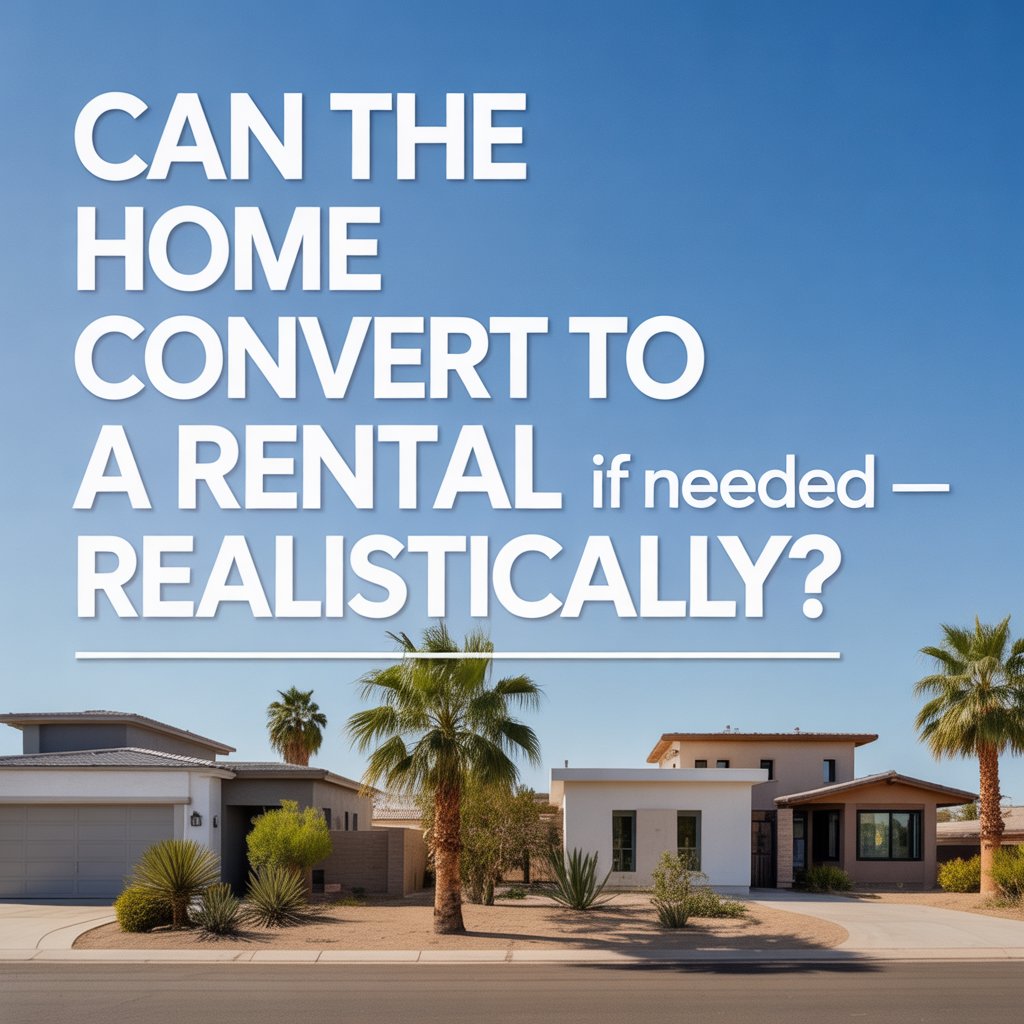
Every so often, I sit across from a buyer who pauses mid-conversation and says something like, “I love this home… but what if life changes and I need to rent it out?”
It’s a fair and smart question — especially in the Phoenix metro market, where people’s needs evolve quickly. Job relocations, aging parents, travel opportunities, or even a shift in lifestyle can make flexibility more valuable than square footage. The truth is, many buyers want to know that their purchase won’t box them in. They want to feel like they’re building both a home and a safety net.
And in Phoenix, that kind of flexibility isn’t just possible — it’s something we can plan for. But it takes a clear-eyed look at both the home and the market to understand what “realistically” means.
Understanding the Heart of the Question
When buyers ask if a home could “convert to a rental,” they’re really asking two things:
- Would it rent easily if I needed it to?
- Would it perform well enough to make sense financially?
Those are two different but deeply connected questions. And in Phoenix, the answers depend on a mix of neighborhood dynamics, HOA restrictions, property type, and timing — all within the unique rhythms of our desert market.
Not Every Home Makes a Great Rental, and That’s Okay
Some homes are designed for lifestyle first — maybe they’re tucked into a gated golf community, or situated on a custom desert lot with higher-end finishes and low turnover. Others are built in high-demand school districts or near major employment centers like the Price Corridor in Chandler, Midtown’s healthcare hubs, or North Scottsdale’s tech corridor.
As a general rule, homes that are moderately priced for their area, have low maintenance exteriors, and are within a 30–40 minute commute of multiple job centers tend to rent more steadily.
For example:
- A three-bedroom home in Gilbert or Tempe near the Loop 101 corridor often rents quickly because of strong demand from professionals and families.
- A remodeled townhome in Midtown Phoenix appeals to medical residents, traveling professionals, and remote workers.
- A North Peoria single-story with solar and a pool can rent seasonally to “Snowbirds” who want a winter home without buying.
By contrast, the high-end custom home on a one-acre parcel in Paradise Valley may sit longer if converted to a rental — not because it’s undesirable, but because the pool of qualified renters at that level is smaller.
That doesn’t make it a bad choice. It just means we approach the “what if” scenario differently.
The Numbers Behind the Flexibility
A lot of people assume a home either “works” as a rental or it doesn’t. In truth, it’s more of a spectrum.
Suppose you purchased a $650,000 home in Desert Ridge. If the area’s average rent supports $3,500–$3,800 per month, you might cover most of your mortgage and expenses if you ever had to lease the property. Even if it isn’t perfectly cash-flow positive, it can serve as a “bridge” — buying you time, keeping you in the market, and allowing your equity to grow until you’re ready to sell or return.
That’s what realistic flexibility looks like here. It’s not about turning every home into an investment property that makes huge profits. It’s about ensuring that if life throws you a curveball, the property can carry itself or come close enough to make holding it worthwhile.
HOA and City Restrictions: The Hidden Variables
This is where local knowledge truly matters.
Several Phoenix-area neighborhoods — especially newer master-planned communities — have rental restrictions built into their CC&Rs. Some specify a minimum lease term (commonly 6 or 12 months), while others prohibit rentals altogether within the first year of ownership.
In Scottsdale, for example, the city enforces short-term rental licensing and noise ordinances that have changed the game for Airbnb-style investors. Meanwhile, cities like Glendale and Mesa have taken different approaches, creating a patchwork of rules across the Valley.
Before purchasing, it’s important to know what you can and can’t do with the property. I always encourage clients to envision both their current lifestyle and their backup plan. If having the option to rent later brings peace of mind, that needs to be part of the conversation from the beginning — not an afterthought once life changes.
Maintenance, Durability, and Tenant Appeal
A home’s physical features matter, too. Phoenix’s climate is beautiful but intense, and not every property is equally suited for rental durability.
Look for:
- Low-maintenance landscaping (desert xeriscape over high-water lawns)
- Tile or luxury vinyl flooring instead of soft surfaces that wear easily
- Energy-efficient systems — solar, variable-speed pool pumps, quality HVAC units — because tenants value low utility bills
- Neutral, modern finishes that photograph well and attract a wide audience online
One client of mine converted her North Phoenix home into a rental while she relocated temporarily for work. Because she’d already updated her home for energy efficiency and had a manageable yard, it rented within three weeks — at a rate that nearly covered her mortgage.
The takeaway? When a property is easy to maintain, flexible in design, and appealing to a broad audience, it becomes a much stronger candidate for conversion.
Market Cycles and Timing Matter — Especially Here
Phoenix’s rental market doesn’t behave exactly like others. Our strongest leasing seasons tend to be spring and early summer, when relocation moves, school transitions, and snowbird shifts intersect.
Understanding seasonal rhythm can make all the difference. Listing a home for rent in July, for instance, often aligns with job transfers and family relocations, whereas listing in November may mean slower interest until after the holidays.
That’s why I tell clients not to panic if their backup plan depends on timing. Flexibility in lease dates and pricing can help you ride those normal ebbs and flows.
Emotional Realities: Letting Go Without Losing Ground
There’s always an emotional layer when transitioning your home into a rental. You might have thought of it as your sanctuary — and now, strangers will be living in it. That’s okay to acknowledge.
Sometimes my clients worry that leasing their home means they’ve “moved backward” instead of forward. It doesn’t. What you’re doing is giving yourself breathing room, preserving your investment, and maintaining control of an asset that can adapt over time. That’s wise stewardship, not retreat.
Phoenix is a city that rewards people who think long-term. Our population growth remains steady, our job base diverse, and our desert lifestyle resilient — year after year. That’s why a well-located, properly cared-for home rarely loses its usefulness, even if life changes how you use it.
What “Realistically” Looks Like in Action
So, could that home convert to a rental if needed? Realistically, yes — if it checks three main boxes:
- Local demand exists for your property type in that price range and area.
- Your HOA and city allow leasing under terms that fit your timeline.
- The property itself is low-maintenance, appealing, and positioned to stand out in rental listings.
If those pieces align, your home can absolutely serve as both a personal residence and a future income opportunity — without compromising your stability or peace of mind.
A Guiding Thought
Homeownership in the Phoenix metro area has always been about more than a roof overhead. It’s about flexibility, lifestyle, and foresight — planning not just for where you are, but where life might lead.
Whether you end up living in it, renting it, or a bit of both over time, the right property can adapt with you. That’s the true beauty of real estate when you approach it thoughtfully.
A Warm Invitation
If you’re exploring a home purchase and wondering whether it could double as a rental someday, let’s talk through it together. We’ll look honestly at your target areas, the local rental trends, and what kind of flexibility matters most to you.
Because if you’re thinking about making a move in Phoenix, you don’t have to figure it out alone.
Get the full Phoenix Market Insights → [Market Insights]


-
Cost of Living in Rhode Island: Housing, Taxes, Utilities, and Everyday Expenses
-

What If My Commute Becomes Worse Than Expected?
-
How Aging Home Systems Affect Property Value