


Local Politics and Housing→ [Local Politics and Housing] & For more info on National Politics and Housing → [National Politics and Housing]
Written by: Renee Burke
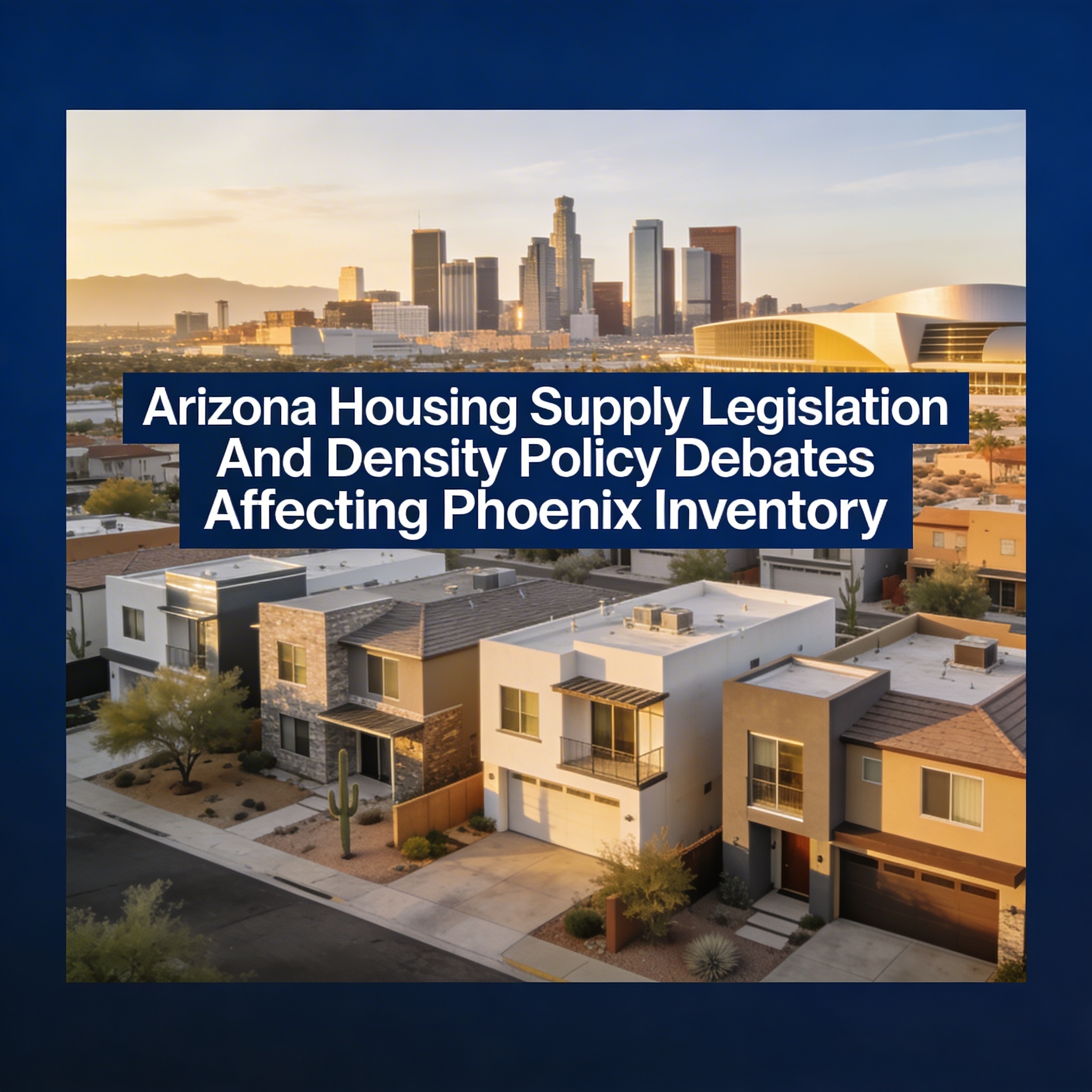
If you’ve been watching listings across the Valley this winter, you’ve likely noticed the tension: Phoenix continues to grow, but new inventory feels stubbornly slow to materialize despite all the talk at the Capitol about fixing housing supply. It’s the kind of disconnect that leaves investors wondering what’s really changing—and what it means for neighborhoods like yours. These debates around legislation and density aren’t just headlines; they’re quietly reshaping where and how new homes get built right here in Maricopa County.
I’ve sat through enough of these policy cycles to know they move slowly, often with more rhetoric than results. But in 2026, a handful of bills and local pushes are gaining real traction, and understanding them can help you position ahead of shifts in inventory and pricing. Let’s walk through what’s happening, calmly and clearly.
The Push for More Supply: Key Legislation in Play
Arizona lawmakers kicked off the 2026 session with housing squarely in focus, driven by the reality that our population growth outpaces construction every year. Bills like HB2926—the Workforce Housing Accelerator Act—aim to cut construction costs through tax exemptions on the state’s portion of sales tax for qualified projects, alongside fast-track permitting and allowances for starting vertical builds before full infrastructure is complete. This matters for Phoenix because it targets “workforce” housing—those mid-range single-family and townhome developments that could finally ease pressure in areas like Queen Creek and Buckeye.
The Arizona REALTORS® are backing measures to unlock public land too: proposals letting counties sell below-market parcels to cities for affordable teacher and public worker housing, school districts building on their own land, and even a State Trust Land study group to map opportunities. These aren’t pie-in-the-sky ideas; they build on recent wins converting farmland and obsolete commercial sites into homes, with announcements already trickling in for West Valley subdivisions.
Renewing the State Low-Income Housing Tax Credit (LIHTC) is another priority from groups like the Arizona Housing Coalition, after it lapsed last year despite proven success. Paired with Housing Trust Fund boosts and preservation tools for at-risk affordable units, this suite of bills signals a multi-pronged attack on supply shortages—though execution will vary by municipality.
Density Debates: Middle Housing and ADUs Enter the Conversation
Density isn’t a dirty word in Phoenix, but it’s sparking some of the most heated local debates. Lawmakers are wrestling with “middle housing”—duplexes, triplexes, and fourplexes in single-family zones—to add units without sprawling further into the desert. One bill even exempts historic neighborhoods from these mandates, acknowledging that not every street in Encanto or Willo is suited for it.
Accessory Dwelling Units (ADUs) remain a flashpoint too. SB 1105 would block their use as short-term rentals unless the primary home is owner-occupied, aiming to boost long-term rental supply without flooding quiet streets with Airbnbs. This follows years of tension: investors love the income potential, but neighborhoods push back on turnover and parking chaos.
Phoenix-specific overlays—like allowing ADUs in backyards across more R-1 zones—could add hundreds of units annually if approved, especially in infill-heavy areas like Roosevelt Row and Downtown-adjacent tracts. But expect pushback from HOAs in places like DC Ranch or Kierland, where the single-family character is sacrosanct.
How This Plays Out Across Phoenix Neighborhoods
These policies don’t land evenly. In rapidly expanding suburbs like Goodyear, Peoria, and Laveen, unlocked public land and tax incentives could accelerate master-planned communities, bringing starter homes and townhomes that absorb first-time buyer demand. Farmland conversions near Eloy and Casa Grande are already feeding inventory into South Maricopa, potentially softening prices there long-term.
Central Phoenix tells a different story: density reforms shine here, where lot sizes support middle housing or ADUs without much sprawl. Repurposing underused office buildings into multifamily—spotted in Glendale and Uptown—fits recent laws easing those transitions, adding rental stock without eating farmland.
Luxury pockets like Paradise Valley and Arcadia? Largely insulated. Their zoning stays tight, preserving exclusivity even as broader supply measures roll out. But spillover effects—like stabilized rents from new West Valley units—could indirectly lift values by easing metro-wide pressure.
Investors should watch water rules closely too: HB 2722 requires “build-to-rent” subdivisions to secure assured water supply certificates, just like for-sale developments. This levels the field but might slow some rental-heavy projects in water-stressed outer corridors.
The Investor’s Real Concerns—and Misconceptions
I hear the same worries from clients: “Will density crash my single-family values?” or “Does more supply mean rents plummet?” Let’s address them head-on.
First, Phoenix’s supply crunch—estimated at 50,000 units, heavier on affordable end—means even aggressive building won’t flood the market overnight. Construction timelines, labor shortages, and material costs keep a natural brake on pace. Density tools like ADUs often add just 1-2 units per lot, filtering into rentals without overwhelming neighborhoods.
Values hold where demand does: jobs, schools, lifestyle. New supply in Buckeye doesn’t tank Arcadia; it captures growth that might otherwise bid up Central homes. Rents may soften slightly in oversupplied pockets, but our inbound migration—tech, retirees, remote workers—keeps fundamentals strong.
The bigger risk? Overly prescriptive local zoning blocking these reforms. Cities resisting fast-track permitting or public land deals perpetuate shortages, inflating everything from starter homes to luxury leases.
Navigating the Transition Patiently
These bills face hurdles: February 20th was the committee deadline, so surviving measures head to full chambers soon. Not everything passes, and even signed laws take 6-18 months to yield shovels in the ground. Track HB2926 for workforce wins, LIHTC renewal for rentals, and ADU tweaks for creative density.
For portfolios, this tilts toward opportunity: ground-up developments in permitted zones, conversions of commercial holdouts, even partnering on public-land plays if you’re scaled. Existing owners benefit from gradual absorption of demand pressure, stabilizing cap rates.
Blend this with lifestyle: new inventory often funds parks, trails, and schools that enhance surrounding areas. A well-planned Buckeye community doesn’t dilute Scottsdale—it creates a fuller Valley ecosystem.
What Healthy Policy Looks Like Here
Arizona’s approach—tax incentives, land unlocks, targeted density—avoids California-style mandates that spook markets. It’s pragmatic: reward builders who deliver without eroding property rights. Public land focus leverages our geography smartly, preserving desert while housing families.
Phoenix works best when growth integrates: walkable nodes in Central, family enclaves West, estates North. Legislation succeeding here respects that mosaic, not imposing one-size-fits-all.
A Grounded Way Forward
If you’re holding rentals, eyeing flips, or building in Phoenix, these policy winds favor measured action over panic. Review your zones for ADU potential, scout conversion-friendly parcels, and pencil in workforce housing proximity for rental yields.
I’ve guided investors through every legislative swing—from ADU booms to short-term rental clamps—and the constants remain: know your submarket, read the documents, plan three steps ahead.
If you’re thinking about making a move in Phoenix, you don’t have to figure it out alone.
Get the full Phoenix Market Insights → [Market Insights]


-
Cost of Living in Rhode Island: Housing, Taxes, Utilities, and Everyday Expenses
-

What If My Commute Becomes Worse Than Expected?
-
How Aging Home Systems Affect Property Value