


National Politics and Housing → [National Politics and Housing] & For more info on Local Politics and Housing→ [Local Politics and Housing]
Written by: Renee Burke
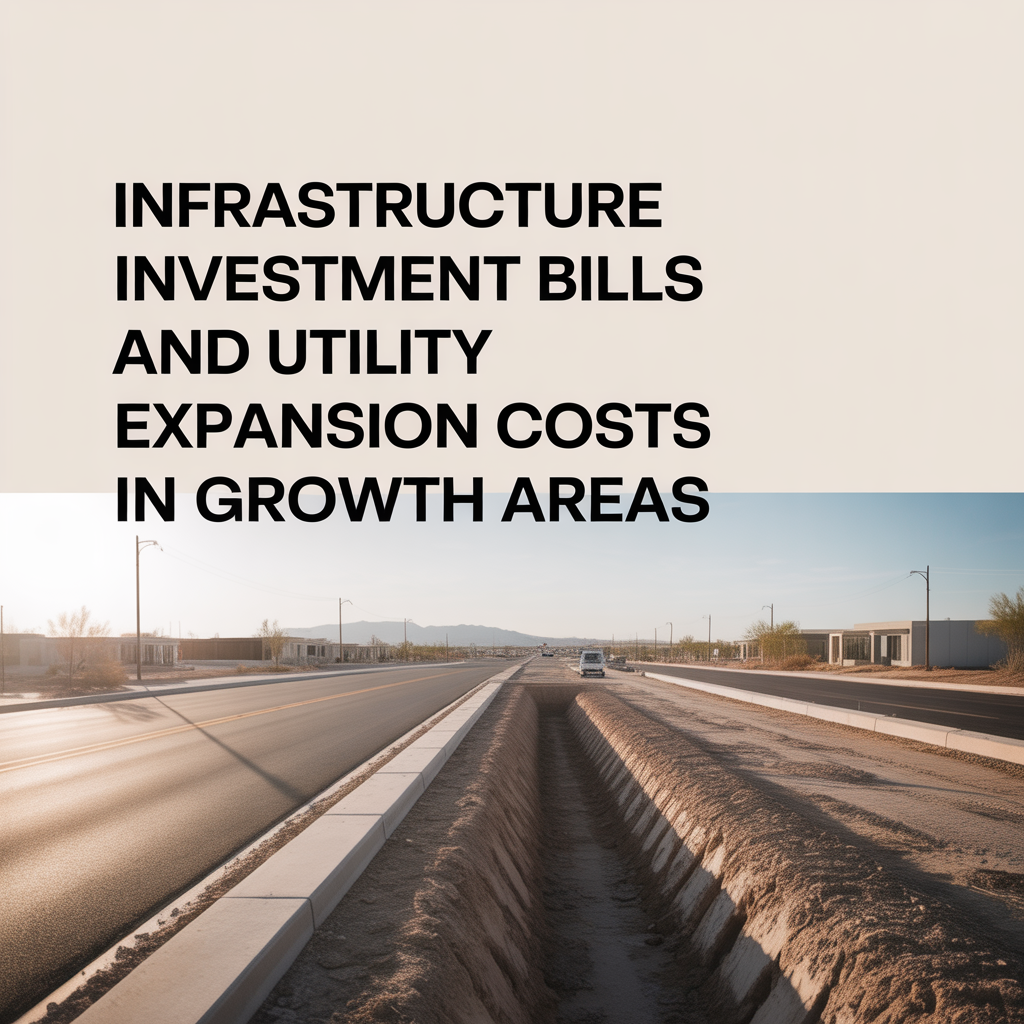
Federal infrastructure investment bills are pouring billions into Phoenix metro’s roads, transit, and water systems, but that funding comes with strings that drive up utility expansion costs in fast-growing areas like Buckeye, Queen Creek, and East Valley. These aren’t free gifts—they’re catalysts for development that ultimately show up in higher lot premiums and connection fees for new homes.
I’ve seen families caught off-guard by these add-ons, thinking they’re just buying a lot, only to face unexpected water and sewer taps that reshape their budget. Let me guide you through how this works in our Valley.
The Big Bills Fueling Phoenix Infrastructure
The Infrastructure Investment and Jobs Act (IIJA), signed in 2021, unlocked over $1 trillion nationally, with Arizona securing billions for transportation, broadband, and utilities. Phoenix tapped heavily into transit grants—like $2.2 billion proposed for FY2026 Capital Investment Grants—and water resilience projects tied to federal climate funding.
Locally, this accelerates Valley Metro Rail extensions, I-10 widenings, and utility backbone upgrades through Maricopa County. Transportation 2050, voter-approved here, layers on top, prioritizing South Central extensions and I-10 West Park-and-Ride connections. These aren’t optional; they’re prerequisites for approving new subdivisions in growth corridors.
How Federal Dollars Trigger Utility Costs
Infrastructure bills mandate matching funds and compliance, but the real impact hits utilities. When feds fund a major corridor like Loop 303 or State Route 30, cities require developers to extend water, sewer, and electric in tandem—often at full cost recovery.
In growth areas:
- Water and sewer extensions run $20,000-$50,000 per lot, depending on distance to mains. Queen Creek’s rapid buildout means trenching miles of pipe before homes break ground.
- Electric upgrades for master-planned communities like Eastmark add $5,000-$15,000 per parcel as SRP or APS beef up substations.
- Stormwater and flood control, boosted by IIJA climate grants, tack on $2,000-$10,000 via impact fees.
Builders amortize these into lot prices, so a $100,000 raw lot in Buckeye balloons to $130,000-$150,000 post-infrastructure.
Growth Areas Feel the Heaviest Lift
Phoenix’s outer rings—Buckeye, Queen Creek, Apache Junction—bear the brunt because they’re farthest from existing mains. Federal bills prioritize “shovel-ready” projects, so cities fast-track these zones, but developers foot the extension bills.
Take Buckeye: IIJA-funded highway expansions demand parallel utility spines. A single-family phase might spend $10-20 million upfront on pipes before pouring slabs. That cascades to buyers as $10,000+ tap fees at closing.
East Valley’s Cadence and Grove East face similar pressures from CAP canal upgrades and groundwater recharge mandates. Federal water security grants sound great, but they trigger engineering studies and oversized infrastructure that smaller infill can’t spread costs across.
The Cost Breakdown for New Home Buyers
Here’s what infrastructure-driven utility costs look like in practice:
| Utility Type | Typical Per-Lot Cost | Growth Area Example |
|---|---|---|
| Water/Sewer Tap | $15,000-$40,000 | Queen Creek master plans |
| Electric Service | $4,000-$12,000 | Buckeye subdivisions |
| Stormwater Fee | $2,000-$8,000 | East Valley expansions |
| Gas/Telecom | $1,000-$5,000 | Far West Valley |
| Total Add-On | $22,000-$65,000 | Per lot, pre-home build |
These aren’t optional; city ordinances tie them to IIJA compliance. Builders sometimes offer “infrastructure credits,” but they’re rare in hot markets.
Ripple Effects on Home Pricing and Timing
Utility expansions delay entitlements too. Environmental reviews, federal permitting, and utility master planning add 6-12 months to subdivision approvals. Families waiting for Verrado expansions or Laveen phases watch resales spike as new supply lags.
Pricing-wise, it’s baked in: a base home jumping $30,000 from taps alone. Incentives shrink because builders can’t absorb federally mandated costs. Relocators from slower-growth states feel this hardest—Phoenix’s scale turns “standard” fees into five-figure surprises.
Local Responses and Silver Linings
Phoenix isn’t passive. The city’s Infrastructure Strategic Plan benchmarks costs and pushes for dedicated funding via bonds. Public-private partnerships—like those with Intel or TSMC—share utility burdens in high-job zones.
Growth areas benefit long-term: Once spines are in, infill phases cost less. Buckeye’s IIJA-backed water plant means future lots avoid massive upfronts. But early pioneers pay the premium.
What This Means for Your Family’s Move
If new construction calls, scrutinize:
- Impact fee schedules on city sites (Buckeye’s are public).
- Builder disclosures on utility credits or pass-throughs.
- Phase timing—later phases ride earlier infrastructure.
Resale sellers in growth zones gain equity from these upgrades, but timing matters.
Navigating Valley Growth with Confidence
Infrastructure bills build our future, but they price today’s entry. I decode city agendas, fee schedules, and builder pro formas so you don’t face sticker shock at closing.
If you’re thinking about making a move in Phoenix, you don’t have to figure it out alone.
From Queen Creek’s water frontiers to Buckeye’s booming grids, I’ve positioned families ahead of these costs—ensuring your home fits your budget amid federal-fueled growth. My role is your steady guide, not a hard sell.
Let’s review your target areas and map the real costs of expansion. Together, we’ll turn policy into opportunity.
Get the full Phoenix Market Insights → [Market Insights]


-

Energy Efficiency Upgrades for Phoenix Homes
-
How to Plan for Major Home System Replacements
-

When Phoenix Homeowners Should Replace Water Heaters