


This is part of the larger Phoenix Financing Guide→ [Phoenix Financing Guide]
Written by: Renee Burke
Picture this: You’re standing in a sun-drenched Scottsdale paradise — maybe a terraced beauty in Silverleaf with unobstructed McDowell Mountain views, or a sleek modern retreat off Tatum Boulevard. The lifestyle calls to you: resort-style living, proximity to top dining and golf, and that unmistakable Valley prestige. But when you sit down with your lender, the conversation pivots to loan types — conventional or jumbo? — and suddenly the path to ownership feels less certain.
Here in Phoenix metro’s high-value enclaves, from Paradise Valley estates to Gainey Ranch villas, these aren’t abstract terms. They determine your down payment, rates, and even closing timeline. I’ve guided dozens of families through this exact fork in the road, and I know the quiet anxieties: Will I qualify? What’s the real cost difference? Let me explain it clearly, drawing from how our market truly works, so you can move forward with the confidence you deserve.
The Line That Defines Conventional vs. Jumbo
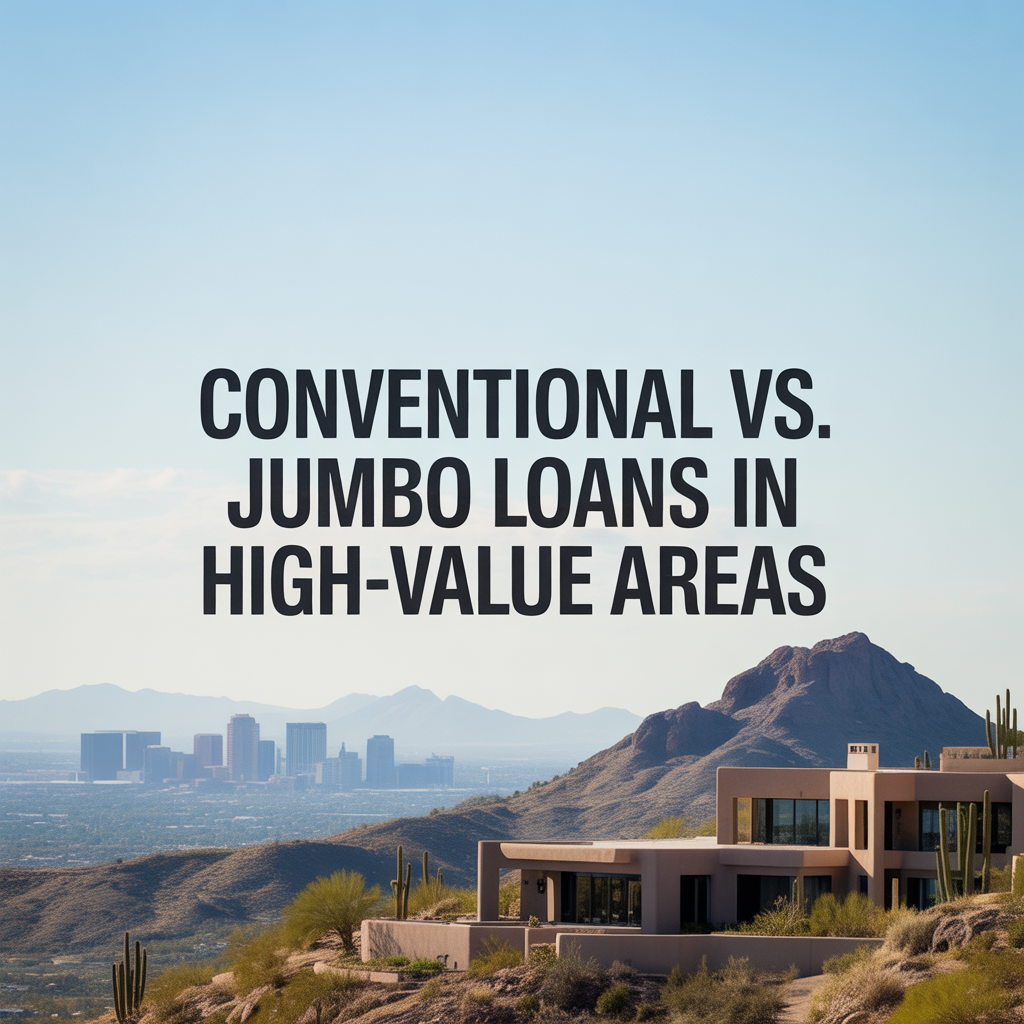
In Arizona for 2026, the conforming loan limit sits at $832,750 for a single-family home in most counties, including Maricopa where Phoenix, Scottsdale, and Tempe thrive. Loans at or below this threshold qualify as “conventional” — backed by Fannie Mae or Freddie Mac, with standardized guidelines that make approval smoother and more predictable.
Cross that line — say for a $1.2 million home in DC Ranch — and you’re in jumbo territory. These “non-conforming” loans exceed agency limits, so lenders hold them on their books or sell to private investors. No government backing means stricter scrutiny, but in our luxury-heavy market, jumbos are commonplace for properties over $1 million.
Phoenix’s high-value areas push more buyers into jumbo loans than many metros. Scottsdale median sales hover around $1.1 million, Paradise Valley starts at $2.5 million — numbers that demand financing savvy beyond basic conforming rules.
Down Payment Demands: Where the Paths Diverge Most
Conventional loans offer flexibility that feels like a gentle hand: First-time buyers can put down just 3-5%, repeat buyers 5-10%, often avoiding PMI with 20% equity. In a $750,000 Ahwatukee charmer under the limit, that’s $22,500-$37,500 down — accessible for many professionals relocating here.
Jumbos tighten the reins. Expect 10-20% minimum, scaling with loan size: 10% on $1.5 million, 20-25% on $3 million+ estates in Arcadia or Foothills clusters. Why? Lenders mitigate risk on larger balances. In practice, I’ve seen Scottsdale buyers bridge with piggyback seconds to dodge PMI while staying under 80% loan-to-value, but it adds complexity.
Local nuance: Valley jumbo programs sometimes stretch to 95% LTV up to $2 million for pristine profiles — physicians, executives — but reserves must cover 6-24 months of payments post-closing.
Credit, DTI, and Reserves: Stricter Standards for Bigger Loans
Conventional: Credit scores from 620 qualify, though 680+ unlocks best rates. Debt-to-income (DTI) ratios flex to 50% with strong compensating factors like ample reserves.
Jumbos demand excellence: 700-740 minimum credit, often manual underwriting with human eyes on every detail. DTI caps at 43% rigidly — no exceptions without extraordinary offsets like 800+ FICO or 30% down. Cash reserves? 6 months for conventional, 12-24 for jumbos over $2 million.
In Phoenix’s executive pockets — think Kierland or Desert Ridge professionals — this weeds out but rewards stability. Self-employed buyers in Fountain Hills face extra hurdles: two years’ tax returns, business P&Ls, and CPA letters.
Rates, Fees, and Closing Timelines in the Valley Context
Jumbos carry slightly higher rates — 0.25-0.75% more — because no agency guarantee shifts risk to lenders. On a $1.5 million loan at 6.5% vs. 6.125%, that’s $10,000+ extra interest yearly. Fees climb too: 1-2 points origination, plus potential appraisal surcharges for custom estates.
Closings stretch: Conventional wraps in 30 days; jumbos 45-60, thanks to layered reviews. In hot Scottsdale, where multiple offers fly, this lag can cost you the property — cash buyers pounce while you’re still underwriting.
Phoenix silver lining: Local banks and credit unions specialize in jumbos for high-value areas, offering rate buydowns or flexible reserves for repeat Valley clients.
Scottsdale and Paradise Valley: Where Jumbo Dominates
In Scottsdale’s 85255 and 85266 ZIPs, 70%+ of sales exceed conforming limits — custom builds with pools, casitas, and mountain views command premiums. Paradise Valley? Nearly every transaction: $4-10 million compounds where jumbos up to $5 million+ are routine.
Contrast Central Phoenix resale under $800k — Biltmore or Uptown rowhomes — leaning conventional for broader appeal. Investors flipping East Valley spec homes stay conforming to maximize buyer pools.
Jumbo buyers here gain lifestyle perks: Gated security, golf memberships, walking to Old Town vibrancy. But plan for scrutiny — appraisers nitpick unique features like negative edges or smart-home integrations.
Navigating as Buyer or Seller with Eyes Wide Open
Buyers: Pre-qualify specifically — “jumbo eligible?” Run scenarios: $1.2 million home, 15% down, reserves verified. Lock rates early; Valley volatility amplifies jumbo sensitivity.
Sellers: Price with financing in mind. Over $832k? Highlight lender appeal: Recent comps, transferable warranties. Disclose HOA health, as weak associations compound jumbo hesitancy.
Contingencies matter: Jumbo deals rarely waive appraisals or inspections in our custom market.
Gentle Reassurance on Common Concerns
Worried jumbos exclude you? Strong W2 earners or physicians qualify with 10% down — I’ve seen $2 million approvals for dual-income teachers who’ve planned wisely.
“My rate will skyrocket?” Marginally, but shop Valley specialists; loyalty discounts offset.
“Slower sale in luxury?” Not if staged impeccably — Scottsdale jumbo buyers abound, from snowbirds to tech transplants.
Your Confident Path in High-Value Phoenix
Armed with this, you’re not guessing. Whether eyeing a $900k Shea Corridor townhome tipping into jumbo or a $2 million Paradise Valley legacy property, match loan to lifestyle — down payments, reserves, timelines aligned.
Here, where saguaros frame million-dollar sunsets, the right financing unlocks it all without stress.
If you’re thinking about a move in Phoenix’s high-value areas, you don’t have to figure it out alone. I’m here to crunch your numbers with jumbo-savvy lenders, walk through conforming thresholds for your target neighborhood, and guide you to ownership that feels secure and right.
When you’re ready, let’s map your path forward — together.
Get the full Phoenix Market Insights → [Market Insights]


-

Repair vs Replace Decisions for Phoenix HVAC Systems
-
Creating a Long-Term Home Maintenance Plan
-

How Often Phoenix Homes Should Be Professionally Inspected