


Financial Readiness Guide → [Financial Readiness] & this is part of the larger Phoenix Financing Guide→ [Phoenix Financing Guide]
Written by: Renee Burke
I was meeting with a family last week in a cozy Chandler backyard, the kind with mountain views and a community pool just steps away. They loved the vibe of the neighborhood, but when we pulled up the numbers, their eyes widened at the HOA line item. “Renee, is this fee worth it, or is it just padding someone else’s budget?”
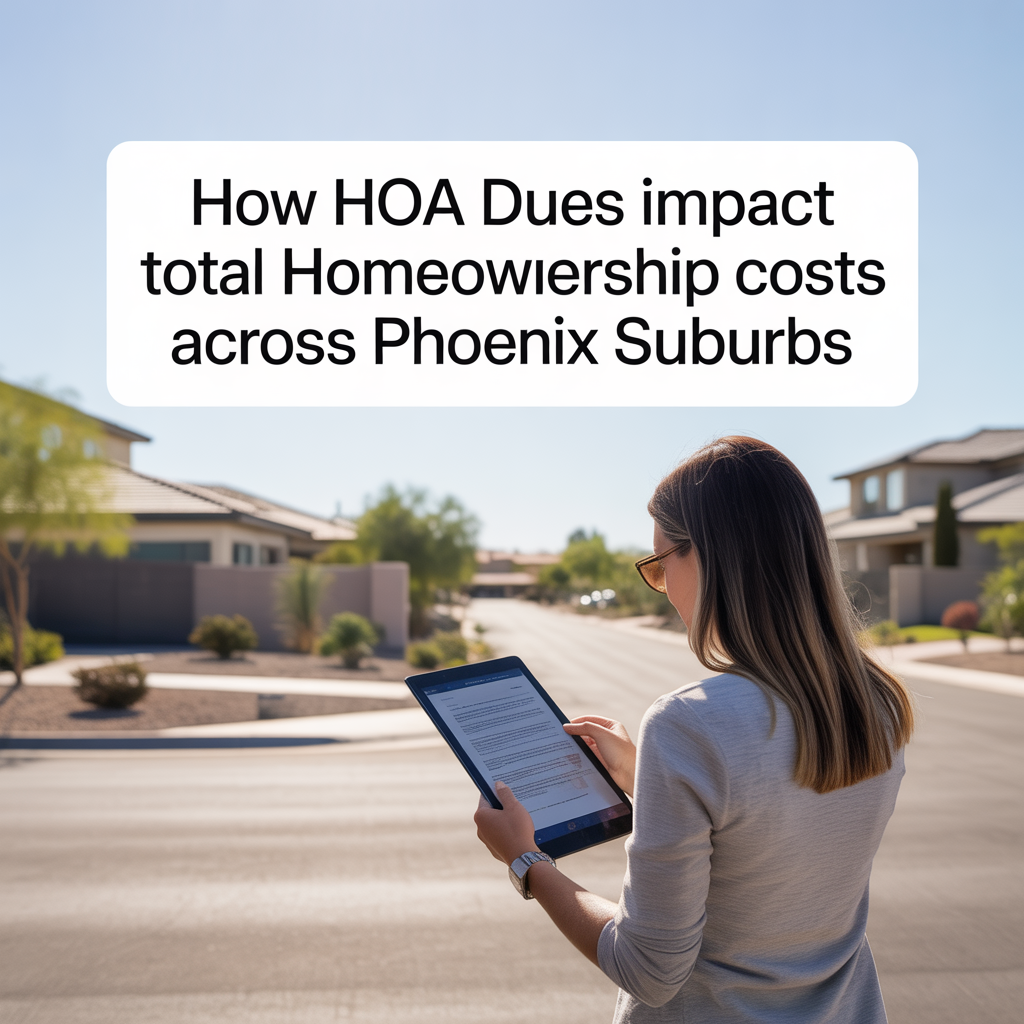
That’s the question so many ask here in Phoenix. HOA dues aren’t just another bill—they weave into the fabric of your total homeownership costs, influencing everything from your monthly cash flow to long-term resale strength. In our Valley suburbs, where master-planned communities dominate, understanding their true impact means seeing beyond the sticker price to how they shape your life and finances.
You know I live this every day, guiding families through these details. Let’s unpack it gently, suburb by suburb, so you can decide with confidence.
Why HOAs Are Everywhere in Phoenix—and What They Really Cover
Phoenix suburbs thrive on community design. Nearly half of our homes sit in HOA-governed spots, especially new builds in Gilbert, Chandler, Peoria, and the West Valley. These dues fund the things that keep neighborhoods pristine: shared pools, landscaping for our desert lots, private street maintenance, and rule enforcement that protects curb appeal.
Average monthly dues hover around $98-$135 statewide, but Phoenix varies widely—$30-$80 for basic single-family setups, $250-$450+ for condos and amenity-rich townhomes. They’re not optional in 70% of new construction; builders bake them in to deliver that polished Valley lifestyle.
The upside? They preserve value in places like Eastmark or Verrado. The catch? They add 10-20% to your total costs if not budgeted right.
HOA Ranges Across Key Phoenix Suburbs
Here’s how dues play out suburb-by-suburb, tied to PITI and lifestyle:
These aren’t guesses—they reflect how our suburbs balance growth and upkeep. In mature areas like Gilbert, low dues mean stable reserves; in booming Buckeye, watch for future hikes.
The Full Ripple Effect on Your Total Costs
HOA dues don’t sit alone—they amplify everything:
- PITI Integration: Add $100 dues to a $3,000 PITI, and you’re at 3-5% more monthly. Escrows rarely include them, so it’s pure out-of-pocket alongside SRP bills.
- Utility Offsets (and Surprises): Many cover community irrigation, trimming your water share—but condo HOAs might bundle trash/sewer, masking true savings.
- Insurance Ties: Shared roofs or pools raise master policies, trickling into your premium. Monsoon repairs? HOA handles exteriors, but specials can hit owners.
- Reserve Funds Matter: Healthy ones (review financials!) avoid assessments. Weak ones in older Peoria spots? $1,000-$5,000 pops post-10 years.
- Resale Edge: Well-managed HOAs in Chandler lift values 5-10%; troubled ones drag.
Phoenix truth: Dues under $100 often pay for themselves in preserved equity; over $300 demand scrutiny.
Common HOA Concerns—and the Reality Check
I hear the fears: “Will fees skyrocket?” “Can I rent or modify?” Let’s address them head-on.
- Fee Hikes: National medians rose to $135 in 2025; Phoenix tracks at $98 but expect 5-10% annual in growth areas like Queen Creek. Check 5-year histories.
- Restrictions: CC&Rs limit solar installs, Airbnb, or even backyard chickens. East Valley is lenient; luxury North Phoenix, less so.
- Condo vs. Single-Family: Townhomes pay more for roof/insurance inclusions—great if you hate maintenance, tough if cash flows tight.
- Hidden Specials: One-time roof funds or litigation can add $2K-$10K. Always read minutes from last 2 years.
Misconception: HOAs kill affordability. Reality: In Phoenix, they often enhance it by stabilizing neighborhoods amid our boom.
Strategies to Minimize HOA Impact
Make dues work for you:
- Budget Buffer: Aim for HOA under 5% of take-home. Pair with PITI under 28% for resilience.
- Due Diligence: Get estoppel certificate ($200 well-spent)—shows balances, dues, litigation.
- Negotiation Leverage: In slower markets, ask sellers for 12 months prepaid.
- Lifestyle Match: Families love Queen Creek amenities; empty-nesters prefer low-dues Ahwatukee.
- Future-Proof: Favor HOAs with 100%+ funded reserves; avoid those under 70%.
These steps turn potential burdens into assets, Valley-style.
When HOAs Enhance Lifestyle and Wealth
Beyond costs, think harmony. In Gilbert, $100 dues mean kid-friendly events and manicured trails—freeing weekends for Usery hikes, not yard work. In Desert Ridge, they fund spas that make monsoon season bearable. When aligned, HOAs let your homeownership feel lighter, not loaded.
Mastering HOAs for Smarter Phoenix Ownership
HOA dues shape your Valley life profoundly—from monthly flow to decade-long value. Choose wisely across our suburbs, and they become partners in your financial story.
If your numbers or neighborhood questions need a closer look, I’m right here.
If you’re thinking about making a move in Phoenix, you don’t have to figure it out alone.
Get the full Phoenix Market Insights → [Market Insights]


-

Energy Efficiency Upgrades for Phoenix Homes
-
How to Plan for Major Home System Replacements
-

When Phoenix Homeowners Should Replace Water Heaters