



Financial Readiness Guide → [Financial Readiness] & this is part of the larger Phoenix Financing Guide→ [Phoenix Financing Guide]
Written by: Renee Burke
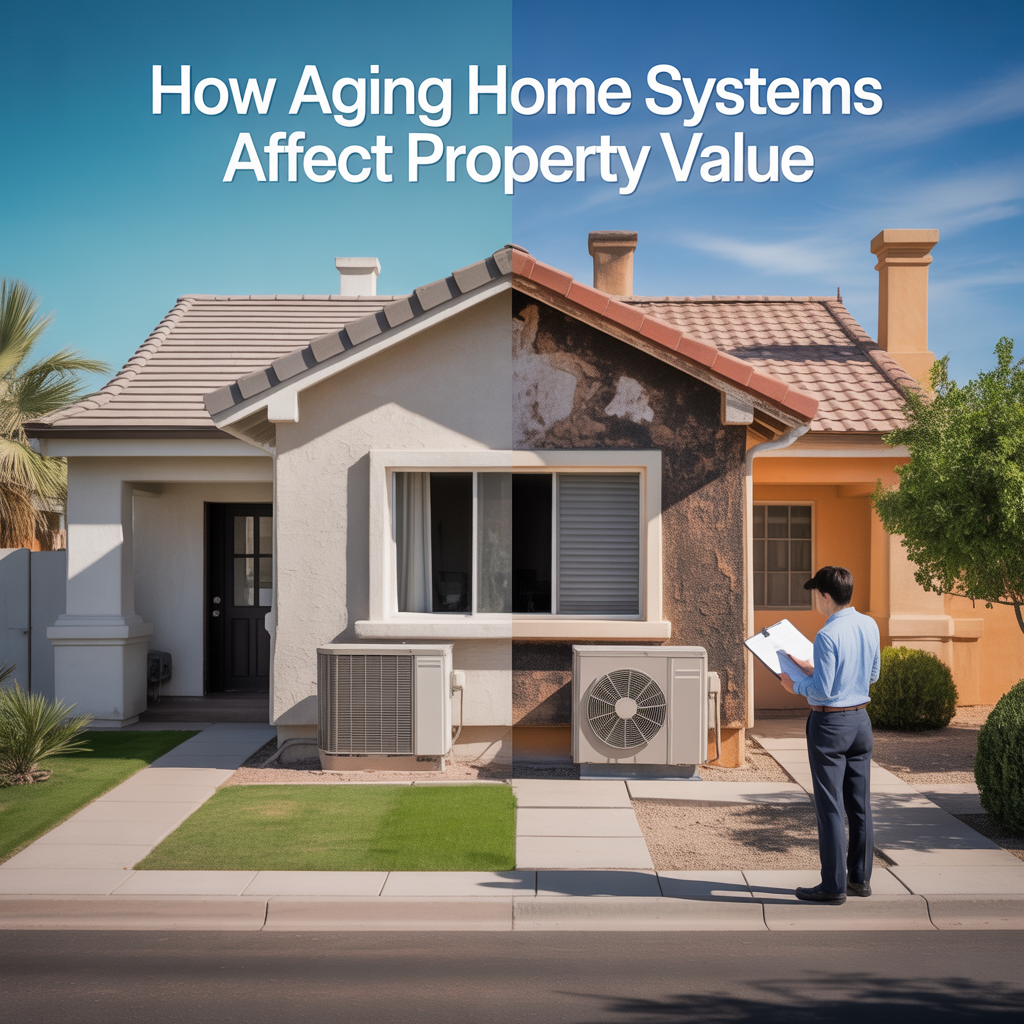
The age of your Phoenix home quietly shapes your ownership journey, with older properties often carrying higher maintenance demands due to decades of desert sun, dust, and thermal stress. I’ve guided families through charming 1970s bungalows in Central Phoenix and sleek newer builds in Queen Creek, helping them anticipate how a pre-1980 home might need 1.5–3% of value annually in upkeep ($6,750–$13,500 on $450,000), versus 0.5–1.5% ($2,250–$6,750) for post-2010 construction.
In our Valley, where monsoons test roofs and 115°F summers strain systems, older homes reward patience with character but require proactive budgeting to avoid surprises.
Why Older Properties Cost More to Maintain
Pre-1990s Phoenix homes feature original HVAC, foam roofs, galvanized plumbing, and single-pane windows that wear faster under UV and heat cycles. Expect frequent A/C overhauls ($5,000–$10,000 every 8–12 years versus 15–20 for new), stucco repaints every 5–7 years ($4,000–$8,000), and termite treatments twice yearly. Newer builds benefit from warranties, energy codes, and impact-resistant materials, cutting routine costs 30–50%.
Insurance rises too: Older roofs hike premiums 20–40%; modern ones qualify for discounts.
Short-Term Maintenance: First 1–3 Years
Older homes hit with immediate needs — $3,000–$8,000 upfront for inspections revealing deferred items like sewer scopes or electrical panels. A 1980s Ahwatukee charmer might need $2,000 pool relining; a 2020 Peoria new-build, just $500 filter tweaks.
Newer properties lean on builder warranties (1–10 years structural), keeping year-one under $1,500.
Long-Term Expenses: 5–15 Years Horizon
Cumulative costs diverge sharply. Older homes face major replacements sooner: Roof ($15,000–$25,000 at 20–30 years), water heater ($1,500–$3,000 every 10), windows ($10,000–$20,000). Annual totals climb to $7,000–$12,000 as systems overlap.
Newer homes spread peaks: Same roof at 30–40 years, HVAC at 20+. Reserves build steadily at 1%, versus reactive spending in aged properties.
Phoenix climate accelerates: Heat degrades foam roofs 20% faster; dust clogs older vents.
Cost Comparison by Age Bracket
| Property Age | Annual Maintenance | Major Replacement Cycle | 10-Year Total (450k home) |
|---|---|---|---|
| New (<10 yrs) | 0.5–1.5% ($2k–$7k) | 15–25 yrs | $30k–$60k |
| Mid (10–25 yrs) | 1–2% ($4k–$9k) | 10–15 yrs | $50k–$90k |
| Older (>25 yrs) | 1.5–3% ($7k–$14k) | 5–10 yrs | $80k–$140k |
Older saves upfront purchase but compounds over decades.
Strategies for Each Age Group
Older: Baseline inspection ($500–$800), 2% reserves monthly, phase upgrades (solar offsets A/C). Mid: Annual pro checks, warranty tracking. New: DIY basics, build habits early.
Age brings equity potential in appreciating Central pockets, but pairs best with realistic reserves.
If you’re weighing how property age fits your Phoenix budget, you don’t have to forecast alone. I’ve mapped these realities for dozens of Valley families, from mid-century gems to modern suburbs, so expenses feel planned, not punishing. Reach out — let’s align yours with steady confidence.
If you’re thinking about making a move in Phoenix, you don’t have to figure it out alone.
Get the full Phoenix Market Insights → [Market Insights]


-
Cost of Living in Rhode Island: Housing, Taxes, Utilities, and Everyday Expenses
-

What If My Commute Becomes Worse Than Expected?
-
How Aging Home Systems Affect Property Value