


This is part of the Ownership Costs & Budget Planning Guide → [Ownership Costs & Budget Planning Guide] & the larger Homeownership 101 Guide→ [Homeownership 101]
Written by: Renee Burke
Planning ahead for homeownership in the Phoenix Valley feels like a smart, steady choice right now. With market cycles shifting and families growing into their next chapter, thinking five years out gives you real clarity — not guesswork.
Many buyers I guide worry about affordability traps or unexpected costs down the road. The good news? A thoughtful budget today sets you up for confidence tomorrow, tailored to how our market actually evolves.
Let’s walk through how to build a realistic five-year budget for the home you’ll own — blending local market insights with the practical steps that keep life balanced.
1. Start With Your Future Lifestyle Snapshot
Before numbers come into focus, picture your life in five years. Will you have one more child in school? A promotion that means longer commutes to downtown Phoenix or the East Valley? Or perhaps semi-retirement with more time for golf in Ahwatukee or hiking in South Mountain?
Phoenix living ties closely to these choices. A single professional might prioritize a low-maintenance condo in Tempe. A growing family could eye Gilbert’s master-planned communities with top-rated schools.
Map your must-haves: commute distance to work hubs like Intel in Chandler or Banner Health in Mesa, access to hiking trails, or HOA amenities that fit your pace. This snapshot anchors your budget in reality, not just spreadsheets.
2. Project Home Prices Realistically for the Valley
Phoenix home values don’t skyrocket endlessly — they cycle with inventory, jobs, and rates. Looking five years ahead, expect moderate appreciation of 3–5% annually in stable areas like North Scottsdale or West Valley, potentially higher (5–7%) in high-demand pockets like Arcadia or DC Ranch.
But don’t bank on endless gains. If rates stay above 6%, inventory could loosen, moderating prices. Use tools like the Arizona Regional MLS data or Maricopa County assessor trends to project.
For example, a $550,000 home today in Peoria might reach $650,000–$700,000 in five years. Factor in your down payment growth — aim to save 10–20% by then through consistent contributions to high-yield accounts.
Your target: A home payment that’s no more than 28% of projected gross income. This keeps breathing room for everything else.
3. Mortgage Rates: The Big Variable
Rates fluctuate, but Phoenix buyers often qualify well due to strong local employment in tech, healthcare, and logistics. Assume a range of 5.5–7.5% for conventional loans in five years, based on current Fed trends and economic forecasts.
Build flexibility into your budget. At 6%, a $600,000 loan (20% down) means about $3,200 monthly principal and interest. At 7%, it’s closer to $3,600.
Refinancing windows open if rates drop, but plan conservatively. Explore VA or FHA if eligible — they often shine in our market for first-time or repeat buyers. Local lenders like those in the Arizona Bankers Association can lock in pre-approvals early.
4. The True Cost of Ownership: Beyond the Mortgage
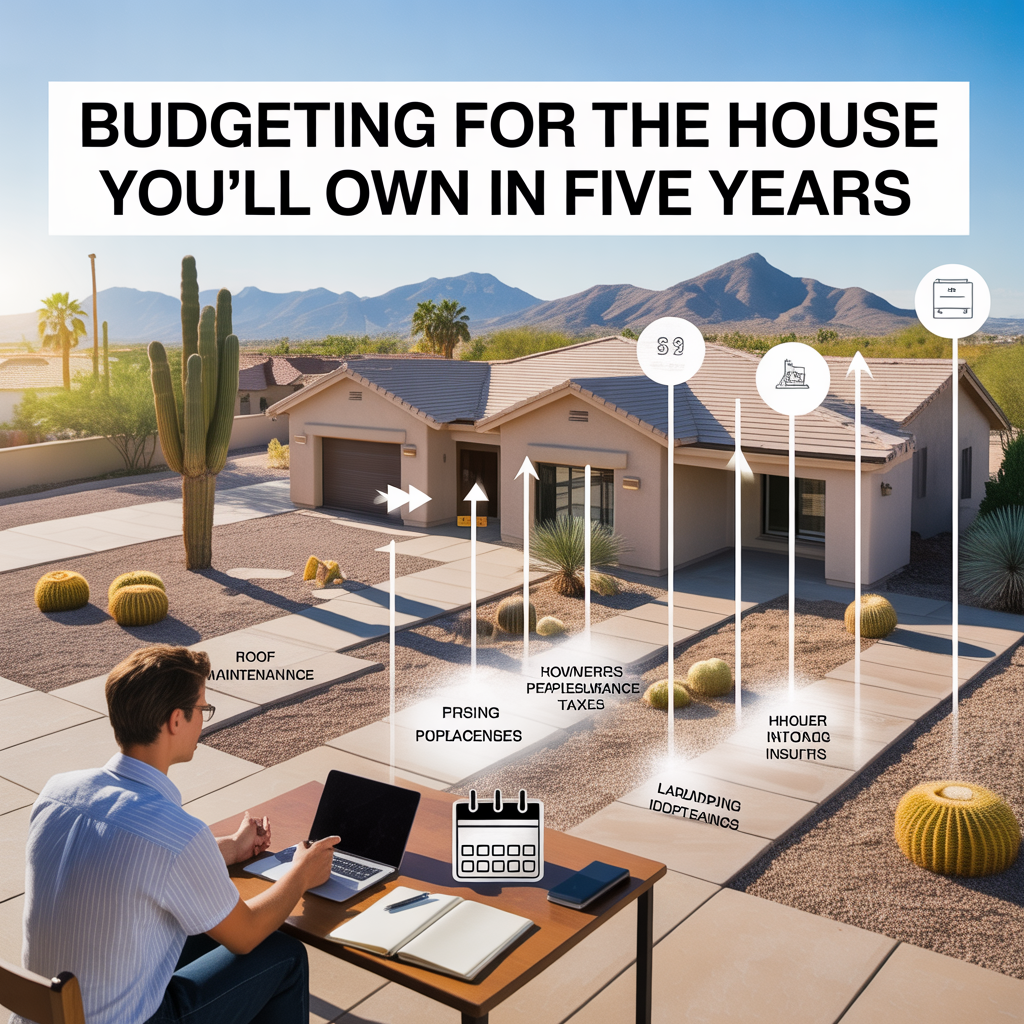
A mortgage is just the start. In Phoenix, ongoing costs can add 30–50% to your monthly outlay. Budget for these now so surprises don’t derail you later.
- Property taxes: Maricopa County averages 0.6–0.8% of assessed value. A $700,000 home might mean $350–$450/month.
- HOA fees: Common in 70% of Valley homes — $100–$300/month for condos/townhomes, $50–$150 for single-family in places like Queen Creek.
- Insurance: $150–$300/month, higher for pool homes or those in flood zones near the Salt River.
- Utilities: SRP/APS bills average $250–$400/month, peaking at $500+ in summer for larger homes.
Total non-mortgage housing costs often hit $1,200–$2,000/month. Test this against your current rent or living expenses to see the gap.
5. Maintenance and Reserves: Phoenix-Specific Realities
Desert living accelerates certain wear. Budget 1–2% of home value annually for upkeep — that’s $7,000–$14,000/year for a $700,000 home.
Break it down:
- A/C replacements every 10–12 years ($8,000–$12,000).
- Roof recoating or tiles ($5,000–$15,000).
- Hard water systems, pool maintenance, or stucco repairs ($1,000–$3,000/year).
Start a dedicated sinking fund now: $200–$400/month into a high-yield savings account. This covers the “desert tax” of heat, dust, and sun without stress.
6. Inflation and Income Growth Assumptions
Inflation in Phoenix tracks national averages but feels amplified by energy and food costs. Assume 2–3% annually for expenses, offset by similar wage growth in key sectors like Amazon warehouses in Goodyear or Mayo Clinic in North Phoenix.
Project your income upward conservatively — 3–4% raises plus any promotions. If you’re in real estate, tech, or healthcare, Valley job growth supports this.
Use a simple formula: Future monthly housing = (Current expenses × 1.025^5) + mortgage projection. This builds in compound growth without over-optimism.
7. Neighborhood Nuances That Shape Budgets
Not all Phoenix areas budget the same. East Valley (Gilbert, Chandler) offers family-friendly value with solid schools but higher HOAs. West Valley (Surprise, Buckeye) stretches dollars further for larger lots, ideal for remote workers.
Central corridors like Camelback or Biltmore carry premium taxes but walkable lifestyles. Emerging areas near TSMC’s chip plant in north Phoenix may see faster appreciation — budget for that upside and construction noise.
Visit open houses today. Talk to residents about real costs — it reveals what spreadsheets miss.
8. Building Your Five-Year Action Plan
Turn projections into steps:
- Track today: Log current expenses for 3 months. Use apps like Mint or YNAB, customized for Phoenix categories like “summer A/C buffer.”
- Save strategically: Automate 15–20% of income to down payment and reserves. Phoenix credit unions offer competitive rates.
- Stress-test scenarios: Model best/worst cases — rates at 5% vs. 8%, prices flat vs. +25%.
- Credit health: Aim for 740+ FICO. Pay down debt now; it unlocks better terms.
- Annual reviews: Revisit your plan yearly, adjusting for life changes or market shifts like new light rail expansions.
This isn’t rigid — it’s empowering.
9. Avoiding Common Pitfalls in Phoenix Planning
Buyers often underestimate summer utility spikes or overestimate “low-maintenance” HOAs. Others chase hot spots without budgeting for resale fees or appreciation taxes.
Focus on total cost of ownership, not just purchase price. And remember: Phoenix rewards patient planners. Inventory ebbs and flows — positioning yourself now means choice later.
10. Confidence Comes From Preparation
Budgeting for your future home isn’t about perfection — it’s about peace. In five years, you’ll step into ownership knowing you’ve accounted for the Valley’s unique rhythm: growth, heat, opportunity.
This approach has guided dozens of families from renters to confident owners, homes in Litchfield Park to luxury in Paradise Valley.
If you’re starting this journey — or refining your numbers — I’m here. Share your timeline, neighborhood ideas, or budget questions.
You don’t have to figure it out alone. Let’s craft a plan that fits your life in Phoenix perfectly.
If you’re thinking about making a move in Phoenix, you don’t have to figure it out alone.
Get the full Phoenix Market Insights → [Market Insights]


-
Cost of Living in Rhode Island: Housing, Taxes, Utilities, and Everyday Expenses
-

What If My Commute Becomes Worse Than Expected?
-

How Aging Home Systems Affect Property Value