


This is part of the Ownership Costs & Budget Planning Guide → [Ownership Costs & Budget Planning Guide] & the larger Homeownership 101 Guide→ [Homeownership 101]
Written by: Renee Burke
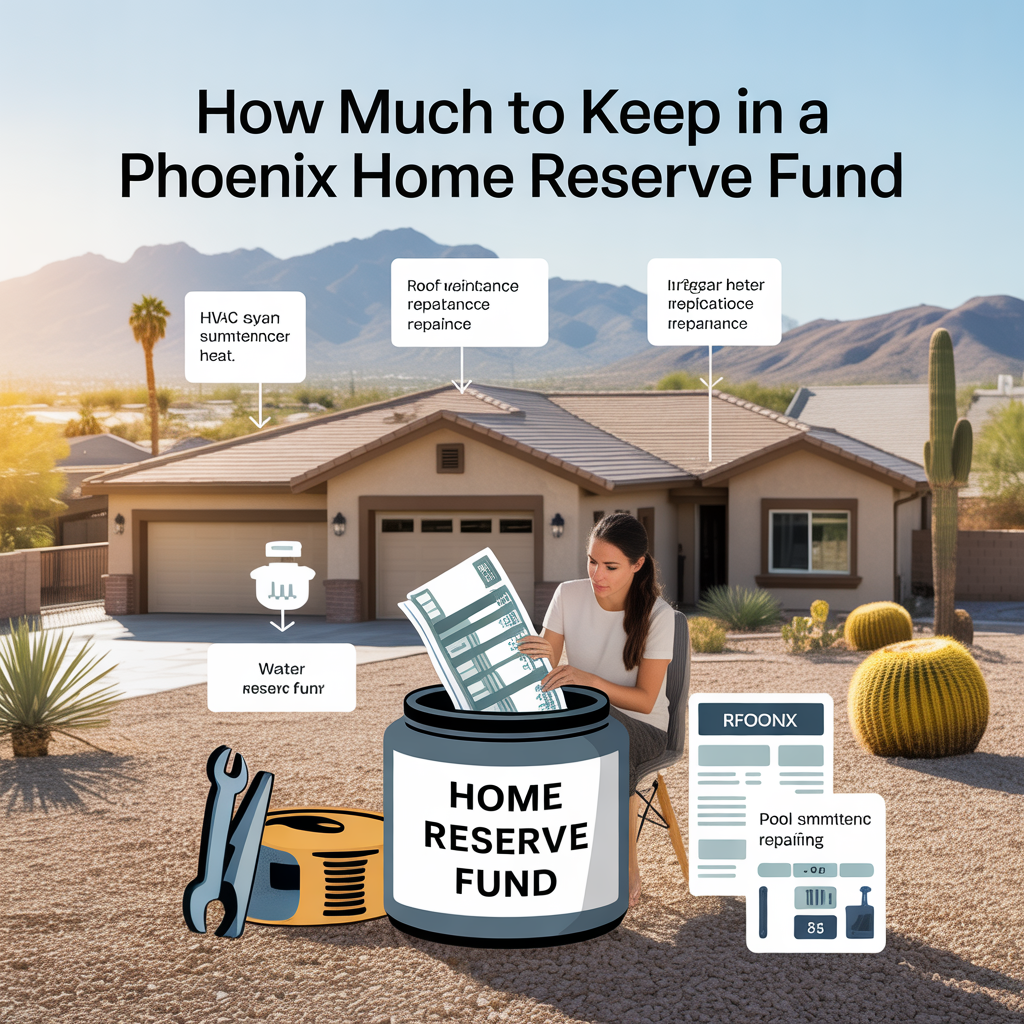
A home reserve fund is your quiet safety net — money set aside for the inevitable repairs and replacements that come with Valley living. In Phoenix’s harsh sun and dust, knowing the right amount brings peace, preventing those stressful cash crunches.
I recommend this to every homeowner I guide, from first-time buyers in Surprise to long-timers in Arcadia. It’s not about fear; it’s about smart, steady preparation tailored to our local realities. Let’s figure out what’s right for your home.
1. The 1% Rule: A Proven Starting Point
Financial experts and local pros agree: Budget 1% of your home’s value annually for maintenance and reserves. For a $500,000 Phoenix home — typical in Peoria or Chandler — that’s $5,000/year, or $417/month.
This covers routine upkeep like A/C servicing and filters, plus building toward big-ticket items. It’s a baseline that fits most single-family homes here, where desert wear accelerates costs. Adjust up for pools or older roofs.
2. Phoenix-Specific Wear: Why Reserves Matter More Here
Our climate shortens lifespans: A/C units last 10–12 years under constant heat ($8,000–$12,000 replacement), foam roofs need recoating every 7–10 years ($5,000–$10,000), and stucco/paint fades fast from UV ($3,000–$6,000).
Monsoons crack foundations; hard water clogs systems. Without reserves, a $10,000 A/C fail mid-summer hits hard. Aim for 3–6 months of these projected costs liquid — $10,000–$30,000 total for average homes.
3. Break It Down by Home Type
- Starter homes ($400k–$600k, 1,800 sq ft): $4,000–$6,000/year ($333–$500/month). Focus: A/C, irrigation, appliances.
- Family homes ($600k–$900k, pools): $6,000–$9,000/year ($500–$750/month). Add pool pumps ($2,000 every 5 years).
- Luxury ($1M+, Scottsdale): $10,000–$20,000/year ($833–$1,667/month). Gated features, larger systems.
HOA homes lean on association reserves (ideally 70–100% funded), so personal funds cover interiors only — still 0.75–1%.
4. Big-Ticket Timeline and Funding Goals
Project 10-year horizons:
- Year 3–5: Appliances ($3,000–$5,000).
- Year 7–10: A/C, water heater ($10,000+).
- Year 10–15: Roof, flooring ($15,000+).
Target $20,000–$50,000 liquid by year 5, growing with equity. High-yield savings (4–5% APY) or money markets keep it accessible and earning.
5. HOA Overlap: Don’t Double-Count
70% of Phoenix homes have HOAs — Gilbert or Queen Creek communities often fund roofs/pools via reserves (studies recommend 100% ideal, 70% safe). Your fund focuses on interiors: HVAC, plumbing, paint.
Request the reserve study at purchase — underfunded ones signal personal buffers needed.
6. Emergency vs. Planned: The Split
- Emergency fund (3–6 months living expenses): Separate, for job loss/life events.
- Home reserve: Planned repairs. $5,000–$10,000 cash for surprises like slab leaks ($4,000–$8,000 in our clay soils).
Total housing buffer: 6–12 months combined.
7. Inflation and Appreciation Adjustments
With 3–5% annual home value growth, bump reserves proportionally. Post-2026, construction costs up 10–15% mean larger future hits. Review yearly against Maricopa Assessor values.
8. Tax-Smart Storage Options
- High-yield savings: Liquid, FDIC-insured (Ally, local credit unions).
- Money market/CDs: Slightly higher yields for known timelines.
- Home equity line: Last resort, low interest. Avoid stocks — too volatile for essentials.
HOA best practices echo this: Safe, conservative investments.
9. Building and Maintaining Your Fund
- Automate: $300–$600/month transfers.
- Replenish post-use: A $2,000 repair? Refill over 4 months.
- Annual audit: List assets, lifespans, costs via apps like HomeZada.
- Insurance gaps: Reserves cover deductibles ($2,500+ for hail).
Start small — consistency compounds.
10. The Confidence Reserves Bring
In Phoenix, where heat doesn’t pause, a solid reserve fund means choices, not crises. Families I advise sleep easier, tackling South Mountain hikes instead of bill worries.
You deserve that security. If calculating for your East Valley pool home or West Valley newbie — or auditing your current setup — let’s talk specifics. I’ll walk you through it, neighborhood by neighborhood.
You don’t have to build it alone. I’m your partner in this.
If you’re thinking about making a move in Phoenix, you don’t have to figure it out alone.
Get the full Phoenix Market Insights → [Market Insights]


-

Real Outdoor Access by Chandler Area
-
Commute Corridors and Directions in Chandler
-

School District Lines in Chandler