



This is part of the Ownership Costs & Budget Planning Guide → [Ownership Costs & Budget Planning Guide] & the larger Homeownership 101 Guide→ [Homeownership 101]
Written by: Renee Burke
Utility bills in Phoenix can feel like the wildcard in your budget — steady one month, soaring the next. With our intense summers and variable provider plans, planning around this volatility keeps your homeownership smooth and stress-free.
I’ve helped many Valley families turn those summer shocks into predictable line items. It starts with understanding SRP and APS realities, then building buffers that fit your lifestyle. Let’s map it out step by step.
1. Understanding Phoenix’s Utility Landscape
Salt River Project (SRP) and Arizona Public Service (APS) dominate the metro, each with time-of-use plans that reward smart habits but punish peak usage. SRP’s summer on-peak (July–August) hits 40.20¢/kWh, while off-peak dips to 15.06¢ — a huge swing. APS peaks exceed 25¢/kWh in summer afternoons, amplifying bills for 2,000 sq ft homes to $400–$600 monthly.
Recent news shows volatility: SRP proposes a 3% summer dip (May–Oct 2026, saving ~$5.57/month average), offsetting prior 3.5% hikes, while APS eyes 16% increases (~$20/month) via rate cases. Water from city providers like Phoenix or Gilbert adds $50–$150, spiking with pools or lawns.
These aren’t random — they tie to fuel costs, demand, and our desert heat.
2. The Anatomy of a Volatile Bill
Break down a typical SRP residential bill: base charge + energy + fuel adjustment + taxes. Summer peaks cluster evenings (4–9 p.m.), when A/C, ovens, and EVs overlap. A 3,000 kWh summer user might pay $550, vs. $200 winter — a 175% jump.
APS solar buyback at ~6.85¢/kWh (dropping to 6.17¢ post-Sept 2025) means excess production doesn’t fully offset peaks. Pools evaporate 1/4 inch daily in 110°F, adding $100/month water/electric. Hard water filters and salt systems layer $20–50.
Track your last 12 months — patterns emerge.
3. Seasonal Peaks: Summer’s Biggest Hit
Phoenix summers aren’t three months; they’re six-plus, with monsoons adding humidity loads. SRP summer rates (May/June/Sept/Oct) average 18.85¢ on-peak; APS time-of-use pushes super-peak avoidance. Average household bills hit $4,500–$5,000 yearly, 20–30% above national due to cooling.
Pre-2026 hikes (SRP 3.5%, APS 4.5–16%) mean planning for 5–10% annual volatility. Monsoon dust demands fans/filters; heat waves spike usage 20%.
4. Rate Changes: Stay Ahead of the Curve
Utilities file annual cases — SRP’s March 2026 board vote could cut summer bills slightly, but APS seeks major overhauls doubling solar fees. Fuel/purchased power adjustments swing with gas prices; renewables shifts add uncertainty post-Arizona’s mandate repeal.
Subscribe to provider alerts and Arizona Corporation Commission updates. Historical 3–6% household increases signal buffers.
5. Home Features That Amplify Volatility
Pool homes ($150–$300 extra summer), north-facing roofs (less solar gain), or EVs (off-peak charging key) vary wildly. Larger footprints (2,500+ sq ft) in West Valley like Surprise see higher baselines. Appliances pre-2015 guzzle more.
Audit yours: Energy vampires like old fridges add $50/month unnoticed.
6. Strategies to Stabilize Your Bills
Smart planning flattens peaks:
- Time-of-use mastery: Run loads pre-4 p.m. or post-9 p.m. SRP super off-peak at 3.95¢/kWh saves big.
- Efficiency upgrades: LED bulbs, ceiling fans, programmable thermostats cut 10–20%.
- Solar with batteries: Offset peaks; APS buyback low, but self-use shines (lock rates before Sept 2025 drops).
- Pool covers/pumps: Reduce evaporation 50%, timer for off-peak.
- Water smarts: Drip irrigation, xeriscaping for Gilbert rebates.
Many see 15–25% savings without sacrifice.
7. Building Volatility Buffers
- Monthly reserves: Stash $100–$200 (10–15% of average bill) into high-yield savings for summer surges.
- Budget averaging: Divide yearly total by 12 for flat payments.
- Provider switches: Compare SRP vs. APS if boundaries allow; Gilbert water hikes (25%) prompt audits.
- Assistance programs: SRP/APS low-income discounts, federal weatherization for qualifiers.
Test: Model a 20% spike — does your budget hold?
8. Tech and Habits for Long-Term Wins
Apps like SRP’s My Account or APS Sense track real-time; smart plugs automate. Habits: 78°F thermostat, no hot cooking evenings, shade trees (East Valley rebates available).
Annual energy audits (free via providers) pinpoint leaks.
9. Neighborhood and Lifestyle Ties
East Valley (Chandler SRP) peaks lower with solar prevalence; West Valley (APS Buckeye) faces grid strain from growth. Families with home offices need EV strategies; retirees prioritize fixed plans.
Tailor to your zip: North Phoenix TSMC boom may hike demand.
10. Peace Through Preparation
Utility volatility is Phoenix life — but planned buffers turn it into a non-issue. Families I guide reclaim hundreds yearly, freeing funds for hikes in Papago or dinners in Old Town.
You deserve that steadiness. If bills feel unpredictable — or you’re eyeing solar/rebates — let’s review your usage and options.
You don’t have to weather the peaks alone. I’m here to light the way.
If you’re thinking about making a move in Phoenix, you don’t have to figure it out alone.
Get the full Phoenix Market Insights → [Market Insights]


-

Electrical Safety Inspections for Older Phoenix Homes
-
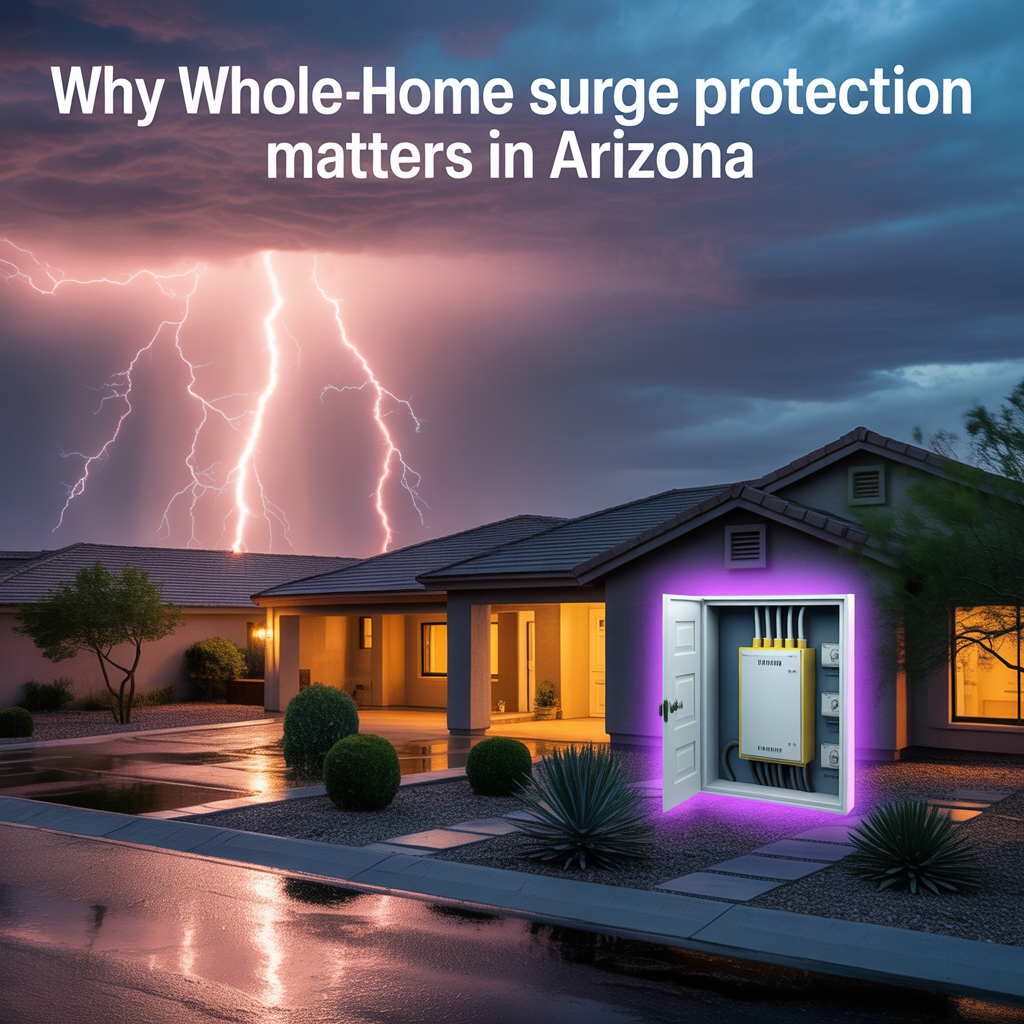
Why Whole-Home Surge Protection Matters in Arizona
-

Preparing a Phoenix Home for Electric Vehicle Charging