


This is part of the Insurance, Risk and Protection Guide →[Home Maintenance and Systems] & the larger Homeownership 101 Guide→ [Homeownership 101]
Written by: Renee Burke
Owning a home in Phoenix means saying yes not just to the sunshine and views, but to the responsibility of keeping your house in tune with the desert. The most peaceful, valuable homes in our market aren’t the ones that were built the most expensively, but the ones that had a steady, thoughtful maintenance rhythm from the start.
A long‑term home maintenance plan is simply a roadmap that helps you stay ahead of our heat, dust, and shifting seasons without feeling overwhelmed. It takes the guesswork out of “What should I do this month?” and replaces it with gentle, predictable habits that protect your comfort, safety, and investment.
1. Start with a Clear Big‑Picture Goal
Before you dive into calendars and checklists, decide what you’re really trying to accomplish. For most Phoenix homeowners, long‑term maintenance is about:
- Keeping major systems (HVAC, water heater, plumbing, and electrical) running smoothly and efficiently
- Protecting the exterior — roof, stucco, windows, and slab — from our intense sun and occasional storms
- Maintaining indoor air quality and safety (smoke alarms, CO detectors, locks, and fire extinguishers)
- Preserving and eventually enhancing your home’s resale value without constant crisis‑mode repairs
With that in mind, your long‑term plan becomes less about a rigid to‑do list and more about a rhythm of care that feels sustainable over decades.
2. Build a Timeline: Life Stages of Your Home
A useful way to think about long‑term maintenance is in “life stages” of your home. These are rough windows, not exact rules, but they give you a mental framework for what to expect.
Years 1–10: Establishing the rhythm
- Focus on learning your home’s quirks: where it drafts, which rooms run hotter, how your irrigation behaves.
- Set up a simple inspection and maintenance schedule: annual HVAC service, yearly roof / exterior checks, and biannual plumbing and safety reviews.
Years 10–20: Staying ahead of wear
- Pay closer attention to aging systems: HVAC nearing 10–15 years, water heater nearing 10–12, older roofing materials.
- Begin planning for gradual upgrades: dual‑pane windows, improved insulation, or a planned roof refresh before leaks appear.
Years 20+: Reinforcing the structure
- Monitor for structural or slab‑related signs: sticking doors, uneven floors, or recurring cracks.
- Strengthen drainage and exterior seals so your home remains dry and stable, even as the desert continues to shift.
Keeping this timeline in mind helps you choose projects that feel forward‑thinking instead of reactive.
3. Anchor Your Plan Around the Seasons
In Phoenix, the year doesn’t feel like spring → summer → fall → winter the way it does in other places, but our seasons still have a very real impact on your home. A seasonal rhythm is one of the easiest ways to create a long‑term plan you can actually stick with.
Spring (late winter / early March–April)
- Service your HVAC before the first 100‑degree days.
- Inspect your roof, stucco, and exterior for any damage from cooler months or wind.
- Clean gutters and downspouts, and check grading around the foundation so monsoon runoff stays away from the slab.
Summer (May–September)
- Change your AC filter monthly and keep an eye on water usage and irrigation leaks.
- Clean dryer vents and inspect appliances to reduce fire risk.
- Schedule pest‑control and seal gaps around doors, windows, and the stem wall to keep scorpions and bugs from moving in.
Fall (October–November)
- Have your HVAC checked again and flush your water heater.
- Inspect driveway and walkways for cracks, and re‑seal as needed.
- Review your pool equipment and irrigation system if you have them.
Winter (December–February)
- Test smoke and CO detectors, and check security‑system batteries.
- Inspect caulking around windows and doors, and tighten any loose hardware.
- Plan any larger projects — new roof, window upgrades, or exterior painting — so they’re ready before the heat returns.
By attaching your key tasks to the seasons, you automatically distribute work across the year instead of letting it pile up in a frenzy.
4. Mix DIY Tasks with Professional Touches
A long‑term plan works best when you know which chores are easy to do yourself and which truly deserve a professional. In Phoenix, the sweet spot is:
DIY‑friendly, routine checks
- Monthly: changing HVAC filters, checking for leaks under sinks, and inspecting smoke‑alarm batteries.
- Quarterly: cleaning appliance vents, testing faucets and showerheads, and inspecting exterior seals around doors and windows.
Professionally handled, periodic checks
- Annual HVAC tune‑ups and duct cleaning every 3–5 years.
- Roof inspections twice a year and full‑home inspections every 3–5 years.
- Plumbing and sewer‑line inspections when you notice slow drains or water‑usage spikes.
Blending the two keeps your home in good shape without burning you out.
5. Track It So You Don’t Forget It
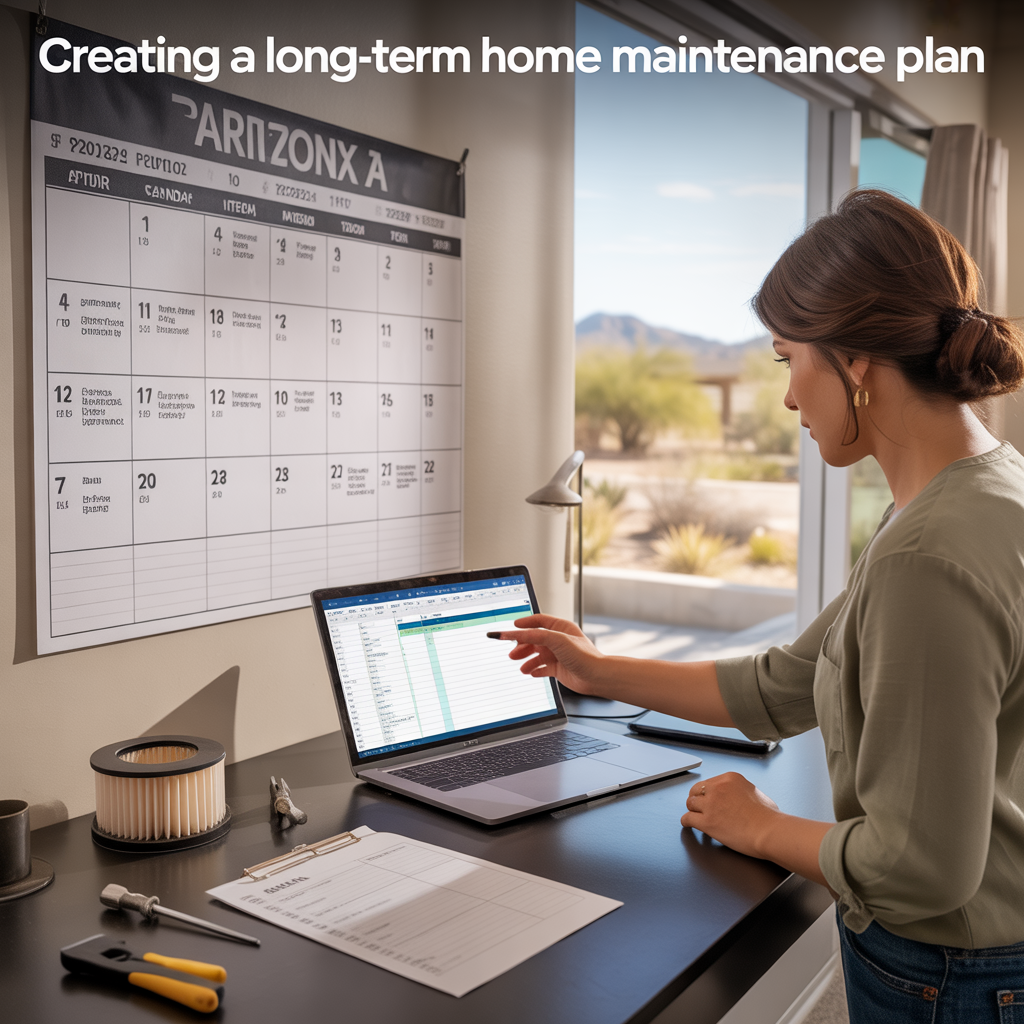
The best plan is useless if you can’t remember to follow it. A simple home‑maintenance calendar — whether on your phone, a wall planner, or a printed checklist — makes a huge difference. You might:
- Create one‑page “spring,” “summer,” “fall,” and “winter” lists and post them in your laundry room or kitchen.
- Set recurring reminders in your phone for key tasks: HVAC service, AC filter changes, and roof inspections.
- Use a simple spreadsheet or notebook to track what you’ve done each year, so you can see patterns and anticipate replacement dates for big systems.
Over time, you’ll notice which tasks you consistently forget — and you can plan workarounds (like hiring a handyman twice a year) so they’re never neglected.
6. Plan for the “Big Ticket” Items Over Time
A true long‑term maintenance plan also includes a gentle financial rhythm for larger projects. In Phoenix, the most common “big‑ticket” items are:
- Roof replacement or significant repair (tiles, underlayment, flashing)
- HVAC system replacement
- Water‑heater and hot‑water system upgrades
- Exterior paint or stucco refresh
- Drainage fixes or slab‑related work if needed
A helpful exercise is to:
- Estimate when you think each major system might need work (e.g., HVAC at 12–15 years).
- Decide how many years you want to spread that cost over (5–10 years is common).
- Set aside that small monthly amount into a “home maintenance” savings account.
This way, when it’s time to replace a roof or an AC unit, you’re not shocked by the price — you’ve been quietly preparing for it all along.
7. Let Your Plan Grow With You
Finally, remember that your long‑term maintenance plan is not set in stone. It should grow and change with your life:
- If you add a pool, your plan will include more frequent chemical checks and equipment maintenance.
- If you remodel the kitchen or bathroom, you’ll add new appliances to your inspection list.
- If you’re preparing to sell, your plan temporarily shifts to focus on repairs, cosmetic touches, and inspection‑ready details.
A flexible, thoughtful plan is what lets you enjoy your Phoenix home without living in fear of the next repair bill. It’s much less about perfection and much more about consistency.
You Don’t Have to Map This Out Alone
If you’re wondering what your home’s long‑term maintenance plan should look like — whether you’re three years in or thirty years in — I’m here to help you sketch it out.
If you’re thinking about making a move in Phoenix, you don’t have to figure it out alone. Whether you’re trying to understand what systems should be prioritized, when to replace versus repair, or how your home’s condition fits into your overall plan, I’m happy to walk through it with you — calmly, clearly, and without pressure.
Together, we can build a maintenance rhythm that feels like care, not chore, and sets your home up to be a quiet, steady part of your life story in Phoenix.
Get the full Phoenix Market Insights → [Market Insights]


-
Cost of Living in Rhode Island: Housing, Taxes, Utilities, and Everyday Expenses
-

What If My Commute Becomes Worse Than Expected?
-

How Aging Home Systems Affect Property Value