


This is part of Real Estate Fears in Denver→ [Real Estate Fears in Denver] also research Denver Buyer Fears → [Denver Buyer Fears] and Denver Seller Fears → [Denver Seller Fears]
Written by: Chad Cabalka
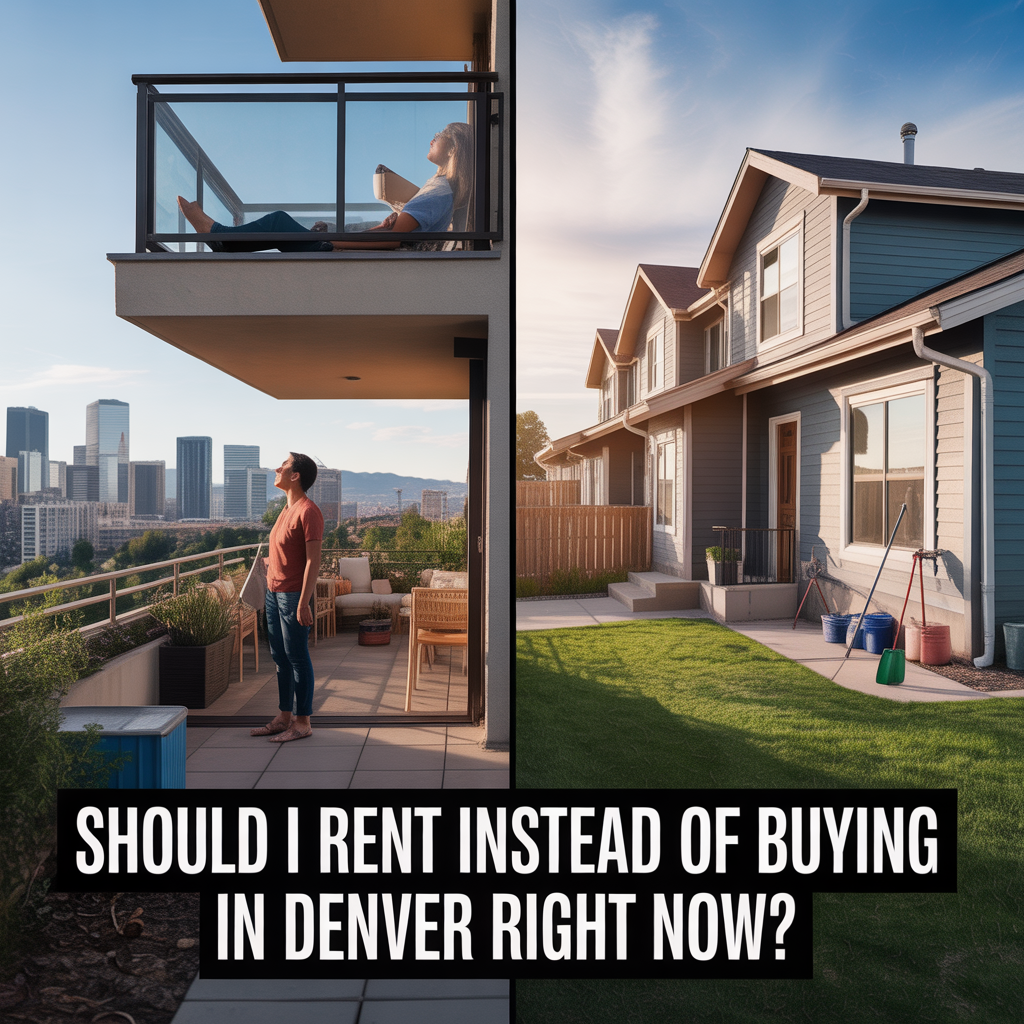
Renting versus buying in Denver right now hinges on your timeline, risk tolerance, and cash flow—it’s not a one-size-fits-all call in a market where median homes hit $530K-$570K while rents for decent three-beds hover around $1,850-$2,750 monthly. Pure math often favors renting short-term amid high entry costs and softening prices, but ownership builds equity if you’re planted for 7+ years amid the metro’s persistent demand drivers. From guiding clients through both paths, the edge tilts toward flexibility for most in this balanced 2026 cycle.
Monthly Cost Breakdown
Renting looks leaner upfront. A median $1,900 two- or three-bedroom apartment or townhome runs $1,800-$2,500 including utils in spots like Central Park or LoDo—often 40% less than owning a comparable $550K property at 6.7% rates. PITI (principal, interest, taxes, insurance) clocks $2,700-$3,200 on a 20% down payment, plus 1-2% maintenance ($500-$900/month amortized) and HOA fees averaging $250-$400. Property taxes at 0.5-0.7% add $250 monthly; insurance another $150, spiking on hail-prone roofs.
Buyers front-load: 3-5% closing ($15K-$25K), plus reserves for surprises. Renters dodge that, banking the difference—potentially $340K more wealth over 10 years if invested at 7% returns, per models factoring Denver’s 23.9 price-to-rent ratio. But factor appreciation (2-4% forecasted) and principal paydown ($400-$600/month equity), and buying pulls ahead after year five for long-haulers.
Short-Term Winner: Renting
If staying under five years—like relocators or job-hoppers—renting crushes. No appraisals gaps (common now with prices dipping 4% yearly), no maintenance roulette ($10K roofs post-hail), no selling costs (6% commissions). Inventory abundance means lease flexibility; break early with sublets or assignments rare in ownership.
Denver’s renter-friendly laws cap deposits at one month’s rent, ban retaliatory evictions, and mandate 91-day notices for non-renewals. Lifestyle perks shine: Test neighborhoods like RiNo or Wash Park without $50K skin. In softening sales (January volume down to 2008 lows), buyers face carrying costs if DOM stretches to 60+ days.
Long-Term Edge: Buying
Past seven years, ownership wins on wealth build. Low taxes (0.51% metro average) and steady inflows from tech/healthcare jobs sustain 2-3% annual gains, outpacing rent hikes (3-5% lately). Leverage amplifies: Borrow at 6.7%, force appreciation on $420K loan while rents chase inflation. Tax deductions offset $5K-$10K yearly if itemizing.
Submarket matters. Highlands Ranch or Littleton single-families hold firmer (3% appreciation) versus urban condos lagging on HOA/insurance creep. New builds in Parker offer warranties, buffering early costs.
Who Should Rent
Young professionals or dual-income pairs under $145K household (income needed to comfortably buy) save aggressively—invest the spread in index funds. Families staging for private schools test districts without commitment. Investors? Rent, house-hack later via multifamily when cap rates improve.
Downsides: Rent escalations outpace wages; no customization (goodbye, backyard oasis); credit dings from evictions in turnover-heavy complexes.
Who Should Buy
Stable $140K+ earners with 20% down ($100K+) and 5-7 year plans lock value. Move-ups trading rentals for space gain lifestyle equity—home offices, yards over apartment treadmills. Retirees eye fixed PITI versus rent spirals.
Risks loom: Rates stuck high cap affordability; price corrections (down 20% five-year) hit flippers. But geographic chokeholds (foothills east-west) and job magnets preserve floors.
Rent vs. Buy Calculator Insights
Plug your numbers: At $532K median, $1,860 rent, 6.7% rate, 20% down—renting nets $340K advantage over 10 years if no appreciation; flips to buy at 15% growth. Shorten to three years? Rent by $100K+. Add $138K income threshold, and sub-$110K households rent decisively.
| Factor | Renting | Buying |
|---|
| Factor | Renting | Buying |
|---|---|---|
| Monthly (Median) | $1,900 | $2,700 |
| Upfront Cash | $4K | $110K |
| 5-Year Wealth | +$80K (invested) | +$50K (equity) |
| Flexibility | High | Low |
| Customization | None | Full |
Market Timing Nuances
2026’s buyer leverage—8K inventory, 35 DOM—eases entry versus 2021 frenzy, but hail/insurance hikes (25% yearly) inflate ownership. Spring rebound tightens rents; fall softens buys. If rates dip to 6%, pivot to purchase—locking now hedges that.
Rent if transient or capital-poor; buy if rooted and capitalized. Denver’s not crashing—it’s plateauing. Flexibility buys time to strike when math aligns with your runway.
Get the full Denver Market Insights → [Market Insights]



Littleton’s Ken Caryl for Lockheed Relocations
This is part of Lockheed Martin Relocation → [Lockheed Martin Relocation Hub] & the larger Denver Relocation Hub → [Denver Relocation Hub] Written by: Chad Cabalka Ken Caryl is one of the best-kept “family first” relocation options for Lockheed Martin employees who want foothills scenery, strong neighborhood appeal, and a real suburban lifestyle that still feels connected…


Centennial & Parker for Lockheed Relocations
This is part of Lockheed Martin Relocation → [Lockheed Martin Relocation Hub] & the larger Denver Relocation Hub → [Denver Relocation Hub] Written by: Chad Cabalka Centennial and Parker are two of the smartest suburban choices for Lockheed Martin employees relocating with families because they give you a strong balance of commute flexibility, good neighborhood variety, and…

Highlands Ranch for Family-Friendly Lockheed Relocations
This is part of Lockheed Martin Relocation → [Lockheed Martin Relocation Hub] & the larger Denver Relocation Hub → [Denver Relocation Hub] Written by: Chad Cabalka Highlands Ranch is one of the strongest choices for Lockheed Martin employees relocating with families because it delivers exactly what most parents want after a big move: stable neighborhoods, strong community…