


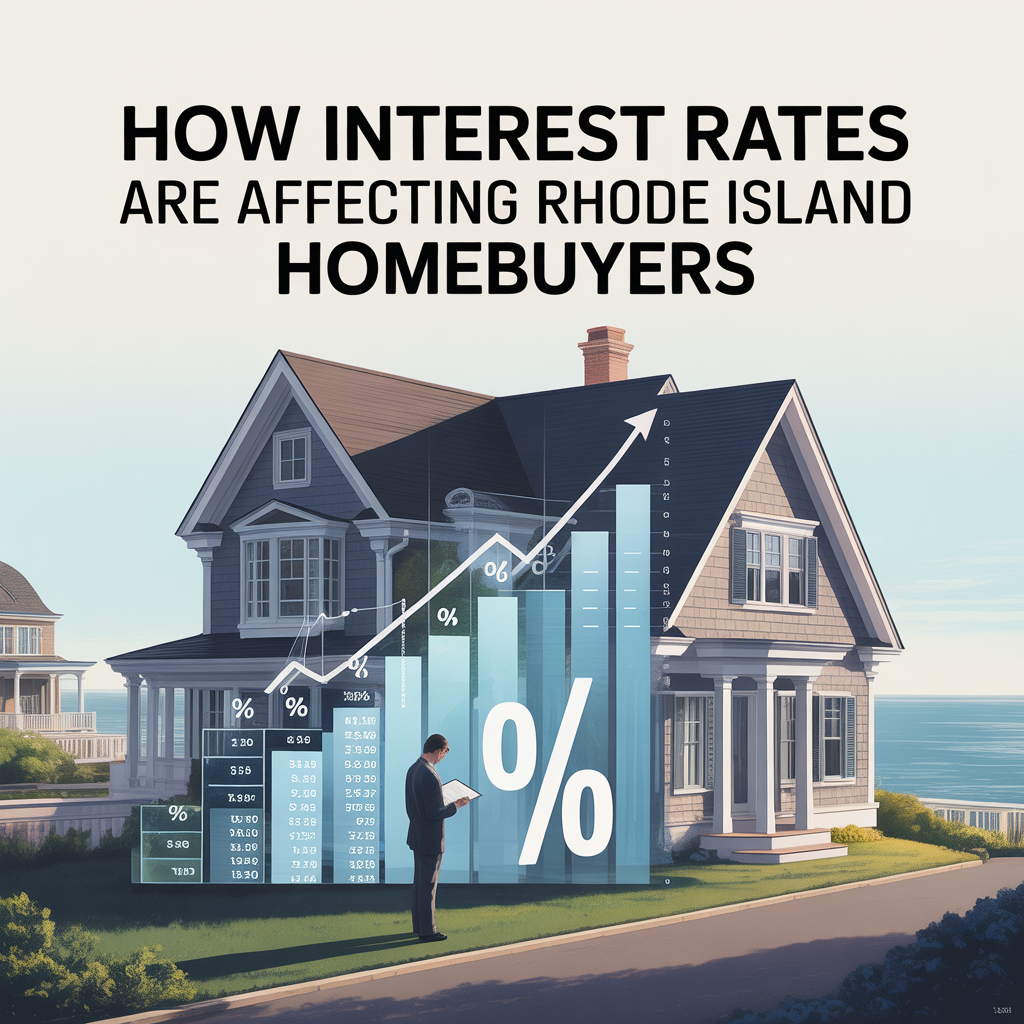
This is part of the RI Market Insights Hub → [RI Market Insights Hub] also research RI Home Buying Process→ [RI Home Buying Process] and RI Home Selling Process → [RI Home Selling Process]
Written by: Hilary Marshall
When people in Rhode Island ask me about interest rates, they’re not really looking for a chart or a national headline. What they want to know is simple: “Can I actually afford to buy a home here right now, and am I making a mistake if I wait?”
I hear that from first‑time buyers in Providence, families trading up in the suburbs, and even long‑time homeowners thinking about downsizing from coastal towns. The rate environment in 2026 isn’t as shocking as it was a couple of years ago, but it’s still shaping every decision buyers make.
In this market, interest rates don’t just affect your monthly payment. They affect how fast homes move, how picky sellers can be, and how much breathing room you have as a buyer. Let’s talk about what that really looks like on the ground in Rhode Island.
Where Rates Actually Are – And How That Feels in Rhode Island
You’ve probably seen enough “rate update” headlines to last a lifetime, but most of them aren’t Rhode Island‑specific and they don’t translate those numbers into real life.
What I’m seeing day to day with my buyers is this: rates are no longer at the painful peaks we saw, but they’re also not dropping back to the ultra‑low levels everyone remembers from a few years ago. We’re in a middle zone. For most Rhode Island homebuyers, that means you’re qualifying somewhere in the mid‑range—not cheap, not catastrophic, but tight enough that you feel every little bump in the rate.
On a typical Rhode Island home, especially in and around Providence and the more desirable suburbs, that rate range pushes your principal and interest payment into a level where you really have to think about your budget. You’re not just asking, “Can I get approved?” You’re asking, “Do I still have room for daycare, student loans, and the rest of my life?”
That’s the real impact of rates right now: they don’t necessarily stop you from buying, but they force you to be more intentional about what you buy and where.
How Rates Are Changing Buyer Behavior in Providence and Beyond
A few years ago, I watched buyers in Providence and nearby towns make offers in a kind of controlled panic. Rates were jumping, inventory was low, and there was a sense that if you didn’t move right now, you’d never catch up. That led to waived inspections, aggressive escalation clauses, and people stretching far beyond what felt comfortable.
Today, the behavior is different.
In Providence, buyers are still competing for the solid homes—good neighborhoods, updated interiors, decent yards or outdoor space—but they’re more measured. They’re asking more questions about monthly payments and long‑term affordability. They’re paying attention to condo fees, property taxes, and future maintenance, not just the list price and the rate.
In the suburbs—places like East Greenwich, North Kingstown, Cranston—rates are shaping which homes get attention. Well‑priced, move‑in ready homes still draw a crowd, but the buyers in that crowd are more likely to say, “If the payment crosses this line, we’re out.” You can feel that line in conversations and in the way offers come in.
On the coast, especially in second‑home or vacation areas, interest rates have a very specific effect. When money was cheaper, people stretched for a beach house or waterfront property because the carrying cost felt manageable. With higher rates, those buyers are running real numbers on rental income, seasonal use, and long‑term hold time. A lot of them are still interested—but they’re not impulsive. They’re thinking like investors, even if they’re also picturing their kids on the beach.
What People Think Interest Rates Do vs. What They Actually Do
There’s a huge gap between how people talk about interest rates and how they actually play out in Rhode Island.
One common idea I hear: “If rates go down, prices will come down too and I’ll get a great deal.” That’s not usually how it works here. In a small state with limited inventory and strong demand in key areas, lower rates often bring more buyers off the sidelines. That extra demand has a way of pushing prices up or at least keeping them firm, especially around Providence, in solid school districts, and near the coast.
Another misconception: “I’ll wait for rates to go back to what they were a few years ago.” Those ultra‑low rates were not normal. They were a product of a very specific economic moment. Basing your housing plans on getting that same environment back is like planning your financial life around winning the lottery. Could rates go lower from where they are now? Sure. But waiting for a repeat of the cheapest money we’ve ever seen is more wishful thinking than strategy.
Here’s what interest rates actually do for you as a Rhode Island buyer:
They set your monthly payment more than they change the list price. A small movement in the rate can change what you can comfortably afford month to month in a way that feels bigger than the difference between one price band and the next.
They affect how much competition you face. When rates spike, some buyers step back, which can give the remaining buyers a bit more negotiating room. When rates ease and stabilize, more buyers re‑enter the market, especially in popular areas, and that competition limits your wiggle room on price.
They shape your timeline. If you’re renting and watching rates creep up, you may reach a point where waiting another year doesn’t help you. The rent goes up, rates don’t drop much (if at all), and home prices in Rhode Island keep climbing at a steady pace. At that point, the cost of waiting can be higher than the cost of acting in a less‑than‑perfect rate environment.
The main takeaway: interest rates control the feel of the market and your monthly reality more than they dictate whether prices crash or not. In a state like Rhode Island, with chronic inventory tightness, rates are part of the picture—not the whole story.
How Buyers Are Adjusting to Today’s Rates
I see a few consistent shifts in how serious buyers are handling today’s interest rate environment in Rhode Island.
First, they’re redefining “must‑have” versus “nice‑to‑have.” With higher borrowing costs, some buyers are dialing back square footage, location, or finish level to keep the payment where they need it. Maybe it’s Providence instead of that one specific East Side block. Maybe it’s a slightly smaller yard in a better school district. People are making trade‑offs, but they’re doing it with clearer eyes.
Second, they’re thinking longer term. When rates were historically low, some buyers were comfortable buying something that worked for two or three years, assuming they could easily sell and trade up. Now, with higher payments, most of my clients want something they can live in for five to seven years or more. They care about future life changes—kids, work, aging parents—and whether the house can flex with those needs.
Third, they’re taking financing strategy more seriously. That might mean comparing multiple lenders, asking about rate buydowns, or exploring first‑time buyer programs that Rhode Island offers. Instead of just accepting the first quote they’re given, they’re squeezing out any advantage they can. A small difference in the rate or in closing costs can make a real impact on their budget.
Finally, they’re more willing to walk away. In 2021–2022, I watched buyers push well past their comfort zone because they were afraid the next house would cost even more. Now, if the numbers don’t work, they’re more inclined to say, “We’ll wait for the right fit.” That doesn’t mean sitting out for years; it means passing on the wrong house at the wrong payment, and staying ready to move when something better lines up.
What Actually Matters for Rhode Island Buyers Right Now
With everything you hear about rates, it’s easy to fixate on the number alone. In reality, a few other pieces matter just as much, if not more, when you’re buying a home in Rhode Island in 2026.
The first is your monthly payment comfort level. Not the number you can get approved for, but the amount you can live with without feeling squeezed every month. That takes into account principal and interest, property taxes (which vary town to town), insurance, and if relevant, condo or HOA fees. Many buyers discover that the real pinch isn’t the rate itself, but the total stack of housing costs.
The second is the strength of the location. In Rhode Island, location is everything because we’re dealing with a small state, limited land, and very different micro‑markets. A solid, well‑located home in Providence, a desirable suburb, or a year‑round coastal community will usually hold up better over time than a cheaper property in an area with weaker long‑term demand. When you’re paying more to borrow, buying in a stronger location helps protect you if you need to sell down the line.
The third is your time horizon. If you’re planning to be in the home for several years, the exact rate you lock in today matters less over the long run than the combination of price, location, and lifestyle fit. You may refinance if rates move down later. You may stay put and simply grow into the payment as your income increases. But if you’re thinking of buying and selling again quickly, higher rates and transaction costs make those short hops harder to justify.
The last piece is your overall financial picture: emergency savings, debt, job stability. Interest rates highlight these realities. A higher monthly payment with no cushion is stressful. A higher payment with a solid safety net and a stable job is a different situation. The rate is the same; the experience is not.
A Practical Framework for Deciding Whether to Buy Now
If you’re trying to figure out what to do in this rate environment, here’s the kind of conversation I have with my own Rhode Island clients.
First, we look at your current situation. Are you renting with yearly increases you can’t control? Are you in a home that no longer works—too small, too big, wrong location, too much upkeep? If your current setup is clearly working against you, waiting for a “perfect” rate may not actually help your quality of life.
Second, we run real numbers. Not back‑of‑the‑napkin, but actual payment estimates for the kinds of homes and locations you’re considering. If the payment at today’s rate is already at your ceiling, and there’s no room left even with a small rate improvement, that’s important. If the payment is tight but workable, and your plan is to stay put for a good stretch, that’s very different.
Third, we talk about your timeline. If you want to stay in Rhode Island, or at least keep this property as a long‑term asset, then getting in at a higher rate with a solid home can still make sense. If you know you might need to move again in a year or two, we need to be more cautious.
Fourth, we look at realistic “what if” scenarios. What if rates come down a bit next year? Would you refinance? Would more buyers then jump into the local market and keep prices firm or push them higher? What if rates stay roughly where they are and prices continue to slowly climb? For many buyers, the cost of waiting a year ends up being similar—or sometimes higher—than the cost of acting now in a rate environment that feels uncomfortable but manageable.
Once you walk through those questions honestly, the decision is usually clearer. It’s not about whether rates are “good” or “bad” in some abstract sense. It’s about whether buying, at today’s rate, in today’s Rhode Island market, moves your life forward or keeps you stuck.
A Grounded Closing Thought for Rhode Island Buyers
Interest rates shape the rhythm of the Rhode Island housing market, but they don’t control everything. They influence your payment, your competition, and your comfort level—but they don’t change the fact that this is a small state with persistent demand in key areas, limited new construction, and a lot of people who want to live near Providence, our coast, and our commuter routes.
You don’t need to chase the lowest rate in history to make a good decision here, and you don’t need to sit frozen because today’s rates don’t match what your friend got years ago. If you focus on the payment you can live with, the location that makes sense long term, and a time horizon that gives you room to ride out normal market swings, you can buy a home in Rhode Island in this rate environment without regretting it every time you write the mortgage check.
Get the full Rhode Island Market Insights → [Market Insights]


Common Loan Types Used by Rhode Island Home Buyers
This is part of the RI Home Buying Process→ [RI Home Buying Process] also research the RI Home Selling Process → [RI Home Selling Process] Written by: Hilary Marshall The Real Answer: Not All Rhode Island Loans Are Created Equal Buying a home in Rhode Island isn’t just about choosing a neighborhood — it’s about choosing a…

How Much House Can I Afford in Rhode Island?
This is part of the RI Home Buying Process→ [RI Home Buying Process] also research the RI Home Selling Process → [RI Home Selling Process] Written by: Hilary Marshall The Real Answer — Not the “Bank” Answer Let’s get right to it — buying a home in Rhode Island in 2026 isn’t about what a mortgage calculator…

What Credit Score Do You Need to Buy a Home in Rhode Island?
This is part of the RI Home Buying Process→ [RI Home Buying Process] also research the RI Home Selling Process → [RI Home Selling Process] Written by: Hilary Marshall The Honest Answer: Aim for 680 or Higher in Rhode Island If you’re planning to buy in Rhode Island in 2026, your credit score isn’t just about your…