


This is part of the RI Market Insights Hub → [RI Market Insights Hub] also research RI Home Buying Process→ [RI Home Buying Process] and RI Home Selling Process → [RI Home Selling Process]
Written by: Hilary Marshall
I’ve sat across from more sellers than I can count who come to me with one basic question: “What’s my house worth?” They’ve usually got a number in mind—sometimes based on what their neighbor got last year, sometimes from an online estimate, sometimes just a gut feel.
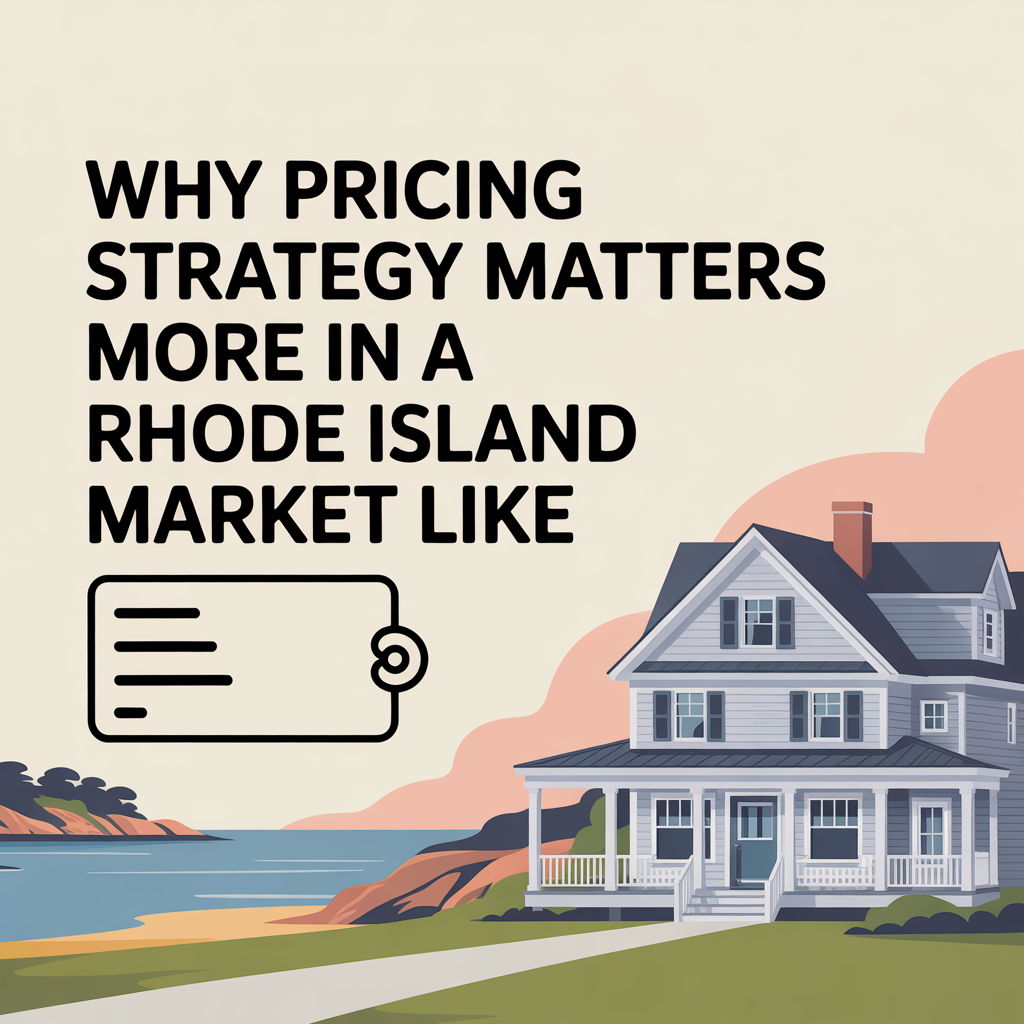
In a Rhode Island market like the one we’re in right now, that question isn’t just casual. It’s everything. Get the price right, and your home sells quickly, often with multiple offers and minimal hassle. Get it wrong, and you’re looking at weeks or months on the market, price cuts that make you feel like you’re chasing the market instead of leading it.
We’re not in a frenzy where anything sells. We’re not in a crash where you’re begging for offers. This is a market where pricing is the difference between a smooth transaction and a drawn‑out lesson in patience.
What Makes This Rhode Island Market So Price‑Sensitive
To understand why pricing strategy is king right now, you have to look at the numbers and what they mean on the ground.
Statewide, inventory is still tight—around 1.7 to 2 months of supply for single‑family homes early in 2026. That’s low enough to favor sellers, but not so low that buyers are blind bidding on overpriced listings. Median prices are hovering right around 500,000 dollars, up from last year, with forecasts for another 2–4% rise.
Sales are slower than they’ve been in years—January hit a 15‑year low—but prices aren’t dropping. Homes that are priced correctly sell in under a month. Homes that aren’t sit, accumulate days on market, and often end up selling for less than they might have with a sharper strategy from the start.
In Providence, where medians are around 447,000 to 450,000, a mispriced home stands out because buyers have options in some neighborhoods and can be picky. In East Greenwich or Narragansett, where medians push 800,000 to 900,000, buyers expect value at those numbers and walk away fast if it doesn’t deliver.
The market rewards precision. In a slower, more discerning environment like this, buyers aren’t rushing. They’re comparing, negotiating, and waiting for motivation from sellers who overreached.
How Pricing Plays Out Differently Across Rhode Island
Pricing isn’t one‑size‑fits‑all here. What works in Pawtucket doesn’t work the same way in North Kingstown.
In Providence and Pawtucket, where medians sit around 400,000 to 450,000, buyers are price‑sensitive but active. First‑time buyers and investors are drawn to affordability and commuter access. Price too high, even by 20,000 or 30,000, and you lose that crowd to the next listing. Price it right, and you get quick showings and solid offers.
Up in the East Bay or South County suburbs—East Greenwich, North Kingstown—demand stays strong for schools and lifestyle. Medians are 650,000 to 888,000, and prices are up double digits in some spots. Buyers here have money but high expectations. They’ll pay a premium for condition and location, but they won’t touch a listing that’s 5–10% off comps. Strategic pricing here means starting with momentum to capture multiple offers.
Coastal markets like Narragansett are even more nuanced. Median around 930,000, sales up but inventory thin. Out‑of‑state buyers and locals alike scrutinize value hard—flood insurance, seasonal appeal, rental potential. Overprice, and it sits through the off‑season. Price to the market’s rhythm, and it moves before summer heats up.
Everywhere in Rhode Island, the pattern is the same: correct pricing creates buzz in the first two weeks. Incorrect pricing kills it.
What People Think Pricing Is vs. What It Actually Is
Sellers often walk into my office with misconceptions that set them up for trouble.
The biggest one: “I’ll price high and come down if I have to.” Sounds logical, but in practice, it backfires. Days on market stack up, buyer interest fades, and when you cut the price, you’re selling from a position of weakness. Buyers see the reduction and wonder what’s wrong. Studies and local data show homes priced right from day one net higher final prices and faster closings.
Another: “Online estimates or my neighbor’s sale tell the whole story.” Zillow or Redfin spits out a number, or your buddy down the street got 550,000 last summer. But those ignore condition, updates, market shifts, and micro‑location. In Rhode Island’s varied market, two homes a mile apart can have very different values.
People also think “seller’s market means name your price.” Not anymore. With sales slowing and buyers more selective, leverage comes from pricing that draws a crowd early, not from testing the ceiling.
What pricing actually is: a strategy based on recent comps in your exact neighborhood, adjusted for your home’s strengths and flaws, timed to the local season and buyer pool. It’s not a wish list; it’s market reality.
The Real Costs of Getting Pricing Wrong
I’ve watched sellers learn this the hard way, and the math adds up quickly.
Start 10% over market, and your home might sit 60–90 days. During that time, you’re paying carrying costs—mortgage, utilities, taxes. In Rhode Island, that’s easily 2,000–4,000 a month on a typical home. Then the price cut: to catch up, you drop 5–7%, which often means selling for less than a sharp initial price would have gotten.
Buyers perceive “stale” listings as problematic. They lowball or demand concessions for imagined issues. Momentum is gone; you’re negotiating from behind.
On the flip side, price strategically—say, 3–5% below where you think the peak is—and you get 5–10 showings in week one, multiple offers, and a final sale price at or above list. That’s what happened with a recent East Greenwich listing I priced aggressively: three offers in days, closed over asking.
In this market, poor pricing isn’t just slower—it’s more expensive.
How Smart Sellers Nail Pricing Strategy
The sellers who thrive in Rhode Island right now treat pricing like the critical first step it is.
They start with hyper‑local comps: What have similar homes—size, age, condition—sold for in the last 90 days, within a half‑mile? Not asks, sales. Adjust for your specifics: new roof adds value; outdated kitchen subtracts.
They consider the “sweet spot” for their area. In Providence under 500,000, price to move fast. In premium suburbs over 700,000, price to spark competition without scaring off the field.
Timing matters: Spring listings in family towns capture school‑aware buyers. Coastal in early spring before summer frenzy.
They pair pricing with presentation: staged, decluttered, minor fixes done. Pricing alone isn’t enough; it has to look the part.
And they stay flexible: If week one feedback says adjust, they do—small tweaks to keep momentum, not big drops later.
A Decision Framework for Your Pricing Strategy
When advising sellers, I boil it down to these questions.
What do the last three months of sales say about your home’s value, block by block?
What’s the buyer pool like right now in your town—first‑timers, movers, investors—and what price pulls them in?
How long can you afford to carry if it doesn’t move fast, and does that change your starting point?
What’s your goal: max dollar regardless of time, or quick sale to buy your next place?
Answer those, and your price emerges naturally. It’s data‑driven, not emotional.
A Grounded Closing Thought
In a Rhode Island market that’s tight but picky, strong but not wild, pricing strategy isn’t optional—it’s your biggest lever. Nail it, and you control the process from day one. Miss it, and the market controls you.
With prices steady or climbing, inventory low, and buyers choosier than ever, the sellers who price smart get the outcomes they want: quick sales, strong offers, peace of mind. The rest chase a number that was never realistic. Whether you’re in Providence, the coast, or the suburbs, get the price right upfront, and the rest falls into place.
Get the full Rhode Island Market Insights → [Market Insights]

How Interest Rates Are Affecting Rhode Island Homebuyers
This is part of the RI Market Insights Hub → [RI Market Insights Hub] also research RI Home Buying Process→ [RI Home Buying Process] and RI Home Selling Process → [RI Home Selling Process] Written by: Hilary Marshall When people in Rhode Island ask me about interest rates, they’re not really looking for a chart or a national…


Are Buyers or Sellers in Control in Rhode Island Right Now?
This is part of the RI Market Insights Hub → [RI Market Insights Hub] also research RI Home Buying Process→ [RI Home Buying Process] and RI Home Selling Process → [RI Home Selling Process] Written by: Hilary Marshall When people ask me whether it’s a buyer’s market or a seller’s market in Rhode Island, what they really want…
Are Buyers or Sellers in Control in Rhode Island Right Now?
This is part of the RI Market Insights Hub → [RI Market Insights Hub] also research RI Home Buying Process→ [RI Home Buying Process] and RI Home Selling Process → [RI Home Selling Process] Written by: Hilary Marshall Buyers have a little more leverage than they did at the peak, but sellers still hold the stronger position overall…