


This is part of the RI Market Insights Hub → [RI Market Insights Hub] also research RI Home Buying Process→ [RI Home Buying Process] and RI Home Selling Process → [RI Home Selling Process]
Written by: Hilary Marshall
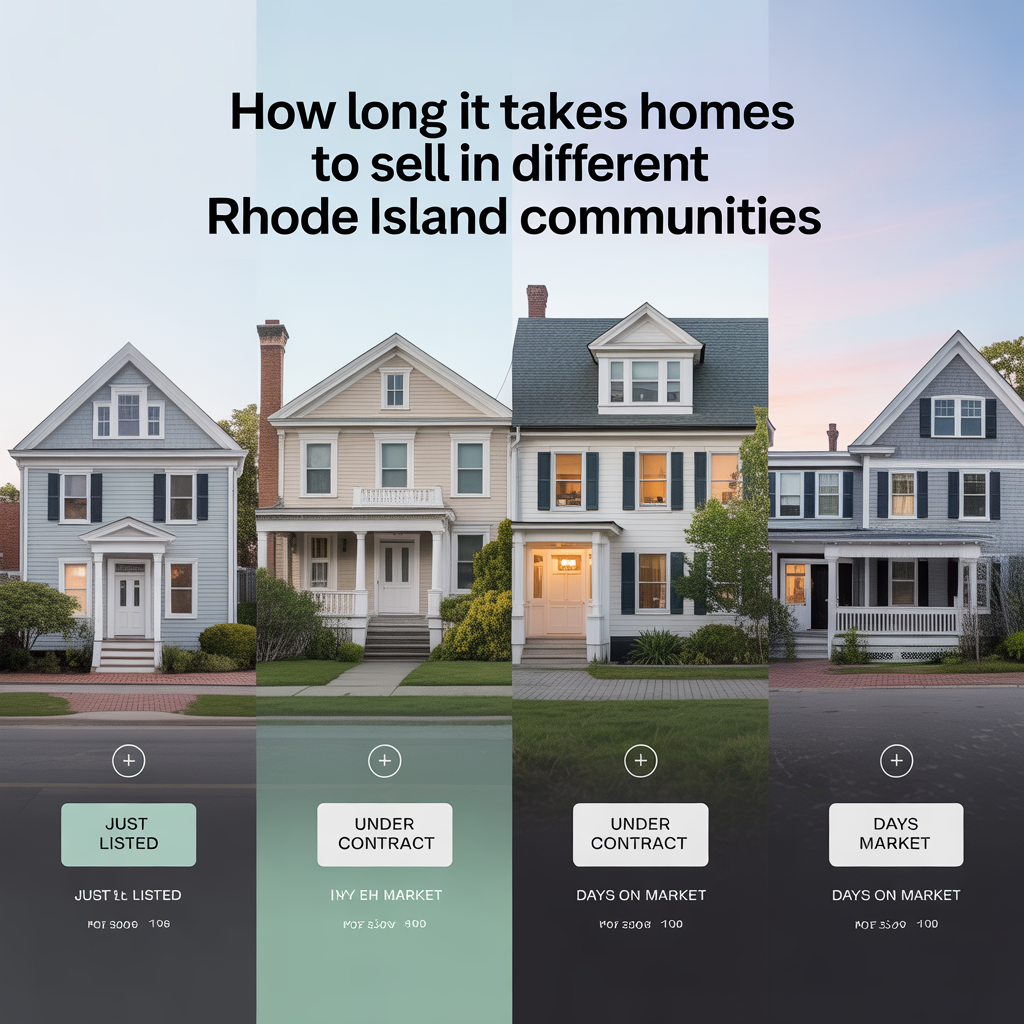
In Rhode Island, the “days on market” number you see in statewide reports is just a headline. In reality, how fast a home sells depends far more on where it is, what it’s priced to, and who your neighbors are than the calendar.
Across the state, data shows that the average time to sell a single‑family home runs roughly in the mid‑30s in days on market, with the full process from listing to closing usually landing in the 60‑ to 75‑day window. But that’s just the average. In practice, you can have one town where homes are under contract in 18–22 days and another where they’re circling 80–100 days, and the underlying fundamentals explain most of that difference.
If you’re trying to decide whether to list, wait, or jump in as a buyer, understanding community‑by‑community patterns is more useful than staring at statewide medians.
How the statewide average breaks down
Most recent data puts Rhode Island’s median days on market somewhere in the low‑ to mid‑30s, depending on the year and how you measure it. That lines up with the broader national trend: Rhode Island moves faster than the U.S. average, but not by a huge margin.
When you unpack that, it’s usually:
- About 30–40 days on the market for a typical, well‑priced, well‑presented single‑family home.
- Another 30–45 days to close, depending on the buyer’s financing, inspection, and appraisal timelines.
Those numbers hold together in many suburban and mid‑range markets, but they start to change as soon as you zoom in from the state level to the town level.
Which communities tend to move fastest
In Rhode Island, the fastest‑moving homes are usually clustered in a few categories: strong school districts, walkable neighborhoods, and coastal or Providence‑adjacent towns.
- East Greenwich, Warwick, and East Providence
These areas consistently show some of the shortest days on market because they combine good schools, access to Providence by car or commuter options, and a mix of housing styles that attract first‑time buyers and move‑up households. In East Greenwich and parts of Warwick, well‑priced, updated homes can under contract in the 18–25 day range, especially in the 300,000–550,000 bracket. - Coastal towns (Newport, Middletown, Narragansett, parts of South Kingstown)
Coastal markets are more nuanced. In Newport and surrounding towns, luxury and waterfront homes sometimes take longer, but mid‑range, year‑round‑friendly homes in good condition can still sell quickly because of strong in‑state and out‑of‑state demand. In Narragansett and similar coastal communities, the combination of second‑home buyers, investors, and locals keeps absorption tight despite seasonality. - Providence‑adjacent and walkable pockets
In and around the capital, certain neighborhoods—like the East Side, parts of the West End, and some Providence suburbs—are highly desirable for young professionals, empty‑nesters, and rental‑investors alike. In those areas, inventory is limited, prices are elevated, and homes that are modern, move‑in‑ready, and in a walkable pocket still tend to sell close to the statewide short‑DOM band.
Across these faster‑moving communities, the pattern is consistent: low supply, steady demand, and buyers who are willing to move quickly if the price and condition are right.
Which communities linger longer
Not every town benefits from the same level of urgency. In some places, structural factors—location, school‑district perception, limited infrastructure, or older housing stock—stretch the selling timeline.
- Certain inland and more auto‑dependent towns
In some inland, less walkable, and more highway‑dependent communities, homes that are not priced at the top of the local market or that need significant updates can sit noticeably longer. In these pockets, the DOM easily creeps into the 50–100+ day range, especially if the home is overpriced or poorly marketed. - Overpriced or “specialty” homes in almost any town
Even in fast‑moving markets, you can see outliers. A large, older estate, a very niche layout, or a home that’s been tagged with a price far above the last few comparable sales will often sit through the spring and summer seasons without a contract. In those cases, the problem is not the town as much as the price‑to‑market‑reality mismatch. - Providence’s slower‑moving pockets
In parts of Providence, especially in neighborhoods that have not seen the same level of reinvestment or walkability upgrades, the story is more mixed. Some blocks are hot; others are slow. In certain central‑city zip codes, homes are taking closer to 100 days or more to sell, and the number of homes sold year‑over‑year has dipped, signaling a softening where the market is still inventory‑constrained but not overheated.
What really drives the difference in timing
Community‑level DOM isn’t random. In Rhode Island, a few key drivers explain why one town’s homes move in three weeks and another’s drag for months.
- Supply and demand balance
Towns with older, low‑elasticity stock and limited new construction see more competition, which compresses DOM. Where demand is steady but supply is thin—in East Greenwich, Newport, Warwick, and parts of Providence—homes turn faster. Where demand is more limited or spread out, DOM stretches. - Pricing discipline
Across the state, well‑priced homes sell faster. In Des Moines, for example, homes that priced to comps sold almost twice as fast as the market average; in Rhode Island, the same pattern holds. In places where sellers overreach, DOM jumps, even in otherwise strong towns. - Condition and “move‑in” status
A clean, updated, move‑in‑ready home will usually outpace a comparable “project” unless the project is priced like a true fixer. In fast‑moving markets, buyers are less likely to wait for a house that needs significant work, so those listings sit longer unless the discount is substantial. - Season and buyer motivation
Even within a town, timing matters. Spring and early summer remain the fastest windows statewide, with DOM dropping into the high‑teens or low‑twenties in many desirable spots. In places like Providence, winter or fall‑to‑winter listings can stretch into the 80–100+ day band, simply because the market is cooling and buyers are more selective.
How I use DOM to position my clients
In my own practice, I don’t just quote the statewide average DOM. I look at the last 90–120 days of sales in the specific town and price band, and I ask:
- What’s the typical DOM for homes in this price range, size, and style?
- How many of those sales were at or near asking, and how many required price cuts?
- Are there any outliers that are skewing the average—very fast, very slow, or extremely high‑priced homes?
From there, I can help sellers decide whether they’re in a 18–25 day environment (common in East Greenwich, Warwick, and some coastal neighborhoods) or a 50–80 day environment (more common in certain inland or slower‑moving pockets). That clarity shapes pricing, timing, and expectations.
For buyers, I use DOM to signal opportunity or caution. If a home in a fast‑moving town has sat for 60–90 days, that’s a red flag worth investigating. If it’s in a slower‑moving town but has only been on the market a month, it may still be in a normal window. Understanding that difference keeps my clients from making decisions based on headline DOM numbers alone.
The bottom line for Rhode Island buyers and sellers
Across Rhode Island, communities behave differently, and that’s reflected in how fast homes sell. In places like East Greenwich, Warwick, and many coastal towns, DOM is short, demand is steady, and a well‑priced home can vanish in three weeks. In other areas, including certain pockets of Providence and some inland, auto‑dominant towns, DOM stretches, and the market is more selective.
If you’re trying to interpret “how long it takes” in your own situation, the key is to look past the statewide average. Check your town, your price band, and your comps. Because in Rhode Island, the difference between a 20‑day sale and a 90‑day sale is rarely about luck. It’s about where you are, how you’re priced, and how well you’re positioned for the type of buyers who actually live in that community.
Get the full Rhode Island Market Insights → [Market Insights]

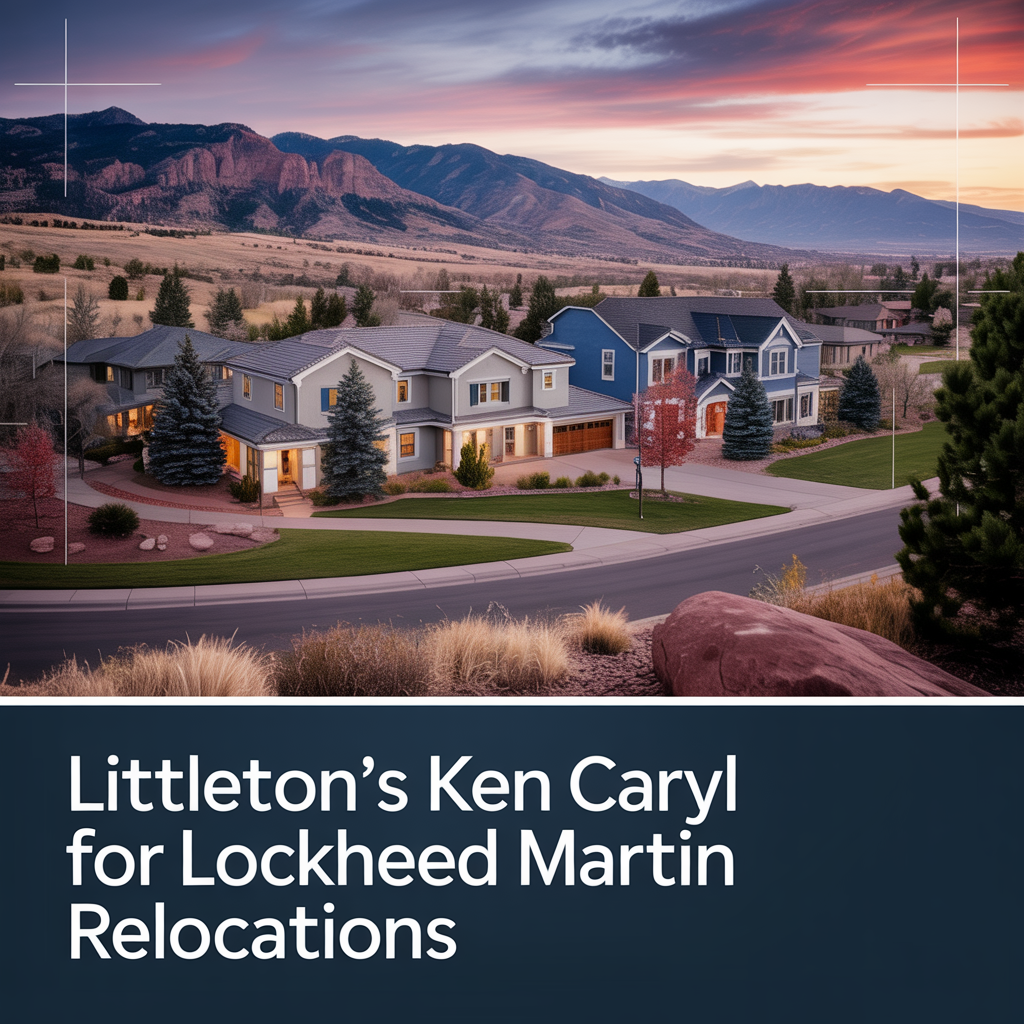
Littleton’s Ken Caryl for Lockheed Relocations
This is part of Lockheed Martin Relocation → [Lockheed Martin Relocation Hub] & the larger Denver Relocation Hub → [Denver Relocation Hub] Written by: Chad Cabalka Ken Caryl is one of the best-kept “family first” relocation options for Lockheed Martin employees who want foothills scenery, strong neighborhood appeal, and a real suburban lifestyle that still feels connected…


Centennial & Parker for Lockheed Relocations
This is part of Lockheed Martin Relocation → [Lockheed Martin Relocation Hub] & the larger Denver Relocation Hub → [Denver Relocation Hub] Written by: Chad Cabalka Centennial and Parker are two of the smartest suburban choices for Lockheed Martin employees relocating with families because they give you a strong balance of commute flexibility, good neighborhood variety, and…

Highlands Ranch for Family-Friendly Lockheed Relocations
This is part of Lockheed Martin Relocation → [Lockheed Martin Relocation Hub] & the larger Denver Relocation Hub → [Denver Relocation Hub] Written by: Chad Cabalka Highlands Ranch is one of the strongest choices for Lockheed Martin employees relocating with families because it delivers exactly what most parents want after a big move: stable neighborhoods, strong community…