



This is part of the RI Market Insights Hub → [RI Market Insights Hub] also research RI Home Buying Process→ [RI Home Buying Process] and RI Home Selling Process → [RI Home Selling Process]
Written by: Hilary Marshall
When I’m talking with buyers who say, “I just want to find a home that’s not in a bidding war,” I often have to say what no one likes to hear: the problem isn’t just demand, it’s that Rhode Island is barely building new homes at all. The headline story about high prices and low inventory doesn’t mean much unless you understand that the state is fiftieth out of fifty in the nation for new housing construction.
That number is not political spin. It’s the floor under everything else: why entry‑level buyers feel crushed, why rents keep rising, and why coastal towns feel like every house is being used or sold by the same small group of owners. Construction is moving, but it’s crawling compared with the pace our population and household formation demand.
If you’re trying to decide whether to buy, sell, or wait in Rhode Island, the depth of the supply problem is one of the most important factors you need to understand.
How little we’re actually building
Rhode Island’s housing stock is aging, and the replacement rate is almost nonexistent. Between 2016 and 2025, total inventory is reported to have dropped about 78 percent, even as the median home price has shot up from 303,000 dollars to roughly 476,000 dollars. That’s a brutal combination: fewer homes, more people chasing them, and almost no new supply coming online to ease the pressure.
Multifamily and apartment construction has picked up somewhat, especially in Providence and a few coastal job‑linked areas, but even there, the numbers are modest. The state’s own housing policy analysis shows that, despite dozens of new laws and hundreds of millions of dollars in spending, new housing permits in the first half of 2025 actually declined compared with the same period in 2024. That’s a sign that the engine is still sputtering, not running.
On the ground, this means you’re not seeing the kind of new‑construction subdivisions in Rhode Island that you see in other parts of the country. A few bright spots exist—urban infill projects, some new condominiums, and a handful of coastal developments—but they’re drops in the bucket compared with the overall deficit. The vast majority of our housing stock is still 1950s, 1960s, and older.
How the lack of supply is tightening the market
When supply doesn’t keep up, the market becomes a game of musical chairs. The Pew Trusts’ analysis of Rhode Island’s housing crisis likens it to an escalator moving downward: as fewer homes are built, each remaining unit gets bid up because it’s one of the only options.
That’s exactly what’s happening in real life. First‑time buyers are outbid for modest homes by cash buyers, retirees, or out‑of‑state owners who can stretch more. Move‑up buyers find they’re trading up not into clearly better neighborhoods, but into the same competitive bands, because nothing meaningfully new has appeared downstream to absorb the demand.
The result is visible at multiple levels:
- Median single‑family prices have climbed dramatically over the last five years, even as incomes have not kept pace.
- Rents have soared from around 941 dollars a month in 2017 to about 1,480 dollars in 2025, reflecting the same supply squeeze in the rental market.
- Homelessness is up significantly, and the waiting lists for public and affordable housing in cities like Providence stretch into the thousands.
In plain terms: the lack of new construction isn’t just an abstract planning issue. It’s directly feeding higher prices, fewer options, and more stress for nearly every Rhode Island household.
Where new construction is trying to show up
It’s not that the state is doing nothing. In fact, Rhode Island has launched one of the most aggressive housing policy pushes in its history. The General Assembly has passed nearly fifty housing‑related bills, created a permanent funding stream for affordable housing, and passed a 120‑million‑dollar bond to finance housing, homeownership programs, and infrastructure.
The state has also rolled out a five‑year “Housing 2030” plan that aims to permit 15,000 new housing units—roughly double the recent production rate. Cities like Providence and Woonsocket are rezoning corridors, streamlining permitting, and partnering with nonprofits to build more multifamily and affordable projects.
In practice, you see that in several places:
- Urban infill: Providence, Pawtucket, and a few other cities are replacing parking lots, underused lots, and older buildings with mixed‑use and multifamily projects.
- Multifamily development: most of the actual new‑construction activity is happening in the multifamily and rental sectors, which are easier to finance and site‑plan than diffuse single‑family neighborhoods.
- Coastal and suburban developments: a few new‑build communities along the coast and in suburban pockets (like Pulte‑style projects in South County) add a modest number of units, but they’re still a small slice of the market.
On the single‑family side, accessory dwelling units (ADUs) were supposed to be a quiet, steady source of supply, but the numbers are disheartening: only 82 ADUs received certificates of occupancy in 2025, nowhere near the level needed to bend the affordability curve. That’s telling. Even when the state creates tools and incentives, local resistance and slow approvals limit real output.
How this is quietly changing buyer and seller behavior
The lack of supply isn’t just a statistic; it’s reshaping how people approach buying and selling in Rhode Island.
For buyers, it means accepting a narrower range of options. If you’re not flexible on bedroom count, square footage, or vintage, the chances of winning a home shrink quickly. Many buyers end up settling for “good enough” because there isn’t enough genuinely new stock to allow them to be picky. That’s especially true in the 300,000–500,000 band, where the competition is thickest.
For sellers, the low supply gives you a structural advantage, but not an unlimited one. Because the market is tight, even modestly priced, move‑in‑ready homes can still attract multiple offers, sometimes near asking price or within a few percentage points of it. But overpricing a home in an area where new construction is still scarce is a mistake. If you ask for a premium that doesn’t match recent comps, there simply aren’t enough fresh listings to absorb the difference; your home just sits.
Also, the lack of new homes is pushing more buyers into the rehab and renovation lane. Buyers who might have preferred a brand‑new house are now looking at older homes they can update, which shifts the value conversation from “when was it built” to “what can you do to it.” That’s good news for sellers who maintain their homes or make smart upgrades, and harder news for those who ignore deferred maintenance.
What actually matters vs. what people think matters
A lot of Rhode Islanders hear about “housing initiatives” and assume that big new neighborhoods are about to appear. They’re not. The gap between the number of units needed and the number being built is still wide, and the parts of the market that feel the shortage most are the same as ever: entry‑level, first‑time‑buyer‑friendly, and affordable‑rental segments.
Another misconception: some buyers assume that if new construction is so scarce, they should wait for a building boom that will suddenly drop prices. That’s unlikely. When states finally do add meaningful supply, it tends to stabilize prices over time rather than crash them. The pressing issue in Rhode Island is that the boom hasn’t materialized yet, so the correction is happening on the demand side—more buyers being priced out, more people renting longer, and more pressure on the existing stock.
What actually matters for buyers and sellers today is realistic expectations. If you’re buying in a market where almost no new homes are being built, the fair question is not “when will prices fall?” but “how can I position myself in this constrained environment so I win at a price and condition that’s sustainable for me?”
A practical way to plan around the supply crunch
For buyers, the key is to anchor your search in data, not hope. Look at:
- How many active listings are in your price band and town, not just statewide numbers.
- How many pending sales it typically takes to clear that inventory, and how long that backlog is.
- Where the thinnest supply is (often older, single‑family‑heavy neighborhoods) and where even modest new product is beginning to appear (certain Providence corridors, some multifamily zones, a handful of coastal communities).
If new or low‑maintenance, modern‑style homes are important to you, you may need to stretch further geographically or into multifamily or condos, not wait for a wave of single‑family construction that isn’t coming.
For sellers, recognizing that new construction is limited changes how you price and present your home. Because alternatives are scarce, a well‑kept, efficiently designed home can still be very competitive, even if it’s not new. On the flip side, if you’re in a segment where a few new projects are absorbing the best‑financed buyers, you may need to be more realistic on pricing and flexible on terms so your home doesn’t sit.
The bottom line
New construction in Rhode Island is doing more than it did five years ago, but it’s still nowhere near enough to fix the supply problem. The result is a market that feels perpetually tight, where prices stay elevated, competition stays high, and affordability keeps slipping for many households.
If you’re trying to make sense of whether “now” is a good time to buy, sell, or wait, the supply story is where you start. The state is finally passing serious housing legislation and trying to push up the number of new units, but the numbers are still lagging.
In that environment, the smartest move is not to argue with the shortage, but to work with it: be realistic on price, flexible on style and vintage, and very clear about what you’re actually willing to live with over the long term. That’s how you navigate a Rhode Island market where the real bottleneck isn’t demand—it’s the simple fact that almost nothing new is being built.
Get the full Rhode Island Market Insights → [Market Insights]

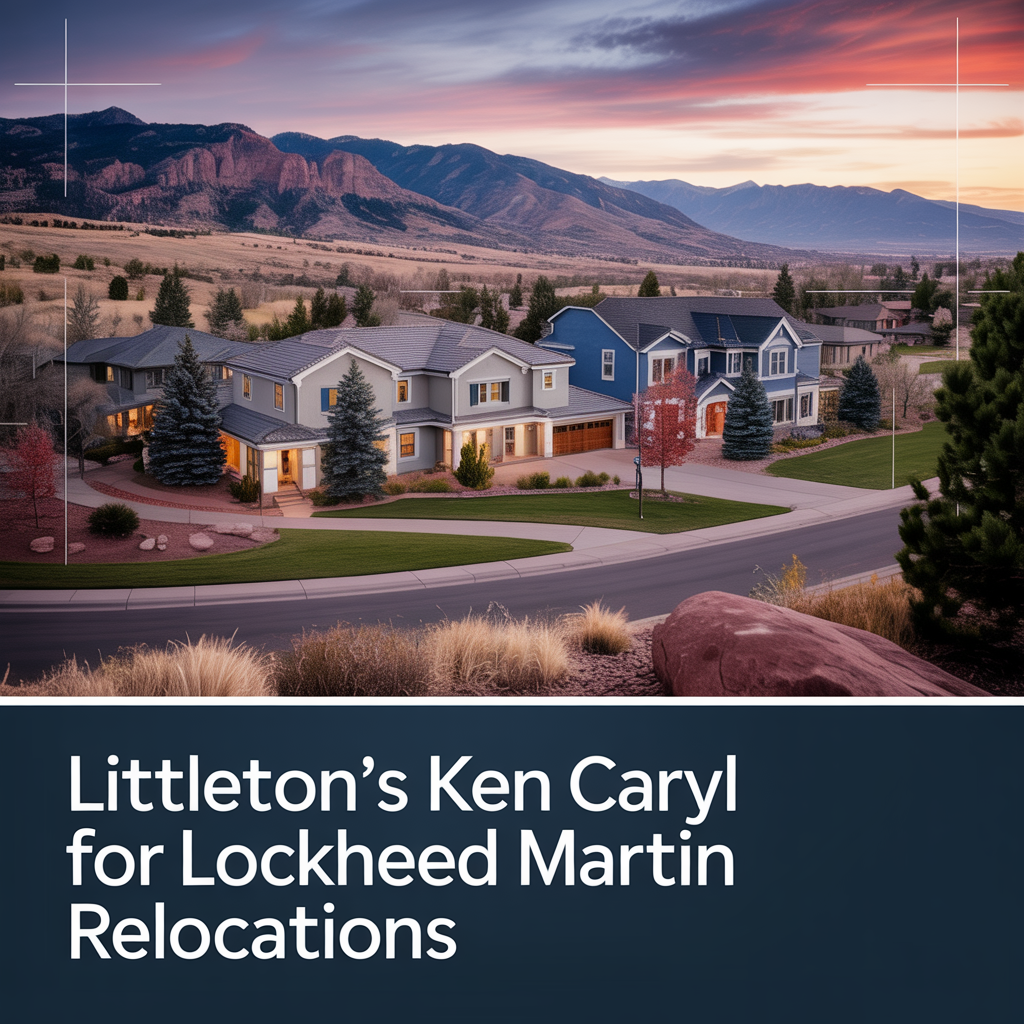
Littleton’s Ken Caryl for Lockheed Relocations
This is part of Lockheed Martin Relocation → [Lockheed Martin Relocation Hub] & the larger Denver Relocation Hub → [Denver Relocation Hub] Written by: Chad Cabalka Ken Caryl is one of the best-kept “family first” relocation options for Lockheed Martin employees who want foothills scenery, strong neighborhood appeal, and a real suburban lifestyle that still feels connected…


Centennial & Parker for Lockheed Relocations
This is part of Lockheed Martin Relocation → [Lockheed Martin Relocation Hub] & the larger Denver Relocation Hub → [Denver Relocation Hub] Written by: Chad Cabalka Centennial and Parker are two of the smartest suburban choices for Lockheed Martin employees relocating with families because they give you a strong balance of commute flexibility, good neighborhood variety, and…

Highlands Ranch for Family-Friendly Lockheed Relocations
This is part of Lockheed Martin Relocation → [Lockheed Martin Relocation Hub] & the larger Denver Relocation Hub → [Denver Relocation Hub] Written by: Chad Cabalka Highlands Ranch is one of the strongest choices for Lockheed Martin employees relocating with families because it delivers exactly what most parents want after a big move: stable neighborhoods, strong community…