


This is part of the RI Market Insights Hub → [RI Market Insights Hub] also research RI Home Buying Process→ [RI Home Buying Process] and RI Home Selling Process → [RI Home Selling Process]
Written by: Hilary Marshall
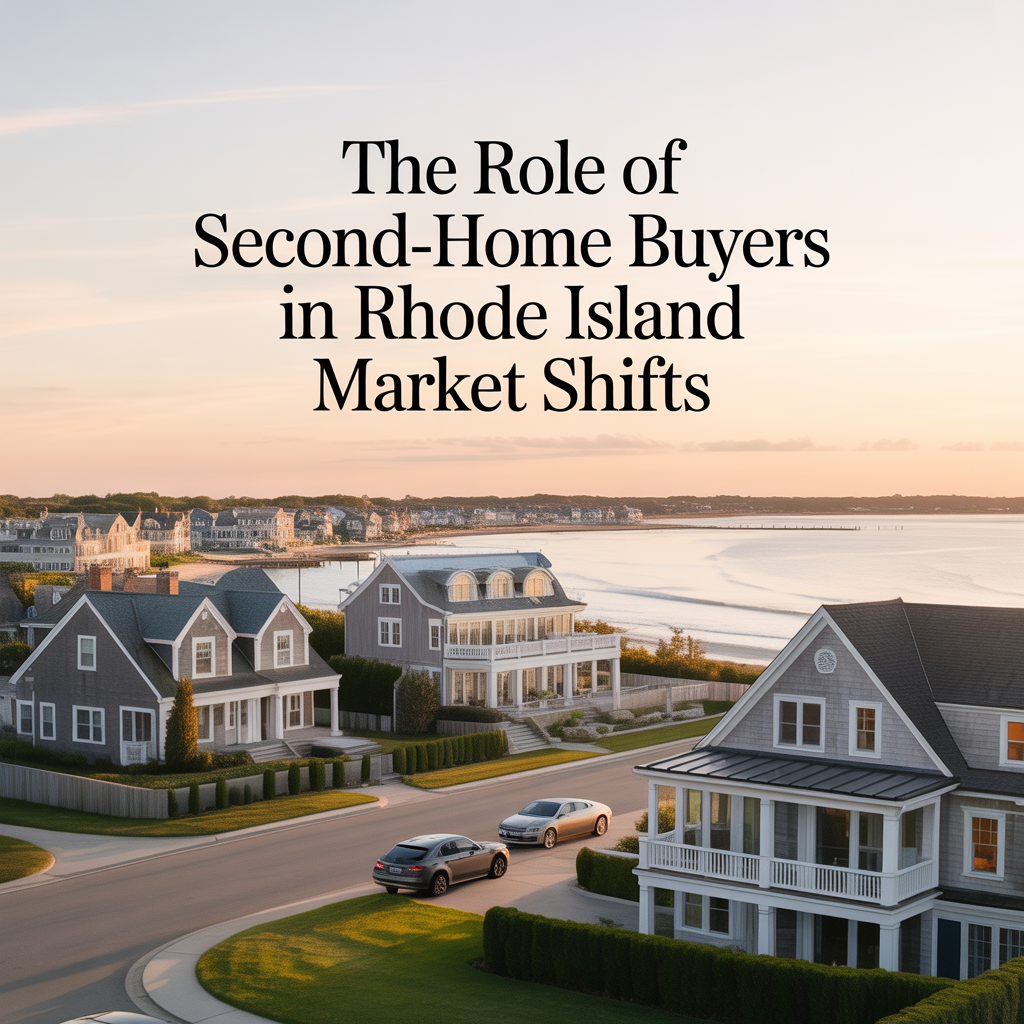
When people talk about the Rhode Island housing market, they often picture first‑time homebuyers struggling with inventory or city dwellers moving here from Boston and New York. What gets less attention—yet quietly drives a huge share of the market—is the second‑home buyer. Over the past several years, I’ve watched these buyers reshape not just pricing, but entire neighborhood dynamics, from Newport to Narragansett to the coastal edges of South County.
As someone who’s worked through both up and down cycles, I can say confidently: second‑home demand isn’t just a side story. It’s a major force behind how opportunity, affordability, and seasonality play out here today.
What’s actually happening with second‑home demand
Before 2020, Rhode Island’s second‑home market had a steady rhythm. Summer rentals filled coastal towns, and a smaller circle of out‑of‑state buyers kept weekend homes along the bay or in the islands. The pandemic changed that completely.
Remote work made “weekend homes” obsolete. Suddenly, people from Connecticut, Westchester, and Boston started looking for properties where they could live half the year—or permanently—but still rent out during peak months. That surge lifted prices, constrained supply, and blurred the old lines between “vacation property” and “primary residence.”
Even as the market calmed in 2024 and 2025, the baseline shifted. Many of those owners kept their Rhode Island properties as semi‑permanent homes, meaning fewer resales and a new layer of stability at the higher end. There’s still movement—especially in Narragansett, Jamestown, Middletown, and Westerly—but the profile of the buyer has evolved.
Who’s buying and why
My second‑home clients today fall into a few clear groups.
One is the long‑time New England professional couple—empty nesters from Massachusetts or Connecticut—looking for a manageable property with water access, low maintenance, and space for visiting family. They view Rhode Island as close enough for regular weekends but far enough to feel like a retreat.
Another group is the “dual‑lifestyle” buyer: hybrid professionals splitting time between Providence and New York, or even Boston and South County. For them, having a place in Rhode Island is less about luxury and more about preserving balance. These buyers tend to choose renovated homes near the shore, not sprawling estates. I’ve also noticed younger high‑income earners choosing condos or townhomes in Newport as their first major investment beyond a primary city apartment.
And then there are the investors—the quieter but equally impactful contingent. They’re not flippers; most are income‑stability investors looking for predictable seasonal rental returns. They’re the ones studying short‑term rental ordinances in Newport and Charlestown, weighing insurance premiums, and watching interest‑rate trends with precision. Their calculations influence list pricing more than many realize.
The ripple effect on local inventory
The obvious impact is price pressure, especially in coastal and lake communities. A modest three‑bedroom in Narragansett that might have sold for $600,000 in 2019 now reaches well above $800,000 when competition includes second‑home buyers with equity from another market.
But what’s interesting is how those effects cascade inland. As second‑home buyers push up coastal prices, more local families start looking further north—South Kingstown to Exeter, Jamestown to North Kingstown, or even into western towns like Hopkinton. That migration creates what I call “spokes of pressure,” radiating from the coast into towns once overlooked.
And once those areas see more competition, local sellers reevaluate. I’ve met lifelong Rhode Islanders who never imagined selling—until an out‑of‑state buyer appeared with a strong cash offer to use the home as a seasonal residence. Multiply that by dozens of transactions, and you get a reshaped inventory cycle that stays tight, even when new listings appear.
What second‑home buyers are learning the hard way
Buying a second property in Rhode Island isn’t the easy coastal dream it appears on paper. The costs that catch newcomers off guard are real:
Insurance premiums have risen sharply, particularly for waterfront or near‑shore homes. Flood zones have been redrawn, and mortgage underwriters now require more nuanced disclosures than in years past. Maintenance, too, adds up fast if you’re managing a historic cottage from 150 miles away.
Then there’s regulation. Newport’s short‑term rental policies are stricter than they used to be, and smaller towns such as Charlestown and Narragansett have tightened licensing rules. That’s made some investment models less profitable and forced owners to think longer‑term.
I often tell buyers: owning here is worth it if you’re ready to embrace Rhode Island’s rhythm—the slower off‑season, the real winter upkeep, and the cost of coastal living. If you approach it like a spreadsheet investment alone, it rarely works. If you approach it as a lifestyle choice supported by good planning, it almost always does.
What locals often misunderstand about second‑home owners
It’s easy to assume second‑home buyers are displacing locals or making communities less accessible. There’s truth in the affordability pressure, but that’s not the whole story.
Many second‑home owners today are active community participants. They join local associations, support small businesses, and often transition into full‑time residents within a few years. I’ve watched couples who once visited only in summer now volunteering in schools or serving on town boards.
What locals sometimes miss is that second‑home ownership stabilizes the market in quieter months. Year‑round tax revenue helps fund infrastructure and schools in towns that otherwise depend heavily on seasonal visitors. The key challenge is ensuring that balance—keeping housing attainable for Rhode Island residents while welcoming responsible newcomers who contribute to the fabric of the community.
What matters most right now
In this environment, clarity is power. For buyers considering a second home in Rhode Island, focus on long‑term usability more than short‑term performance. Choose a property you could live in year‑round if needed, not something that only works as a rental or summer stop.
Sellers, meanwhile, should understand that second‑home demand adds stability but not limitless inflation. The frenzy of 2021 is gone; buyers are thoughtful again. Out‑of‑state cash may still come through, but those buyers now expect updated systems, energy efficiency, and full inspection transparency.
For anyone navigating the Rhode Island housing market, the biggest misconception is that second‑home buyers are all the same. They’re not. Their impact depends on their intent—whether they engage with our communities or simply park capital. The difference shows up not just in data but in daily life around town.
How I help my clients read these shifts
My role, day to day, is to help people separate story from structure—to see what’s emotionally true and what’s financially strategic.
When I guide second‑home buyers, I make sure they understand Rhode Island’s micro‑markets. Waterfront proximity can mean four different flood designations in four adjacent streets. Property taxes in South Kingstown differ substantially from Narragansett, and coastal wind zones change insurance pricing overnight.
For local sellers, we prepare homes not just for nearby buyers but for the second‑home mindset—highlighting ease of maintenance, smart systems, and location details that appeal to part‑time residents. I’ve learned that presenting a property through that lens often brings stronger offers without inflating expectations.
Looking ahead: what the next cycle may bring
I expect second‑home activity to remain firm for at least the next couple of years. Interest rates matter, but for most of these buyers, the bigger driver is lifestyle insurance—having a place to retreat to, one that feels grounded in a region they trust. Rhode Island delivers that uniquely well.
That said, sustainability will increasingly define who succeeds in this space. Homes with updated roofs, flood compliance, solar benefits, or low‑maintenance design will outperform those that rely purely on location. Buyers are too savvy now to ignore cost of ownership.
For locals hoping to buy into these markets, patience and preparation remain key. Inventory won’t loosen dramatically, but opportunities appear more often now than during the pandemic peak. Knowing what matters—timing, condition, flexibility—keeps you competitive even when bids are tight.
The bottom line
Second‑home buyers have become part of Rhode Island’s housing DNA. They’ve changed how towns market themselves, how sellers plan, and how communities evolve. Love it or question it, this is the reality shaping our coastline and our economy.
As I tell my clients, there’s no single “Rhode Island market”—there are dozens, each influenced differently by second‑home ownership. Understanding how those forces interact is what allows you to move smartly, not reactively.
Whether you’re buying your first home or your second, success here comes from the same place: clear goals, honest expectations, and a steady focus on what truly fits your life. The rest, as this market keeps proving, will follow its own rhythm.
Get the full Rhode Island Market Insights → [Market Insights]

How Multiple Offers Work in Rhode Island
This is part of the RI Home Buying Process→ [RI Home Buying Process] also research the RI Home Selling Process → [RI Home Selling Process] Written by: Hilary Marshall When a Rhode Island home gets multiple offers, the seller usually reviews them through the purchase and sales process and chooses the offer that creates the best combination…


What Contingencies Should Rhode Island Buyers Understand?
This is part of the RI Home Buying Process→ [RI Home Buying Process] also research the RI Home Selling Process → [RI Home Selling Process] Written by: Hilary Marshall In Rhode Island, the most important contingencies are usually the inspection contingency, financing contingency, and appraisal contingency, because they control whether a buyer can safely proceed or still…

How to Make a Competitive Offer on a Home in Rhode Island
This is part of the RI Home Buying Process→ [RI Home Buying Process] also research the RI Home Selling Process → [RI Home Selling Process] Written by: Hilary Marshall In Rhode Island, a competitive offer is usually less about making the highest number and more about making the cleanest, most credible offer the seller can trust. In…