


This is part of the RI Home Buying Process→ [RI Home Buying Process] also research the RI Home Selling Process → [RI Home Selling Process]
Written by: Hilary Marshall
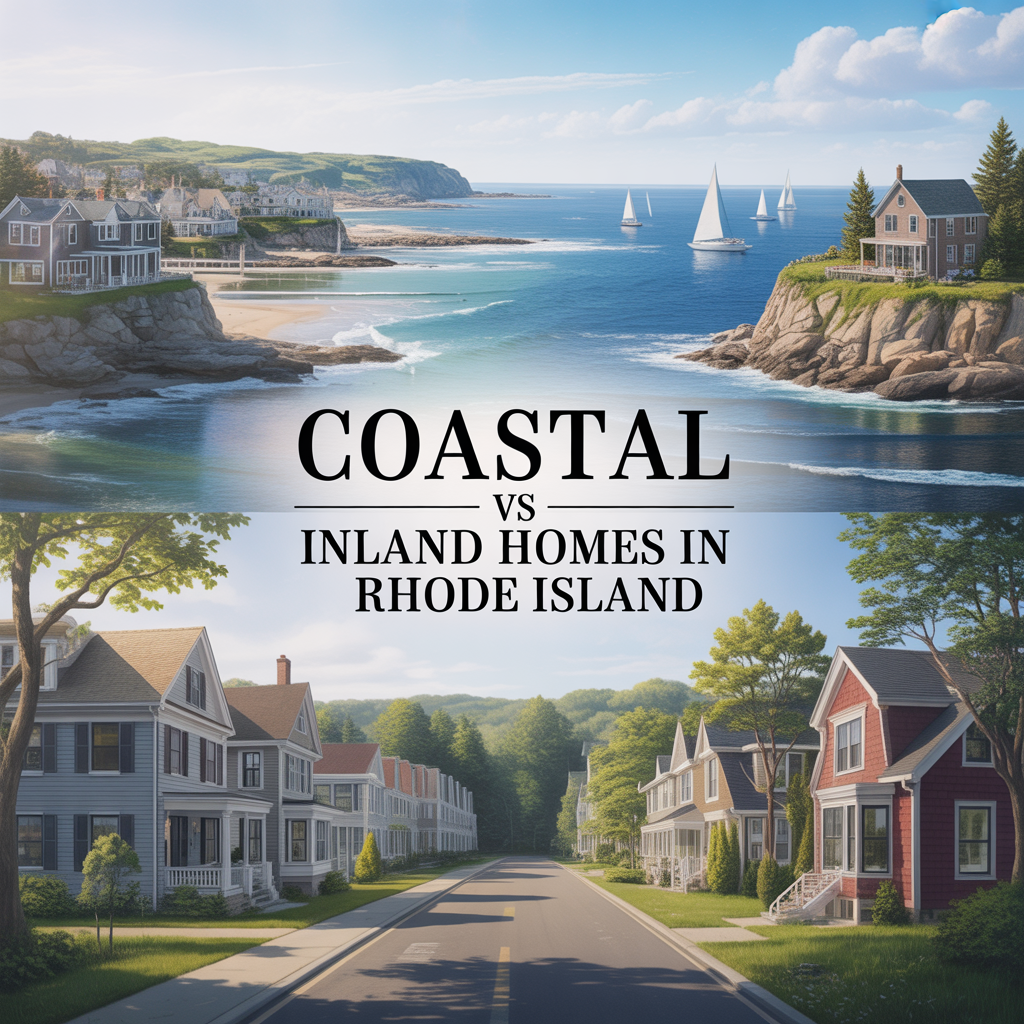
Rhode Island coastal homes and inland homes are not just different by location — they are different by risk, cost, and lifestyle. The coast can buy you water access, views, and a certain level of prestige, but it also brings flood exposure, stricter oversight, and a much narrower path to comfortable ownership.
That distinction matters more in Rhode Island than many buyers realize. This is a small state, but the gap between owning near the shoreline and owning inland can be significant once you move past the listing photos and start looking at the actual cost of keeping the home long term. I have seen buyers get drawn in by the idea of coastal living without fully understanding how quickly insurance, maintenance, and regulatory issues can change the math.
The Real Tradeoff
Coastal homes in Rhode Island tend to carry a premium because supply is limited and demand stays strong, especially in places like Narragansett, South Kingstown, Newport County, and Portsmouth. Inland homes in towns like Johnston, Cumberland, Lincoln, Warwick, and West Warwick usually give you more house for the money and a more predictable ownership experience.
What matters most is not just purchase price. It is the full monthly cost, including taxes, insurance, maintenance, and the possibility that a coastal property will require more permitting, more upkeep, or more adaptation over time. That is where many buyers misjudge the difference. They compare list prices, but they do not compare ownership burden.
A coastal property may feel like the better home on day one, but inland properties often feel like the better decision by year three or year five because they are easier to carry and easier to live with.
- Coastal homes usually cost more upfront.
- Inland homes usually stretch the budget further.
- Coastal ownership adds flood and shoreline risk.
- Inland ownership often means less regulatory friction.
- The best choice depends on whether lifestyle or stability matters more.
What Most Buyers Misread
A lot of buyers assume coastal automatically means “better investment.” In Rhode Island, that is too simplistic.
Shoreline property is emotionally attractive and often stays in demand, but that does not make it automatically smarter. Coastal ownership comes with exposure that inland buyers simply do not face in the same way, including flood-related costs, shoreline rules, weather wear, and more caution around future improvements. A buyer who stretches too far just to get near the water can end up owning a home they admire but do not enjoy financially.
On the other side, some buyers dismiss inland towns as less desirable simply because they do not have the same cachet. That is a mistake too. Inland towns are often the better fit for buyers who care about usable space, lower pressure, easier maintenance, and more room in the monthly budget. In this state, the quieter inland purchase is often the one that proves more sustainable over time.
- Coastal appeal does not erase flood risk.
- Inland value is often stronger than buyers expect.
- Emotional decisions are expensive on the shoreline.
- Older homes near the coast can need specialized repairs.
- A good purchase is the one you can live with, not just admire.
Cost and Risk
The biggest difference is not scenery; it is ownership burden.
Coastal buyers need to think beyond the mortgage payment. They need to consider flood insurance, wind exposure, deferred maintenance from salt air and weather, possible elevation concerns, and the fact that shoreline property in Rhode Island is often more tightly regulated than inland property. Even routine projects can involve more planning and more limitations than buyers expect.
Inland buyers still need to budget for older housing stock, because that is common across Rhode Island, but they are usually not dealing with the same level of shoreline oversight or environmental exposure. That makes inland ownership easier to forecast, which matters a lot if you want a stable five- to seven-year plan.
Predictability is underrated in this market. Buyers often chase scenery and then later realize that the easier house to own was the better fit all along.
- Coastal homes can trigger higher insurance costs.
- Shoreline permits can slow down improvements.
- Inland homes are usually simpler to maintain and modify.
- Older housing stock still matters everywhere in Rhode Island.
- Predictability is often worth more than a water view.
Who Should Buy Where
Choose coastal if you truly value the lifestyle and can absorb the higher ownership costs without creating financial stress. Coastal living can absolutely be worth it for the right buyer, but only when the numbers still work after the romance wears off.
Choose inland if you want a stronger budget cushion, easier upkeep, and a better chance of staying comfortable through rate changes, repairs, and tax increases. Inland ownership is often the more practical fit for buyers who want stability, especially if they are balancing kids, commute, or long-term affordability.
For example, a buyer comparing a $550,000 coastal home in South County with a $450,000 inland home in Johnston or Cumberland is not just choosing between two locations. They are choosing between lifestyle prestige and monthly stability. A buyer with a five-year horizon and young kids may find the inland option much safer, while someone planning for a long-term second home or retirement base may be able to justify the coast.
The right answer depends less on what sounds exciting today and more on what still feels manageable after a few years of ownership.
- Buy coastal for lifestyle and long-term personal enjoyment.
- Buy inland for budget control and everyday practicality.
- Choose coastal only if the extra costs do not strain you.
- Choose inland if you want easier ownership in year one.
- Match the town to your timeline, not your daydream.
The Hard Truth
The hard truth is that Rhode Island coastal homes are not better by default — they are simply more expensive, more regulated, and more emotionally seductive.
Inland homes are not second-best. In many cases, they are the smarter decision for buyers who want a stable monthly payment, fewer surprise costs, and a house that fits real life more comfortably. That is especially true in a state where older homes, local tax differences, and maintenance realities can reshape the cost of ownership fast.
If you buy the coast for the fantasy and not the numbers, you can end up house-rich and cash-poor. If you buy inland with a clear plan, you often end up with more freedom, and in real life, that is usually the better version of luxury.
Get the full Rhode Island Market Insights → [Market Insights]

Littleton’s Ken Caryl for Lockheed Relocations
This is part of Lockheed Martin Relocation → [Lockheed Martin Relocation Hub] & the larger Denver Relocation Hub → [Denver Relocation Hub] Written by: Chad Cabalka Ken Caryl is one of the best-kept “family first” relocation options for Lockheed Martin employees who want foothills scenery, strong neighborhood appeal, and a real suburban lifestyle that still feels connected…

Centennial & Parker for Lockheed Relocations
This is part of Lockheed Martin Relocation → [Lockheed Martin Relocation Hub] & the larger Denver Relocation Hub → [Denver Relocation Hub] Written by: Chad Cabalka Centennial and Parker are two of the smartest suburban choices for Lockheed Martin employees relocating with families because they give you a strong balance of commute flexibility, good neighborhood variety, and…

Highlands Ranch for Family-Friendly Lockheed Relocations
This is part of Lockheed Martin Relocation → [Lockheed Martin Relocation Hub] & the larger Denver Relocation Hub → [Denver Relocation Hub] Written by: Chad Cabalka Highlands Ranch is one of the strongest choices for Lockheed Martin employees relocating with families because it delivers exactly what most parents want after a big move: stable neighborhoods, strong community…