


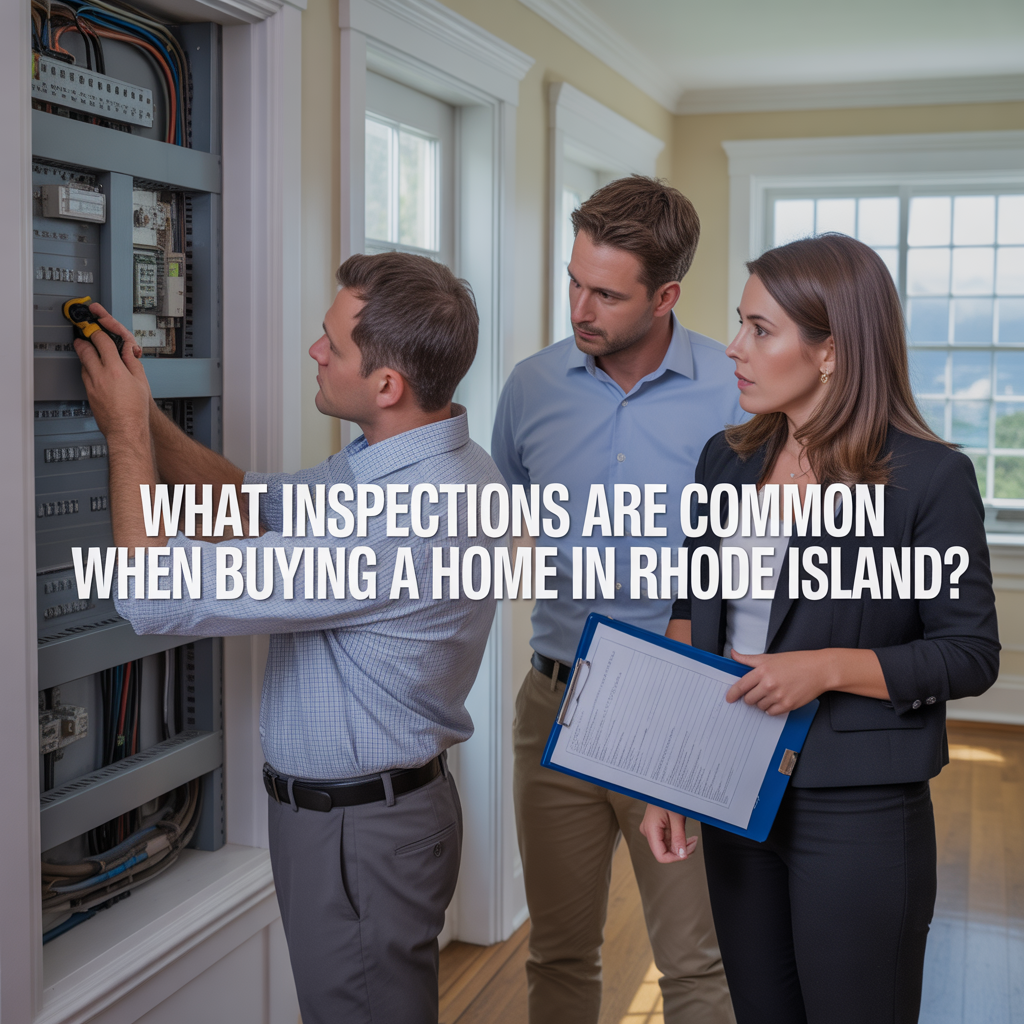
This is part of the RI Home Buying Process→ [RI Home Buying Process] also research the RI Home Selling Process → [RI Home Selling Process]
Written by: Hilary Marshall
Buying a home in Rhode Island almost always requires a deeper look than what’s visible on the walkthrough. The bottom line: you should plan for a full general home inspection, plus specialized inspections based on property type, location, and age. Because Rhode Island’s housing stock is older and more coastal than most states, concerns like lead paint, septic systems, and moisture intrusion are not optional issues—they’re part of responsible due diligence. The smartest buyers see inspections not as a hurdle but as a negotiation tool and a way to protect long-term value.
Core Insight: Rhode Island Homes Are Old, Coastal, and Diverse
Rhode Island is small, but its housing stock is anything but uniform. A 1900s colonial in Providence’s Elmhurst neighborhood poses very different inspection concerns than a 1980s raised ranch in Warwick or a coastal cottage in Narragansett.
- Age factor: Many homes in Providence, Pawtucket, and Cranston were built before 1940, which means older plumbing, wiring, and likely lead-based paint.
- Coastal exposure: In areas like Middletown, Jamestown, and South Kingstown, salt air accelerates wear on siding, roofing, and electrical components.
- Private systems: Rural towns such as Exeter and Hopkinton often rely on wells and septic systems, requiring separate, certified inspections.
Each location adds different inspection priorities. Experienced local agents and inspectors tailor their approach based on exactly where—and when—the property was built.
Standard Rhode Island Home Inspections
A general home inspection is the baseline for nearly every transaction. It’s usually completed within 7–10 days after offer acceptance and costs between $500 and $800, depending on size and complexity. This inspection covers:
- Foundation, structure, roof, and exterior
- Electrical, plumbing, and HVAC systems
- Attic, insulation, doors, and windows
- Basements and any signs of moisture or pest damage
The inspector provides a detailed report summarizing major issues and safety concerns. In Rhode Island, these reports carry significant weight during renegotiation, especially for buyer credits or repair requests.
Real-world note: In older coastal towns like Bristol or Newport, general inspections frequently reveal moisture-related rot or outdated wiring. Buyers who anticipate this often budget $10–$20 per square foot for immediate post-closing repairs.
Specialized Inspections That Matter in Rhode Island
Depending on location and property age, secondary inspections are often just as important as the standard one. Rhode Island’s market norms, unlike some other states, treat these as “common-sense add-ons,” not luxury extras.
1. Septic Inspection
- Where it applies: Homes not tied into municipal sewer, common in South County, Coventry, or rural North Smithfield.
- Who performs it: A licensed septic contractor.
- Typical cost: $400–$600.
- Why it matters: Repairs or system replacements can exceed $20,000. The test checks tank integrity, leach field function, and overall age of the system. Sellers are usually required to pump the tank before inspection.
2. Well Water Test
- Relevant areas: Exeter, Scituate, and parts of Glocester.
- Purpose: Tests for coliform bacteria, nitrates, and sometimes arsenic or radon in water.
- Tip: Lenders often require a clear water report prior to closing.
3. Radon Test
- Applies widely across Rhode Island, especially in areas with granite bedrock (Foster, Coventry, and western Cranston).
- Cost: $100–$200. Results take 48–72 hours.
- Tradeoff: Radon mitigation systems cost about $1,000–$1,500 and are relatively easy to install, but buyers should factor it into their health and home safety planning.
4. Lead Paint Inspection
- Critical for homes built before 1978, which includes large portions of Providence, Pawtucket, and Woonsocket housing.
- Why it’s important: Rhode Island law requires landlords of older homes to have a lead-safe certificate if renting. Even for owner-occupants, remediation can be expensive and time-consuming.
5. Pest and Termite Inspection
- Regions of concern: Warwick, East Greenwich, and Johnston often see subterranean termite activity due to wetter soil and dense tree coverage.
- Cost: $100–$150.
- Why it matters: Termite structural damage can remain hidden until significant repairs are needed.
6. Mold or Moisture Inspection
- Where it’s common: Coastal areas or any older home with poor basement ventilation.
- When to add it: If the general inspector notes musty odors, water staining, or dehumidifiers running during showings, this test is worthwhile.
7. Chimney and Fireplace Inspection
- Applies to older colonials and historic homes.
- Cost: $150–$300.**
- Inspectors use cameras to check for flue cracks or blockages—critical given New England’s long heating seasons.
What Most Rhode Island Buyers Get Wrong
Even savvy buyers underestimate how location and construction era interact with inspection priorities. Three common mistakes show up repeatedly in Rhode Island transactions:
- Assuming “move-in ready” means “system ready.”
Fresh paint and granite counters don’t fix galvanized plumbing or knob-and-tube wiring—issues still common in pre-1950 homes in Providence, Cranston, or Pawtucket. - Skipping septic or lead inspections to “save time.”
These are the two most common post-closing regrets among Rhode Island buyers outside metro areas. Septic surprises can derail resale value, and missing lead certification can prevent a property from being rented later. - Relying on seller disclosures instead of local data.
In flood-prone areas like Westerly or Charlestown, buyers should check FEMA maps and consult local building departments. A strong inspection process should integrate that research. - Expecting uniform building quality across coastal and inland towns.
Oceanfront properties face salt corrosion; inland properties face radon and outdated septic systems. Different problems, same level of importance.
Buyers who internalize these local risks navigate inspections not as a checklist, but as an informed risk assessment tied to long-term maintenance and insurance considerations.
Financial Reality: The Cost of Doing It Right
Home inspections in Rhode Island typically total $800–$1,500 when combining the general inspection with 2–3 specialized tests. While buyers sometimes hesitate at another thousand dollars during the contract phase, experienced agents and inspectors know the math works out clearly:
- Small upfront costs prevent expensive surprises later.
A $500 radon or septic test can easily uncover a $10,000–$25,000 risk. - Inspection credits often offset the cost.
Negotiated credits or seller repairs often exceed the inspection’s total expense.
Rhode Island’s market still expects a full inspection contingency. Waiving inspections to “win the deal” can make sense in ultra-competitive bidding (as seen in East Providence or Barrington during spring markets), but only for buyers who have cash reserves for repairs—and often pre-inspect privately before bidding. For most buyers, skipping inspections remains a poor decision, especially in older housing stock.
Real Tradeoffs: When to Go Beyond the Basics
Scenario 1: 1950s Ranch in Warwick vs. 1890s Colonial in Providence
Both might list around $450,000, but the inspection focus should differ.
- The ranch likely needs HVAC, electrical, and roof review.
- The colonial, by contrast, raises questions about foundation settlement, knob-and-tube rewiring, and insulation effectiveness.
The extra $300–$500 for specific inspections (foundation or electrical) is well-justified for the older home.
Scenario 2: Coastal Home in Narragansett vs. New Construction in North Kingstown
- The Narragansett property needs moisture, mold, and corrosion screening, especially around windows and deck fasteners.
- The North Kingstown home may have fewer urgent needs, but still benefits from radon and general system checks.
Each inspection package should reflect the local climate, not just the price point.
Intent Capture: Common Buyer Questions
Is a home inspection required when buying in Rhode Island?
It’s not legally required, but almost universally expected by lenders and smart buyers. Skipping it may only make sense for builders or experienced investors buying cash.
Should I order every possible inspection?
No—focus on those relevant to the town and property age. For instance, a condo in downtown Providence doesn’t need a septic or well inspection, while a Warwick home on a private lot might.
Is it better to do inspections before or after offer acceptance in Rhode Island?
Traditionally, inspections occur after the offer is accepted. However, in competitive market segments (like single-family homes in East Greenwich), some buyers conduct pre-offer “walk-and-talk” inspections with an inspector to understand risks upfront, then waive contingencies strategically.
Market Behavior and Regional Context
Rhode Island’s compact geography creates inspection culture variations unique to each county:
- Providence County: Most urbanized, with emphasis on lead and electrical safety. Inspections often reveal deferred maintenance hidden by quick flips.
- Kent County (Warwick, East Greenwich): Moderate-age housing stock with common issues in roofing, HVAC, and termites due to wooded, moist conditions.
- Washington County (“South County”): Septic and well inspections dominate; waterfront exposure adds salt and wind-driven deterioration risks.
- Newport County: Historic architecture, which means inspectors often need specialized knowledge of brick foundations, chimneys, and antique framing.
- Bristol County: Coastal flood zones and insurance cost interplay often lead buyers to add elevation certificate and flood survey review alongside standard inspections.
For relocating buyers, these fine distinctions often make Rhode Island’s small distance feel like a big change in required due diligence.
Who This Process Is Right (and Not Right) For
Right for:
- First-time buyers relying on financing or tight budgets who need confidence in what they’re buying.
- Buyers targeting historic or coastal homes, where inspection outcomes directly affect insurability and maintenance costs.
- Investors evaluating rent-ready compliance (especially lead certificates).
Not right for:
- Experienced flippers or contractors comfortable assuming major repair risk.
- Buyers competing in cash-heavy coastal bidding wars, where contingencies might cause a lost offer (though still advisable to pre-inspect off-market).
In short, inspections in Rhode Island are less about “checking boxes” and more about decoding 100+ years of coastal housing evolution.
Closing Thoughts: Inspections as Strategy, Not Expense
In Rhode Island’s diverse market, the right inspection plan is both financial protection and negotiation leverage. The state’s combination of older homes, coastal climate, and tight resale inventory means skipping or rushing inspections usually costs far more in the long run. Whether you’re buying a Victorian in Pawtucket or a beach cottage in Charlestown, the principle holds: local insight beats generic advice.
The best Rhode Island buyers don’t just ask, “What inspections do I need?” They ask, “What risks am I taking if I skip one?” That’s the difference between a smooth closing and years of expensive discovery.
Get the full Rhode Island Market Insights → [Market Insights]

What Is an Appraisal Gap and How Does It Work in Rhode Island?
This is part of the RI Home Buying Process→ [RI Home Buying Process] also research the RI Home Selling Process → [RI Home Selling Process] Written by: Hilary Marshall If you’re buying a home in Rhode Island, an appraisal gap is the difference between the price you agreed to pay and the value the lender’s appraiser assigns…

What to Know About Flood Zones When Buying in Rhode Island
This is part of the RI Home Buying Process→ [RI Home Buying Process] also research the RI Home Selling Process → [RI Home Selling Process] Written by: Hilary Marshall If you’re buying property in Rhode Island, flood zones aren’t a small technical detail — they’re a core part of the ownership equation. From coastal communities like Narragansett…

What Is Earnest Money in Rhode Island Real Estate?
This is part of the RI Home Buying Process→ [RI Home Buying Process] also research the RI Home Selling Process → [RI Home Selling Process] Written by: Hilary Marshall Earnest money is a good-faith deposit a buyer puts down after their offer is accepted to show the seller they are serious about closing. In Rhode Island, that…