


This is part of the RI Home Buying Process→ [RI Home Buying Process] also research the RI Home Selling Process → [RI Home Selling Process]
Written by: Hilary Marshall
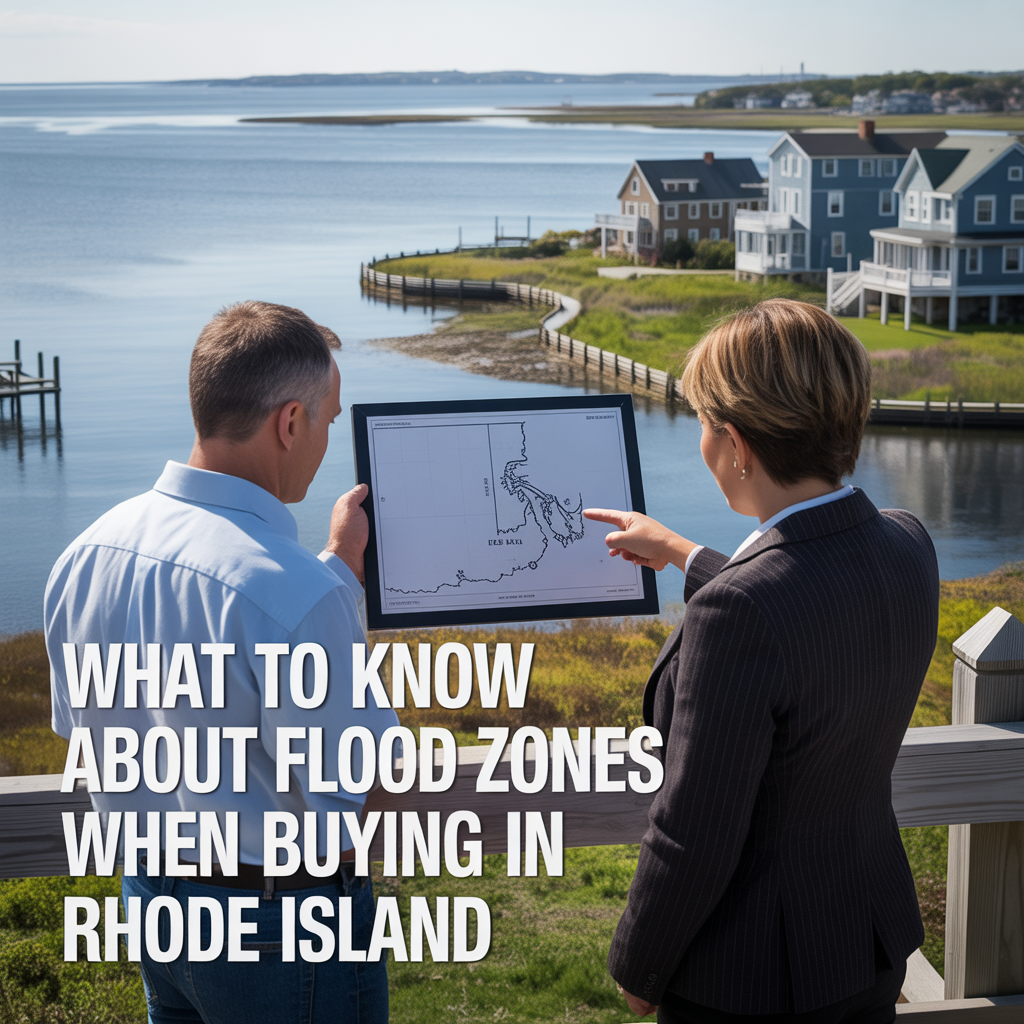
If you’re buying property in Rhode Island, flood zones aren’t a small technical detail — they’re a core part of the ownership equation. From coastal communities like Narragansett and Bristol to inland cities like Cranston or North Kingstown, the question isn’t if flood risk matters, but how much it should shape your buying decision. The bottom line: Understanding flood zones early can protect both your investment and your peace of mind.
Why Flood Zones Matter More in Rhode Island Than Most States
Rhode Island may be small, but its 400+ miles of coastline means an outsized exposure to flood risk. Much of the state’s most desirable real estate—historic coastal homes in Newport, waterfront neighborhoods in Barrington, and even parts of Warwick’s Gaspee Point—sits within high- or moderate-risk flood zones. These areas offer ocean access and stunning views, but those perks come with costs and considerations that directly affect affordability and resale value.
It’s not just oceanfront buyers who need to pay attention. In towns like Westerly, Tiverton, and parts of Pawtucket, heavy rain and storm surge can cause unexpected flooding miles from the beach. Many homes built decades ago predate modern floodplain mapping, meaning today’s “moderate-risk” plots were once assumed safe.
The Real Tradeoffs: Lifestyle, Value, and Cost
Buying in or near a flood zone involves a three-way tradeoff: location, cost, and risk tolerance. You can have ocean access, a lower insurance bill, or maximum long-term stability—but rarely all three.
- Location upside: Waterfront and near-water homes command strong long-term demand and emotional appeal. A waterfront property in Narragansett or Jamestown often holds its value better through slow markets simply due to limited supply.
- Financial reality: Flood insurance can add thousands of dollars per year to ownership costs, depending on elevation, structure age, and FEMA flood zone designation. Buyers must factor this into total monthly affordability.
- Risk tolerance: Even with insurance, flood-prone areas may face recurring disruptions—road closures, foundation damage, or higher maintenance caused by humidity and salt air.
For many Rhode Island buyers, the decision comes down to how much they value the coastal lifestyle versus their willingness to budget for and manage added risk.
What Most Buyers (and Sellers) Get Wrong About Flood Zones in Rhode Island
One of the most common misconceptions is that flood risk equals “oceanfront only.” In Rhode Island, that’s not true. Here’s what tends to surprise first-time buyers and even some seasoned sellers:
- Elevation doesn’t always mean safety. Some inland areas like Warwick’s Pawtuxet River corridor and Cranston’s mesh of wetlands are part of FEMA’s updated flood maps even though they’re miles from open water.
- Maps change. FEMA remaps every few years. A home considered low-risk when purchased in 2010 could now fall into a high-risk flood zone. Owners find out when their mortgage lender suddenly requires flood coverage.
- Older homes weren’t built for today’s climate. Many Rhode Island homes—especially those built before 1970—lack proper foundation venting, elevation, or moisture barriers. Upgrading them can be costly but essential for insurability.
- “Existing coverage” isn’t always transferable or sufficient. Buyers sometimes assume the seller’s flood policy can be continued or costs will remain similar. Premiums often reset based on new underwriting and updated flood maps, which can double or triple costs overnight.
Ignoring these nuances leads to two major regrets: unexpected insurance costs or future difficulty reselling to risk-averse buyers.
The Cost and Financial Reality
When evaluating homes in Rhode Island’s flood zones, buyers should do two things early: request the property’s FEMA flood zone designation (using Form FIRM) and obtain a preliminary insurance quote before making an offer.
Flood insurance through the National Flood Insurance Program (NFIP) averages between $800 and $3,500 per year, depending on zone, elevation certificate data, and coverage type. However, properties in high-risk “AE” or “VE” zones—found often in Narragansett Pier or Westerly’s Misquamicut—can easily exceed $5,000 annually unless the home is elevated. Private market flood insurance can offer competitive alternatives, but those premiums fluctuate with market risk models.
Also consider:
- Lending requirements: If your Rhode Island property sits in a FEMA-designated Special Flood Hazard Area (SFHA) and you’re financing through a federally backed loan, flood insurance is mandatory.
- Resale impact: Homes in flood zones often experience more limited buyer pools. Future buyers—particularly first-time owners using FHA or VA loans—may hesitate, driving longer market times.
- Maintenance and mitigation costs: Drainage improvements, waterproofing basements, or raising mechanical systems can cost $10,000 to $50,000 depending on the property’s structure and lot conditions.
These financial variables can make or break long-term affordability, especially in older neighborhoods like Edgewood or Riverside, where infrastructure predates modern flood standards.
Flood Risk Factors: What Really Drives Exposure
Flood risk in Rhode Island isn’t uniform. Three main variables determine exposure: elevation, proximity, and infrastructure condition.
- Elevation: Even a few feet can shift a property from high risk to low risk. An elevation certificate from a licensed surveyor is essential for accurate risk classification.
- Proximity: Properties within a half-mile of tidal water or along major river corridors (like the Pawtuxet or Blackstone Rivers) are more vulnerable to both surge and rain-driven flooding.
- Infrastructure: Outdated storm drains, undersized culverts, or flat grade development can amplify flood risk. Providence and Pawtucket have both invested heavily in stormwater management over the last decade, but localized flooding still occurs after major storm events.
Buyers should also review Rhode Island Coastal Resources Management Council (CRMC) maps, which show sea level rise and coastal erosion projections. These tools help buyers distinguish between short-term flood insurance risk and long-term climate exposure.
Market Behavior: How Flood Zones Shape Rhode Island Real Estate
Flood zones influence buyer and seller behavior in subtle but consistent ways across Rhode Island:
- Market segmentation: Some luxury buyers—especially in Newport or Little Compton—accept flood exposure as part of the lifestyle, prioritizing location and view over risk reduction. Mid-market buyers in Warwick or Wickford often view flood zones as deal-breakers due to budget or insurance constraints.
- Pricing adjustments: Properties in the same neighborhood but across a flood zone boundary can differ 5–15% in value based purely on insurance obligations and perceived risk.
- Days on market: Flood zone listings typically stay active longer, though demand rebounds in exceptionally tight inventory environments.
Agents fluent in flood zone dynamics can help clients negotiate more effectively—leveraging insurance quotes, elevation certificates, and comparable sales to justify offers or request concessions.
Intent Capture: Common Buyer Questions
Is buying in a flood zone a bad idea in Rhode Island?
Not necessarily. It depends on your budget, lifestyle, and long-term plans. Many high-value Rhode Island properties sit in flood zones, but success comes down to informed preparation—verifying flood data, understanding insurance implications, and budgeting responsibly.
Is it better to buy elevated or retrofit later?
If affordability allows, buying an already-elevated home is usually the better choice. Retrofitting later often costs more than the incremental purchase price difference. Still, in historically built areas like Jamestown or Bristol, buyers sometimes accept older homes and plan gradual elevation or drainage improvements.
Should inland buyers still worry about floods?
Yes, especially in older riverfront sections of Cranston, lower Pawtucket, and Warwick’s Pawtuxet Village. Inland flooding from rainfall or storm drain overload is increasingly common throughout the state.
Real-World Example: Comparing Two Rhode Island Home Buys
Scenario 1: Coastal Purchase in Narragansett
A buyer finds a 1960s beach cottage two blocks from the shore, listed at $725,000. It’s within FEMA zone AE. A flood insurance quote comes back at $3,800 annually. The buyer, planning to rent it seasonally, factors that in without concern since rental demand supports premium pricing. Over ten years, appreciation and limited supply offset higher insurance costs.
Scenario 2: Suburban Purchase in Warwick
Another buyer targets a newly renovated colonial near Pawtuxet River for $575,000. It’s in a mapped flood fringe, with insurance quoted at $2,100 per year and a history of minor basement flooding. By negotiating a small credit for drainage improvements and verifying local flood control work, the buyer balances cost and risk efficiently.
Both purchases “work”—they just fit different profiles. The Narragansett buyer pays for access; the Warwick buyer invests in mitigation. The key lesson: Flood zones shift the math, not the dream.
Lifestyle Fit: Coastal Charm vs. Everyday Practicality
Owning a home in a Rhode Island flood zone means more than budgeting for insurance—it’s a lifestyle choice. Coastal homeowners deal with humidity, salt corrosion, and seasonal crowds but enjoy daily ocean views and unparalleled recreation. Inland owners gain stability, easier resale, and lower long-term costs, but sacrifice proximity to the water.
Several Rhode Island markets offer middle ground: Tiverton’s elevated neighborhoods, East Greenwich’s coastal bluffs, or Portsmouth’s inland sections near Narragansett Bay. These areas provide water adjacency without direct flood exposure, appealing to buyers who want ambiance without heavy insurance obligations.
Who Flood Zone Buying Is Right For—and Who It’s Not
Buying in a Rhode Island flood zone can make sense for certain profiles:
- Second-home or luxury buyers who value location and can absorb insurance costs without impacting their finances.
- Long-term owners planning to live 10–20 years in place, giving market appreciation time to offset risks.
- Investors targeting rental or short-term occupancy markets along the coast.
It’s less ideal for:
- Buyers with tight affordability margins or limited savings for maintenance and insurance.
- Short-term owners aiming for resale within 3–5 years who might encounter changed flood maps.
- First-time buyers unfamiliar with the implications of elevation certificates, floodplain disclosure, or insurance renewals.
Understanding where you fall helps you decide whether the lifestyle and financial model align with your goals.
Closing Thoughts: Informed Decisions Protect Long-Term Value
Buying real estate in Rhode Island means balancing timeless coastal appeal with realistic risk management. Flood zones shouldn’t automatically discourage you—they should guide smarter due diligence. The difference between a rewarding purchase and a regrettable one isn’t the flood map; it’s preparation.
By verifying flood data early, securing accurate insurance quotes, and weighing tradeoffs specific to Rhode Island’s landscape, buyers can make confident, well-informed decisions that align with their lifestyle and timeline. Whether it’s a raised ranch in Warwick, a historic home in Bristol, or a beach cottage in Westerly, the right approach turns flood awareness into ownership confidence.
Get the full Rhode Island Market Insights → [Market Insights]

What Is an Appraisal Gap and How Does It Work in Rhode Island?
This is part of the RI Home Buying Process→ [RI Home Buying Process] also research the RI Home Selling Process → [RI Home Selling Process] Written by: Hilary Marshall If you’re buying a home in Rhode Island, an appraisal gap is the difference between the price you agreed to pay and the value the lender’s appraiser assigns…

What Inspections Are Common When Buying a Home in Rhode Island?
This is part of the RI Home Buying Process→ [RI Home Buying Process] also research the RI Home Selling Process → [RI Home Selling Process] Written by: Hilary Marshall Buying a home in Rhode Island almost always requires a deeper look than what’s visible on the walkthrough. The bottom line: you should plan for a full general home…

What Is Earnest Money in Rhode Island Real Estate?
This is part of the RI Home Buying Process→ [RI Home Buying Process] also research the RI Home Selling Process → [RI Home Selling Process] Written by: Hilary Marshall Earnest money is a good-faith deposit a buyer puts down after their offer is accepted to show the seller they are serious about closing. In Rhode Island, that…