


Chandler is where everyday life feels intentionally designed.
To learn more about Chandler Real Estate go to -> [Chandler Real Estate Guide]
The Chandler Lifestyle Hub is a comprehensive, real‑world resource designed to help residents, buyers, and long‑term planners understand how life in Chandler and its surrounding area actually works — across neighborhoods, daily routines, amenities, culture, and movement patterns.
This hub focuses on how people live, not how they relocate.
Chandler is often described in broad strokes — “family‑friendly,” “high‑tech,” “walkable,” “well‑planned” — but those labels hide enormous variation. Day‑to‑day life in Chandler depends heavily on which part of the city you’re in, how you move, and what you prioritize. Two households living fifteen minutes apart can experience entirely different versions of the city.
This hub exists to replace assumptions with clarity.
Lifestyle Alignment – Daily Functionality – Long‑Term Fit
Rather than broad city overviews, promotional narratives, or generic rankings, this hub examines the lived experience of Chandler — how neighborhoods function Monday through Friday, how weekends are actually spent, how heat and seasonality affect routines, and how lifestyle choices intersect with housing, work, school schedules, recreation, and social life.
This is not a surface‑level look at Chandler.
It is a functional, on‑the‑ground view of how the city truly operates.
Explore This Guide
Last updated: February 2026
How Chandler Lifestyle Actually Varies by Area

Chandler is not a single lifestyle market — and treating it as one leads to mismatched expectations. The way daily life feels changes quickly as you move between its older downtown core, its mid‑century neighborhoods, and its newer master‑planned communities on the edges, even when commute times or home prices look similar on paper.
Lifestyle variation in Chandler is driven by a combination of school zones, freeway and arterial access, park distribution, and how much greenery and “built‑in” neighborhood life a community really offers. A home’s floor plan or HOA amenities may reveal very little about commute ease, local dining options, or how active the nearby parks actually feel. Many of the most meaningful differences only emerge after living them day to day.
Key drivers include:
- School District Lines in Chandler
- Commute Corridors and Directions in Chandler
- Real Outdoor Access by Chandler Area
- Dining Density by Chandler Corridor
- Airport and Freeway Proximity Within the East Valley
- Heat and Microclimates in Chandler
This hub is designed to surface those realities clearly and responsibly so you can match your actual lifestyle to the parts of Chandler that fit it best.
Schools & Education Lifestyles

Schools in Chandler shape daily life far beyond academics. Even for households without children, school start and end times, sports, and events affect traffic, noise levels, and the flow of key corridors. For families, the relationship among Chandler Unified, charter networks, and private schools often becomes the primary framework for choosing where to live.
Different schools in the area operate on slightly varied calendars, bell times, and extracurricular schedules, meaning morning and evening routines can feel very different across neighborhoods. Some pockets lean into strong community roots and walkable neighborhood schools; others see more cross‑town driving to specific programs or magnet academies.
This section explores how education shapes lifestyle through:
- School‑Day Traffic in Chandler
- Family Morning and Evening Routines
- Parent and Community Networks in Chandler
- After‑School Sports and Activities Chandler
- Weekend Events Around Chandler Schools
- District vs Charter Tradeoffs in Chandler
- Chandler Feeder Patterns and Predictability
The focus is not simply “best schools,” but how school structure and geography play out in real‑world Chandler routines.
Restaurants, Dining & Local Culture

Chandler’s dining and culture scene is neighborhood‑driven rather than centralized. Downtown Chandler, Ocotillo, and the Price Corridor area each have distinct clusters of restaurants, breweries, and gathering spots — all with their own rhythms and regulars. Where you live largely determines whether weeknight dinners feel spontaneous or planned around traffic lights and parking.
Walkability varies widely here. Some areas, like Downtown Chandler or certain parts of Ocotillo, let you park once and linger between multiple venues; others are mostly “drive‑to,” even for a coffee or dessert. Vibes also shift by pocket: some areas feel suburban‑family‑focused and wind down early, while others center on professionals, nightlife, or events at The Yard or nearby venues.
This section looks at how dining and culture shape lifestyle through:
- Spontaneous vs Planned Dining in Chandler
- Walkable Chandler Dining and Nightlife Pockets
- How Late Chandler Areas Stay Active
- Family‑Friendly vs Nightlife Zones Chandler
- Hosting at Home vs Going Out Chandler
- Local‑Favorite Restaurants in Chandler
- Weekly Go‑To Spots Around Chandler
The goal is to understand how your neighborhood choice changes what evenings and weekends really look like in Chandler, not just which places get top reviews.
Parks, Trails & Outdoor Access

Outdoor access is a defining feature of Chandler life — but it looks different depending on your exact area. Lakeside paths in Ocotillo, canal trails bordering Price Road, and large community parks like Veterans Oasis or Tumbleweed offer great options, yet usability shifts across seasons. A shaded walk at 8 a.m. in March feels completely different from one in July.
Some neighborhoods weave outdoor activity into daily routines with shaded sidewalks, local gyms, and conveniently placed parks. Others require a drive for meaningful green space or trails. Here, “outdoor lifestyle” is as much about schedule and tolerance for heat as it is about distance.
This section distinguishes between:
- Map vs Usable Parks in Chandler
- Daily Outdoor Habits by Chandler Area
- Active Parks vs Passive Greenspace Chandler
- Trail Systems That Fit Chandler Life
- Best Chandler Parks for Regular Use
- Dog and Kid Friendly Parks Chandler
- Season Shifts in Outdoor Time in Chandler
Proximity alone doesn’t determine usability — shade, design, and timing matter most in Chandler’s desert climate.
Commutes, Traffic & Daily Movement

Commutes in Chandler remain one of the biggest lifestyle variables. A home may be only a few miles from work yet still vary dramatically in feel depending on which intersections, arterials, or freeways you use. Crossing Dobson, Arizona Avenue, or the 101 can add frustration, while the right route can make weekday movement surprisingly smooth.
Chandler is primarily car‑oriented, and most residents plan errands, school runs, and workouts around key roads like the Loop 202, 101, and Germann or Ray. Reverse commuting works for some who drive toward the Price Corridor or Intel campuses, but less so in northbound morning traffic. For remote workers, convenience shifts toward easy grocery runs, nearby coffee spots, and occasional freeway access when needed.
This section analyzes:
- Peak Traffic Directions in Chandler
- Chandler Freeway Slowdown Hotspots
- Reverse Commutes in Chandler Pros/Cons
- Daily Errand Routing Across Chandler
- Remote‑Work Friendly Areas in Chandler
- Tradeoffs of Living Farther South Chandler
- How Congestion Shapes Chandler Routines
The goal is to translate Chandler traffic maps into what your weekday actually feels like, hour by hour.
Airport, Freeways & Transit Access
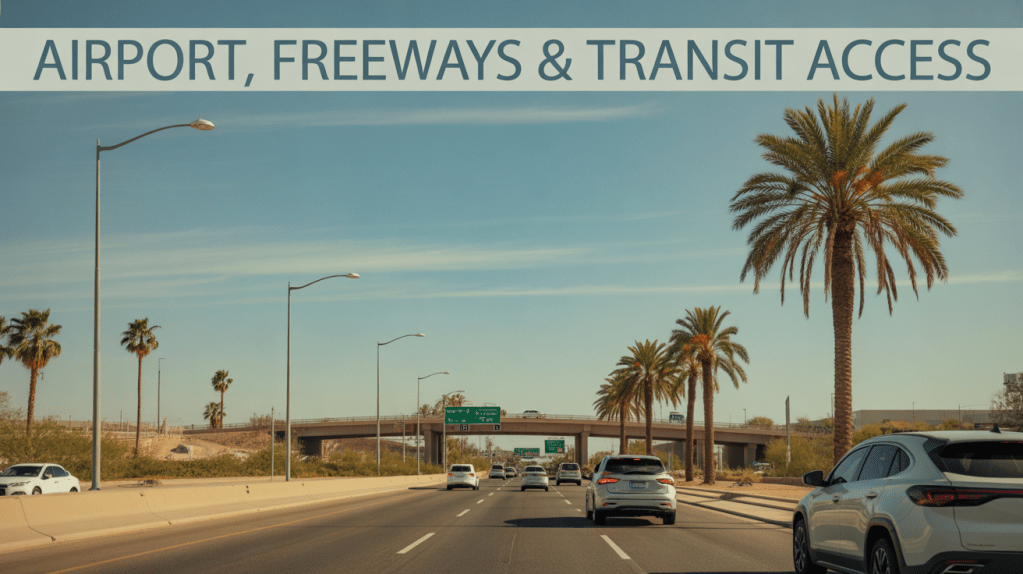
Access to freeways and airports shapes Chandler life for commuters and frequent travelers. While Sky Harbor International Airport is roughly 25–35 minutes away, the difference between routes via the 101, 202, or I‑10 can dramatically change consistency. Access to Gateway Airport in Mesa also plays a growing role for many residents.
Public transit exists but remains limited. Valley Metro buses and limited park‑and‑ride options serve certain stretches, but most locals rely on cars or rideshares. For some, well‑connected arterials mean quick access to Phoenix, Tempe, or Gilbert; for others, even local cross‑town trips can feel lengthy during peak times.
This section focuses on:
- Real‑World Drive Times to Sky Harbor
- Access to Gateway and Secondary Airports
- Key Freeway Connections in Chandler
- Local Transit and Bus Use Cases in Chandler
- Park‑and‑Ride Options Around Chandler
- Micro‑Mobility Utility by Chandler Area
- Areas Where Cross‑City Trips Feel Heavy
Function matters more than lines on a map. The aim here is to understand how often you’ll actually use various routes — and how those choices will feel in your weekly Chandler life.
Sports, Entertainment & Nightlife

Entertainment access in Chandler balances local charm with regional convenience. Downtown events, seasonal festivals, and local venues bring liveliness, while major concerts and pro sports often draw residents toward Tempe, Phoenix, or Mesa. The result is a rhythm where weekends can be vibrant close to home, yet major nights out often mean short drives.
Downtown Chandler, The Yard, and newer east‑side venues support consistent nightlife energy, but other pockets remain quieter or revolve around family‑oriented entertainment. Game‑day and event traffic are less intense than in Phoenix proper but still shape certain corridors during peak weekends.
This section explores:
- Event Impacts on Chandler Evenings
- Live Music and Arts in Chandler
- Chandler Late‑Night Hotspots vs Quiet Pockets
- Family Entertainment Hubs Around Chandler
- Parking and Rideshare Realities Chandler
- Areas That Feel “Always On” Chandler
Some neighborhoods thrive on social energy, while others embrace calm and predictability — both define the Chandler lifestyle in their own ways.
Seasonal Living in Chandler
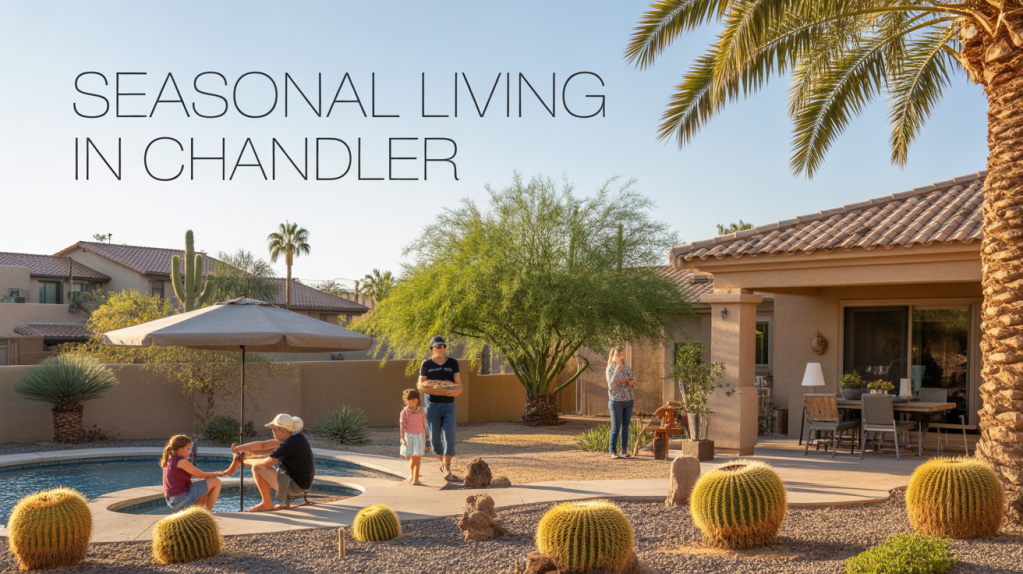
Chandler lives around its seasons more than people expect. Summer heat pushes activity early or late, while fall through spring brings festivals, farmers markets, and daily park use back to life. Local water features, shade patterns, and mature tree cover make some areas more livable during extreme months than others.
Some Chandler communities maintain a comfortable rhythm year‑round thanks to smart landscaping and planned amenities. Others vary dramatically from summer to winter, especially around walking or outdoor seating. Snowbirds also influence certain neighborhoods and golf communities each winter.
This section covers:
- Summer Livability Differences in Chandler
- Shade, Trees, and Heat Relief Chandler
- Seasonal Crowding and Tourism in Chandler
- Season Shifts in Outdoor Time in Chandler
- Patio and Event Seasons Around Chandler
- Impact on Pets and Kids in Chandler
- How Chandler Homes Live by Season
Seasonality quietly shapes routines here — especially for those migrating from cooler climates unaccustomed to the Valley’s extended summers.
Experience, Authority & How This Hub Is Built
This Chandler Lifestyle Hub is written, maintained, and updated by a real estate professional who works across the East Valley every day — not by pulling generic data or summaries. The goal is to capture how people actually live here, not just how the city markets itself.
Each section draws on first‑hand observation, resident feedback, and continuous updates as neighborhoods, schools, and infrastructure evolve. The result is a true reflection of Chandler life in motion.
This resource is built with:
- On‑the‑Ground Chandler Neighborhood Insight
- Client Experience Across Chandler Lifestyles
- Continuous Pattern‑Tracking Over Time
- Regular Review and Refinement in Chandler
It is a living reference, not a one‑and‑done snapshot.
Who This Hub Is For
This hub is built for people who want to understand how Chandler actually feels to live in — beyond bullet‑point “pros and cons.” It’s designed to help you connect your daily routine — work, school, errands, recreation, and social life — to the neighborhoods that best align with it.
Whether you already live here and are reassessing your fit, planning a move within the East Valley, or relocating to Chandler from another state, this hub helps you focus on what really matters in daily life.
This hub is especially useful for:
- Long‑Term Chandler Residents Reassessing Priorities
- Chandler Buyers Focused on Daily Experience
- Families Balancing Chandler Schools and Schedules
- Professionals Managing Chandler Commutes and Travel
- Anyone Seeking Lifestyle Clarity in the East Valley
This is not a relocation pitch.
It is a Chandler lifestyle intelligence hub.
Frequently Asked Questions About Living in Chandler
Is Chandler more urban or suburban in daily life?
Chandler blends suburban comfort with urban convenience. Downtown and The Boulevard at Ocotillo feel walkable and social, while most neighborhoods center on single‑family homes, good schools, and structured routines.
How much does commute direction really matter in Chandler?
A lot. A route that looks short on the map can feel completely different depending on which arterials or freeways you use. East‑west traffic along Ray, Chandler Blvd, or Germann can back up during peak times, while freeway access can make a huge difference for daily stress.
Is Chandler truly an “outdoor lifestyle” city?
Yes — but it depends on your schedule. Many residents stay active year‑round by timing walks early or late, while others focus on fall‑through‑spring outdoor seasons. Plentiful parks and trails make it easy to stay connected outdoors when the weather cooperates.
How important is school district choice to lifestyle in Chandler?
Extremely important. School calendars and pickup routes shape commutes, community rhythms, and even neighborhood event calendars. Families often organize their routines around specific Chandler Unified programs or charter options.
Does transit meaningfully replace driving in Chandler?
Not typically. Buses serve main corridors, but most residents rely primarily on driving. However, proximity to the 202 and 101 gives quick access to Tempe, Mesa, and Phoenix for work and flights.
How different does Chandler feel across seasons?
Summer and winter can feel like two different cities. Patios and parks slow down mid‑summer, then burst back to life in cooler months with festivals and outdoor dining. Shade and air‑flow design make some neighborhoods noticeably more livable in peak heat.
Who should use this hub?
Anyone making lifestyle‑aligned housing decisions in Chandler — whether buying, staying put, or refining long‑term plans. This resource is built to help you see how daily life really lines up with the map before you commit.
Talk With the Chandler Lifestyle Expert
If you’re evaluating neighborhoods, reassessing your current fit, or trying to align lifestyle priorities with long‑term housing decisions, a direct conversation often brings clarity faster than more reading.
You can contact me directly to discuss how Chandler neighborhoods function day to day — without pressure, scripts, or generic recommendations.
👉 Contact Renee Directly