


Chandler Lifestyle Guide → [Chandler Lifestyle Guide] & For more info on Chandler Real Estate → [Chandler Real Estate Guide]
Written by: Renee Burke
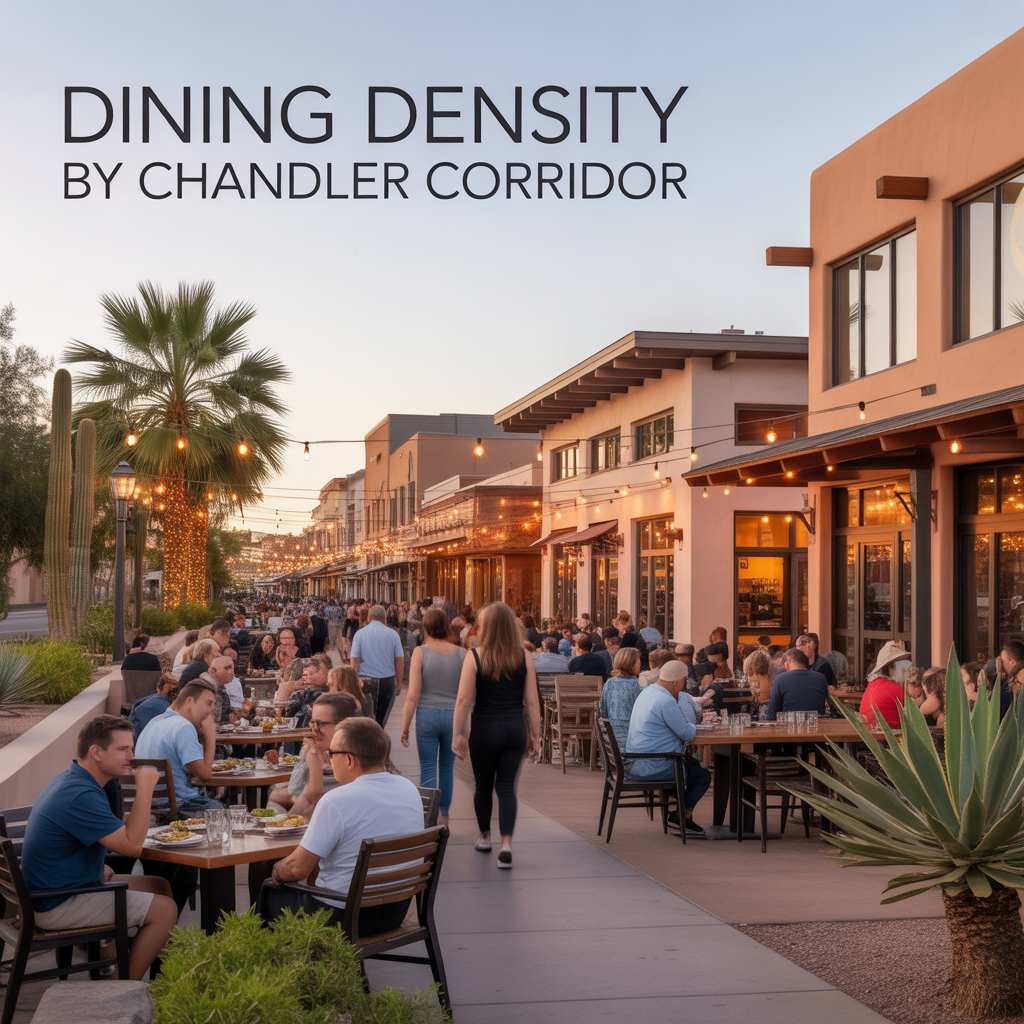
When people talk about “dining in Chandler,” what they’re really feeling is how restaurant clusters line up with the main corridors you live, commute, and go out along. Some stretches are true food hubs; others are more about convenient neighborhood spots anchored to a grocery corner.
Citywide context: how dense is dining in Chandler?
Chandler has a surprisingly rich restaurant base for its size, with roughly one restaurant for about every 350 residents, which signals a strong overall dining density and plenty of competition and variety. That density doesn’t spread evenly, though; it concentrates along a few major corridors and nodes where retail and nightlife are strongest.
Downtown Chandler corridor
Downtown is Chandler’s most walkable, “park once and wander” dining cluster.
- Along and around Arizona Avenue and Boston/Chicago streets, you’ll find a tight grid of restaurants, bars, coffee shops, and breweries close together, giving this corridor the highest restaurant-per-block feel in the city.
- Density here is less about strip centers and more about door-to-door options: you can easily move from dinner to dessert to drinks on foot without getting back in the car.
This corridor is ideal if you want an urban‑lite dining experience — patio hopping, date nights, and event nights within a few walkable blocks.
Chandler Boulevard & 101 / 202 retail corridors
Where Chandler Boulevard meets freeway access, dining really thickens into classic East Valley “power center” zones.
- Around major intersections like Chandler Blvd & Loop 101 and nearby retail hubs, you see clusters of national chains, fast‑casual concepts, and a growing number of independent spots sharing big parking lots.
- The density here shows up as plenty of choices within a short drive, often bundled with big-box shopping and entertainment, rather than a strollable main street.
This corridor works well if you value easy parking and lots of options in one big retail area, and you don’t mind driving between centers instead of walking block to block.
Ray, Warner, and “every-corner” neighborhood centers
Across much of Chandler, the mile‑grid pattern means almost every major corner (Ray, Chandler, Warner, Queen Creek intersecting with Dobson, Alma School, Arizona Ave, McQueen, etc.) has a grocery‑anchored center with several restaurants.
- Locals describe these as “pockets of walkability” — you may have a cluster with a grocery, coffee shop, a few fast‑casual and sit‑down restaurants within a half‑mile walk.
- Density here is moderate: not a huge nightlife draw, but very livable, with enough variety to keep weeknight dinners interesting without driving to downtown.
These corridors suit people who want practical, close‑to-home dining more than a big destination scene.
Dobson / Ray and west-side corners
Some west‑side intersections, especially near Dobson & Ray, are called out by locals as mini‑hubs where dining and errands stack up nicely.
- Residents mention being able to walk to multiple plazas offering groceries, coffee, casual restaurants, and a mix of local and national spots, which creates a higher‑than‑average dining density for a suburban corner.
If you like the idea of driving less and walking more for errands and quick meals, this type of corridor is worth paying attention to.
Price Corridor & employment-adjacent dining
Along the Price Road / Loop 101 employment corridor, dining is shaped by daytime demand.
- Here you’ll see a high concentration of lunch‑friendly spots — fast casual, quick sit‑down, and happy‑hour oriented restaurants serving tech and office workers.
- Density is strong at midday, with clusters near large office parks and business campuses, but the feel leans more corporate‑convenient than nightlife‑oriented.
This corridor best fits people who want lots of weekday lunch and after‑work options near major employers.
South Chandler / Ocotillo and lake-area dining
In Ocotillo and South Chandler, dining clusters around lakes, golf, and upscale master‑planned communities.
- You’ll find pockets of higher‑end and patio‑focused restaurants near waterfronts and golf courses, mixed with everyday casual options in nearby centers.
- Density here isn’t about volume as much as curated feel — a few well‑placed hubs that serve as neighborhood social anchors.
If you love patio dining, neighborhood brunch spots, and a slightly resort‑y vibe, this corridor will feel especially comfortable.
If you’re weighing one Chandler corridor against another — maybe downtown walkability versus Ocotillo patios, or Ray/Dobson convenience versus Price Corridor lunch access — I’m happy to walk through it with you in detail. We can look at where you actually tend to eat, work, and go out, then match that to the parts of Chandler where restaurant density lines up with your real life. You don’t have to sort that all out alone; I’m here as a long‑term advisor to help you choose not just a house, but a daily rhythm that feels like it truly fits.
Get the full Phoenix Market Insights → [Market Insights]

