



This guide is part of our complete Parker Real Estate Guide → [Parker Real Estate Guide]
How to Price Your Parker Home Correctly
Parker, positioned southeast of Denver in Douglas County, attracts families and professionals drawn to its top-rated schools, equestrian-friendly zoning, and 20-30 minute commutes to DTC offices via C-470. Median home prices here range from $650,000 to $750,000, reflecting steady demand amid limited inventory of 2.5-3.5 months supply. Correct pricing prevents prolonged market time, which erodes seller equity through carrying costs like utilities and taxes, while aligning with buyer expectations shaped by metro comparisons.
Step 1: Gather Accurate Comparable Sales Data
Pricing begins with recent comps—sold homes similar in size, age, and location within Parker—rather than active listings or asking prices.
Select Relevant Comps
Focus on sales from the past 90-120 days within 0.5 miles, matching bedrooms (3-5 typical), baths, and square footage (2,500-4,000 sq ft common in Parker’s ranchers and two-stories). Adjust for differences: add $20,000-$50,000 for finished basements offering rec space against Colorado winters, subtract for outdated kitchens lacking quartz amid buyer upgrades.
Parker-specific: Equestrian lots in Stroh Ranch command 10-15% premiums; exclude Cherry Creek-adjacent comps unless targeting that draw. This precision matters because over-reliance on Zillow estimates (often 5-10% off) leads to sticker shock, prompting 40-50% of showings to fizzle.
Calculate Adjusted Price Per Square Foot
Parker’s median PSF hovers at $250-$290, down slightly from peaks but stable due to Douglas County schools. Divide comp sale prices by finished sq ft, averaging top three matches. Why PSF? It normalizes for Parker’s varied stock—1970s splits vs. 2000s patios—revealing true value drivers like lot size (0.25-1 acre standard).
Step 2: Evaluate Your Home’s Condition and Features
Comps set baseline; property-specific factors adjust up or down 3-8%.
Assess Updates and Systems
Buyers penalize 20+ year-old roofs ($15,000-$25,000 replacements) and HVAC strained by snow loads, docking 2-5% ($15,000-$35,000 on $700K home). Premiums accrue for 2020s remodels: $30,000 kitchens yield 4-6% uplift via faster sales (under 30 DOM vs. 45+). Document with before-after photos for appraisals.
Weather impacts: South-facing windows cutting heating bills appeal in Parker’s 50-60 inch snowfall zones, adding 1-2% perceived value.
Factor Lot and Outdoor Amenities
Parker’s zoning allows horse properties; 1+ acre parcels boost 10-20% over standard 0.2 acres. Fenced yards with outbuildings suit families (65% buyer profile), but overgrown landscaping signals neglect, subtracting 1-3%. Staging reveals potential, shortening DOM by 10-15 days.
Step 3: Account for Market Timing and Conditions
Parker’s market softens seasonally, with winter listings (Dec-Feb) lingering 20-30% longer.
Analyze Days on Market and Absorption Trends
Current 2.5 months supply favors sellers, but luxury over $1M stretches to 60+ DOM. Price for quick sale (under 21 days) at comp average minus 1-2% in softening pockets like McCabes; hold firm in Douglas County school cores. Trends show 1-3% YOY growth, but rate sensitivity caps aggressive hikes.
Buyer behavior: Local transfers (70%) test commutes rigorously; overpricing ignores hybrid workers balking at 40-minute I-25 backups.
Consider Carrying Costs During Listing
Douglas County’s 0.55-0.65% tax rate ($3,500-$5,000 yearly on $700K) plus $2,500 insurance and $300-400 monthly utilities accrue $1,000+ per idle month. Price to close in 30 days avoids 3-5% equity loss from dual payments.
Step 4: Ownership Costs Influencing Buyer Offers
Buyers model total costs, indirectly pressuring your price.
Taxes, Insurance, and Utilities Breakdown
| Cost Category | Annual Estimate ($700K Home) | Buyer Impact on Offers |
|---|---|---|
| Property Taxes | $3,850-$4,550 | Caps budgets at 25-30% income |
| Homeowners Insurance | $2,200-$2,800 | Elevated for equestrian risks |
| HOA (if applicable) | $1,200-$2,400 | Common in newer subdivisions |
| Maintenance | $7,000-$14,000 | 1-2% value for large lots |
| Utilities | $3,600-$4,800 | Winter peaks from larger ftpt. |
High costs explain lowballs; transparent disclosures preempt negotiations.
Step 5: Set the List Price Strategically
Integrate data into final figure.
Choose Pricing Tactics
- Aggressive (Quick Sale): 98-99% of comp average for sub-21 DOM in hot neighborhoods.
- Market (Balanced): Full comp value for 21-45 DOM, testing buyer appetite.
- Premium: 2-4% above if unique (pool, views), risking 45+ DOM.
Test with agent CMA; avoid psychological pricing ($699,900) as discerning Parker buyers focus on comps.
Professional Pricing Tools
Agent net sheets project proceeds minus 5-6% commissions, staging ($3,000-$5,000), and repairs. Appraisals ($500) confirm, preventing post-inspection gaps.
Step 6: Monitor and Adjust Post-Listing
Feedback refines pricing.
Track Showings and Offers
Under 50% show-to-offer ratio signals overpricing; drop 2% weekly after 14 DOM. Virtual tours reveal online filters—adjust keywords like “Parker schools Douglas County.”
Parker Pricing Pitfalls to Avoid
Overpricing ignores inventory uptick (18% YOY metro-wide), chasing Denver comps alienates locals. Underpricing leaves equity on table, inviting lowball chains. Balance captures Parker’s 3-5% appreciation trajectory tied to job growth.
| Pricing Error | Consequence | Parker Example |
|---|---|---|
| Ignoring Comps | 45+ DOM, price reductions | $800K list sells $720K after 60d |
| Condition Overlook | Buyer walkaways post-inspect | $20K roof docks 3% offer |
| Seasonal Blindness | Winter stagnation | Dec list lags spring by 5-7% |
| Cost Oversight | Negotiation stalls | Buyers counter taxes/HOAs unseen |
Correct pricing aligns with Parker’s value drivers—schools, commutes, lots—maximizing net proceeds efficiently.
Pricing Parker homes demands comp precision, condition realism, and market timing to match thoughtful buyers’ criteria. This approach secures optimal terms amid Colorado’s balanced metro dynamics.
Ready for a customized CMA, pricing strategy, or net sheet for your Parker property? Reach out today for a no-obligation consultation tailored to current trends.


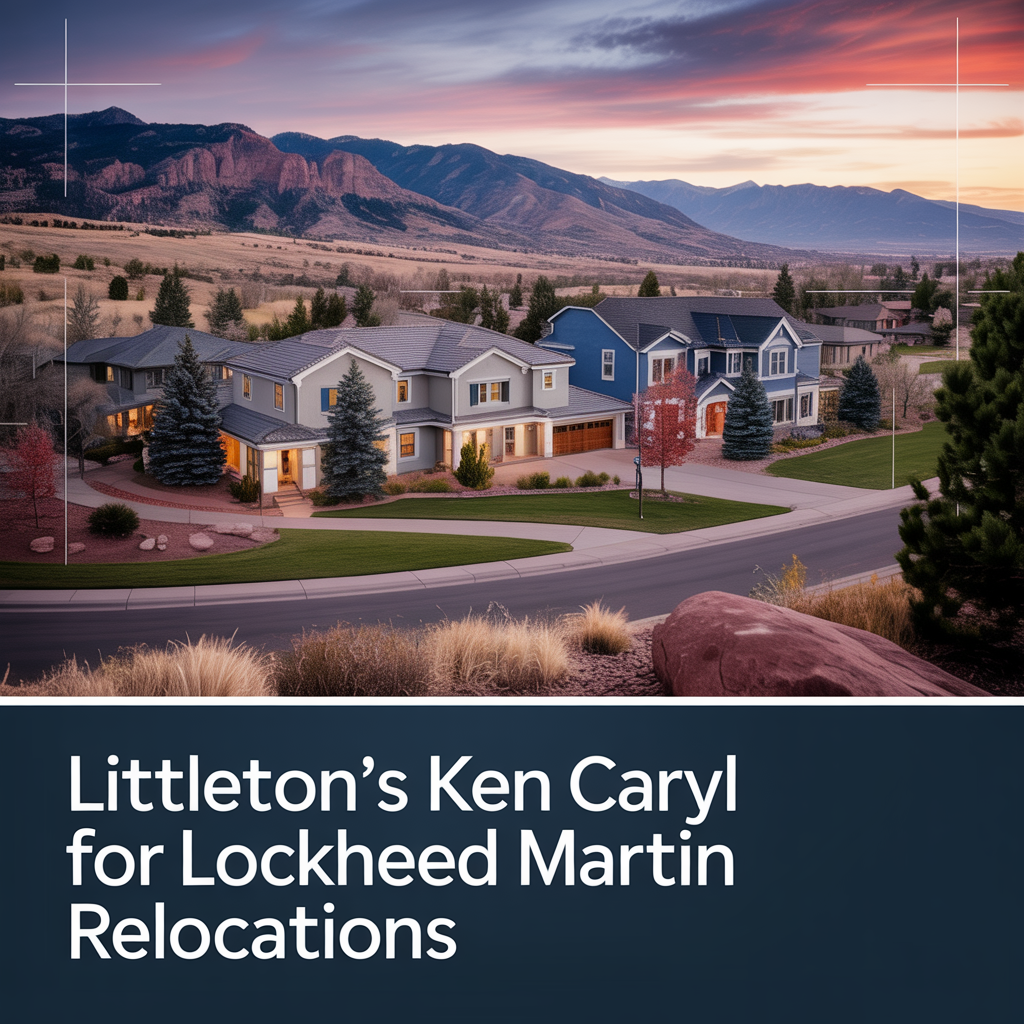
Littleton’s Ken Caryl for Lockheed Relocations
This is part of Lockheed Martin Relocation → [Lockheed Martin Relocation Hub] & the larger Denver Relocation Hub → [Denver Relocation Hub] Written by: Chad Cabalka Ken Caryl is one of the best-kept “family first” relocation options for Lockheed Martin employees who want foothills scenery, strong neighborhood appeal, and a real suburban lifestyle that still feels connected…


Centennial & Parker for Lockheed Relocations
This is part of Lockheed Martin Relocation → [Lockheed Martin Relocation Hub] & the larger Denver Relocation Hub → [Denver Relocation Hub] Written by: Chad Cabalka Centennial and Parker are two of the smartest suburban choices for Lockheed Martin employees relocating with families because they give you a strong balance of commute flexibility, good neighborhood variety, and…

Highlands Ranch for Family-Friendly Lockheed Relocations
This is part of Lockheed Martin Relocation → [Lockheed Martin Relocation Hub] & the larger Denver Relocation Hub → [Denver Relocation Hub] Written by: Chad Cabalka Highlands Ranch is one of the strongest choices for Lockheed Martin employees relocating with families because it delivers exactly what most parents want after a big move: stable neighborhoods, strong community…