



To get more information on Highlands Ranch→ [Highlands Ranch] & Overall Market Info → [Market Insights]
Homes in Highlands Ranch’s older neighborhoods often sell faster than newer builds because they sit at the intersection of price, location, and predictability: they offer established streets, realistic pricing, and fewer unknowns, in a market where buyers have become more cautious and value-focused. In a balanced-to-softening Denver metro environment, that combination shortens decision time for serious buyers, even when newer construction is available with more modern finishes.
Understanding the Highlands Ranch market backdrop
Before comparing older and newer homes, it helps to look at the broader Highlands Ranch market. The area has transitioned from a highly competitive, low-inventory environment to a more balanced market with more options and longer days on market.
- Recent data shows median sale prices in Highlands Ranch in the mid-to-high $600,000s, with days on market in the 40–45 day range—longer than during the peak pandemic years but still relatively healthy for the Denver suburbs.
- Inventory has increased and price reductions are now common, which means buyers can be more selective and are less likely to bid aggressively on every listing.
In a market where buyers have time to compare, homes that offer clear value, proven livability, and fewer surprises in daily life move to the front of the line. Older Highlands Ranch neighborhoods often check those boxes more consistently than newer fringe communities.
What “older” Highlands Ranch neighborhoods really offer
When people talk about “older” Highlands Ranch, they are usually referring to the late 1980s through early 2000s subdivisions that make up much of the original master-planned community. These are not historic properties; they are established, suburban homes with several decades of track record.
Mature neighborhoods reduce buyer uncertainty
In these older pockets, buyers can evaluate not just the house, but the neighborhood’s long-term performance.
- There is a visible history of resale activity, appreciation patterns, and how different floorplans have held value relative to the wider Denver metro.
- Streetscapes, landscaping, and nearby commercial development are known quantities—buyers can see traffic patterns, school drop-off congestion, and real-world commute times to Denver Tech Center, downtown, or the C‑470/I‑25 corridor.
Serious buyers, especially those relocating from out of state, often prefer this predictability. It lowers the perceived risk compared with buying in a newer subdivision where long-term traffic, school crowding, and surrounding development are still evolving.
Established amenities and daily convenience
Older Highlands Ranch neighborhoods tend to have fully developed amenities within a short drive or walk.
- Recreation centers, parks, trail systems, and shopping nodes are built out and heavily used, demonstrating actual community patterns rather than future marketing promises.
- Key services—grocery, medical, daycare, and school access—are tested in all seasons, including winter commutes and early-morning school runs typical of Douglas County families.
When buyers can see exactly how their daily life will function, they make faster, more confident decisions. Newer-build areas may advertise future amenities, but “future” slows down buyers who are already weighing higher prices and interest rates.
Pricing, appraisals, and value perception
One of the most powerful reasons older Highlands Ranch homes can move faster is how they price relative to newer construction in the same broader market.
Wider price bands and better perceived value
In Highlands Ranch today, median prices are high enough that buyers often face trade-offs between size, age, and location.
- Older homes frequently offer more square footage or better lots (cul-de-sacs, views, mature trees) at a lower price per square foot than newer construction.
- With interest rates elevated compared to the last decade, total monthly payment has become a primary decision driver, and older homes often hit a better balance of payment, space, and location.
When buyers feel they are getting “enough house” in a proven area without overreaching on monthly costs, they hesitate less. That confidence speeds up absorption in these neighborhoods, even if finishes are not brand new.
Cleaner appraisals and less financing friction
Appraisers in older neighborhoods have years of comparable sales to work with, including different floorplans, renovation levels, and micro-locations.
- With abundant comps, appraised values tend to fall within a predictable range, reducing the risk of low appraisals that derail or delay deals.
- Lenders are more comfortable when values line up with a deep dataset of prior sales, which is easier to achieve in established areas than in brand-new phases with only a handful of closings.
This smoother appraisal environment means fewer renegotiations, fewer contract extensions, and a cleaner path to closing—often translating to faster “days to sold” on the back end.
How buyer psychology favors older areas
Even in a data-driven market, emotion and psychology drive timing. In Highlands Ranch, several buyer segments respond strongly to the intangible benefits of older neighborhoods.
Families prioritize school timing and stability
Highlands Ranch draws a large share of move-up buyers and relocating families aiming for Douglas County schools. Many of them are timing moves around the school calendar.
- Families often target spring and early summer closings, aiming to be fully settled before the first day of school.
- Older neighborhoods near established schools with known reputations and bus routes reduce uncertainty about zoning, boundary shifts, and future capacity issues.
When parents feel confident in the school situation and neighborhood stability, they move faster, especially if the house meets functional needs (bedroom count, office space, yard) even if it is not fully updated.
Experienced buyers are wary of “perfect but unknown”
In the current Highlands Ranch market, where inventory has increased and days on market are up, many buyers are past the fear-of-missing-out mindset that dominated 2020–2021.
- They are more skeptical of paying a premium for new construction if they are unsure about future traffic, HOA enforcement standards, or surrounding commercial build-out.
- By contrast, an older home that shows a decade or more of stable neighborhood behavior—consistent resale, maintained exteriors, predictable noise and commute patterns—feels safer, even if the finishes show their age.
This “safety bias” shortens decision cycles. A buyer may return to a solid, slightly older listing after touring a few glossy but uncertain new builds.
Physical characteristics that help older homes sell faster
Older Highlands Ranch neighborhoods often benefit from physical attributes that newer subdivisions cannot easily replicate.
Lot size, trees, and privacy
Many earlier phases of Highlands Ranch were platted with slightly larger lots and different spacing norms than newer high-density developments.
- Mature landscaping, established trees, and more separation between homes create privacy and a sense of permanence that is difficult to match in compact new communities.
- Outdoor spaces in these areas have had years to evolve—patios, decks, and yard improvements often feel integrated rather than tacked on, which appeals to Colorado buyers who use outdoor space in all seasons.
In a region where residents are active year-round and sensitive to views, light, and outdoor usability, these features carry real weight and can offset dated interiors in the buyer’s overall value calculation.
Proven construction and system history
Homes from the late 1980s–2000s in Highlands Ranch have had enough time for major systems to prove themselves or be replaced.
- Buyers can review a clear maintenance history for roofs, HVAC, windows, and structural issues, rather than relying solely on builder warranties and limited inspection access typical of brand-new builds.
- Where updates have already been made—furnace replacements, window upgrades, or finished basements—buyers see immediate, quantifiable value tied to Colorado’s climate and energy costs.
This track record can make an older home feel less risky than a newer property where future system costs and performance in local weather conditions are still unknown.
Strategic implications for sellers in older neighborhoods
If you own in one of Highlands Ranch’s older neighborhoods, the fact that peers sometimes sell faster does not guarantee an automatic advantage. It does, however, shape how you should position your property.
Lean into proven value, not just cosmetic updates
Over-improving an older home purely to mimic new construction can backfire if buyers perceive it as mispriced relative to the neighborhood.
- Focus on fundamentals that matter in Colorado: mechanical systems, windows, insulation, and functional floorplans that handle work-from-home patterns and local commute realities.
- Emphasize features that newer builds struggle to match—lot quality, tree cover, trail access, proximity to established schools and recreation centers—alongside clean, neutral interiors.
The goal is to present a home that feels move-in ready without pretending to be brand new. Buyers who understand Highlands Ranch will recognize and pay for that balance.
Price into the sweet spot of the neighborhood
In a market where the median days on market have stretched into the 40s, sellers who price too aggressively at the outset often end up chasing the market down with reductions.
- Correctly priced, well-presented older homes in Highlands Ranch can still attract multiple offers, particularly in the spring and early summer window when family buyers are most active.
- Strategic pricing within the established band for your specific micro-neighborhood—rather than benchmarking against the highest-priced new builds nearby—keeps your listing in the “serious consideration” set from day one.
Speed of sale is not just about demand; it is about aligning with what informed buyers consider rational and fair within that specific pocket of Highlands Ranch.
How thoughtful buyers should evaluate older vs. newer Highlands Ranch homes
For buyers, the question is not whether older or newer is “better,” but which aligns more closely with long-term goals.
- If your priority is predictable commute patterns, tested school performance, and known neighborhood behavior, older Highlands Ranch areas often provide a clearer picture and faster path to a confident decision.
- If ultra-modern design, energy codes, and builder warranties matter more than established surroundings, newer builds may be appropriate—but expect to trade some predictability and possibly pay a higher price per square foot.
The strongest decisions come from reviewing both options through the lens of total cost of ownership, not just initial aesthetics: principal and interest, utilities, anticipated maintenance, commuting time, and how well the house will still fit your life in five to ten years.
A calm, practical takeaway
Homes in Highlands Ranch’s older neighborhoods sometimes sell faster than newer builds because they make the decision easier for serious buyers: the prices are grounded in years of comparable sales, the neighborhoods’ behavior is known, and the daily realities of commuting, schooling, and ownership in Colorado’s climate are already proven. In a more balanced Denver metro market—where buyers can pause, compare, and walk away—listings that minimize uncertainty will naturally move first.
If you are weighing whether to buy or sell in one of Highlands Ranch’s older areas, or you are debating between an established neighborhood and a newer build, reach out to me directly to walk through the specific numbers, micro-neighborhood trends, and long-term implications for your situation. With a focused, data-informed conversation about your goals, together we can determine whether an older Highlands Ranch home—or a different option altogether—offers the right balance of value, timing, and confidence for your next move.


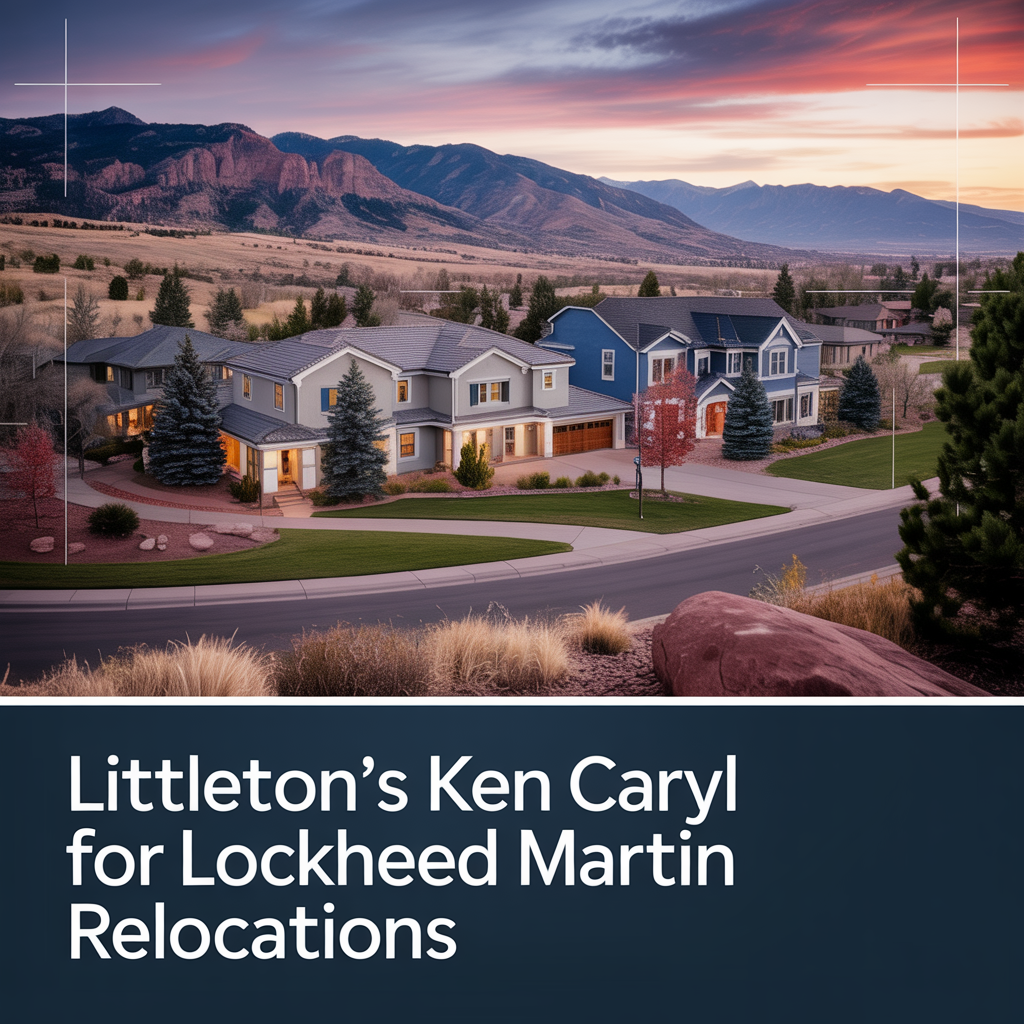
Littleton’s Ken Caryl for Lockheed Relocations
This is part of Lockheed Martin Relocation → [Lockheed Martin Relocation Hub] & the larger Denver Relocation Hub → [Denver Relocation Hub] Written by: Chad Cabalka Ken Caryl is one of the best-kept “family first” relocation options for Lockheed Martin employees who want foothills scenery, strong neighborhood appeal, and a real suburban lifestyle that still feels connected…

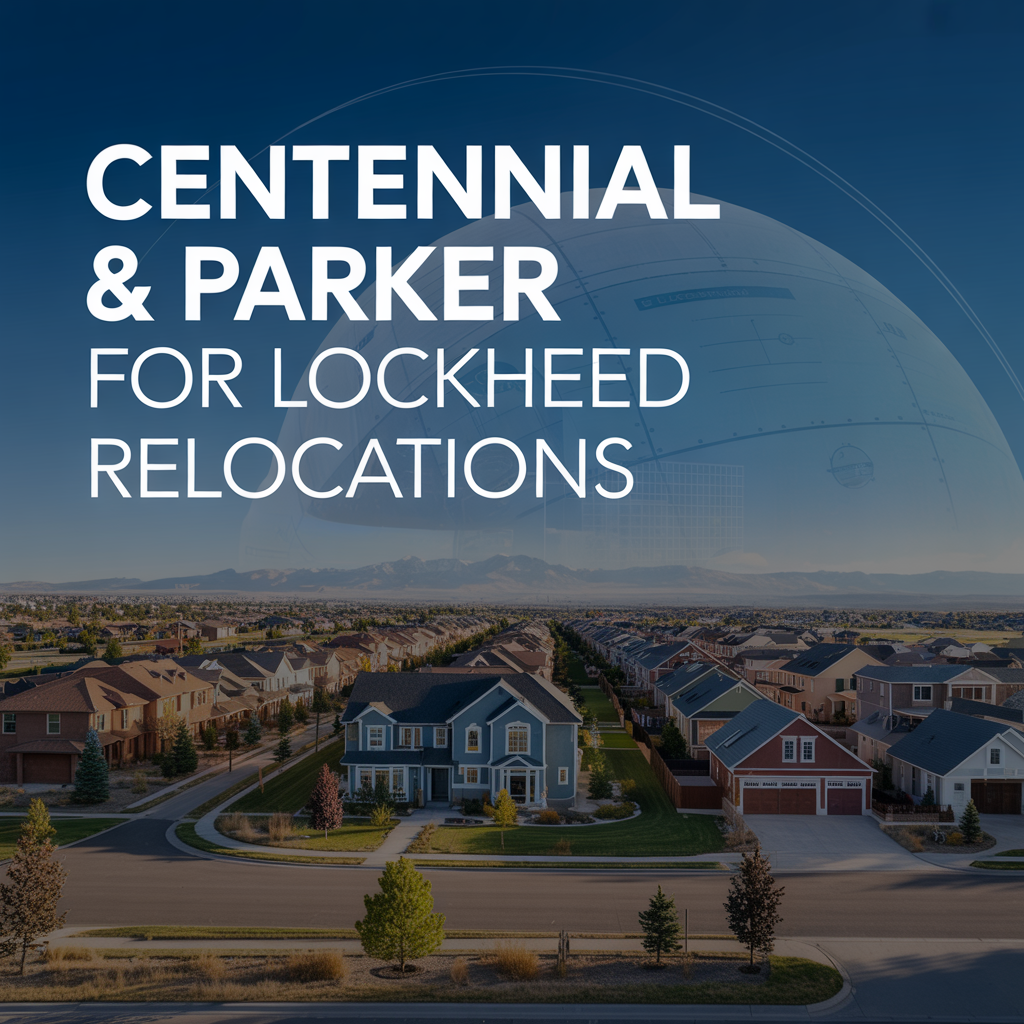
Centennial & Parker for Lockheed Relocations
This is part of Lockheed Martin Relocation → [Lockheed Martin Relocation Hub] & the larger Denver Relocation Hub → [Denver Relocation Hub] Written by: Chad Cabalka Centennial and Parker are two of the smartest suburban choices for Lockheed Martin employees relocating with families because they give you a strong balance of commute flexibility, good neighborhood variety, and…

Highlands Ranch for Family-Friendly Lockheed Relocations
This is part of Lockheed Martin Relocation → [Lockheed Martin Relocation Hub] & the larger Denver Relocation Hub → [Denver Relocation Hub] Written by: Chad Cabalka Highlands Ranch is one of the strongest choices for Lockheed Martin employees relocating with families because it delivers exactly what most parents want after a big move: stable neighborhoods, strong community…