


This is part of the Denver Lifestyle Hub→ [Lifestyle Hub]
There’s a steady hum that runs through Denver these days — a confidence born from years of transformation. The downtown skyline has grown, new neighborhoods have matured, and the city’s spirit feels sharper, more sure-footed. Some call it growth, but anyone living here knows it’s more than that. Denver, in every sense, has become a city of champions — and not just on the scoreboard.
The Broncos, Nuggets, and Avalanche have each carved out eras that define Denver’s resilience. Their energy ripples through the metro area, shaping not only culture but also community identity and, in subtle ways, the local real estate landscape. To understand life here — truly understand it — you have to look at how this sports-driven pride anchors daily living, neighborhood appeal, and long-term value.
The Heartbeat of a City: Sports as Civic Identity
For Denver residents, sports aren’t noise or entertainment; they’re a shared language. A Sunday afternoon when the Broncos play feels different across the metro. Liquor stores and sandwich shops see lines early. Even in quiet neighborhoods like Park Hill or Green Mountain, you’ll hear cheers echo through open windows.
That communal rhythm matters. Cities with strong sports cultures often show cohesive neighborhood dynamics — residents who stay longer and invest deeper. A robust civic identity builds not only local pride but also stability, something every homeowner and investor should pay attention to.
Denver’s transformation into a bona fide sports capital has elevated its sense of belonging. After decades of sprawling suburban growth, sports became one of the few unifying elements in a region stretching from Highlands Ranch to Thornton. People root for their teams from every zip code, and that common ground helps forge a collective identity that’s rare in fast-growing metros.
Economic and Real Estate Ripple Effects
Whether it’s a Super Bowl run or a Stanley Cup victory, sports victories are more than parades and merchandise sales — they affect perception, visitation, and sometimes real estate demand.
After the Avalanche’s 2022 championship, Google search activity for Denver homes spiked temporarily nationwide. While no one moves solely because of a sports win, major franchises shape market psychology. They make a city more magnetic. The same energy that draws national attention to downtown celebrations makes young professionals and remote workers look twice at job postings in the area — and, soon after, at listings in Capitol Hill, RiNo, or LoHi.
Sports-driven enthusiasm also sustains nightlife and small business ecosystems that give Denver’s core districts their edge. Properties near arenas, stadiums, and active entertainment corridors often show resilience in down cycles. A well-located condo near Ball Arena or Coors Field, for example, holds appeal regardless of short-term market shifts. Walkability to events and the social draw of urban weekends continue to command value.
Coors Field: The Best Bar in Denver
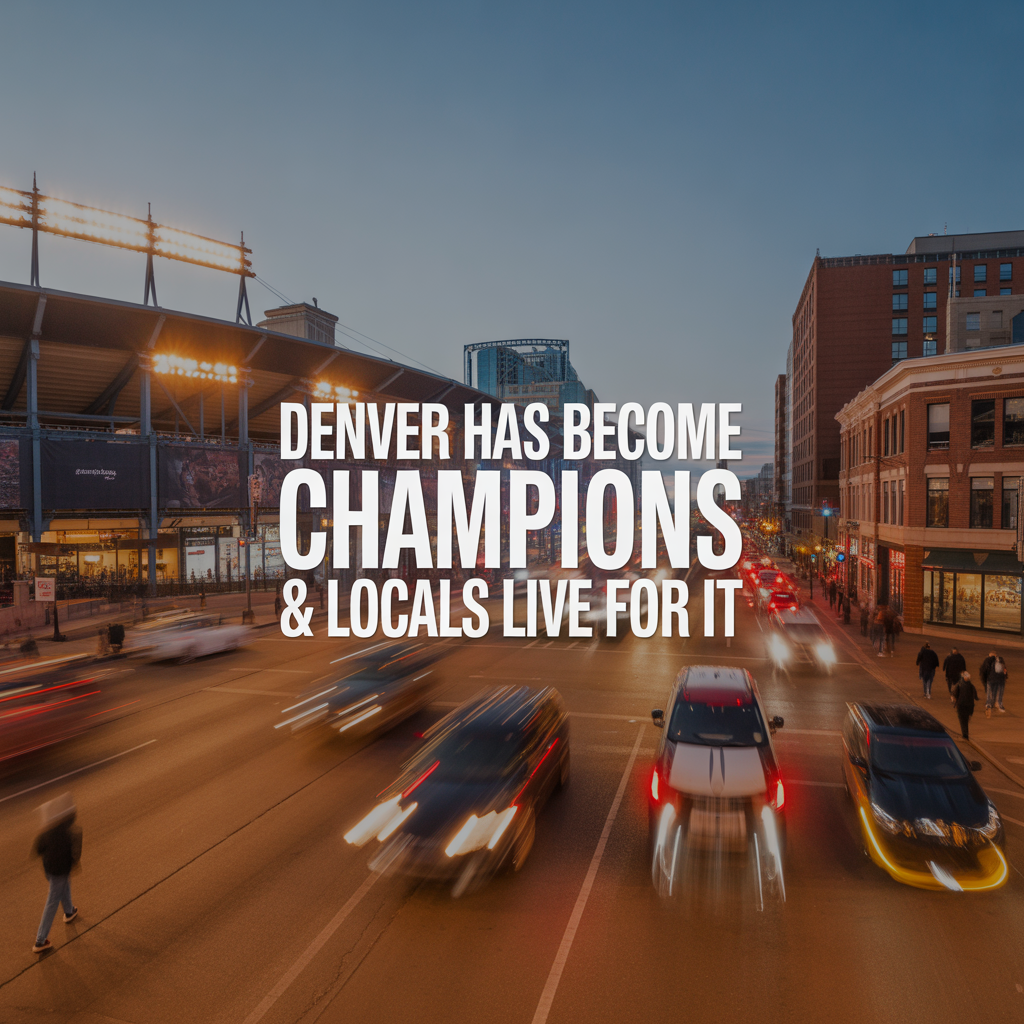
It’s an open secret among locals that Coors Field is more than a ballpark — it’s the city’s best outdoor bar with a baseball field attached. Even casual fans head there on sunny Thursdays or warm fall evenings for the same reason they head to Wash Park or the Highlands rooftops: it’s part of living here.
From a real estate lens, what’s happening around the ballpark is a microcosm of Denver’s broader evolution. LoDo’s early 2000s warehouse conversions matured into one of the region’s strongest urban residential markets, and nearby blocks keep adapting. Developers focus on blending hospitality, retail, and living spaces that appeal to residents who want proximity without chaos. You can walk to dinner, catch a game, and be home before the crowd disperses. That convenience defines modern urban value.
Denverites often joke about the Rockies’ performance, but Coors Field remains one of the most consistently vibrant public spaces in the city — and vibrancy, not statistics, drives demand.
The Broncos Spirit Still Shapes the Suburbs
While downtown pulses with Rockies and Nuggets fandom, Denver’s outer neighborhoods and suburbs often move to a different beat — the orange-and-blue one.
The Broncos’ influence extends far beyond the stadium. You’ll find it in Highlands Ranch tailgate parties, Arvada driveways with flags fluttering in November, and even in family decisions about home size. Football here isn’t a hobby; it’s part of social structure.
The real estate connection lies in lifestyle infrastructure. Game-day gatherings mean spacious great rooms, open kitchens, and finished basements with big screens. These features — often considered “nice to have” elsewhere — are frequently deal-makers in Denver. Buyer psychology here aligns with how people live, and the typical Colorado host-entertainer floor plan continues to reflect that.
When a region’s culture consistently values togetherness, properties that accommodate it tend to outperform long term.
Nuggets and the Rise of the Modern Downtown
Few things have redefined downtown pride like the Denver Nuggets. The franchise’s recent championship run gave younger residents something uniquely their own — a moment of national attention that wasn’t about skiing or craft beer but about the city’s forward-facing identity.
Downtown living, once seen as a transient phase for Denver’s young professionals, now feels legitimate again. Winning teams drive confidence in the city’s cultural core, and confidence encourages reinvestment. Developers are again retooling buildings near Union Station and the Ball Arena corridor to meet long-term residential demand.
Buyers relocating from coastal markets often mention Denver’s “balance.” You can walk to work or the arena, but still see the mountains from your balcony. That’s a rare equilibrium — energy without overextension — and it’s become part of downtown Denver’s pitch, subtly supported by the success of the teams that play there.
Sports as a Mirror of Market Stability
Winning teams alone don’t cause home appreciation, but they reflect the kind of civic consistency that supports it. Markets rise and fall on confidence, community, and long-term belief in a place’s trajectory — the same ingredients that define a successful franchise.
Denver’s steady population growth through multiple national cycles has less to do with boom-chasing and more to do with livability. The same can be said for its teams. Whether the Broncos are rebuilding or the Nuggets are defending, the city’s support never wavers. That mindset parallels real estate behavior here: owners hold longer, buyers look past short-term volatility, and investors bet on the fundamentals — geography, quality of life, and economic diversity.
The psychology behind this confidence shows in every neighborhood trend report. Even when inventory rises and appreciation cools, homes close faster than in comparable metros. Strong markets are cultural as much as economic. Denver’s is anchored by continuity, and its teams exemplify that continuity in motion.
The Daily Life That Surrounds It All
Living in Denver means more than having teams to root for — it’s about the rhythm that naturally structures your week. Morning commutes along Speer or Broadway might be punctuated by flags on passing trucks. Office conversations on Mondays start with evaluations of the run game or Jokic’s stat line. At breweries in RiNo or rooftop patios in Cherry Creek, talk casually slides between work projects and avalanche playoff hopes.
These daily patterns do something subtle but powerful: they connect residents across industries, incomes, and backgrounds. For newcomers relocating from elsewhere — especially those drawn by remote work flexibility — this built-in community fabric makes integration easier. It’s one of the reasons Denver’s retention rate for out-of-state buyers remains high.
The local climate also shapes that experience. With nearly 300 days of sunshine each year, outdoor gathering is a default behavior. That means more front-porch conversations, neighborhood block parties, and local watch events. When a city’s social life happens largely outside, architecture responds — think covered patios, oversized garages for gear, and townhomes designed for both privacy and visibility.
The Denver lifestyle, at its core, is animated by good weather, active living, and civic spirit — and sports are its shorthand expression.
Long-Term Implications for Buyers and Sellers
For buyers, understanding culture is part of understanding value. A strong local identity signals a healthy market psychology — one not solely dependent on economic factors. When people believe in their city, they believe in homeownership within it, even during market corrections. That belief stabilizes pricing over time.
For sellers, cultural momentum translates into confidence. Listings that highlight lifestyle connectivity — proximity to events, vibrant neighborhoods, or established community traditions — tend to attract more qualified, emotionally committed buyers. It’s not just about square footage or updates; it’s about whether the home’s story aligns with how people live here.
Denver’s sports heritage offers that alignment in abundance. This is a place where pride has form — brick lofts, mid-century homes, mountain-view decks — and each tells part of the story.
Why Denver’s Championship Era Matters Beyond Sports
In many respects, Denver’s emergence as a city of champions mirrors its broader evolution: confident but grounded, civic-minded yet forward-thinking. The city’s growth isn’t purely economic; it’s emotional. Winning gives a region proof of concept — that the collective effort works. And that optimism carries into how people invest, where they buy, and how they imagine raising families here.
Championships don’t change zoning maps or interest rates, but they change perception. They remind residents — and potential newcomers — that Denver’s value isn’t just in what it costs to live here, but in what it feels like to belong here. That feeling translates into a real, sustained demand for homes and neighborhoods that reflect pride, connection, and a sense of place.
A City That Wins, On and Off the Field
Denver has matured into one of America’s most balanced metropolitan areas — economically durable, culturally confident, and deeply livable. Its teams symbolize what locals already know: this city competes hard, adapts well, and keeps showing up for its people.
Whether you’re standing on a downtown balcony during a championship rally or grilling in a Littleton backyard with the game on, the rhythm is the same — proud, local, connected. That’s the Denver difference.
If you’re exploring what life could look like here — as a buyer, seller, or relocating homeowner — reach out to me for a conversation. There’s more to this market than headlines or home prices, and living here is the best way to understand why.
Get the full Denver Market Insights → [Market Insights]



Littleton’s Ken Caryl for Lockheed Relocations
This is part of Lockheed Martin Relocation → [Lockheed Martin Relocation Hub] & the larger Denver Relocation Hub → [Denver Relocation Hub] Written by: Chad Cabalka Ken Caryl is one of the best-kept “family first” relocation options for Lockheed Martin employees who want foothills scenery, strong neighborhood appeal, and a real suburban lifestyle that still feels connected…


Centennial & Parker for Lockheed Relocations
This is part of Lockheed Martin Relocation → [Lockheed Martin Relocation Hub] & the larger Denver Relocation Hub → [Denver Relocation Hub] Written by: Chad Cabalka Centennial and Parker are two of the smartest suburban choices for Lockheed Martin employees relocating with families because they give you a strong balance of commute flexibility, good neighborhood variety, and…

Highlands Ranch for Family-Friendly Lockheed Relocations
This is part of Lockheed Martin Relocation → [Lockheed Martin Relocation Hub] & the larger Denver Relocation Hub → [Denver Relocation Hub] Written by: Chad Cabalka Highlands Ranch is one of the strongest choices for Lockheed Martin employees relocating with families because it delivers exactly what most parents want after a big move: stable neighborhoods, strong community…