


This is part of Homeownership 101→ [Homeownership 101]
Written by: Chad Cabalka
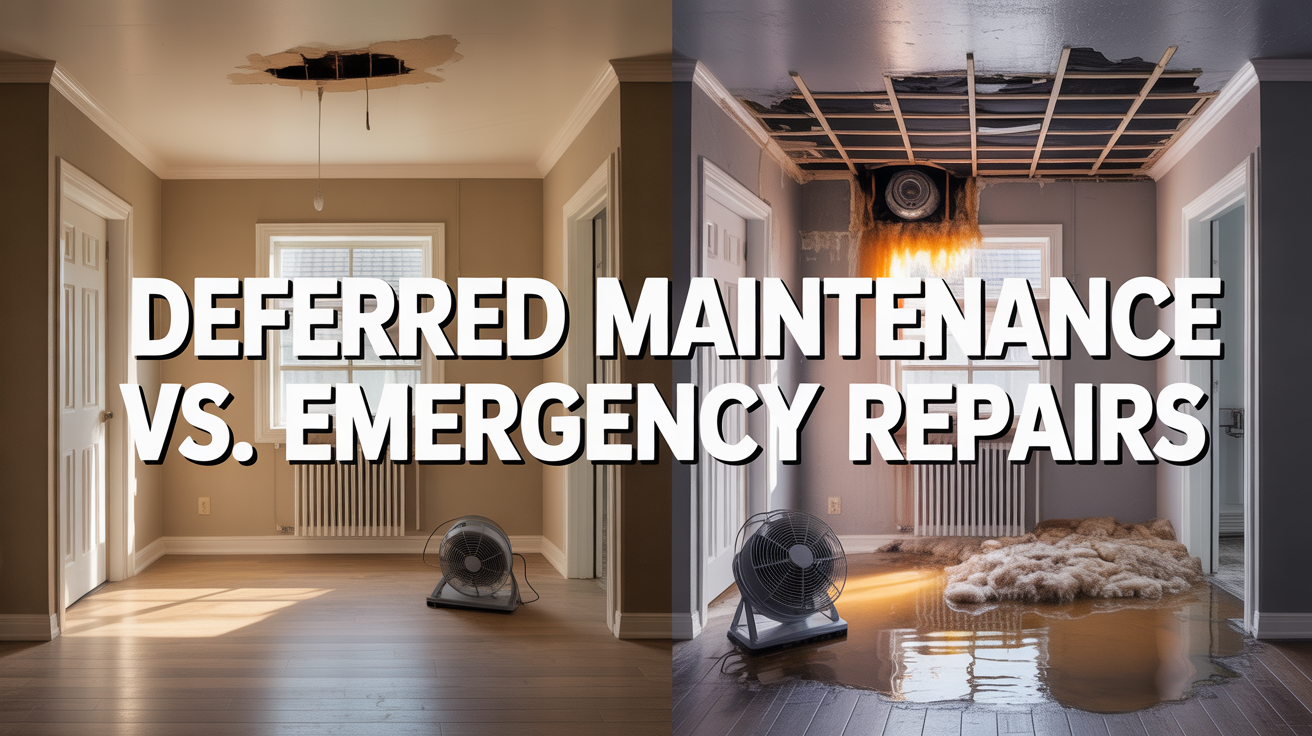
Deferred maintenance and emergency repairs represent two ends of the homeownership cost spectrum, but their relationship is causal rather than coincidental. In Denver’s harsh environment—100+ freeze-thaw cycles cracking foundations, clay soils shifting under poor drainage, hail pummeling roofs every June—small preventive tasks costing $300-800 morph into $8k-25k crises when ignored. Deferred maintenance pretends to “save money” short-term; emergency repairs extract compound interest through premium labor, cascading damage, and trapped capital.
Park Hill veterans budget 2.5% value annually ($16k on $650k homes) for prevention, compounding 6-8% equity via preserved basis. Sunnyside deferrers face 5x cost multipliers, reactive spirals amid 2026 pauses (36+ DOM). The math: $600 gutter cleans prevent $20k foundation work; $300 furnace tune-ups avert $8k mid-blizzard swaps.
Cost Multiplier Mechanics
Deferred tasks average $200-800 each. Gutter cleaning ($300 biannual), furnace tune-ups ($300), sewer scopes ($400), roof inspections ($500).
Emergencies cost 3-10x more. Ice dams from clogged gutters flood interiors ($15k remediation vs $600 prevention). Furnace compressor burnout mid-January demands emergency service ($1,200 call + $7k unit, 2x normal rates). Sewer backups cascade to $12k dig-ups (roots undetected via $400 scope).
Cascade effects amplify 2-3x. Water intrusion rots sheathing ($5k), breeds mold ($8k remediation), shifts foundations ($25k piers). Shorted HVAC strains electrical ($4k panel), spikes utilities 25% ($1k/year lost efficiency).
Denver specifics accelerate: dry air dusts coils 25% faster, clay saturation etches footings predictably. Studies show 1-3% annual budgets prevent 80% emergencies; underfunding hits 5-7% reactive spends.
Timeline Acceleration Under Local Stressors
Months 1-6: Cosmetic deferral. Sticky doors ($20 hinges), slow drains ($10 aerators), peeling trim ($50 caulk). “Not urgent.”
Year 1-2: Efficiency loss. Drafts spike gas $400/winter, dirty coils drop HVAC 20% ($800/year), poor grading pools runoff.
Year 3-5: Structural breach. Warped thresholds crack ($800 doors), roots belly sewers ($5k jets), shingle gaps leak ($12k roofs).
Year 6+: Systemic failure. Differential settlement piers ($25k), full repipes ($15k), electrical fires ($50k claims).
Freeze-thaw widens ignored cracks 3x national rates; hail penetrates missing shingles faster under 60mph June gusts.
Emergency Premium Cascades
Labor markups 50-200%. Normal plumber $150/hour; midnight furnace call $400/hour. Roofers double storm rates.
Consequential damage 2-3x. Leaking roofs rot rafters ($10k), furnace floods basements ($5k drying), electrical shorts smoke wiring ($20k).
Downtime costs. No heat mid-blizzard demands hotels ($3k/week), STR hosts lose $10k peak bookings, families relocate during repipes.
Insurance ripple. Claims spike premiums 30% ($2k/year), “settlement history” docks appraisals 5-10%.
Financial Compounding Trap
Deferred path: $2k year-one prevention saves $50k decade cascades, preserves $100k equity via 6% IRR, times March-May exits.
Emergency spiral: $25k furnace + flood year three traps refi capital, 18% credit during repairs diverts ADU funds, 2026 pause sells at 7% discount.
Budget reality: 2.5% reserves ($16k) absorb clusters; 1% starves, forcing 5% reactive (3x escalation).
Park Hill discipline: quarterly audits preempt 90%. Sunnyside reaction: Google crises, pay premiums.
Opportunity Cost Lockout
Capital trapped. $20k roof crisis mid-ADU plans kills 15% value-add. Emergency reserves divert solar ROI (12%).
Timing windows missed. 2023 ADU reforms backlog closes; deferred sewers block feasibility.
Scale stalled. Equity erosion prevents quadplex down payments, syndication entries.
Prevention Playbook: Beat the Escalation
Month 1: $2k baselines (sewer, electrical, drainage, HVAC). Label shutoffs, test GFCIs.
Quarterly: Walk exteriors (cracks, trim), flush water systems, filter swaps.
Biannual: Gutters ($300), furnace/AC ($300), roof scans post-hail.
Annual: Reserves audit (2.5% replenished), trade network intros.
Denver clay demands crowns year one ($800); pros preempt cascades.
The Math Doesn’t Lie
$600 prevention vs $20k emergency = 33x multiplier. 1% budgets prevent 80% crises; deferral guarantees 5x escalation. Proactive compounds freedom; reactive survives.
Park Hill stewardship yields options—ADUs, refis, 20-year holds. Deferred traps break-even.
Reach out to me directly to quantify your deferred risks and build a prevention roadmap that preserves long-term flexibility.
Get the full Denver Market Insights → [Market Insights]



Aurora Southlands Living For Aerospace And Defense Families
This is part of Lockheed Martin Relocation → [Lockheed Martin Relocation Hub] & the larger Denver Relocation Hub → [Denver Relocation Hub] Written by: Chad Cabalka Relocating to Denver for Lockheed Martin changes the home search fast, because Waterton Canyon is not the kind of campus you casually “figure out later.” The southwest metro drives the whole…


Best Neighborhoods For Buckley Space Force Base Commuters
This is part of Lockheed Martin Relocation → [Lockheed Martin Relocation Hub] & the larger Denver Relocation Hub → [Denver Relocation Hub] Written by: Chad Cabalka If Buckley Space Force Base is the anchor of your move, the best neighborhoods are usually in east and southeast Aurora, with the strongest practical options around Southlands, Murphy Creek, East…
C-470 Commuting Strategy For South Denver Aerospace Workers
This is part of Lockheed Martin Relocation → [Lockheed Martin Relocation Hub] & the larger Denver Relocation Hub → [Denver Relocation Hub] Written by: Chad Cabalka If you work at Waterton, split time between Waterton and the DTC, or live anywhere in the south metro with a Lockheed Martin paycheck attached to it, C-470 is the corridor…