


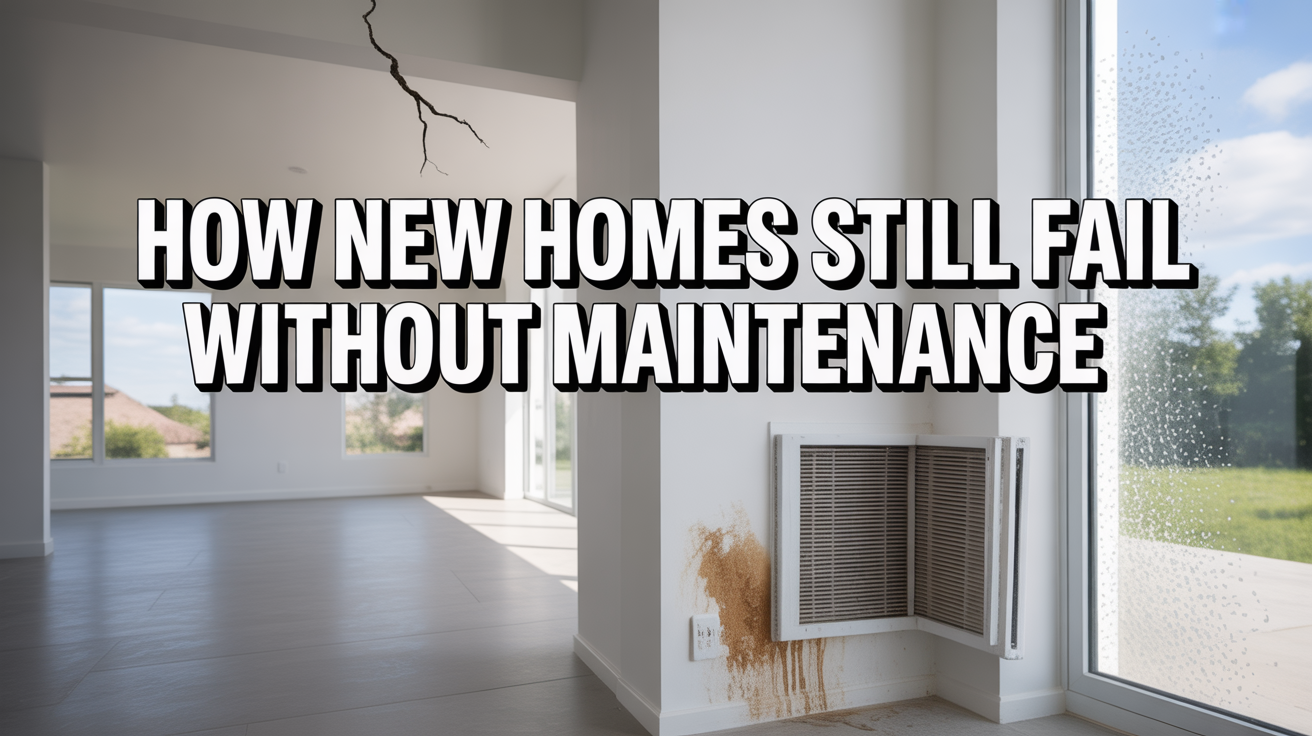
This is part of Homeownership 101→ [Homeownership 101]
Written by: Chad Cabalka
New homes in Denver promise a fresh start. Think gleaming spec houses in Central Park or luxury townhomes in RiNo. Builders highlight shiny new roofs, energy-efficient systems, and warranties that sound bulletproof. But here’s the truth: even brand-new construction needs regular care. Denver’s weather doesn’t care about “new.” Over 100 freeze-thaw cycles each year crack fresh concrete. Dry air clogs HVAC coils faster than you’d think. Hail hits roofs hard every June. Clay soils shift under new foundations just like old ones.
Skip maintenance, and that “worry-free” home turns into a money pit. Warranties cover builder mistakes, not owner neglect. A dirty furnace filter voids your compressor coverage. Uncleared gutters cause ice dams despite perfect drainage plans. Park Hill buyers who ignore year-one checkups face $8,000 furnace replacements by year four. The fix? Treat new homes like they need love from day one. Budget 2% of the home’s value yearly. That’s $16,000 on an $800,000 property. Do it right, and you lock in 6-8% equity growth. Ignore it, and you’re fixing emergencies instead.
Warranty Coverage Has Big Limits
Builders offer warranties that sound great. Ten years on structure. Two years on everything else. But they only cover defects, not neglect. A furnace compressor fails in year three from dirty filters? That’s on you. Expect a $12,000 bill.
Tankless water heaters scale up fast with Denver’s hard water. Annual $150 flushes keep them humming. Skip it, and you pay $5,000 for heat exchanger replacement. Warranties require proof—service logs, photos, receipts. No records? No coverage.
Denver’s contractor shortages make claims worse. Six-week waits for plumbers risk bigger floods. New homeowners often think “new = no problems.” Wrong. Log every service from month one. Test systems before warranties expire. It saves thousands.
Freeze-Thaw Cracks Even New Slabs
Fresh concrete looks perfect. But Denver’s winters hit hard. Clay soils expand 10-15% when wet, contract when dry. New slabs crack by first spring without proper drainage.
Spend $500 year one crowning the yard slope. Water runs away from the house. Skip it, and $25,000 foundation piers hit by year five. New fiber-cement siding warps too. Freeze-thaw pops caulk seals. Water sneaks in. Rot starts behind perfect paint.
Decks peel fast from dry air and UV rays. $1,000 stain in year one prevents $8,000 rebuilds. Builders seal for showings. They don’t maintain for Colorado weather. New materials actually wear quicker without care—premium woods untreated degrade twice as fast.
HVAC Systems Lose Efficiency Quick
Brand-new furnaces boast 95% efficiency. Dry Denver air changes that. Dust clogs coils 25% faster than humid climates. Efficiency drops to 70% by year two. You lose $800 yearly on higher bills.
Change $10 filters monthly. It extends compressor life seven years. Ignore it, and $10,000 replacement comes early. Blower motors need lubrication year one. $300 tune-up versus $3,000 swap later.
New ductwork sags without tension checks. Airflow tanks 30%. Test every register. Baseline before first winter. Homeowners who wait for breakdowns pay double—emergency service rates spike mid-blizzard. Pros schedule pre-freeze. It keeps costs predictable.
Plumbing Scale Builds in New Pipes
Hard water attacks new copper pipes fast. Clean aerators monthly for $10. Scale drops water pressure 20%. Full repipe costs $2,000 by year four.
Tankless units need $150 annual descales. Skip it, and $7,000 heat exchangers fail. New PEX pipes burst without pressure regulators. Denver mains push high PSI.
Basement sump pumps sit idle most months. Test monthly. Add $200 battery backups. Floods cost $15,000 to dry out. New basements flood just like old ones without vigilance.
Roofs and Exteriors Take Hail Beatings
New architectural shingles dent from year-one hail. Upgrade to impact-rated for $500 extra. It survives Denver’s 60 mph June gusts. Standard curls by year four. $20,000 tear-off follows.
UV rays fade new siding year two. $1,000 sealants hold color. Ignored siding chalks fast. It signals neglect to buyers, cutting 4% off offers.
Gutters pack leaves quicker on fresh roofs. $300 biannual cleans stop ice dams. New interiors flood for $12,000. Hail scans right after storms catch shingles early.
Electrical and Smart Systems Overload
New 200-amp panels handle EVs and offices. Load test year one for $500. Loose neutrals spark $50,000 fires.
Pre-wired Cat6 degrades without terminations. WiFi dead zones kill WFH. Smart lights glitch without firmware updates. GFCIs trip in damp new basements—replace proactively.
Landscaping Settles Fast on Clay
New xeriscape compacts unevenly. Crown year one for $800. Irrigation shifts foundations otherwise—$15,000 piers by year five. Tree stakes girdle trunks if forgotten. $2,000 removals follow. Sod dies without deep watering. Replants run $3,000.
Warranties Expire Before Habits Form
Two-year mechanical coverage passes quick. Month 24 furnace neglect voids compressors. Document every filter change. Take photos.
The Real Cost of “New Home Laziness”
Premium $800,000 Central Park homes hit $40,000 in year-five repairs without care. Maintained ones spend half. Resale drops 5-10% for “owner neglect” flags.
Budget 2% yearly. It preserves 6-8% growth. Deferral means five times the emergencies.
Reach out to me directly to create a new-home maintenance plan that keeps warranties valid and costs low.
Get the full Denver Market Insights → [Market Insights]



Aurora Southlands Living For Aerospace And Defense Families
This is part of Lockheed Martin Relocation → [Lockheed Martin Relocation Hub] & the larger Denver Relocation Hub → [Denver Relocation Hub] Written by: Chad Cabalka Relocating to Denver for Lockheed Martin changes the home search fast, because Waterton Canyon is not the kind of campus you casually “figure out later.” The southwest metro drives the whole…


Best Neighborhoods For Buckley Space Force Base Commuters
This is part of Lockheed Martin Relocation → [Lockheed Martin Relocation Hub] & the larger Denver Relocation Hub → [Denver Relocation Hub] Written by: Chad Cabalka If Buckley Space Force Base is the anchor of your move, the best neighborhoods are usually in east and southeast Aurora, with the strongest practical options around Southlands, Murphy Creek, East…
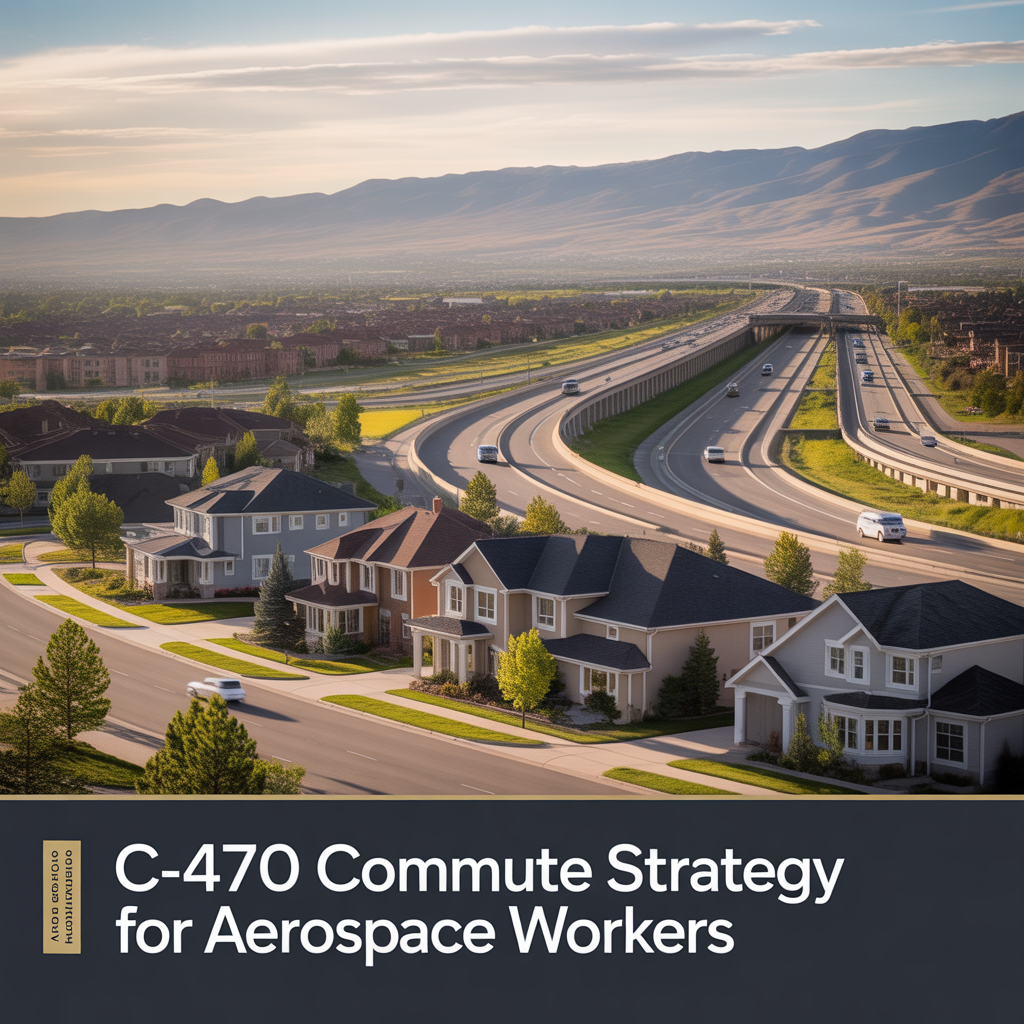
C-470 Commuting Strategy For South Denver Aerospace Workers
This is part of Lockheed Martin Relocation → [Lockheed Martin Relocation Hub] & the larger Denver Relocation Hub → [Denver Relocation Hub] Written by: Chad Cabalka If you work at Waterton, split time between Waterton and the DTC, or live anywhere in the south metro with a Lockheed Martin paycheck attached to it, C-470 is the corridor…