


This is part of Homeownership 101→ [Homeownership 101]
Written by: Chad Cabalka
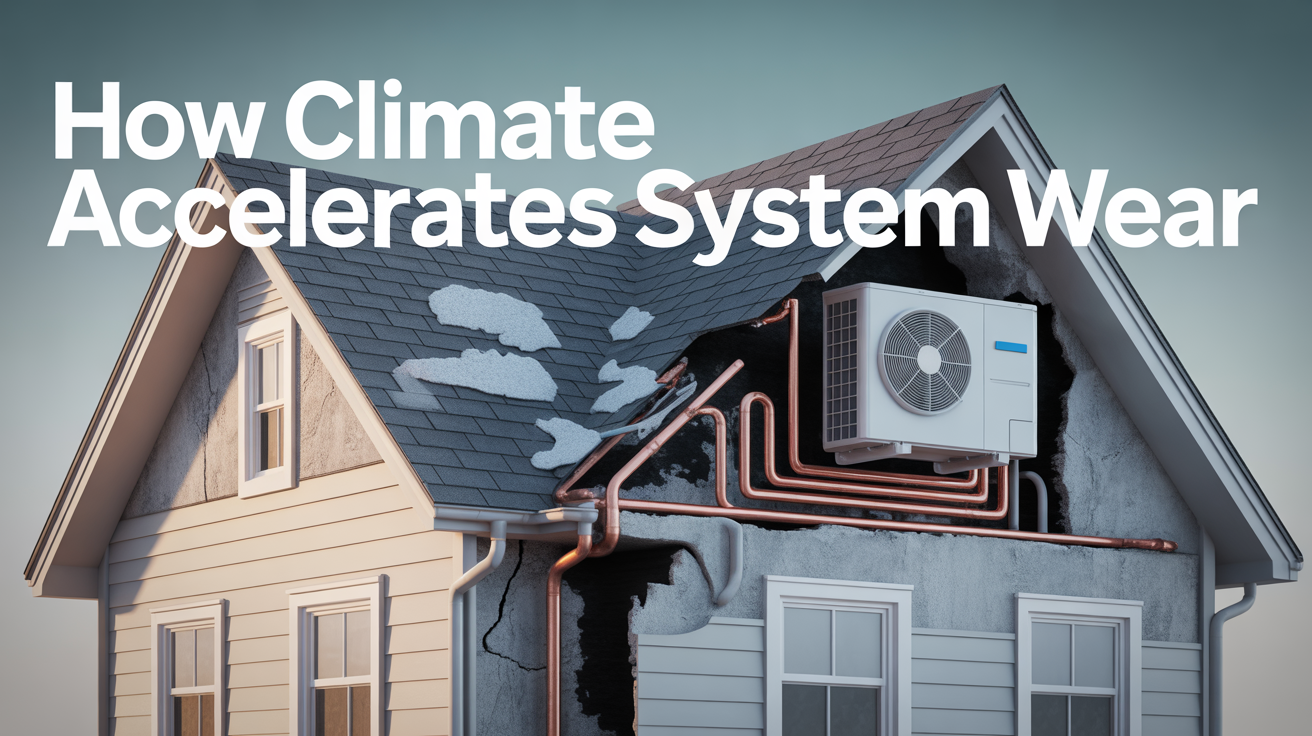
Climate accelerates system wear by subjecting roofs, HVAC units, plumbing, and exteriors to intensified cycles of expansion, contraction, moisture, and temperature extremes that standard materials endure less gracefully over time. In regions like Colorado’s Front Range, high-altitude sun bakes shingles while freeze-thaw cycles crack foundations, shortening lifespans that milder areas enjoy. Understanding these forces helps homeowners adjust care realistically, focusing protection where nature hits hardest.
Homes built for average conditions struggle when climates shift toward volatility—heavier hail, prolonged droughts, or sudden storms amplify stress on seals, insulation, and mechanical parts. This wear compounds quietly, raising maintenance needs and replacement frequency unless countered with targeted resilience.
For everyday ownership, recognizing climate’s role turns generic upkeep into effective defense, preserving system integrity without overreacting to every weather event.
How This Shows Up in Real Homes
High-elevation sunlight in Denver-area homes UV-degrades asphalt shingles faster, causing granules to loosen after just ten years instead of twenty in cloudier regions. Homeowners notice bald spots along south-facing slopes after summers, with leaks following as UV-weakened layers crack under hail impacts. Roofs that should last decades demand spot repairs years early.
Winter freeze-thaw cycles expand moisture in foundation cracks, widening them incrementally around basements. A typical Highlands Ranch property sees heaving sidewalks and sticking basement doors after wet springs, as clay soils swell and contract. This movement stresses plumbing lines embedded in slabs, leading to pinhole leaks that surface as unexplained water bills.
HVAC systems labor under dry air that evaporates refrigerant faster and dust infiltration that clogs coils. Summer monsoons bring humidity spikes that foster mold in ducts, while winter aridity strains furnace humidistats. Families endure uneven cooling and higher bills, with compressors failing prematurely from constant thermal cycling.
Common Misunderstandings Homeowners Have
Many assume all homes wear at uniform rates, applying coastal checklists to high-desert conditions without adjustment. They treat shingle loss as normal aging rather than accelerated UV exposure, delaying reinforcements that climates demand. This overlooks how local solar intensity multiplies deterioration tenfold.
Another confusion equates colder climates solely with heating stress, ignoring how Colorado’s rapid temperature swings—50-degree days to subzero nights—fatigue window seals and caulking more than steady chills. Homeowners blame drafts on installation, not contraction cycles that dry out gaskets yearly.
People often underestimate soil-moisture interplay, thinking foundation checks suffice universally. In expansive clay regions, wet-dry swings heave slabs differently than sandy stability, yet owners follow flatland schedules, missing early settling signs.
Why These Assumptions Create Problems Over Time
Unchecked UV on roofs advances granule loss to full baldness within seasons, inviting hail penetration that shreds underlayment and demands total replacement years ahead of schedule. Cumulative patching fails against repeated exposures, escalating from hundreds to tens of thousands in costs.
Freeze-thaw widens cracks that channel water deeper, corroding rebar and undermining walls over winters. Small gaps become gullies, shifting load-bearing points and cracking interior drywall—issues that start subtly but require underpinning or piering after a decade, far exceeding proactive sealing expenses.
HVAC overwork from dust and dry air shortens compressor and blower life by 30 percent, with duct mold from humidity pulses spreading allergens and straining filters constantly. Energy inefficiency compounds bills yearly, while early failures during peaks force emergency swaps at premium rates.
How Thoughtful Homeowners Handle This Differently
These owners select climate-rated materials upfront—impact-resistant shingles for hail country, PEX plumbing flexible against freezes, and high-SEER ACs with dust-preload filters. They recalibrate schedules: biannual roof coatings for UV, foundation moisture barriers post-rain, and HVAC desiccant packs in dry spells.
They monitor micro-indicators like attic humidity spikes or soil moisture gradients with $20 meters, adjusting humidifiers or drainage before wear accelerates. Annual contractor audits focus climate data—hail maps, freeze depths—tailoring advice to local extremes rather than generic lists.
Thoughtful care includes landscaping buffers: deep-root trees for windbreaks, gravel swales for runoff, and light-colored roofs reflecting solar gain. These passive measures slow wear passively, reducing active interventions needed.
What to Keep in Mind Moving Forward
Climate dictates wear pace—intense sun, soil shifts, and thermal swings demand adjusted materials and vigilance beyond standard care. Track local patterns via weather apps or extension services, prioritizing roofs, foundations, and HVAC where acceleration hits hardest.
Balance adds resilience without excess: upgrade once at replacement, inspect twice yearly, adapt as extremes evolve. This keeps systems enduring climate’s push.
To reach out to me directly for a personalized climate wear analysis tailored to your Denver-area home, including accelerated-risk assessments, material upgrades, and maintenance tweaks, contact me today. This positions your systems to withstand local conditions effectively.
Get the full Denver Market Insights → [Market Insights]



Littleton’s Ken Caryl for Lockheed Relocations
This is part of Lockheed Martin Relocation → [Lockheed Martin Relocation Hub] & the larger Denver Relocation Hub → [Denver Relocation Hub] Written by: Chad Cabalka Ken Caryl is one of the best-kept “family first” relocation options for Lockheed Martin employees who want foothills scenery, strong neighborhood appeal, and a real suburban lifestyle that still feels connected…


Centennial & Parker for Lockheed Relocations
This is part of Lockheed Martin Relocation → [Lockheed Martin Relocation Hub] & the larger Denver Relocation Hub → [Denver Relocation Hub] Written by: Chad Cabalka Centennial and Parker are two of the smartest suburban choices for Lockheed Martin employees relocating with families because they give you a strong balance of commute flexibility, good neighborhood variety, and…

Highlands Ranch for Family-Friendly Lockheed Relocations
This is part of Lockheed Martin Relocation → [Lockheed Martin Relocation Hub] & the larger Denver Relocation Hub → [Denver Relocation Hub] Written by: Chad Cabalka Highlands Ranch is one of the strongest choices for Lockheed Martin employees relocating with families because it delivers exactly what most parents want after a big move: stable neighborhoods, strong community…