


This is part of Homeownership 101→ [Homeownership 101]
Written by: Chad Cabalka
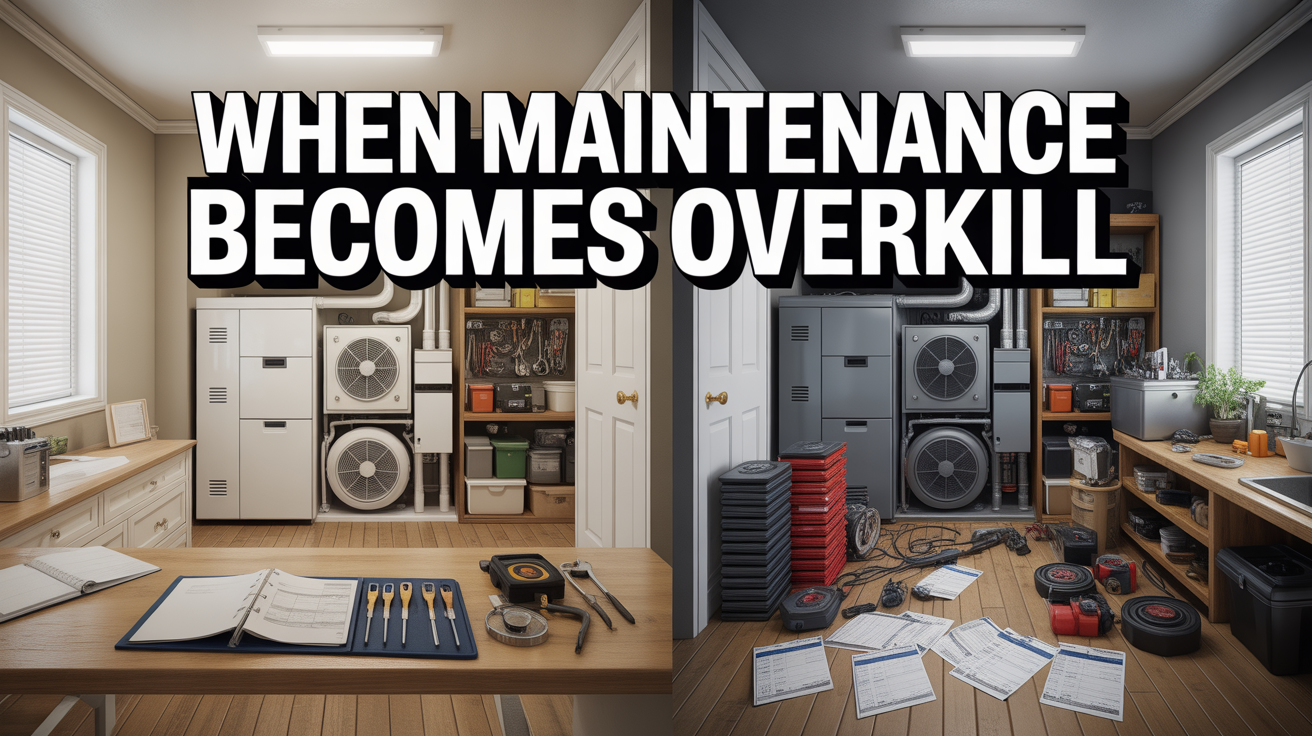
Maintenance becomes overkill when routine tasks consume disproportionate time, money, or effort without delivering meaningful protection or longevity to major systems. Homeowners cross this line by servicing equipment far beyond its practical lifespan, performing redundant checks on stable components, or chasing perfection in areas that wear naturally. Recognizing overkill preserves resources for high-impact care while avoiding the fatigue of unnecessary work.
The distinction lies in balancing vigilance with practicality. A new furnace needs basic filter changes, not quarterly deep cleans; a solid roof requires annual visual scans, not monthly climbs. Overkill drains budgets and energy, turning stewardship into a burden that overshadows living in the home.
Thoughtful owners focus effort where risks truly exist, stepping back from low-probability tasks that add little value. This approach keeps maintenance effective without tipping into excess.
How This Shows Up in Real Homes
A homeowner with a five-year-old HVAC system schedules professional tune-ups four times yearly, spending over $1,000 annually on inspections that reveal no issues beyond clean filters. The unit runs flawlessly, yet the owner insists on preemptive coil flushes and blower recalibrations, fearing distant failures. Family members joke about the “hospital-grade” furnace that hums silently through seasons.
On a fifteen-year-old roof in good condition, the owner hires inspectors every three months, power-washes shingles biannually, and applies sealants preemptively. Each visit costs hundreds, with reports confirming solid structure, yet the routine persists from anxiety over hail storms. Neighbors notice the pristine appearance but question the expense when no leaks or wear appear.
Plumbing in a modern home prompts weekly valve exercises and monthly pipe camera inspections, racking up plumber bills despite zero drips or pressure drops. The owner logs every torque reading, convinced that constant vigilance prevents unseen corrosion. Water flows steadily, but the regimen feels more like obsession than care.
Common Misunderstandings Homeowners Have
Many equate more frequent maintenance with better outcomes, assuming twice-yearly furnace services double reliability over annual ones. They overlook manufacturer guidelines that specify intervals based on usage and environment, treating all homes identically. This mindset stems from confusing proactive care with hyper-vigilance.
Another confusion views cosmetic perfection as structural necessity. Homeowners polish exterior trim monthly or reseal driveways yearly, believing shine equals durability. In reality, these tasks protect appearance more than function, diverting funds from critical systems like drainage or insulation.
People often misread general advice as universal mandates, applying “change filters monthly” to low-traffic homes where quarterly suffices. They fear skimping invites catastrophe, ignoring how over-servicing introduces risks like improper reassembly or part contamination from excessive handling.
Why These Assumptions Create Problems Over Time
Excessive furnace tune-ups accumulate costs without proportional benefits, as technicians repeat diagnostics on healthy units, sometimes introducing contaminants or loosening connections. Over ten years, thousands spent yield no added lifespan, while normal annual care achieves the same reliability at one-fourth the price.
Roof over-maintenance accelerates wear paradoxically. Frequent power washing strips protective granules, shortening shingle life, and repeated sealant layers trap moisture if applied incorrectly. Homeowners face premature replacement sooner, having paid premiums for interventions that standard seasonal checks would have sufficed.
Financially, overkill strains budgets needed for true emergencies or upgrades. Plumbing camera scopes every quarter divert funds from foundation grading or attic insulation, leaving higher-risk areas vulnerable. Emotionally, the constant cycle fosters anxiety, making homeownership feel like a treadmill rather than a stable asset.
How Thoughtful Homeowners Handle This Differently
These owners consult manufacturer manuals first, adhering to specified intervals like annual HVAC service for standard homes or biennial roof pros for mild climates. They track actual performance—energy bills, noise levels, output consistency—to adjust frequency, extending checks when data shows stability.
They prioritize tasks by impact, limiting cosmetics to visuals that boost curb appeal without structural pretense. Driveways get sealed every three years based on cracking, not calendar dates; trim painting aligns with fading, not seasons. This selective focus allocates 80% of effort to the 20% of tasks preventing major failures.
Thoughtful care includes periodic audits: every three years, a full-system review confirms if routines remain appropriate as the home ages. They embrace natural wear, budgeting for eventual refresh rather than endless preservation, ensuring maintenance enhances life without dominating it.
What to Keep in Mind Moving Forward
Gauge maintenance by evidence, not emotion—stable systems signal less frequent intervention, while anomalies prompt escalation. Manufacturer guidelines tempered by your home’s usage and location provide the baseline; adjust up only for proven risks like heavy tree cover or high humidity.
Overkill erodes returns, so cap routine spending at 1% of home value yearly, redirecting savings to reserves for inevitable replacements. This discipline keeps care practical, freeing time and funds for enjoyment.
To reach out to me directly for a personalized review of your maintenance routine to identify overkill and optimize for real protection in your Denver-area home, including tailored schedules and cost-saving adjustments, contact me today. This ensures your efforts deliver maximum value without waste.
Get the full Denver Market Insights → [Market Insights]



Littleton’s Ken Caryl for Lockheed Relocations
This is part of Lockheed Martin Relocation → [Lockheed Martin Relocation Hub] & the larger Denver Relocation Hub → [Denver Relocation Hub] Written by: Chad Cabalka Ken Caryl is one of the best-kept “family first” relocation options for Lockheed Martin employees who want foothills scenery, strong neighborhood appeal, and a real suburban lifestyle that still feels connected…


Centennial & Parker for Lockheed Relocations
This is part of Lockheed Martin Relocation → [Lockheed Martin Relocation Hub] & the larger Denver Relocation Hub → [Denver Relocation Hub] Written by: Chad Cabalka Centennial and Parker are two of the smartest suburban choices for Lockheed Martin employees relocating with families because they give you a strong balance of commute flexibility, good neighborhood variety, and…

Highlands Ranch for Family-Friendly Lockheed Relocations
This is part of Lockheed Martin Relocation → [Lockheed Martin Relocation Hub] & the larger Denver Relocation Hub → [Denver Relocation Hub] Written by: Chad Cabalka Highlands Ranch is one of the strongest choices for Lockheed Martin employees relocating with families because it delivers exactly what most parents want after a big move: stable neighborhoods, strong community…