


This is part of Homeownership 101→ [Homeownership 101]
Written by: Chad Cabalka
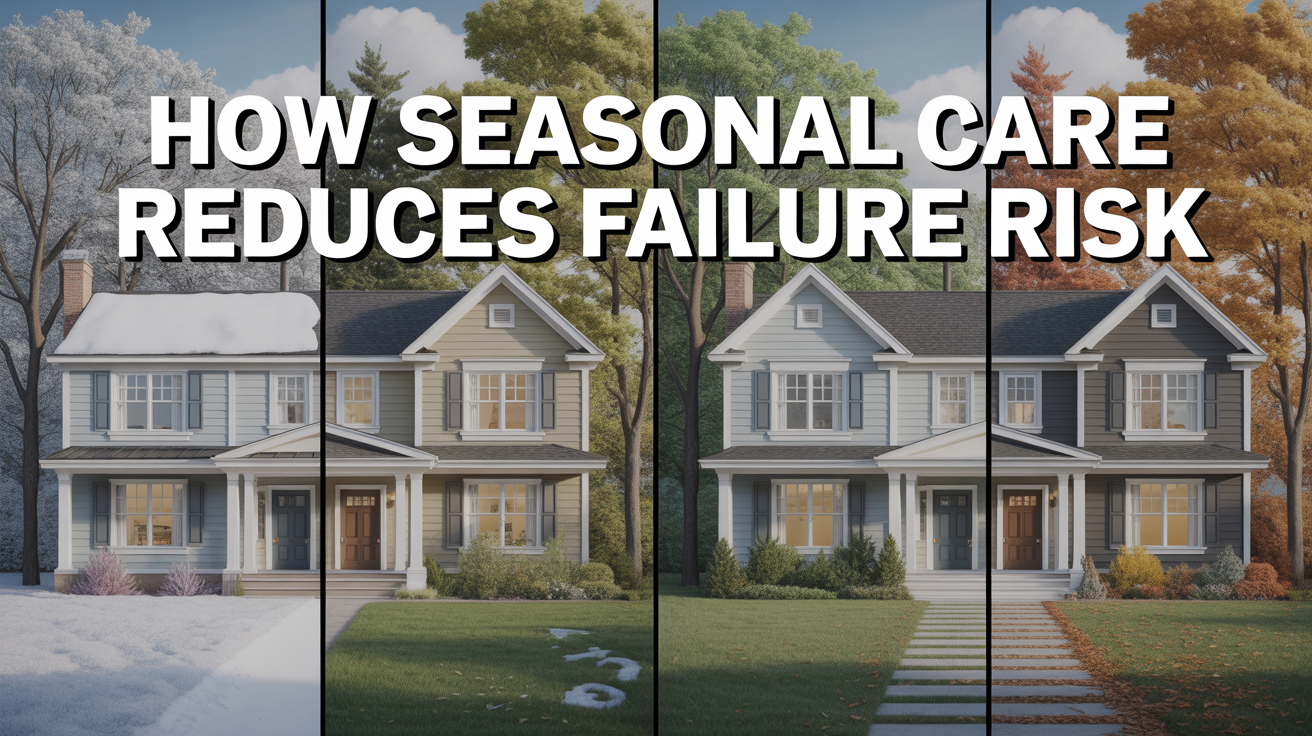
Seasonal care reduces failure risk by aligning maintenance with weather patterns and system demands, catching vulnerabilities before they meet extreme conditions. Homes face different stresses in winter snow, summer heat, spring rains, and fall winds, so timing tasks to each season prevents issues like frozen pipes or clogged gutters from turning into disasters. This approach keeps major systems—roofs, HVAC, plumbing, and exteriors—operating reliably without constant emergencies.
Homeowners who shift from generic annual checklists to season-specific actions lower the odds of breakdowns dramatically. For instance, preparing heating systems before cold snaps avoids mid-winter failures when repair waits stretch days. The logic is straightforward: match care to the calendar, and your home handles nature’s cycles more gracefully.
In regions with distinct seasons like Colorado’s, this timing proves especially valuable, turning potential headaches into routine upkeep that protects both comfort and budget.
How This Shows Up in Real Homes
Spring cleanup focuses on thawing systems, where homeowners drain outdoor faucets and inspect grading around the foundation to ensure meltwater flows away properly. This prevents basement flooding from saturated soil pressing against walls, a common issue after heavy snowpack. Families notice drier interiors and no musty odors, as early attention stops water intrusion before it reaches crawlspaces.
Summer demands cooling system vigilance, with monthly air conditioner filter changes and clearing debris from outdoor units to maintain airflow. In a typical home, this keeps compressors from overheating during 90-degree days, avoiding shutdowns that leave upstairs bedrooms stifling. Regular checks also reveal refrigerant leaks early, preventing total failures during peak heat waves.
Fall preparation centers on heating readiness, including furnace tune-ups and chimney inspections before the first frost. A household tests the system on mild October evenings, confirming even warmth and no strange odors from dust buildup. Gutters cleared of leaves direct runoff away from siding, reducing ice dam risks that plague winter roofs.
Winter shifts indoors, monitoring indoor humidity to prevent wood shrinkage cracks around windows and excessive dryness that strains furnaces. Homeowners run bathroom exhaust fans during showers and check humidifiers, keeping air balanced to avoid static damage to electronics or warped door frames from dry heat.
Common Misunderstandings Homeowners Have
Many homeowners treat maintenance as a once-a-year event, applying the same tasks regardless of season and missing how summer humidity stresses seals differently than winter freezes. They clean gutters in spring and assume coverage through fall leaves, overlooking how autumn debris blocks downspouts right before rains hit.
Another confusion assumes systems self-regulate across seasons, so a working AC in June handles July peaks without prep. In reality, accumulated pollen or pet hair clogs filters faster in warm months, forcing units to labor and shortening life. Homeowners blame rising bills on utility hikes rather than seasonal neglect.
People often think indoor care pauses in summer, focusing outdoors while ignoring attic fans or dryer vents that trap heat buildup. This oversight lets moisture linger from air conditioning condensation, fostering mold that standard winter checks miss entirely.
Why These Assumptions Create Problems Over Time
Ignoring seasonal timing lets problems brew until conditions worsen them. Spring grading oversights allow summer storms to overwhelm poor drainage, eroding foundations incrementally and requiring costly underpinning years later. Repeated cycles turn minor settling into structural shifts that appraisers flag.
HVAC strain from unseasoned prep compounds wear across years. An AC running dirty coils through back-to-back summers burns out compressors early, while unprepared furnaces cycle excessively in cold snaps, cracking heat exchangers. These failures cascade into higher energy use and premature replacements.
Over decades, mismatched care softens home resilience. Exteriors battered by uncleared winter ice or untrimmed fall branches show premature aging, from peeled paint to buckled siding. Buyers see these as red flags, negotiating steeper credits that reflect the compounded neglect of off-season lapses.
How Thoughtful Homeowners Handle This Differently
These owners divide the year into four phases, tackling roof and drainage in fall, heating in late summer, cooling in spring, and plumbing grading in early thaw. They test systems under light loads—a short furnace run in September or AC cycle in April—to spot issues without full-season stress.
They adapt to local patterns, like Colorado’s high-altitude dryness prompting extra winter humidifier checks or Front Range hail prompting post-storm roof scans. Seasonal journals track observations, such as gutter flow after first rains, building a custom rhythm that preempts repeats.
Thoughtful care includes neighbor-shared alerts for early freezes or wind events, prompting group checks that catch shared risks like power line trims. This networked approach layers personal vigilance with community timing for comprehensive protection.
What to Keep in Mind Moving Forward
Seasonal care thrives on anticipation: prep before demands peak, inspect after stresses pass, and adjust for your home’s microclimate. Core systems benefit most from timed attention, with flexibility for anomalies like early snow or late frosts. Consistency across years builds equity in reliability.
Simple tools—a moisture meter, ladder level, and calendar reminders—suffice for most tasks, with pros filling technical gaps like refrigerant checks. This framework minimizes failures without overwhelming schedules.
To reach out to me directly for a personalized seasonal care plan tailored to your Denver-area home, including weather-adjusted checklists, risk prioritization, and local contractor recommendations, contact me today. This equips you to reduce failure risks effectively through every season.
Get the full Denver Market Insights → [Market Insights]



Aurora Southlands Living For Aerospace And Defense Families
This is part of Lockheed Martin Relocation → [Lockheed Martin Relocation Hub] & the larger Denver Relocation Hub → [Denver Relocation Hub] Written by: Chad Cabalka Relocating to Denver for Lockheed Martin changes the home search fast, because Waterton Canyon is not the kind of campus you casually “figure out later.” The southwest metro drives the whole…


Best Neighborhoods For Buckley Space Force Base Commuters
This is part of Lockheed Martin Relocation → [Lockheed Martin Relocation Hub] & the larger Denver Relocation Hub → [Denver Relocation Hub] Written by: Chad Cabalka If Buckley Space Force Base is the anchor of your move, the best neighborhoods are usually in east and southeast Aurora, with the strongest practical options around Southlands, Murphy Creek, East…

C-470 Commuting Strategy For South Denver Aerospace Workers
This is part of Lockheed Martin Relocation → [Lockheed Martin Relocation Hub] & the larger Denver Relocation Hub → [Denver Relocation Hub] Written by: Chad Cabalka If you work at Waterton, split time between Waterton and the DTC, or live anywhere in the south metro with a Lockheed Martin paycheck attached to it, C-470 is the corridor…