


This is part of Homeownership 101→ [Homeownership 101]
Written by: Chad Cabalka
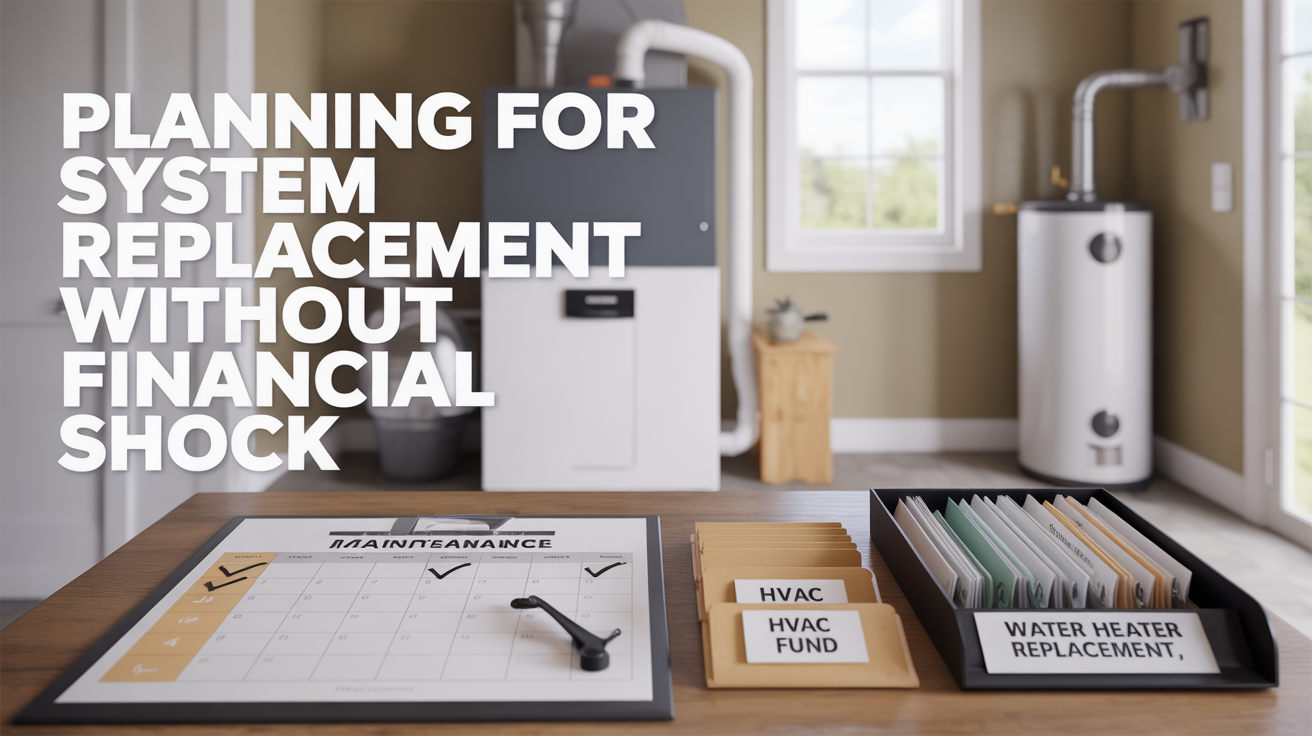
Major home system replacements rank among the biggest financial shocks for Denver homeowners. A new furnace runs $8,000 to $12,000 installed. Roof tear-offs cost $20,000 to $30,000. Water heater swaps hit $3,000 to $7,000. These expenses land without warning for unprepared owners. They often cluster during market slowdowns like 2026’s rising inventory. Clay soil shifts trigger $25,000 foundation piers unexpectedly.
Proactive planning changes everything. Park Hill veterans treat replacements as line items. They budget 2% of home value each year. That equals $16,000 on an $800,000 property. Sunnyside owners who react chase emergencies. Contractor backlogs stretch six weeks in winter. Discipline builds 6-8% equity growth over time. Reactive spending erodes wealth through credit card interest and resale discounts.
Denver’s weather plays a role too. Freeze-thaw cycles number over 100 yearly. Hail storms pound roofs every June. Dry air dusts HVAC coils faster than average. Warranties expire quickly. Systems connect in chains. Dirty furnaces overload electrical panels. Wet roofs rot structural beams. Quarterly inspections keep surprises at bay. Dedicated reserves create timing freedom. Schedule work for March-May resale peaks when buyers overlook fresh upgrades.
Understand Your System Lifespans First
Start with accurate timelines for every major system. Month one diagnostics cost around $2,000 total. Sewer scopes spot tree roots for $400. Electrical load tests reveal capacity issues for $500. HVAC energy audits flag early inefficiencies for $300. Drainage surveys prevent soil saturation for $800.
Asphalt roofs last 20-30 years when impact-rated for hail. Furnaces endure 15-25 years with annual tune-ups. Air conditioners manage 10-15 years in hot attics. Water heaters survive 8-12 years before rust. Electrical panels hold 25-40 years structurally. Copper pipes reach 40-70 years. Track everything in a spreadsheet. Note replacement years and cost ranges. Log funded percentages.
Annual professional inspections extend life by 20-30%. Builders require service records for warranty claims. Skip initial baselines and surprises strike during life changes. Babies arrive or jobs shift. A clear roadmap guides decisions. Park Hill owners replace roofs proactively at year 22. Sunnyside homeowners wait for leaks. They pay 50% more in premiums.
Create Dedicated Reserves From Day One
Allocate 2.5% of your home’s value to high-yield savings. That builds a $20,000 fund on an $800,000 property. Keep it separate from emergency cash. Categorize by system type. Set aside $5,000 for HVAC. Reserve $10,000 for roofs. Budget $3,000 for water heaters.
Replenish the fund quarterly after expenses. Tax appeals recover $3,000 on average. Insulation rebates save $800 in utilities each year. Solar installations return 12% through Xcel incentives. Reserves earn $1,000 in interest annually at 5% rates. Credit cards charge 18% during furnace failures. Interest alone costs $2,000 in year one.
Reserves let you buy during lulls. Prices drop 10-15% off-peak. The fund grows by $10,000 over a decade. Use it for ADU down payments later. Underfunded budgets skip tune-ups. Failure accelerates by 30%. Financial freedom comes from discipline. It unlocks smart refinances at peak equity moments.
Schedule Replacements for Best Timing
Furnaces install best in September-October. Avoid January premiums that double labor costs. Roofs go up post-hail in August-September. Contractors overload in June storms. Water heaters work anytime. Stagger them with HVAC projects for savings.
March-May timing aligns with sales peaks. Buyers ignore fresh systems and pay full price. The 2026 inventory pause cuts material costs by 10%. Sequence projects logically. Upgrade electrical capacity at year 20 for $4,000. Replace HVAC at year 15 for $10,000. Tackle roofs at year 25 for $25,000.
Build trade networks early. Nextdoor recommendations create priority access year one. Off-season contracts save 15-20%. Professionals provide cost ranges upfront. Bulk scheduling reduces travel fees. Smart timing preserves cash flow. It avoids rushed decisions during emergencies.
Maximize Warranties and Rebates Fully
Extended warranties add two to five years of coverage. A $500 furnace plan pays off big. Log every service call meticulously. Builders deny claims for neglect. Xcel rebates reach $1,000 for efficient HVAC upgrades. Federal tax credits cover 30% of solar panels and insulation.
Run energy audits in year one for $300. Claim upgrades immediately. Rebates compound to $5,000 free over a decade. Sequence work smartly. Fix drainage first to protect new furnaces. Update electrical before tankless heaters. Reserves cover upfront costs. Rebates replenish funds quickly.
Warranty proof requires photos and receipts. Digital apps track everything easily. Skip this layer and you forfeit thousands. Professional inspections qualify more rebates. Homeowners who plan ahead turn free money into real advantages.
Sequence Projects to Build Leverage
Year five calls for electrical capacity upgrades at $4,000. It supports future EVs and air conditioners. Year 10 needs plumbing flushes or PEX pipe segments for $5,000. Year 15 brings HVAC replacement at $10,000. Roofs follow at year 25 for $25,000. Foundation crowning happens year one for $800.
Systems interconnect tightly. New HVAC units overload old panels quickly. Updated electrical supports tankless water heaters. Proper drainage protects every upgrade underneath. Reserves fund the full sequence. Loans stay minimal. Each step builds long-term value.
Interdependencies matter greatly. Wet basements ruin new furnaces. Undersized wiring shorts smart systems. Logical order prevents rework. Budgets stay intact across phases. Homeowners gain confidence with clear milestones.
Build Vendor and Financing Networks Early
Introduce yourself to local trades year one. Plumbers, roofers, and electricians book six weeks out in winter. Nextdoor recommendations build trusted lists fast. Off-season contracts cut costs by 20%. Home equity lines at 7% beat credit cards at 18%.
Reserves reduce HELOC draws significantly. Pre-approved financing waits ready for opportunities. Vendor relationships skip bidding wars. Priority scheduling saves weeks of disruption. Networks create calm during big projects.
Professionals spot issues early too. They recommend connected upgrades. Financing aligns with market lulls. Homeowners avoid panic spending completely.
The Power of Compounding Financial Freedom
A 2.5% budget preserves 6-8% investment returns over time. It aligns replacements with March-May sales peaks. ADUs add 15% value later. Reactive $50,000 clusters force discounts in 2026. Reserves grow choices exponentially.
Scale into quadplexes becomes possible. Refinances hit peak equity moments. Longer tenure builds wealth steadily. Park Hill discipline creates lasting security. Sunnyside shocks drain resources instead.
Month one roadmaps set the course firmly. Systems stay reliable for decades. Financial stress fades completely. Ownership turns into true freedom.
Reach out to me directly to create your personalized system replacement roadmap.
Get the full Denver Market Insights → [Market Insights]



Aurora Southlands Living For Aerospace And Defense Families
This is part of Lockheed Martin Relocation → [Lockheed Martin Relocation Hub] & the larger Denver Relocation Hub → [Denver Relocation Hub] Written by: Chad Cabalka Relocating to Denver for Lockheed Martin changes the home search fast, because Waterton Canyon is not the kind of campus you casually “figure out later.” The southwest metro drives the whole…


Best Neighborhoods For Buckley Space Force Base Commuters
This is part of Lockheed Martin Relocation → [Lockheed Martin Relocation Hub] & the larger Denver Relocation Hub → [Denver Relocation Hub] Written by: Chad Cabalka If Buckley Space Force Base is the anchor of your move, the best neighborhoods are usually in east and southeast Aurora, with the strongest practical options around Southlands, Murphy Creek, East…

C-470 Commuting Strategy For South Denver Aerospace Workers
This is part of Lockheed Martin Relocation → [Lockheed Martin Relocation Hub] & the larger Denver Relocation Hub → [Denver Relocation Hub] Written by: Chad Cabalka If you work at Waterton, split time between Waterton and the DTC, or live anywhere in the south metro with a Lockheed Martin paycheck attached to it, C-470 is the corridor…