


This is part of Homeownership 101→ [Homeownership 101]
Written by: Chad Cabalka
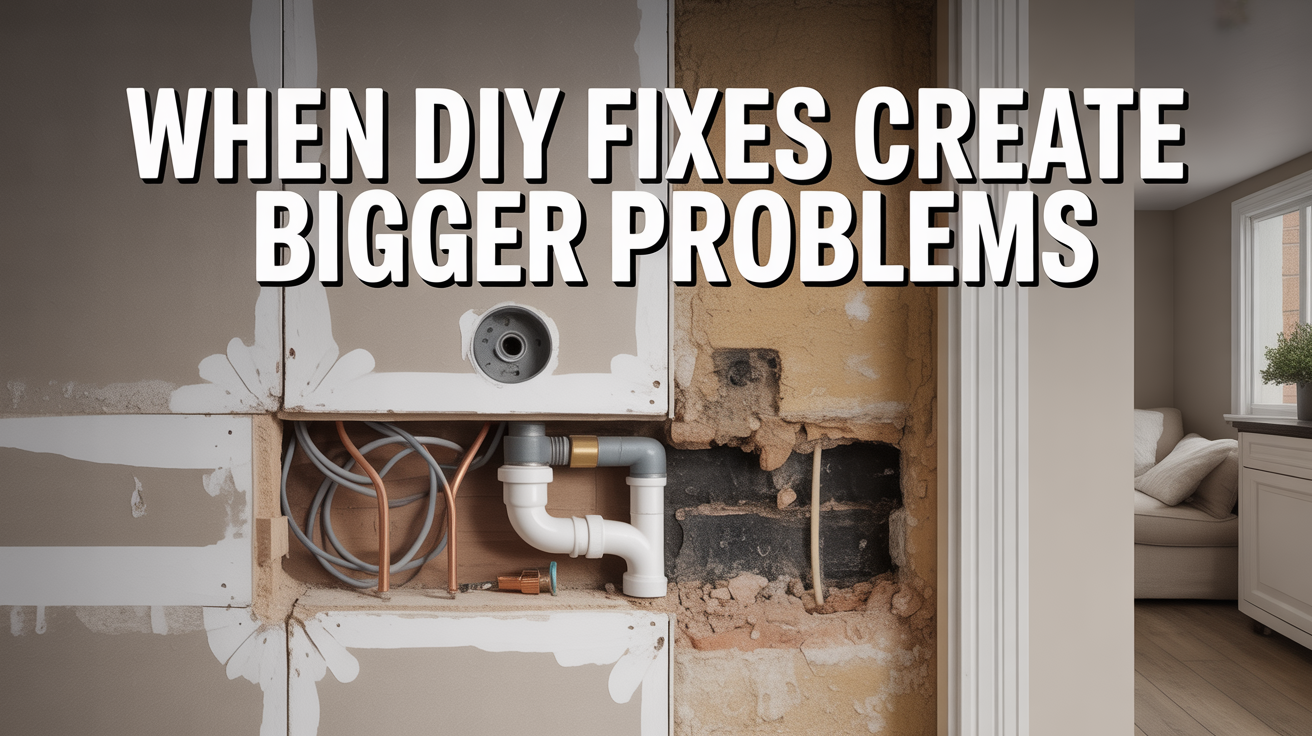
DIY home repairs seem like a smart move right after closing. You watch YouTube videos, grab supplies from Home Depot, and save money versus hiring pros. A dripping faucet calls for a $10 washer swap. A sticking door needs sandpaper on the hinge. A leaky gutter gets zip-tied back in place. New Denver homeowners dive in with confidence. These quick fixes feel victorious. However, amateur attempts often mask symptoms instead of solving root causes.
Denver’s climate makes matters worse. Freeze-thaw cycles warp wood frames. Clay soils shift under poor drainage. Hail damages roofs every June. Hard water builds minerals fast. Bad DIY accelerates wear 5-10 times faster than calling experts. Park Hill veterans warn about this trap. A $500 plumbing hack turns into $5,000 repipes. A $200 electrical tweak risks $50,000 fires. Trade backlogs stretch 6 weeks in winter. Secondary damage cascades quickly. Professionals diagnose full systems. DIY targets shiny symptoms only. Smart discipline preserves your equity. It delivers 6-8% compounding returns through protected home value. Reactive fixes erode wealth instead.
Faucet and Plumbing Mistakes Build Hidden Clogs
Homeowners unscrew dripping aerators and wrap on plumber’s tape. They overtighten fittings with enthusiasm. Denver’s hard water minerals scale up twice as fast in the process. Water pressure drops 20% by year two. The amateur fix starves flow inside the pipes. Scale migrates deeper into the lines. A full copper repipe costs $2,000 by year four. A professional descale runs just $150.
Toilet flappers turn yellow from constant use. DIY buyers grab $8 “universal” replacements. Wrong seats cause steady leaks. Fill valves misadjusted overflow tanks slowly. Subfloors warp beneath unnoticed. Repairs hit $3,000. Experts match exact models for the brand. Amateurs pick mismatched parts from the aisle. Low pressure strands families mid-shower rush. Leaks rot joists silently over time. Insurance notices “owner plumbing work.” Premiums rise 25%. Always scope plumbing first. Call pros unless you test water chemistry. DIY plumbing snowballs into major crises fast.
Door and Window Hacks Hide Bigger Shifts
A front door sticks after spring humidity swells the wood. Homeowners sand the hinge or plane the bottom edge. The fix feels solid for a week. Freeze-thaw cycles warp the frame further in Denver winters. Foundation shifts from clay saturation cause the real issue. Sanding lowers the threshold slightly. More snow tracks inside during storms. Floors rot from constant moisture. A full door and frame replacement costs $800 by year three.
Professionals check if the house sits plumb with a level. They extend gutters if water pools nearby for $1,500. Drafty windows tempt foam sealant guns from the store shelf. Gaps fill sloppily with too much product. Moisture traps behind the glass panes. Freezing water expands and cracks them. Each pane replacement runs $1,500. Experts use proper weatherstripping. They clear weep holes for drainage. Denver’s UV rays and hail degrade caulk seals quickly. Amateur patches pop loose. Water infiltrates siding for $12,000 rot repairs. Buyers see “neglect” signs and cut offers 4%. Test structure first. DIY hides signals of serious problems.
Gutter and Drainage Band-Aids Speed Foundation Damage
Homeowners spot a leaky gutter seam. They grab zip-ties or duct tape for a $10 patch. Water bypasses the seal and dumps right at the foundation wall. Denver clay soils expand 15% when saturated this way. Cracks spiderweb across the surface by year two. Professionals reseal full seams for $300 per section. They extend downspouts 10 feet away for $1,500 total systems.
Tape fails completely in winter freezes. Ice dams form and flood new interiors for $15,000 drying costs. A yard grading dip starts pooling water. Raking in some dirt seems like a free solution. Clay compacts unevenly under foot traffic. Footings shift over time. Foundation piers cost $25,000 by year five. Pros crown the slope properly for $800. Wet basements grow mold that demands $10,000 remediation. Insurance refuses renewal on moisture history. ADU plans stall from damp walls. Zip-tied gutters scream amateur work to future buyers. Always inspect full drainage paths. Quick patches create saturation chains that destroy value.
Electrical Quick Fixes Risk Fires and Code Fails
GFCI outlets trip in the kitchen. Homeowners reset or swap the same unit for $20. An underlying ground fault arcs wiring beneath. Dry Denver air sparks fires 50% faster than humid areas. Professionals run load tests for $500. They trace faults to their source.
DIY overloads 100-amp panels common in 1960s homes. EVs and home offices brownout repeatedly. Breakers reset weakens connections over time. A loose outlet gets shimmed with electrical tape. Insulation melts inside walls. Code inspections fail during refis or sales. Subpanel upgrades cost $4,000. Full rewires run $12,000 with pros. Electricity poses real danger. Call licensed electricians from day one. Amateur wiring voids insurance claims. Fire risks escalate quietly until too late.
Drywall and Paint Patches Trap Moisture
Cracked plaster appears in the hallway. Homeowners spackle, sand, and paint over it for $30. The patch hides water intrusion from poor gutters. Mold grows unseen behind the fresh surface. Remediation costs $10,000 by year three.
Experts trace the moisture source first. They fix gutters or grading before patching. Denver basements seep during spring runoffs. Patches trap humidity and rot studs silently. Ceiling water stains get sanded and Kilzed for $50. Stains return after the next rain. Roof flashing leaks escalate to $20,000 tear-offs. Always identify leaks first. DIY patches worsen hidden damage over time.
HVAC and Vent Hacks Kill Efficiency and Safety
Dirty furnace coils tempt DIY cleaner sprays for $20. Wrong chemicals corrode aluminum fins. Efficiency drops 30%. Compressor replacement hits $10,000. Pros tune-up for $300.
Dryer vents clog with lint fast. Shop-vacs clear $30 worth. Wall caps stay packed. Fire risks demand $50,000 claims. Full snaking costs pros $150 yearly. Skip DIY on sealed systems. Bad fixes void warranties and accelerate failure.
Landscaping Fixes Shift Soils Wrong
Leaky sprinkler heads get taped for $5. Water wastes $200 monthly. Clay oversaturates and shifts foundations for $25,000 piers. Tree wounds painted trap moisture. Girdling kills trunks at $2,000 removal cost.
The True Cost of DIY Disasters Adds Up
Amateur $200 fixes cascade to $20,000-$50,000 pro bills. Homes show “hack job” signs. Resale drops 5-10%. Winter delays flood further. Park Hill pros call experts immediately. Sunnyside DIY erodes equity fast.
Reach out to me directly to identify DIY risks early. Protect your home’s value with professional-first discipline.
Get the full Denver Market Insights → [Market Insights]



Littleton’s Ken Caryl for Lockheed Relocations
This is part of Lockheed Martin Relocation → [Lockheed Martin Relocation Hub] & the larger Denver Relocation Hub → [Denver Relocation Hub] Written by: Chad Cabalka Ken Caryl is one of the best-kept “family first” relocation options for Lockheed Martin employees who want foothills scenery, strong neighborhood appeal, and a real suburban lifestyle that still feels connected…


Centennial & Parker for Lockheed Relocations
This is part of Lockheed Martin Relocation → [Lockheed Martin Relocation Hub] & the larger Denver Relocation Hub → [Denver Relocation Hub] Written by: Chad Cabalka Centennial and Parker are two of the smartest suburban choices for Lockheed Martin employees relocating with families because they give you a strong balance of commute flexibility, good neighborhood variety, and…

Highlands Ranch for Family-Friendly Lockheed Relocations
This is part of Lockheed Martin Relocation → [Lockheed Martin Relocation Hub] & the larger Denver Relocation Hub → [Denver Relocation Hub] Written by: Chad Cabalka Highlands Ranch is one of the strongest choices for Lockheed Martin employees relocating with families because it delivers exactly what most parents want after a big move: stable neighborhoods, strong community…