


This is part of Homeownership 101→ [Homeownership 101]
Written by: Chad Cabalka
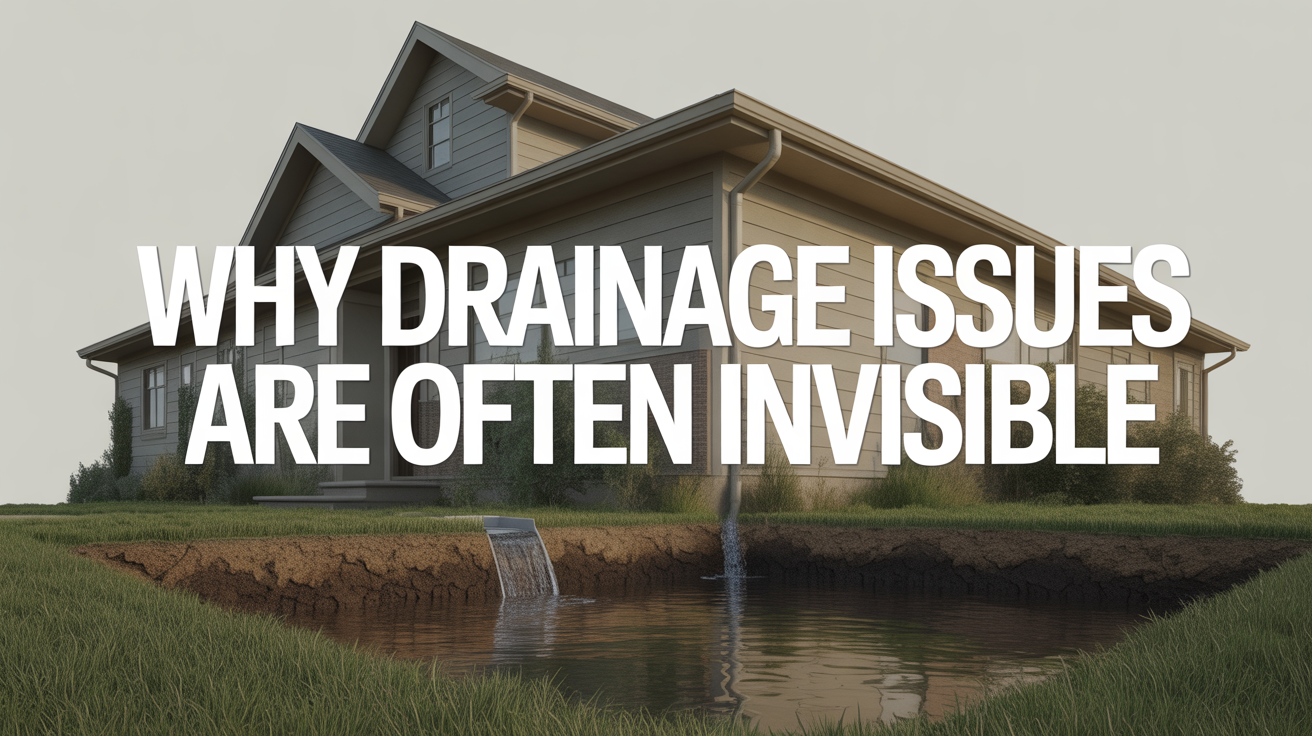
Drainage issues often remain invisible because they operate below ground, behind walls, or through gradual soil shifts that show no immediate puddles or floods on the surface. Water moves silently through cracks, saturated soils, and clogged underground lines, eroding foundations or wetting insulation long before stains or musty smells appear. This hidden nature matters in everyday homeownership because it allows small grading flaws or gutter misalignments to weaken major systems like basements, siding, and framing without warning, turning routine care into structural repairs.
Homeowners walk their properties after rains assuming all looks fine, yet subsurface channeling creates voids under slabs or hydrostatic pressure against walls. These problems evade casual glances, relying on indirect clues like sticking doors or rising water bills to signal trouble. In areas with clay soils and intense storms, like Denver suburbs, invisibility amplifies risk as seasonal downpours exploit unseen weaknesses.
Recognizing this stealth allows proactive checks that protect investments without excavating every yard, keeping homes dry and stable through targeted vigilance.
How This Shows Up in Real Homes
A homeowner notices basement walls with faint white efflorescence after spring thaws, dismissing it as normal mineral dust from concrete. Underground, poor gutter downspout extensions direct roof runoff toward the foundation, saturating backfill soil that presses inward invisibly. Over months, this hydrostatic force bows block walls slightly, with cracks forming only after years of silent pressure.
Yard grass grows unusually lush in one corner near the street, fed by leaking sewer laterals cracked from tree roots probing joints underground. No surface water appears because clay soil holds moisture like a sponge, channeling it laterally to destabilize sidewalks and pool under garages undetected. Families attribute higher water bills to usage, unaware of the 24/7 drip feeding the ground.
Interior clues emerge subtly: a bathroom floor feels spongy during heavy rains, tracing to a clogged perimeter drain tile overwhelmed by surface runoff. Water bypasses the system through silted lines, migrating up slab edges without flooding, leaving only damp carpet edges that dry quickly and escape notice until mold colonizes joists above.
Common Misunderstandings Homeowners Have
Many assume dry ground and clear gutters mean effective drainage, overlooking subsurface flow paths shaped by soil compaction or fill settling over decades. They test downspouts with a hose on sunny days, missing how storm volumes overwhelm undersized extensions or flat slopes that reverse during saturation.
Another confusion treats yard pooling as temporary, ignoring how repeated wetting compacts subsoils and creates preferential channels to foundations. Homeowners grade mulch beds away temporarily, unaware that organic decay absorbs then releases water slowly, wicking it back toward walls through capillary action in masonry.
People often believe sump pumps prove drainage works, since they cycle without backups. In reality, constant operation signals chronic overload from poor exterior grading, pulling groundwater that weakens footings invisibly while pumps mask the root cause until burnouts occur.
Why These Assumptions Create Problems Over Time
Silent foundation saturation erodes supporting soils, creating voids that settle slabs unevenly and crack walls progressively. Initial hairline fissures widen under freeze-thaw, admitting more water in cycles that delaminate membranes and corrode rebar, demanding piering or waterproofing costing tens of thousands after a decade of unchecked flow.
Leaking laterals nourish tree roots that fracture pipes further, collapsing lines that back up sewage into cleanouts or yards during peaks. Soil destabilization sinks patios and driveways, while pathogens contaminate groundwater, raising health risks and insurance scrutiny that complicates claims.
Over years, perimeter drains clogged with silt lose capacity silently, forcing basements to handle surface loads they cannot, leading to efflorescence turning to spalling concrete and bowed walls. Resale inspections reveal these cascades, prompting buyer credits that erase equity gained from surface-only fixes.
How Thoughtful Homeowners Handle This Differently
These owners map drainage paths annually after storms, tracing downspouts to daylight and probing yard low spots with probes for soft soil. They install cleanouts at key junctions and flush perimeter lines with hydrants yearly, confirming flow without digging. Dye tests in gutters reveal if colors surface near foundations, pinpointing silent redirects.
They extend downspouts 10 feet from driplines using flexible sections buried in gravel trenches, bypassing clay layers that slow percolation. French drains along driveways capture runoff before slabs, while sump pit liners with battery backups handle overloads without masking grading flaws.
Thoughtful monitoring includes piezometers—simple $20 tubes driven into soil—to measure groundwater spikes post-rain, alerting to rising pressures. They redirect roof planes with splash blocks and crown yards at two percent slopes, verifying with levels rather than eyes, turning invisible risks into documented stability.
What to Keep in Mind Moving Forward
Drainage invisibility demands indirect vigilance: watch bills, soil patches, wall salts, and pump cycles as proxies for subsurface health. Post-storm walks reveal pooling precursors, while annual pro scopes confirm pipe integrity without excavation. Soil type dictates urgency—clay amplifies hidden woes more than sand.
Simple tools like moisture meters and laser levels expose flaws cheaply, with corrections prioritizing velocity over volume to keep water moving fast and far. This mindset prevents silent erosion from becoming visible crises.
To reach out to me directly for a personalized drainage audit tailored to your Denver-area home, including hidden issue detection, soil testing guidance, and corrective grading plans, contact me today. This empowers you to uncover and resolve invisible threats before they compromise your home’s foundation.
Get the full Denver Market Insights → [Market Insights]



Littleton’s Ken Caryl for Lockheed Relocations
This is part of Lockheed Martin Relocation → [Lockheed Martin Relocation Hub] & the larger Denver Relocation Hub → [Denver Relocation Hub] Written by: Chad Cabalka Ken Caryl is one of the best-kept “family first” relocation options for Lockheed Martin employees who want foothills scenery, strong neighborhood appeal, and a real suburban lifestyle that still feels connected…


Centennial & Parker for Lockheed Relocations
This is part of Lockheed Martin Relocation → [Lockheed Martin Relocation Hub] & the larger Denver Relocation Hub → [Denver Relocation Hub] Written by: Chad Cabalka Centennial and Parker are two of the smartest suburban choices for Lockheed Martin employees relocating with families because they give you a strong balance of commute flexibility, good neighborhood variety, and…

Highlands Ranch for Family-Friendly Lockheed Relocations
This is part of Lockheed Martin Relocation → [Lockheed Martin Relocation Hub] & the larger Denver Relocation Hub → [Denver Relocation Hub] Written by: Chad Cabalka Highlands Ranch is one of the strongest choices for Lockheed Martin employees relocating with families because it delivers exactly what most parents want after a big move: stable neighborhoods, strong community…