


This is part of Homeownership 101→ [Homeownership 101]
Written by: Chad Cabalka
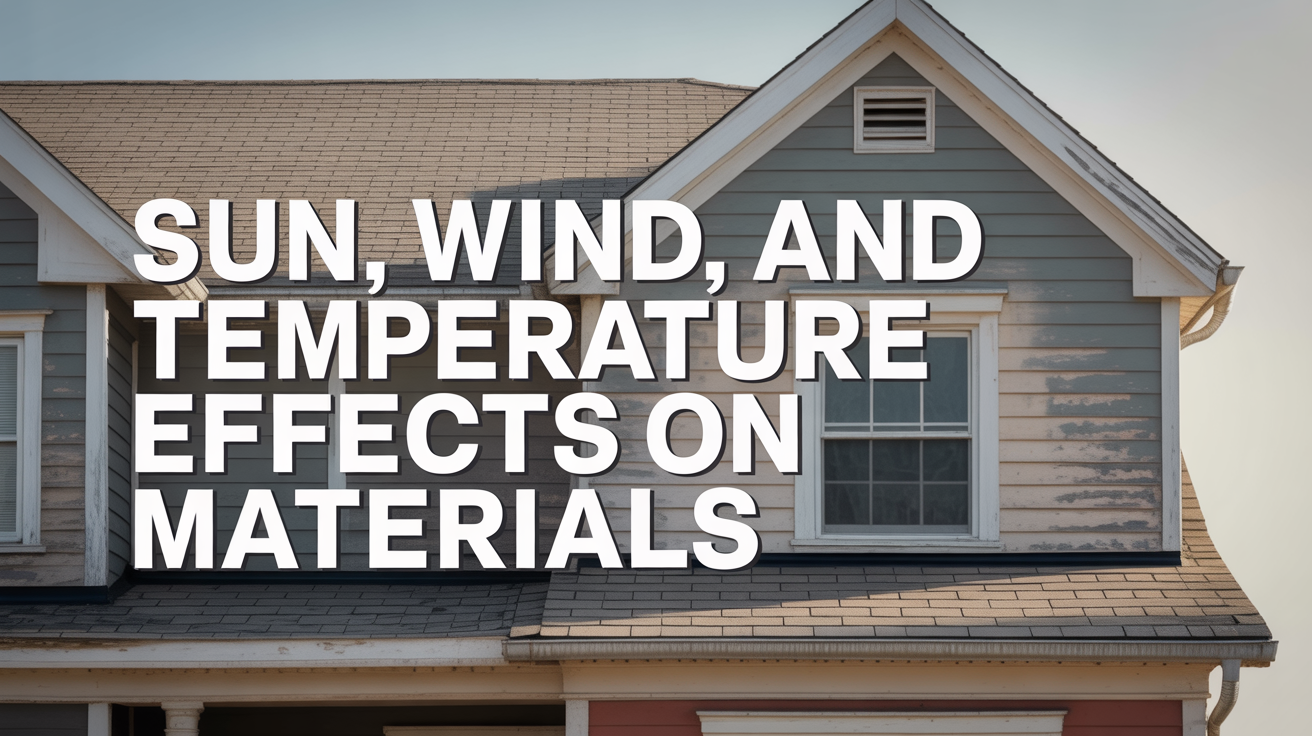
Sun, wind, and temperature effects degrade building materials through relentless cycles of expansion, contraction, UV breakdown, and mechanical abrasion that weaken roofs, siding, windows, and sealants faster than calm conditions allow. In Colorado’s high-altitude climate, intense solar radiation brittleizes asphalt shingles while rapid 40-degree daily swings fatigue caulking and framing joints. These forces matter in everyday homeownership because they shorten system lifespans predictably, raising repair frequency unless materials and care adapt to local realities.
Homes face sun baking south walls all summer, winds scouring paint from eaves in fall, and winter freezes cracking masonry after thaws. Standard materials designed for milder zones fail prematurely here, turning 30-year roofs into 15-year replacements. Homeowners who understand these interactions choose resilient options and timed maintenance, preserving structure without constant patchwork.
This dynamic turns weather into a slow adversary, demanding vigilance that balances cost with durability for long-term stability.
How This Shows Up in Real Homes
South-facing asphalt shingles in a Denver suburb curl and lose granules after eight years under unrelenting UV, while north slopes hold texture longer. Homeowners spot bald patches cracking in hail storms, tracing leaks to sun-weakened underlayment that wind lifts easily. Replacement comes years early, with south roofs showing three times the wear of shaded areas.
High winds along the Front Range strip caulk from window corners, allowing drafts and water entry that rot sills silently. A typical two-story sees trim paint flaking horizontally where gusts carry grit, while sheltered east walls stay sealed. Families feel chills near frames in winter, blaming single-pane glass rather than eroded seals from 60 mph blasts.
Temperature swings contract metal flashing overnight then expand it by noon, popping nails loose around chimneys. In Highlands Ranch homes, this cycles 100 times yearly, widening gaps that admit moisture to attic joists. Ceilings stain subtly after monsoons, linking to loose metal stressed by 50-degree shifts.
Common Misunderstandings Homeowners Have
Many assume all wear stems from age alone, overlooking how Colorado’s UV index above ten degrades sealants ten times faster than sea-level norms. They repaint siding every five years nationally, missing how high-altitude rays chalk finishes in three, blaming cheap paint over solar intensity.
Another confusion attributes wind damage solely to storms, ignoring chronic abrasion from steady 20 mph breezes laden with dust. Homeowners secure loose shutters after gales but ignore daily scouring that pits stucco, thinking calm days pose no threat to surface integrity.
People often believe temperature effects even out annually, applying uniform care despite daily cycles stressing joints more than steady climates. They caulk once yearly like coastal guides suggest, unaware that Front Range swings demand flexible hybrids checked twice to endure contraction without cracking.
Why These Assumptions Create Problems Over Time
UV-weakened shingles granulate fully within a decade, exposing felt paper to hail that punches through, demanding total reroofs costing $20,000 when partial patches fail repeatedly. South elevations accelerate this asymmetrically, unbalancing curb appeal and insurance as uneven wear signals neglect.
Wind-eroded caulk admits cycles of freeze-thaw that spall window frames, rotting wood until full sash replacements mount thousands per opening. Dust infiltration clogs weeps, trapping moisture that delaminates vinyl, cascading to siding swaps years before warranted lifespans.
Thermal fatigue loosens flashing into gullies channeling water to sheathing, fostering mold that remediation uncovers during sales. Buyers demand credits for systemic wear linked to loose metals, eroding equity as inspectors cite climate-exploited flaws from unaddressed cycles.
How Thoughtful Homeowners Handle This Differently
These owners select UV-stabilized metal roofs or clay tiles rated for 120 mph winds, reflecting solar gain while shrugging off hail common to plains. They apply high-flexibility silicone caulks biannually at frame joints, choosing colors matching trim to spot gaps early through fading.
Siding choices favor fiber cement or aluminum with baked-on fluoropolymer finishes, resisting chalking five times longer than paint under local sun. Thoughtful ones orient decks south with overhangs shading walls, reducing direct exposure while wind screens of lattice slow abrasive flow at corners.
Annual rituals include tightening flashing screws post-winter and infrared scans for heat loss at seals, catching loosened spots before water paths form. They plant evergreens west for wind buffering, layering passive design with active checks for compounded resilience.
What to Keep in Mind Moving Forward
Prioritize materials tested for high UV, wind shear, and thermal cycling—metal over asphalt, synthetics over organics—while scheduling seal checks after peak seasons. South and west exposures demand closest watch, as sun and gusts concentrate damage there predictably.
Passive aids like overhangs and berms amplify durability cheaply, reducing active maintenance needs. This climate-smart approach extends material life realistically.
To reach out to me directly for a personalized material resilience assessment tailored to your Denver-area home, including sun-wind-temperature risk mapping, upgrade recommendations, and maintenance timing, contact me today. This ensures your home withstands Colorado’s elements effectively while minimizing long-term costs.
Get the full Denver Market Insights → [Market Insights]



Littleton’s Ken Caryl for Lockheed Relocations
This is part of Lockheed Martin Relocation → [Lockheed Martin Relocation Hub] & the larger Denver Relocation Hub → [Denver Relocation Hub] Written by: Chad Cabalka Ken Caryl is one of the best-kept “family first” relocation options for Lockheed Martin employees who want foothills scenery, strong neighborhood appeal, and a real suburban lifestyle that still feels connected…


Centennial & Parker for Lockheed Relocations
This is part of Lockheed Martin Relocation → [Lockheed Martin Relocation Hub] & the larger Denver Relocation Hub → [Denver Relocation Hub] Written by: Chad Cabalka Centennial and Parker are two of the smartest suburban choices for Lockheed Martin employees relocating with families because they give you a strong balance of commute flexibility, good neighborhood variety, and…

Highlands Ranch for Family-Friendly Lockheed Relocations
This is part of Lockheed Martin Relocation → [Lockheed Martin Relocation Hub] & the larger Denver Relocation Hub → [Denver Relocation Hub] Written by: Chad Cabalka Highlands Ranch is one of the strongest choices for Lockheed Martin employees relocating with families because it delivers exactly what most parents want after a big move: stable neighborhoods, strong community…