


This is part of Arvada Lifestyle Hub → [Arvada Lifestyle Hub] & Arvada Real Estate Guide → [Arvada Real Estate Guide]
Written by: Chad Cabalka
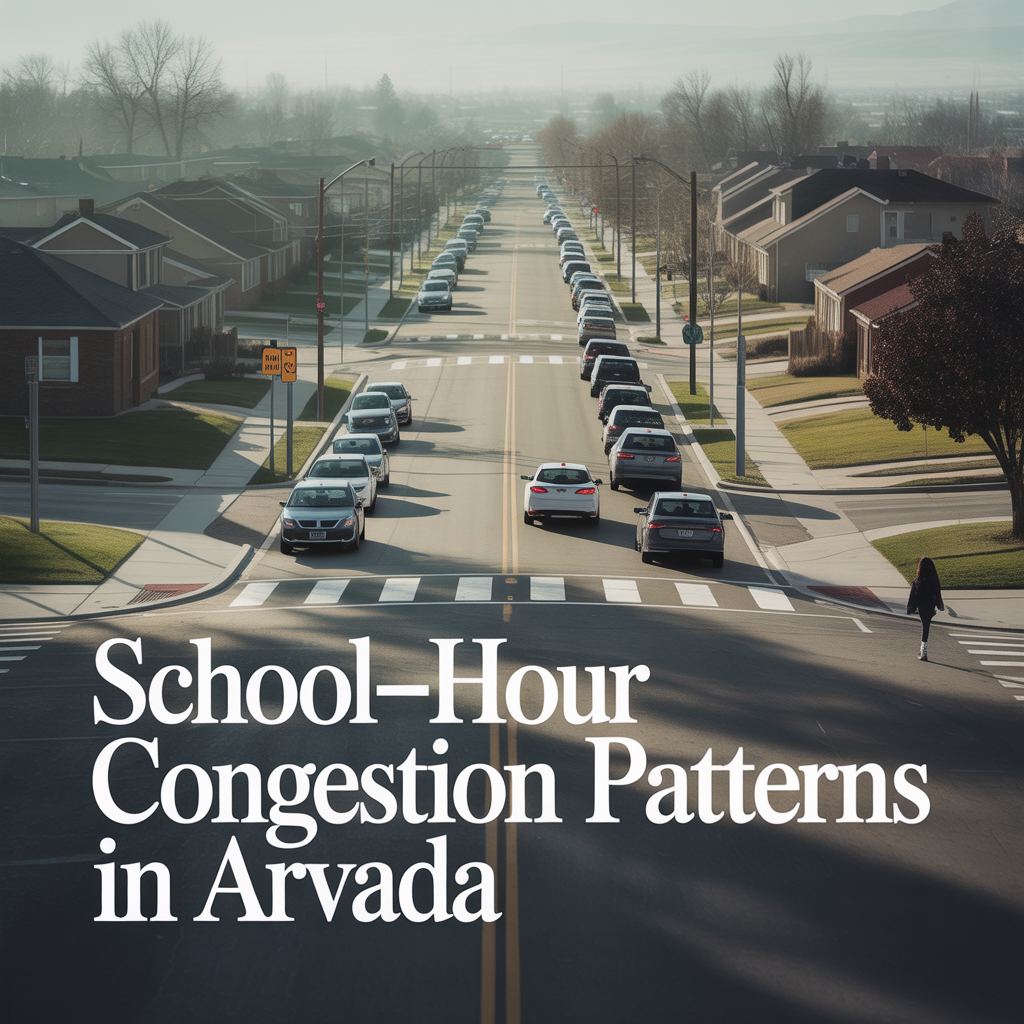
Arvada, like any busy city with a large school district, has a very predictable rhythm to its traffic, and the biggest daily shift is tied to school hours. For families and anyone who drives in the city during the week, understanding how school drop‑off and pickup times actually reshape streets and signals isn’t just about convenience — it’s about safety, time management, and how much stress a commute carries. Over the years, I’ve seen how families adapt to these patterns, and the families who feel most settled in Arvada are the ones who treat school‑hour congestion as a permanent part of the neighborhood, not a surprise to be endured.
When Arvada’s Streets Really Change
On a normal school day, Arvada’s traffic changes dramatically in very specific time windows:
- Morning (6:45–8:30 a.m.) – This is the heaviest shift. School start times are clustered in the 7:50–8:30 range, so the worst congestion tends to peak right before 8 a.m. and eases off by 8:30–8:45. Arterials like Wadsworth, Sheridan, and Ralston, and corridors like 64th, 72nd, and 70th Avenues, see the most traffic, especially between residential areas and key intersections near the Arvada Center and Olde Town. School zones along neighborhood streets also activate flashers, and many families notice that careless passing, speeding, or distracted driving becomes more dangerous during this window.
- Afternoon (2:30–4:30 p.m.) – This is the other big spike, and it’s often more chaotic than the morning rush. Elementary school dismissals start in the 2:30–3:15 range, middle and high schools follow close behind, and again, the main corridors heat up as parents, buses, and after‑school traffic crowd the same roads. Intersections near schools are especially busy, and neighborhoods with high concentrations of elementary schools often see a wave of cars, bikes, strollers, and buses swirling through the same blocks in a short window. The worst afternoons tend to be Tuesday through Thursday; Mondays and Fridays often feel a bit lighter because of late starts, staff development days, and fewer after‑school commitments.
For families not tied to school routines, these periods mean planning is everything. Running errands, going to the doctor, or making a work call between 7:30–8:30 a.m. or 3:00–4:00 p.m. from late August through May almost always feels slower and more stressful than the same trip at 9 a.m. or 11 a.m. Many residents simply accept that those hours are “school time” and adjust their schedule around them, leaving earlier, later, or combining trips into one loop outside the worst windows.
How This Shows Up in Different Parts of Arvada
Because Arvada spans a wide area, school‑hour congestion isn’t the same everywhere, and the intensity varies depending on whether a neighborhood is close to major schools, main corridors, or quiet residential pockets.
Near Olde Town and along the Wadsworth–Sheridan core, the biggest pressure is on the main roads and near the high schools and middle schools. Arvada High, Arvada West, and the central middle schools draw traffic from many neighborhoods, so those corridors feel like a through‑route during the rush, not just a neighborhood street. Stoplights on 64th, 72nd, and 80th get heavy backing, and left turns across high‑volume arterials can feel like a challenge during peak dismissal.
In neighborhoods with a high concentration of elementary schools — like Allendale, Alta Vista, and older subdivisions near the Apex Center — the pattern is more localized but still very real. During drop‑off and pickup, nearby streets narrow under extra cars, and parents circling for a parking spot make it harder for others to turn or park. Sidewalks get busy, crosswalks are heavily used, and many families keep a close eye on kids, strollers, and other vehicles to avoid near‑misses. Over time, families in these areas learn which blocks are safest, when the worst of the wave hits, and which routes are less saturated.
Further west, near the Ralston Valley and Blunn Reservoir areas, the pattern is different but still present. Those neighborhoods are more spread out, so the school traffic is more diffuse, but it still concentrates on key roads like Federal Center, Ralston, and 74th Avenue. Families here often have slightly longer drives, but they also tend to see more bus traffic and families bundling activities (sports, clubs, tutoring), which can extend the after‑school rush.
How Families Adapt to the Daily Pattern
The most grounded families in Arvada treat school‑hour congestion as a normal part of the calendar, not an exception, and they adjust their life around it:
- They build extra time into school mornings, especially on cold/rainy/snowy days, so that rushing doesn’t become a daily stressor.
- They avoid high‑traffic intersections and arterials during the worst windows unless absolutely necessary; many residents know the “backdoor” routes, like side streets and alternate connectors, and use them for errands and short trips.
- Families with multiple kids often stagger school responsibilities, when possible, to spread out the demand on drivers and vehicles.
- Many families also plan chores, grocery runs, and appliance deliveries for middle of the day (10 a.m.–2 p.m.), when streets are calmer and parking is easier.
Families who are hyper‑aware of school schedules often notice that Arvada feels like a different city depending on the time. From 9 a.m. to 2 p.m., it can feel relatively quiet and calm, especially on residential streets, but from 7:30–8:30 a.m. and 3:00–4:30 p.m., it’s a much more active, fluid, and demanding environment. That’s not a flaw; it’s just the rhythm of a city with a strong school district and a high percentage of families with school‑age kids.
A Local Perspective on Living With School Traffic
If you’re thinking about staying in Arvada or choosing a home here, school‑hour traffic isn’t a problem to be avoided, but a pattern to be understood and planned around. It shows up in the value of homes: those near major schools often feel more connected and convenient, but they also come with heavier street use during the school day. Those further from the core offer more quiet, but often mean a longer drive during those peak hours.
The best decisions are usually the ones that match the family’s own rhythm. Families who value a very quiet, walkable block near Olde Town often accept heavier morning and afternoon use as the price of that location. Families on the west side often trade a bit more driving time for a more residential feel, but they still plan for the same I‑70 and arterial congestion.
If you’d like to talk through how school‑hour congestion fits into your work schedule, school options, and neighborhood preference in Arvada, I’d be glad to walk through it — not with a sales pitch, but as a long‑time Denver area resident who’s lived this rhythm for decades. I can help you see how school traffic actually plays out in different parts of the city and how to choose a home that feels like a calm, grounded fit for the long term.
Get the full Denver Market Insights → [Market Insights]



Littleton’s Ken Caryl for Lockheed Relocations
This is part of Lockheed Martin Relocation → [Lockheed Martin Relocation Hub] & the larger Denver Relocation Hub → [Denver Relocation Hub] Written by: Chad Cabalka Ken Caryl is one of the best-kept “family first” relocation options for Lockheed Martin employees who want foothills scenery, strong neighborhood appeal, and a real suburban lifestyle that still feels connected…


Centennial & Parker for Lockheed Relocations
This is part of Lockheed Martin Relocation → [Lockheed Martin Relocation Hub] & the larger Denver Relocation Hub → [Denver Relocation Hub] Written by: Chad Cabalka Centennial and Parker are two of the smartest suburban choices for Lockheed Martin employees relocating with families because they give you a strong balance of commute flexibility, good neighborhood variety, and…

Highlands Ranch for Family-Friendly Lockheed Relocations
This is part of Lockheed Martin Relocation → [Lockheed Martin Relocation Hub] & the larger Denver Relocation Hub → [Denver Relocation Hub] Written by: Chad Cabalka Highlands Ranch is one of the strongest choices for Lockheed Martin employees relocating with families because it delivers exactly what most parents want after a big move: stable neighborhoods, strong community…